Artwork
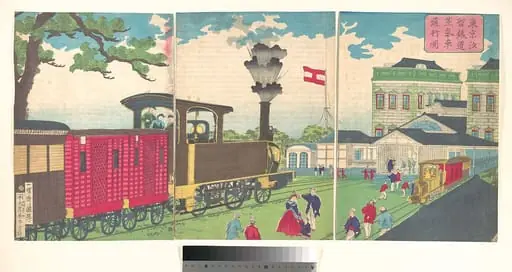
東京高輪鉄道蒸気車走行之図|Illustration of a Steam Locomotive Running on the Takanawa Railroad in Tokyo (Tōkyō takanawa tetsudō jōkisha sōkō no zu)
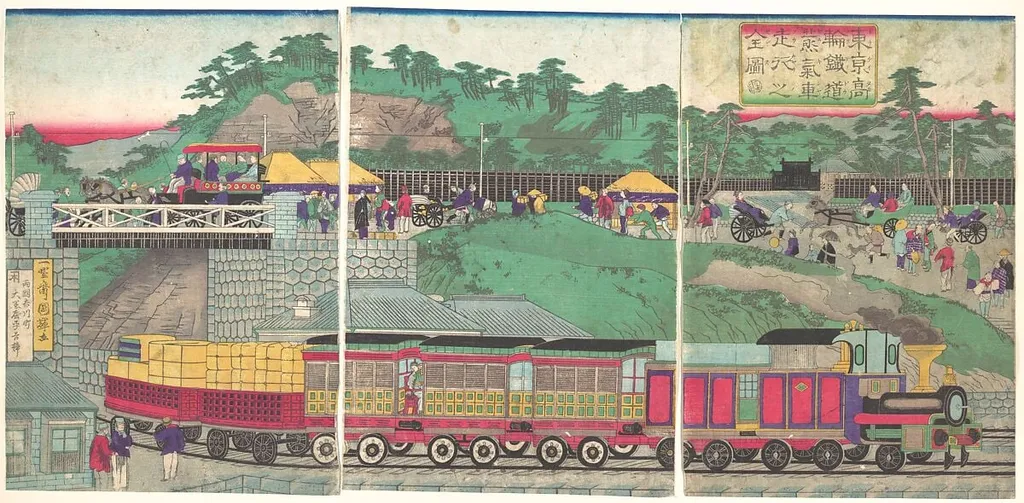
東京高輪鉄道蒸気車走行之図|Illustration of a Steam Locomotive Running on the Takanawa Railroad in Tokyo (Tōkyō takanawa tetsudō jōkisha sōkō no zu) is an ink print by the Impressionist artist Utagawa Kuniteru. It dates from 1873 and is held in the collection of the Metropolitan Museum of Art.
About this work
Overview
The work combines traditional ukiyo-e techniques with contemporary subject matter, reflecting the cultural shift brought by Western-style rail transport.
Created around 1873 by Utagawa Kuniteru, this triptych depicts the early operation of a steam locomotive on the Takanawa line in Tokyo. Composed of three joined woodblock prints, it captures a moment of technological transition in Japan’s modernizing landscape. The work combines traditional ukiyo-e techniques with contemporary subject matter, reflecting the cultural shift brought by Western-style rail transport.
Subject & Meaning
The scene portrays a red steam engine moving through a bustling urban periphery, surrounded by pedestrians, carts, and temporary structures. The train’s prominence signals its novelty and impact on daily life. Crowds gather with curiosity, while buildings and bridges hint at the encroachment of infrastructure into traditional spaces. The image documents not just transportation, but societal adaptation to industrial change.
Technique & Style
Kuniteru employed flat, bold areas of color and sharp outlines typical of ukiyo-e, yet applied them to a modern subject. The red locomotive contrasts vividly against natural tones of sky and hillside, enhancing its dynamism. Movement is suggested through diagonal tracks and the alignment of figures, while the triptych format allows for a sequential narrative—arrival, pause, and departure—mirroring the rhythm of rail travel.
History & Provenance
The print was produced shortly after the opening of Japan’s first railway between Tokyo and Yokohama in 1872. It was likely made for public consumption, serving as both news and entertainment. The work entered the collection of The Metropolitan Museum of Art, where it remains one of the few surviving visual records of early Japanese rail travel created by a traditional printmaker.
Context
In the early Meiji period, Japan rapidly adopted Western technologies to assert its modernity. Railroads symbolized progress, and their depiction in art bridged traditional aesthetics with new realities. This print emerged amid a surge of interest in mechanized transport, appearing alongside photographs and newspaper illustrations, yet retaining the visual language of Edo-period print culture.
Legacy
As one of the earliest woodblock prints to depict a steam train in Japan, it stands as a cultural artifact of transition. While later artists embraced photography and Western realism, Kuniteru’s work preserves the moment when traditional printmaking engaged with industrialization. It offers insight into how ordinary citizens encountered and interpreted technological change through familiar visual forms.
Artist & collection


 Untitled
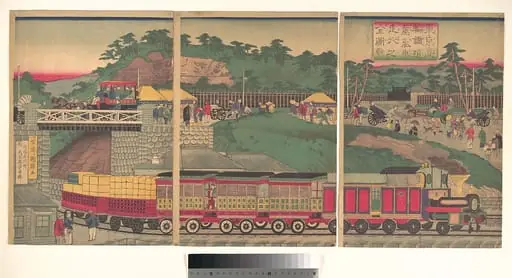 東京高輪鉄道蒸気車走行之全図|Tokyo /Takanawa Steam Railway
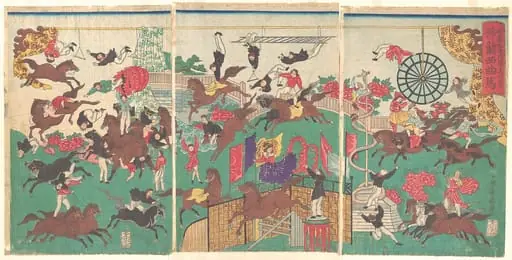 浅草観音境内ニ於イテ興行仕候 佛蘭西曲馬|French Equestrian Circus on the grounds of Asakusa Kannon temple (Asakusa kannon keidai ni oite kōgyō tsukawashi sōrō-Furansu kyokuba)
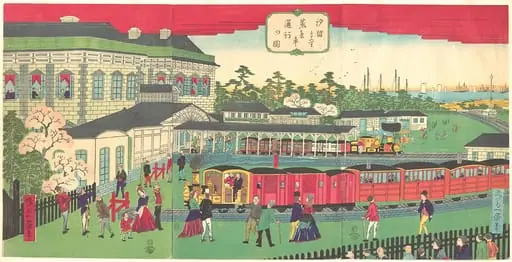
 東京汐留鉄道蒸気車通行図|Illustration of a Steam Locomotive Passing Shiodome in Tokyo (Tōkyō Shiodome testudō jōkisha tsūkō zu)
 Untitled
 Untitled
 Untitled
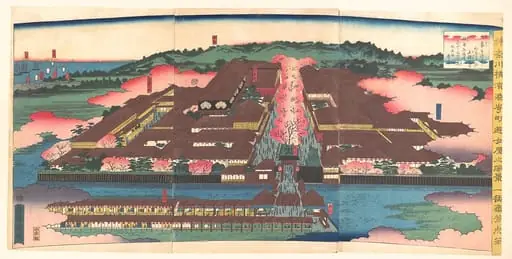 神奈川横浜港崎町遊女屋光景|View of the Miyozaki Brothel District in Yokohama, Kanagawa (Kanagwa Yokohama Miyozaki machi yūjoya kōkei)
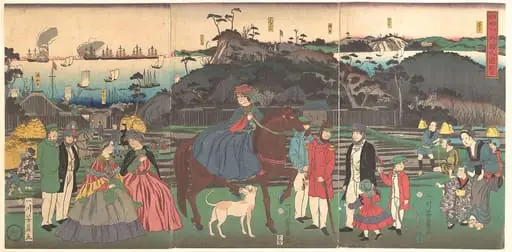 Kanagawa Gongenyama Gaikokujin yūran|Foreigners Visiting the Famous Site of Mt. Gongen in Kanagawa
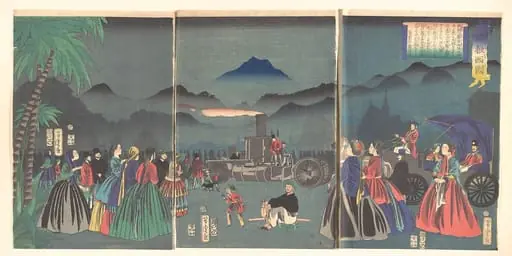 仏蘭西国|France (furansukoku)
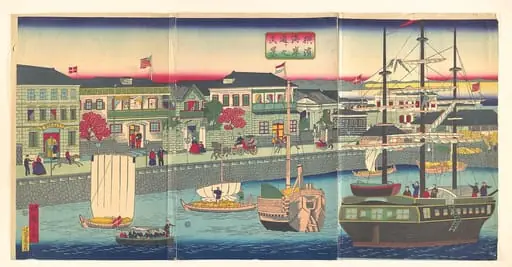 横浜海岸通り之風景|View of the Seafront in Yokohama (Yokohama Kagandori no fūkei)
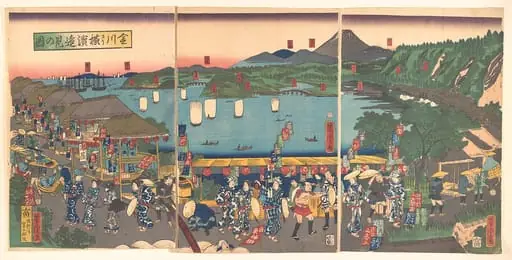 Kanagawa yōri Yokohama...ken no zu|A Distant View of Yokohama from Kanagawa
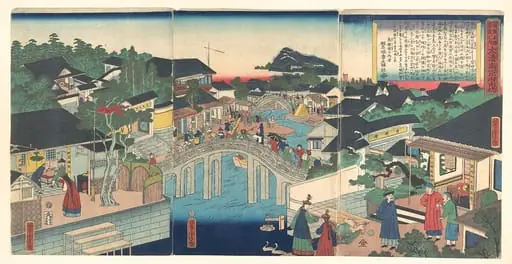 Daishin Nankin fu no shiō|Nankin in China