Artwork
The Courtesan Chozan of the Chojiya
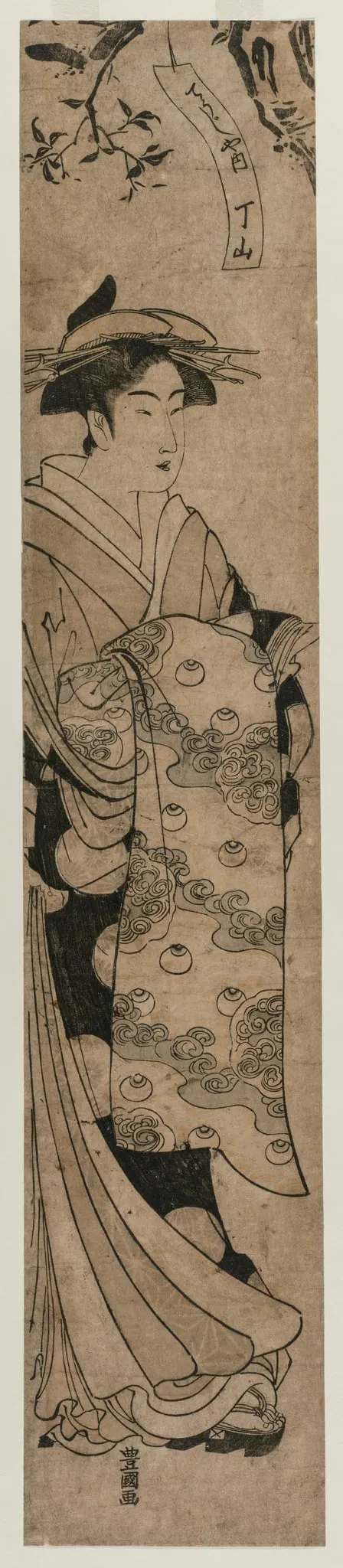
The Courtesan Chozan of the Chojiya is a print by the Romanticist artist Utagawa Toyokuni I. It dates from 1790 and is held in the collection of the Cleveland Museum of Art.
About this work
The painting is called The Courtesan Chozan of the Chojiya.
It was made by Utagawa Toyokuni around 1790.
The work is part of the Romanticism movement, which is interesting because it was not as common in Japanese art at that time.
You can learn more about this type of art at the museum where it's held, The Cleveland Museum of Art.
Overview
The print was produced for mass distribution, reflecting the growing demand for images of famous courtesans among the merchant class during the late Edo period.
Created around 1790 by Utagawa Toyokuni, this woodblock print depicts Chozan, a courtesan affiliated with the Chojiya brothel in Edo’s Yoshiwara district. It belongs to the ukiyo-e tradition, a genre focused on urban pleasures and entertainment culture. The print was produced for mass distribution, reflecting the growing demand for images of famous courtesans among the merchant class during the late Edo period.
Subject & Meaning
Chozan is portrayed in elaborate attire, her posture and expression conveying both elegance and calculated poise. As a registered courtesan of high rank, her image served not only as a portrait but also as an advertisement for the Chojiya establishment. The depiction reinforces social hierarchies within Yoshiwara, where beauty and status were commodified and consumed as part of urban leisure culture.
Technique & Style
Toyokuni employed the standard ukiyo-e method of woodblock printing, using multiple carved blocks for color layers. Lines are crisp and rhythmic, with bold outlines defining the figure’s form. Color is restrained yet refined, emphasizing the texture of silk and the precision of hairpins and embroidery. The composition follows the vertical format typical of actor and courtesan portraits, designed for easy display in private homes.
History & Provenance
The print entered the collection of The Cleveland Museum of Art through established channels of early 20th-century Japanese art acquisition. Its provenance reflects broader Western interest in ukiyo-e during the Japonisme movement. While the exact early ownership history is undocumented, its preservation in a major institution ensures its accessibility for study and public viewing.
Context
Produced during the Kansei era, this print emerged in a period of strict moral regulation in Edo, yet the pleasure quarters remained culturally vibrant. Courtesan prints like this one were popular despite government attempts to curb extravagance. They reveal the tension between official austerity and the thriving commercial culture of the cities, where visual media played a key role in shaping public taste.
Legacy
Toyokuni’s portrayal of Chozan exemplifies the mature phase of ukiyo-e portraiture, influencing later artists in both Japan and the West. The print contributes to the historical record of Edo’s social dynamics and the visual language of gender, status, and beauty. It remains a reference point for scholars studying the intersection of art, commerce, and urban identity in pre-modern Japan.
Artist & collection

Artist
Toyokuni was a born showman who made sure the energy of Edo’s kabuki stage never faded on paper.

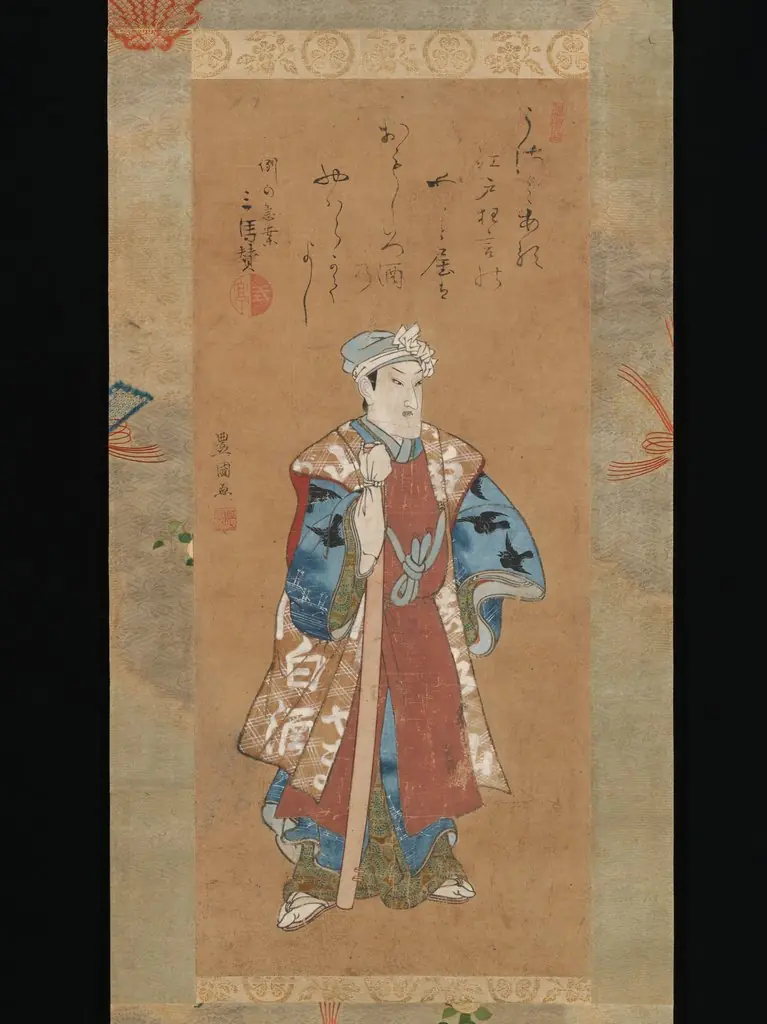 Bandō Mitsugorō II as Shinbei in the Kabuki Play "Sukeroku"
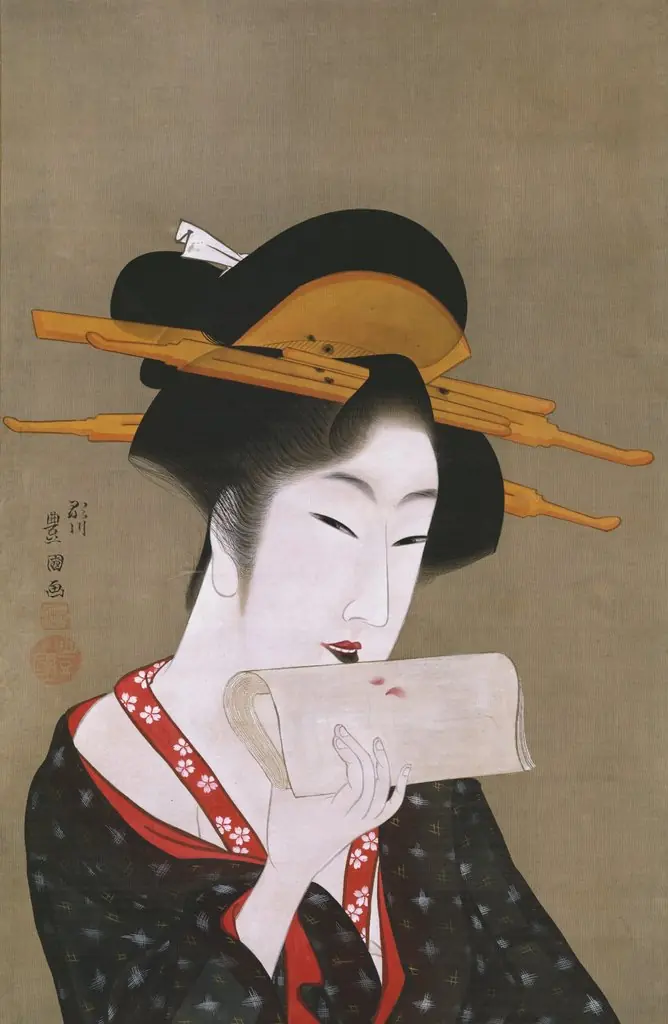 Beauty Blotting Her Lip Rouge
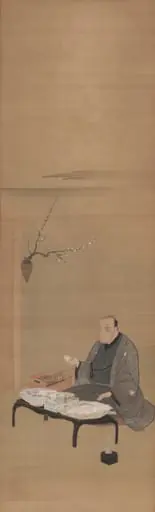 Portrait of Kinokuniya Bunzaemon
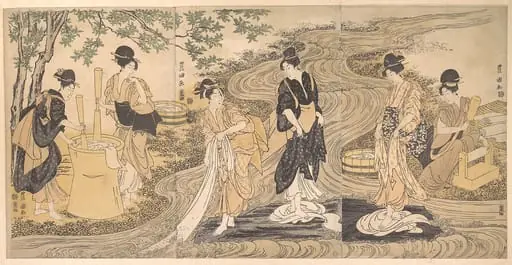 Untitled
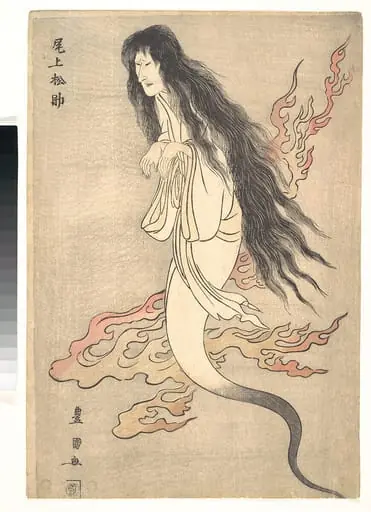 Tokaido Yotsuya Kaidan|Onoe Matsusuke as the Ghost of the Murdered Wife Oiwa, in "A Tale of Horror from the Yotsuya Station on the Tokaido Road"
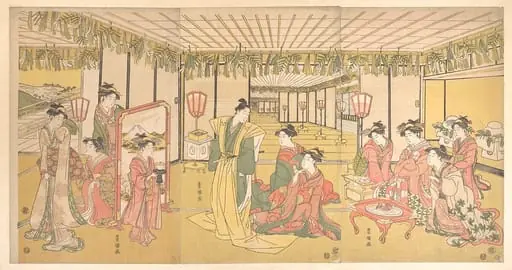 Untitled
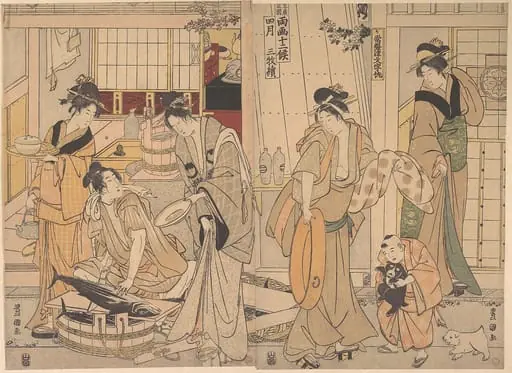 Untitled
 娘道成寺図の錦絵|Print of a Kabuki Dancer from the Maiden of the Dōjōji Temple (Musume Dōjōji)
 A Beauty with a Mirror
 Untitled
 Young Woman Standing Beside a Pine Tree Within the Precincts of a Temple
 Untitled
 Young Woman Standing Under an Umbrella in the Snow
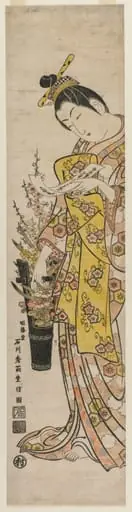 Courtesan Reading a Poem Slip Tied to Flowers in a Vase
 Beauty in Snow
 The Lovers Ohan and Choemon (from the series Joruri Ballads in the Tokiwazu and Tomimoto Styles)
 Untitled
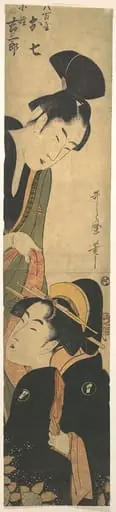 八百屋お七 寺小姓吉三郎|O Shichi and Kichisaburo