Artwork
Courtesan Reading a Poem Slip Tied to Flowers in a Vase
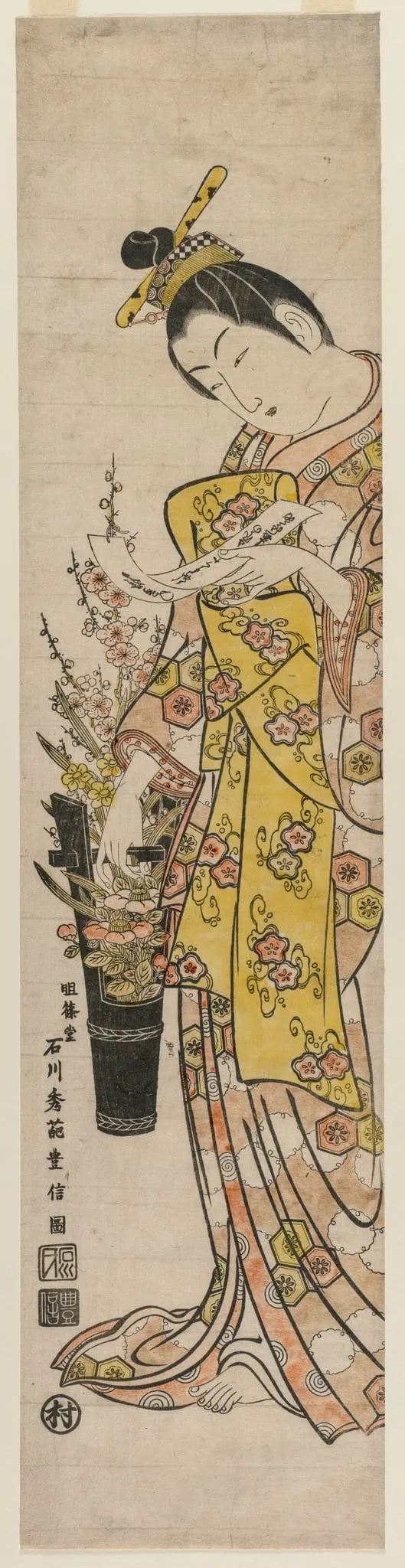
Courtesan Reading a Poem Slip Tied to Flowers in a Vase is a print by the Baroque artist Ishikawa Toyonobu. It dates from 1744 and is held in the collection of the Cleveland Museum of Art.
About this work
Overview
Created around 1744 by Ishikawa Toyonobu, this woodblock print depicts a courtesan engaged in a quiet, intimate moment. The work is part of the ukiyo-e tradition and is currently held in the collection of The Cleveland Museum of Art. Its composition centers on the figure and a floral vase, with minimal background detail to emphasize the subject’s presence and the symbolic elements she holds.
Subject & Meaning
Her poised demeanor and the delicate flowers reflect the cultivated artistry of courtesan life, where wit and aesthetics were as valued as physical allure.
The courtesan is shown holding a scroll tied to flowers in a vase, suggesting a poetic exchange common in Edo-period entertainment culture. The act of reading a verse attached to blooms implies a refined, ephemeral moment—linking beauty, literature, and transience. Her poised demeanor and the delicate flowers reflect the cultivated artistry of courtesan life, where wit and aesthetics were as valued as physical allure.
Technique & Style
The print employs bold, flat areas of color typical of early ukiyo-e, with no attempt at shading or perspective. The yellow robe, patterned with floral motifs, contrasts sharply against the plain background. The vase and flowers are rendered in simplified pink and white tones, while the courtesan’s black headpiece anchors the composition. Lines are clean and precise, emphasizing decorative form over naturalism.
History & Provenance
Produced during the mid-18th century, the print reflects the flourishing print culture of Edo. Ishikawa Toyonobu, a student of Torii Kiyonobu, contributed to the development of bijin-ga, or pictures of beautiful women. The work entered The Cleveland Museum of Art’s collection through documented acquisitions, preserving its place in the historical record of Japanese printmaking.
Context
This print emerged during a period when ukiyo-e flourished as popular art, often depicting the pleasures of the pleasure quarters. Courtesans were both subjects and cultural icons, their lives intertwined with poetry, fashion, and performance. The inclusion of a poem slip ties the image to literary traditions, reinforcing the courtesan’s role as a conduit of refined aesthetic experience.
Legacy
Ishikawa Toyonobu’s work helped shape the visual language of bijin-ga, influencing later artists like Utamaro. While not widely known today, this print exemplifies the quiet elegance and symbolic depth of early ukiyo-e. Its preservation in a major Western museum underscores its significance in the global appreciation of Japanese print art.
Artist & collection
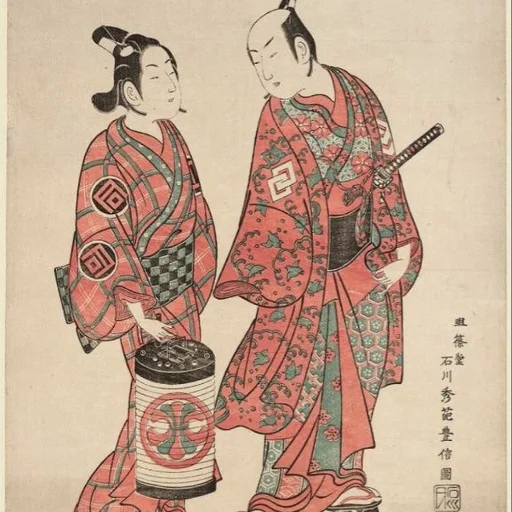
Artist
Ishikawa Toyonobu spent his life in Edo, now Tokyo, where he carved and printed the everyday scenes of city life.

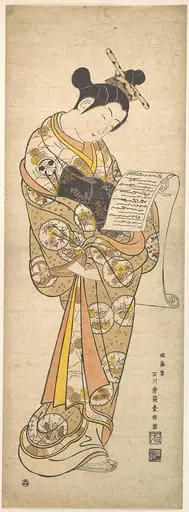
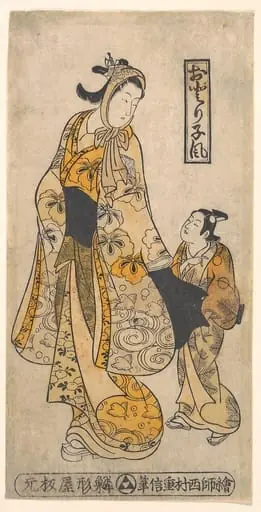
 Young Woman Standing Beside a Pine Tree Within the Precincts of a Temple
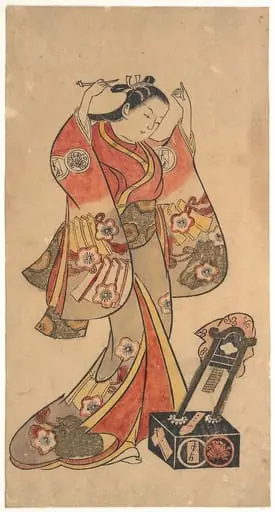 Untitled
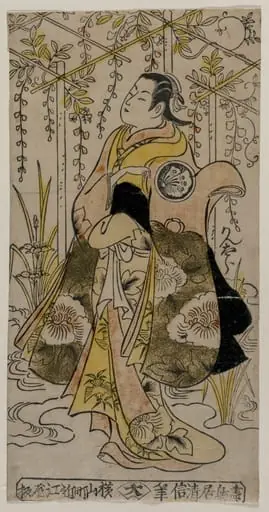 Sanjo Kantaro as a Young Woman Standing in a Wisteria Arbor
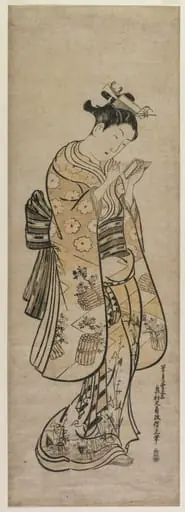 A Beauty with a Mirror
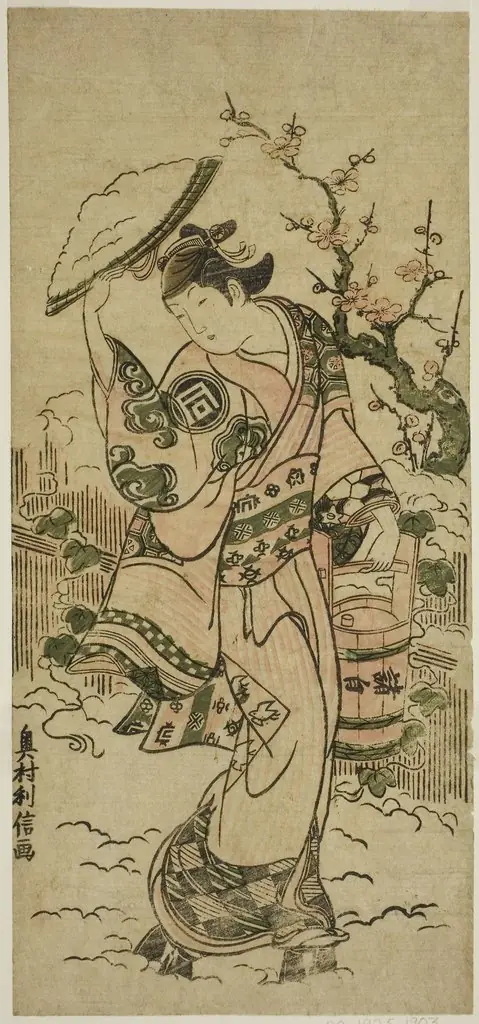 The Actor Sanogawa Mangiku as a woman walking in the snow
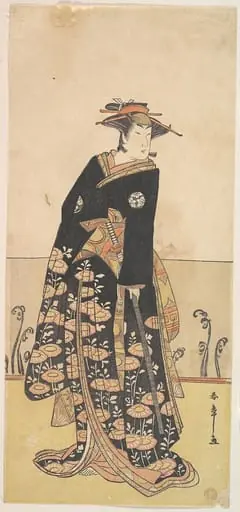 勝川春章画 二代目小佐川常世|Kabuki Actor Osagawa Tsuneyo II
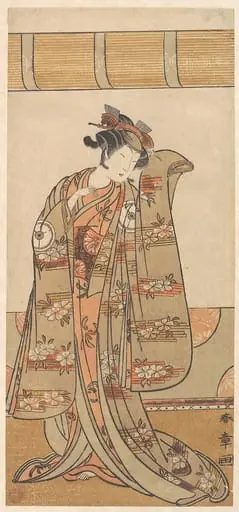 Untitled
 Untitled
 Untitled
 Sanpuku Tsui|Moon in Musashi Province
 Young Man Playing Football
 Untitled