Artwork
Gaikokujin Sake no zu|A Foreigner's Wine Party (Gaikokujin shuen no zu), from an untitled series of foreigners at home
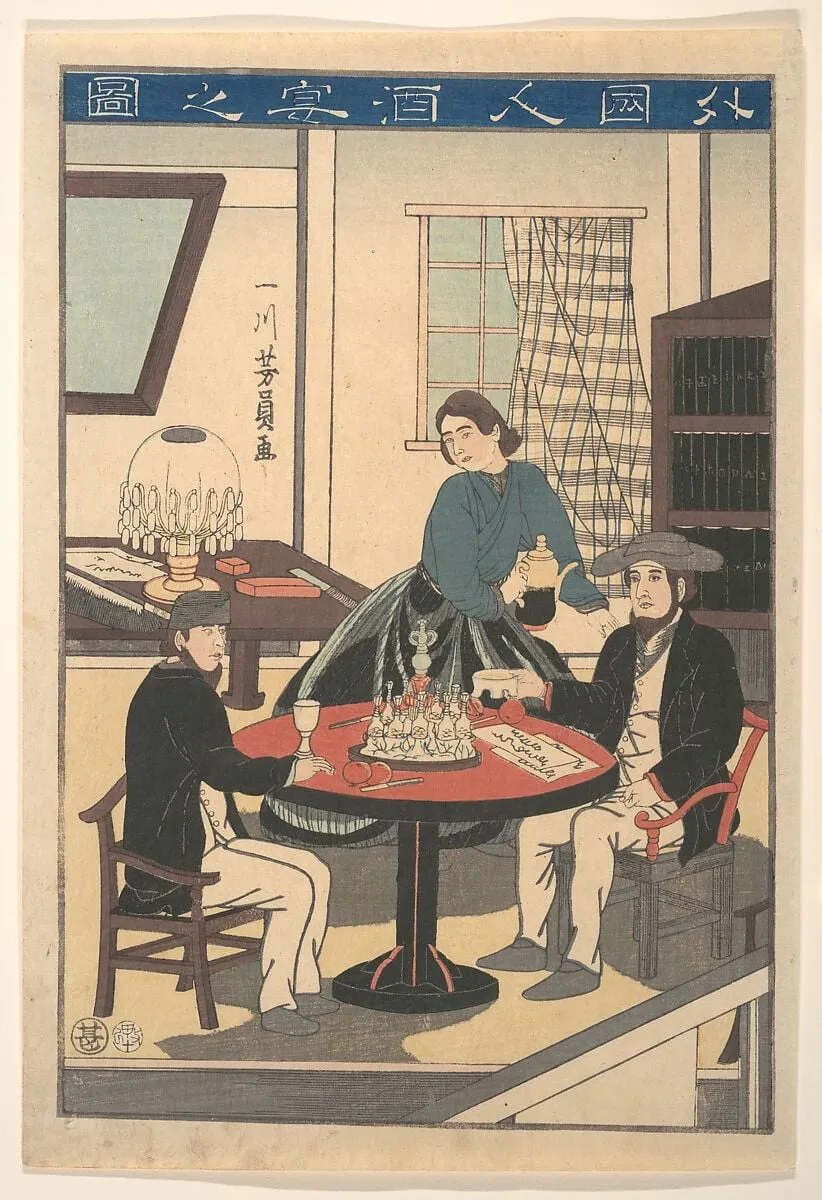
Gaikokujin Sake no zu|A Foreigner's Wine Party (Gaikokujin shuen no zu), from an untitled series of foreigners at home is an ink print by the Impressionist artist Utagawa Yoshikazu. It dates from 10 and is held in the collection of the Metropolitan Museum of Art.
About this work
Overview
Rendered in ink and color on paper, it captures a moment of social gathering, blending Japanese printmaking techniques with observations of foreign customs.
This woodblock print, attributed to Utagawa Yoshikazu and dated around 1850, belongs to an unnamed series depicting Westerners in domestic settings. Rendered in ink and color on paper, it captures a moment of social gathering, blending Japanese printmaking techniques with observations of foreign customs. The work is part of the Metropolitan Museum of Art’s collection, reflecting mid-19th century Japanese interest in the foreign presence in Japan during a period of limited international contact.
Subject & Meaning
The scene portrays a Western-style celebration, likely a birthday or festive gathering, with a woman pouring wine from a bottle into cups held by two seated men. A cake with lit candles rests on the table, signaling a ceremonial occasion. The figures, dressed in stylized Western attire, are arranged around the table in a composition that emphasizes interaction and hospitality. The inclusion of familiar domestic elements—books, a lamp, a curtained window—grounds the scene in an intimate, interior space, suggesting curiosity about foreign social rituals.
Technique & Style
Executed in the ukiyo-e tradition, the print uses fine linework and flat areas of color typical of woodblock printing. The figures are rendered with simplified forms and delicate outlines, while the interior details—bookshelf, lamp, curtain—are suggested rather than meticulously detailed. Color is restrained but purposeful: the woman’s blue dress and the red table create visual anchors. The composition balances asymmetry with clarity, reflecting the influence of both Japanese aesthetics and the emerging visual vocabulary of Western life as interpreted through Japanese eyes.
History & Provenance
Created during the late Edo period, when Japan maintained restricted contact with the outside world, the print emerged from a growing fascination with foreign customs among urban Japanese audiences. Utagawa Yoshikazu, a lesser-known artist of the Utagawa school, contributed to this niche genre of 'foreigner pictures.' The work entered the Metropolitan Museum of Art’s collection through established channels of early 20th-century acquisitions, preserving its role as a cultural document of cross-cultural observation.
Context
This print was made during a time when Japan was beginning to encounter Westerners through limited trade at Dejima and the arrival of foreign ships. Artists like Yoshikazu responded to public curiosity by producing images of foreigners in domestic settings, often mixing accurate details with imaginative interpretations. These works were not ethnographic records but rather cultural fantasies, filtered through Japanese conventions of representation and social norms, offering a window into how the unfamiliar was visually negotiated.
Legacy
Though not widely celebrated in its time, this print contributes to a broader body of Edo-period imagery that documents Japan’s early engagement with the West. It stands as a quiet artifact of cultural exchange, illustrating how Japanese artists interpreted foreign customs through familiar artistic frameworks. Today, it remains a valuable reference for understanding the visual language of cross-cultural perception in pre-modern Japan.
Artist & collection

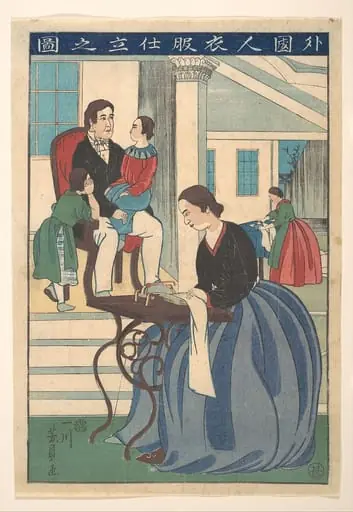 歌川芳員画 『外国人衣服仕立之図』|Foreign Family with Wife Making Clothes (Gaikokujin ifuku shitate no zu)
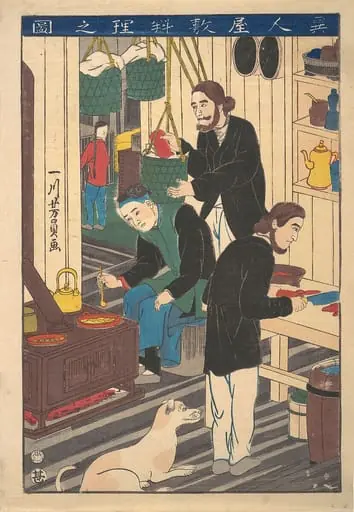 Ijiin Yashiki ryōri no zu|Inside a Foreign Restaurant
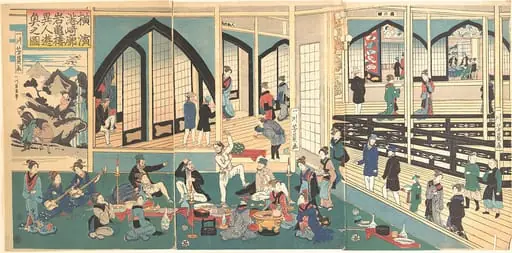 Yokohama Miyozaki-kaku Gankirō ijin yūkyō no zu|Foreigners Enjoying a Party at the Gankirō Tea House
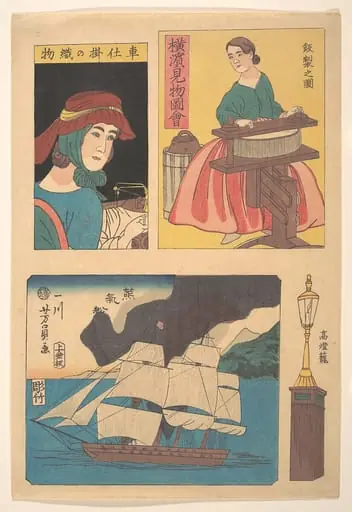 Yokohama kenbutsu zue|Picture of Sights in Yokohama: Woman with a Ringer, Lamp Post, a Steamboat at Full Sail and a Woman with a Sewing Machine
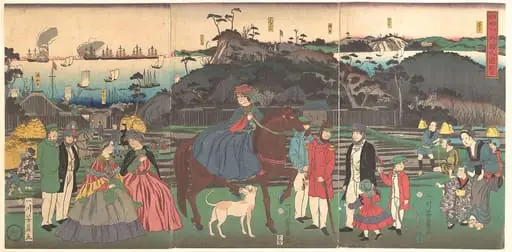 Kanagawa Gongenyama Gaikokujin yūran|Foreigners Visiting the Famous Site of Mt. Gongen in Kanagawa
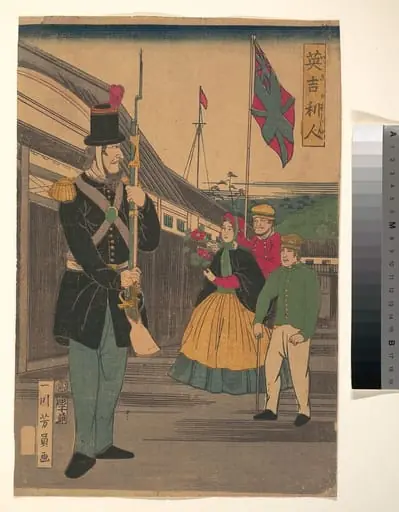 Igirisujin|英吉利人|Englishmen
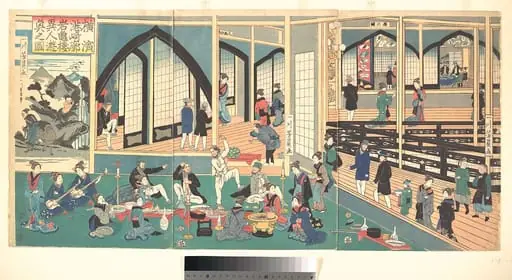 Untitled
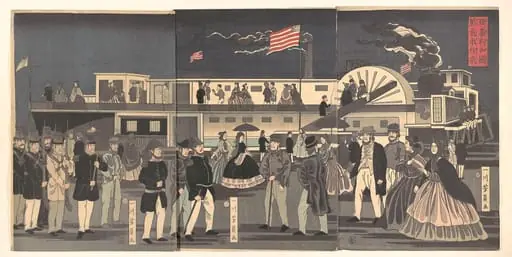 「亞墨利加國蒸氣車往来」|“America”: A Steamship in Transit
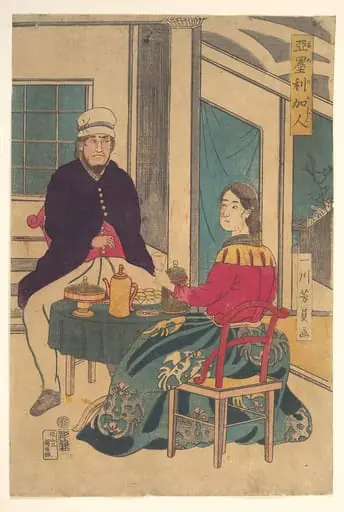 亜墨利加人|Amerikajin
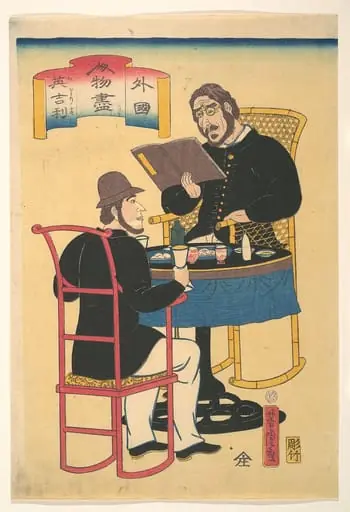 Igirisu|Englishmen Dining
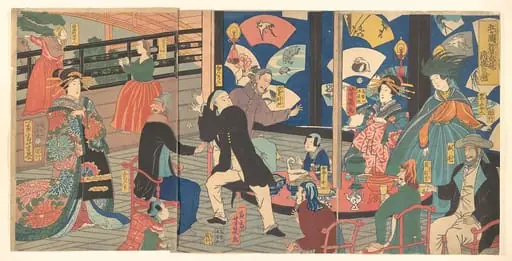 Gok'koku o Gankirō sakamori no zu|The Five Nations Enjoying a Drunken Revel at the Gankirō Tea House
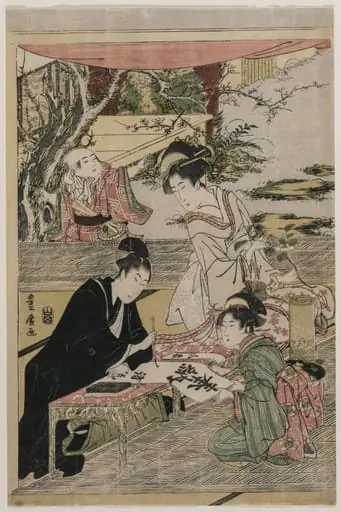 Young Man Writing at a Table
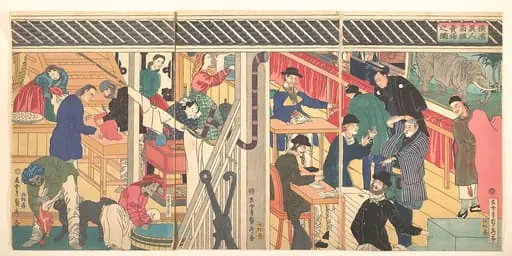 「横浜異人商館買場之圖」|Foreign Business Establishment in Yokohama (Yokohama ijin shōkan uriba no zu)
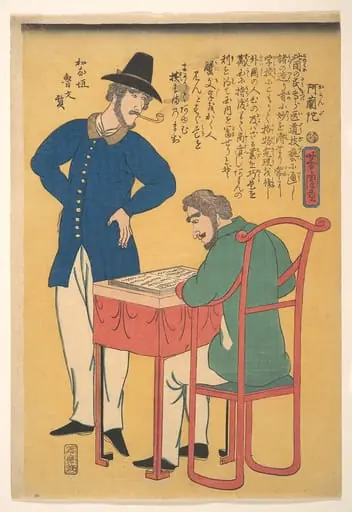 Oranda|Dutch Printers
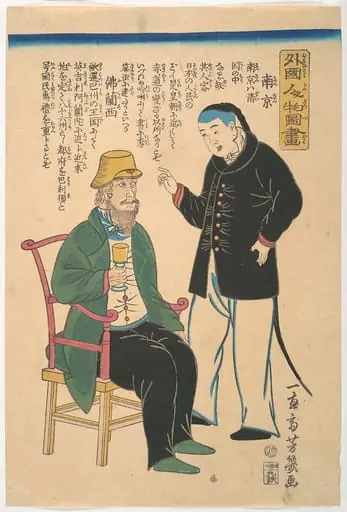 Oroshia|Chinese Servant and Frenchman