Artwork
亜墨利加人|Amerikajin
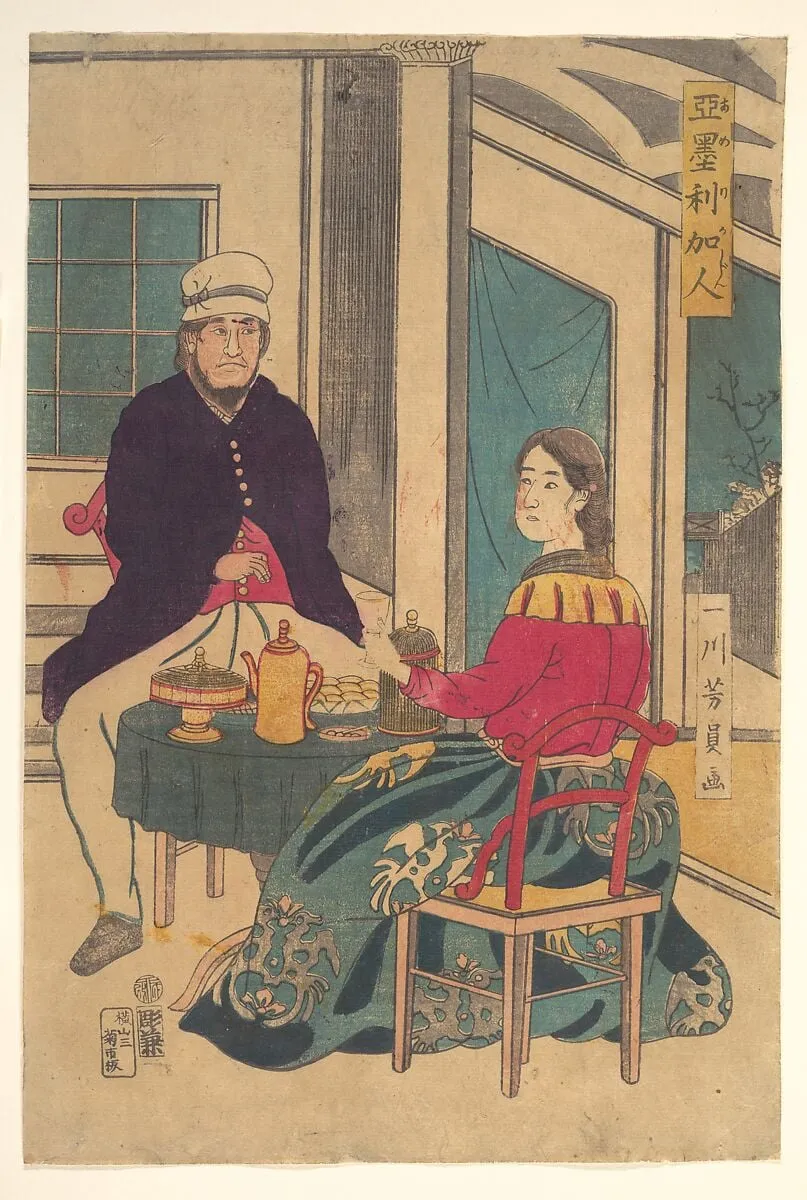
亜墨利加人|Amerikajin is an ink print by the Impressionist artist Utagawa Yoshikazu. It dates from 1862 and is held in the collection of the Metropolitan Museum of Art.
About this work
Overview
Amerikajin is a woodblock print produced in 1862 by Utagawa Yoshikazu, a lesser-known artist of the Utagawa school.
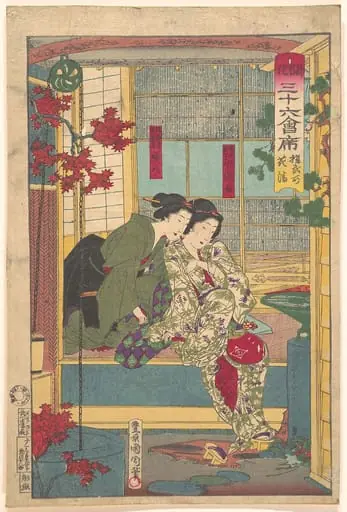
Amerikajin is a woodblock print produced in 1862 by Utagawa Yoshikazu, a lesser-known artist of the Utagawa school. Executed in ink and color on paper, it captures a domestic interior scene featuring two figures. The work is part of the collection at The Metropolitan Museum of Art, where it represents mid-19th-century Japanese depictions of foreign individuals, reflecting growing curiosity about the wider world during Japan’s period of limited external contact.
Subject & Meaning
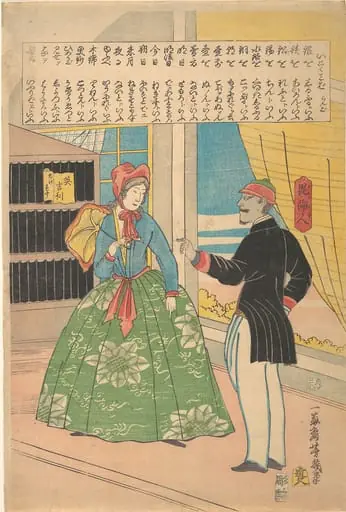
The print portrays a man and woman seated at a table, presumed to be Westerners, given the title Amerikajin—'American person.' Their attire, including the man’s dark coat and hat and the woman’s red and blue garments, diverges from traditional Japanese dress. The quiet interaction, with the man gazing at the woman while she looks away, suggests a moment of private intimacy. The presence of Western-style tableware implies an adoption of foreign customs, possibly symbolizing cultural exchange or imagined domestic life beyond Japan’s borders.
Technique & Style
Yoshikazu employed traditional ukiyo-e woodblock techniques, using bold outlines and flat areas of vivid color to define forms. The composition is carefully balanced, with the window and doorway framing the figures and guiding the viewer’s eye. The rendering of textures—fabric, wood, ceramic—is simplified yet distinct, emphasizing pattern over realism. The use of color, particularly the red and blue of the woman’s clothing, creates visual contrast against the muted interior, enhancing the scene’s quiet atmosphere.
History & Provenance
Created in 1862, during the final years of the Edo period, the print emerged as Japan began encountering increased foreign presence following the opening of its ports. While few records detail its early ownership, the work entered The Metropolitan Museum of Art’s collection through documented acquisitions of Japanese prints in the early 20th century. Its survival and preservation reflect growing Western interest in ukiyo-e as both art and ethnographic artifact.
Context
In the 1860s, Japan’s isolationist policies were easing, and images of foreigners—known as 'yōjin'—became subjects of popular prints. Amerikajin reflects this shift, portraying Westerners not as exotic curiosities but as participants in a familiar domestic setting. Such images were likely intended for Japanese audiences curious about the outside world, blending observation with imagination, as direct encounters with Americans remained rare outside port cities like Nagasaki.
Legacy
Amerikajin stands as a quiet testament to the early visual engagement between Japan and the West during a time of profound change. Though not widely reproduced or celebrated in its time, it contributes to the broader understanding of how Japanese artists interpreted foreign cultures through familiar artistic conventions. Today, it serves as a historical document of cross-cultural perception, offering insight into how the unfamiliar was rendered in everyday terms.
Artist & collection

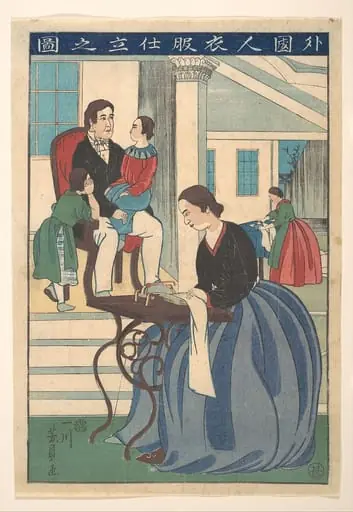 歌川芳員画 『外国人衣服仕立之図』|Foreign Family with Wife Making Clothes (Gaikokujin ifuku shitate no zu)
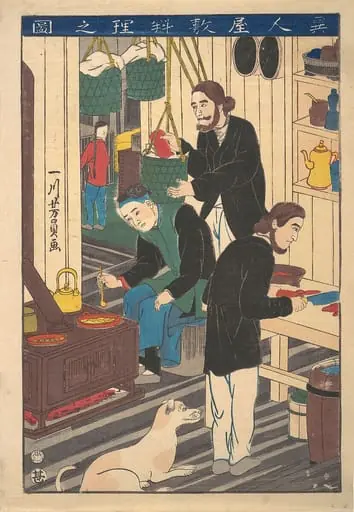 Ijiin Yashiki ryōri no zu|Inside a Foreign Restaurant
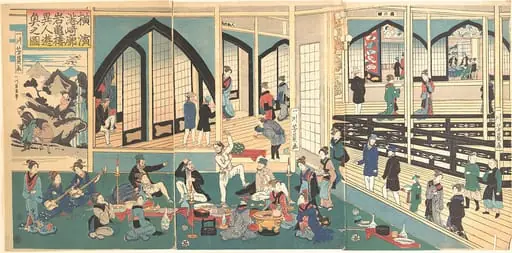 Yokohama Miyozaki-kaku Gankirō ijin yūkyō no zu|Foreigners Enjoying a Party at the Gankirō Tea House
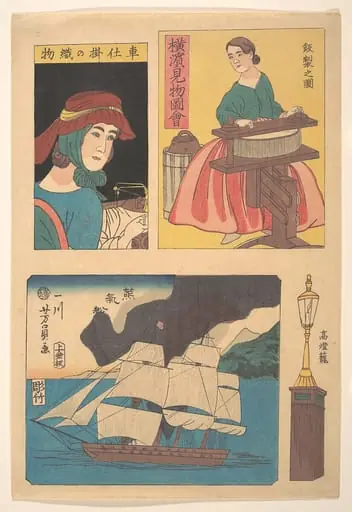 Yokohama kenbutsu zue|Picture of Sights in Yokohama: Woman with a Ringer, Lamp Post, a Steamboat at Full Sail and a Woman with a Sewing Machine
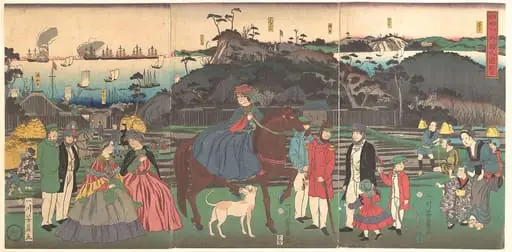 Kanagawa Gongenyama Gaikokujin yūran|Foreigners Visiting the Famous Site of Mt. Gongen in Kanagawa
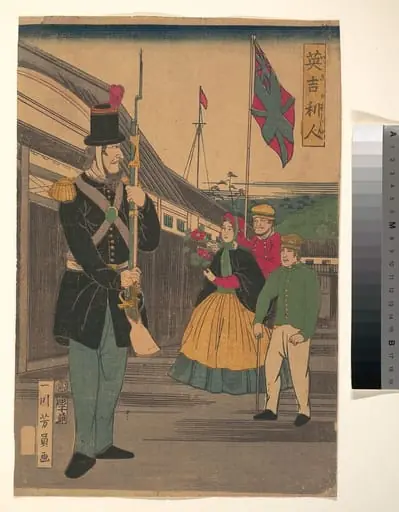 Igirisujin|英吉利人|Englishmen
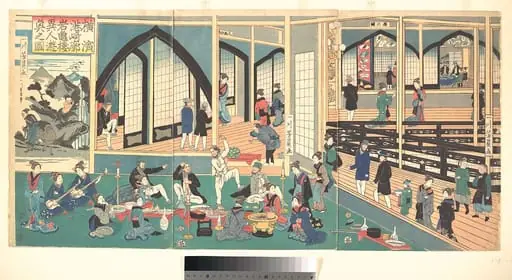 Untitled
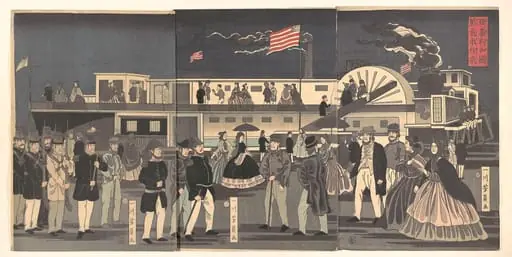 「亞墨利加國蒸氣車往来」|“America”: A Steamship in Transit
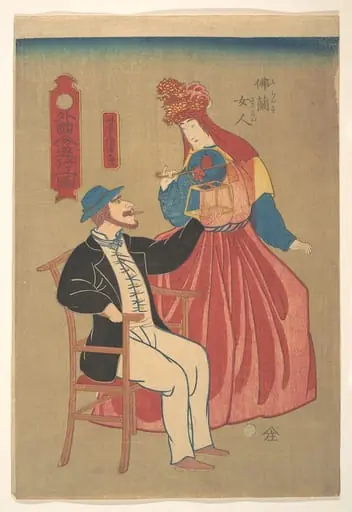 Furansu nyōjin|French Housewife and Her Husband
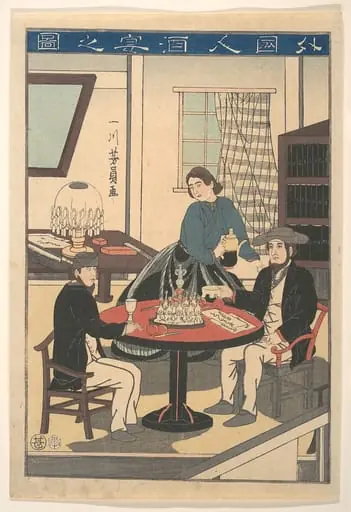 Gaikokujin Sake no zu|A Foreigner's Wine Party (Gaikokujin shuen no zu), from an untitled series of foreigners at home
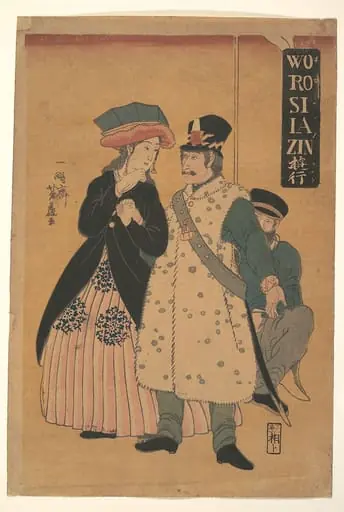 Worosiiazin yuko|魯西亜人遊行|Russians Strolling
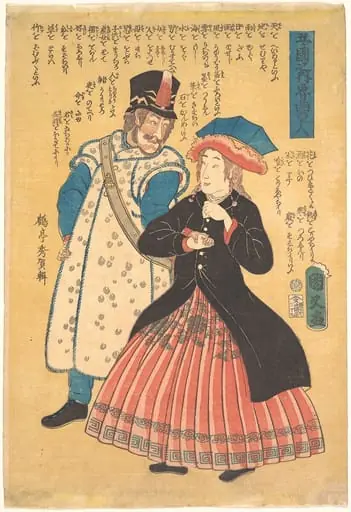 Roshiajin|Russians
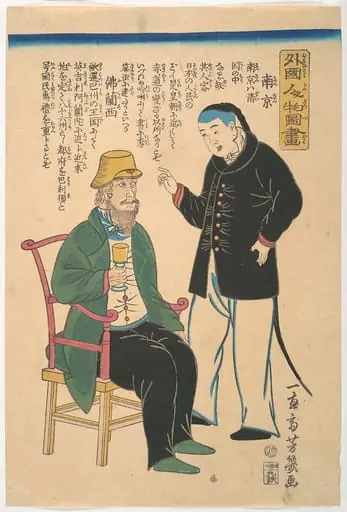 Oroshia|Chinese Servant and Frenchman
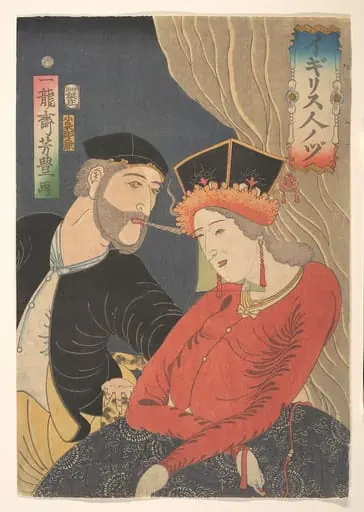 英吉利人之図|Illustration of English People (Igirisujin no zu)
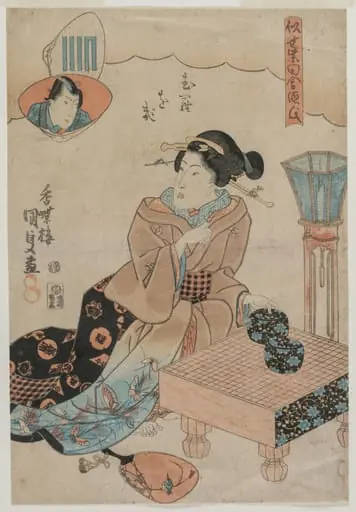 Muraogi, from the series The False Murasaki's Rustic Genji (Nise Murasaki Inaka Genji)
 Untitled
 Untitled
 Igirisu to korombojin|English Woman with Black Man
 Yokohama torai Amerika shonin ryoko no zu|横浜渡來亜墨利加商人旅行之図|American Merchant Strolling in Yokohama
 Untitled