Artwork
『東風俗福づくし 大 礼ふく』|“Ceremonial Attire” from the series An Array of Auspicious Customs of Eastern Japan (Azuma fūzoku, fukuzukushi: Tairei fuku)
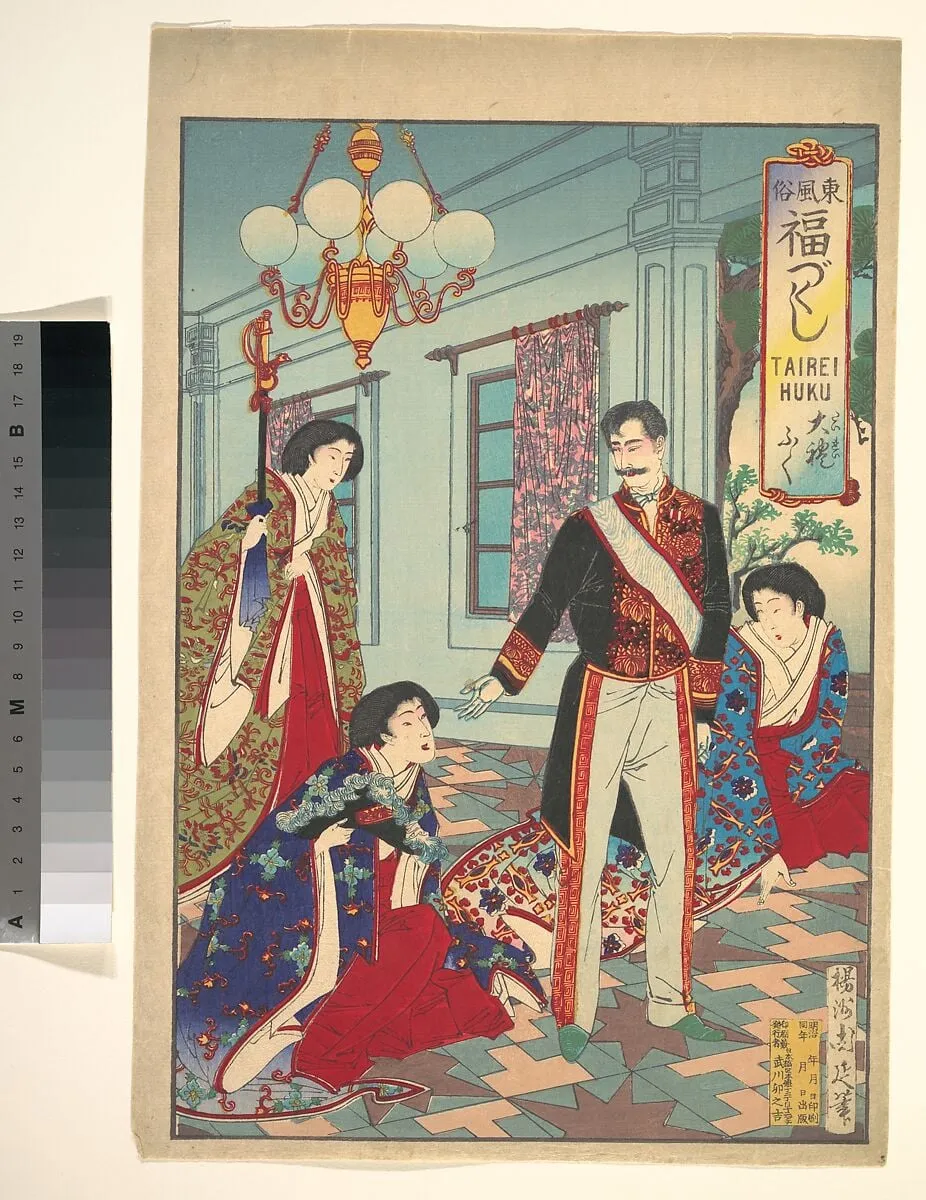
『東風俗福づくし 大 礼ふく』|“Ceremonial Attire” from the series An Array of Auspicious Customs of Eastern Japan (Azuma fūzoku, fukuzukushi: Tairei fuku) is an ink print by the Impressionist artist Yōshū (Hashimoto) Chikanobu. It dates from 1889 and is held in the collection of the Metropolitan Museum of Art.
About this work
Overview
This triptych woodblock print, titled 'Ceremonial Attire' from the series 'An Array of Auspicious Customs of Eastern Japan,' was created by Yōshū Chikanobu around 1889. It is part of The Metropolitan Museum of Art's collection.
Subject & Meaning
The print depicts a ceremonial scene with one man and three women in a formally decorated room. The man's black and red jacket and the women's traditional kimonos (including a green one with red flowers and a blue one with red and blue flowers) indicate a formal, possibly celebratory occasion.
Technique & Style
Executed in ink and color on paper, the work showcases meticulous attention to detail and a vibrant color palette. The interplay of textures, from the patterned floor to the light blue walls, and the inclusion of a chandelier and curtained window, contribute to a sense of depth.
History & Provenance
Created circa 1889 by Yōshū Chikanobu, the print is now housed at The Metropolitan Museum of Art, though the full provenance history prior to its acquisition is not detailed here.
Context
Part of a series highlighting auspicious customs of Eastern Japan, 'Ceremonial Attire' reflects late 19th-century interests in documenting and celebrating traditional practices amidst modernization.
Legacy
As a late Edo to early Meiji period work, it contributes to the historical record of Japanese ceremonial attire and domestic interiors of the time, offering insights into the blending of traditional customs with the influences of modernity.
Artist & collection


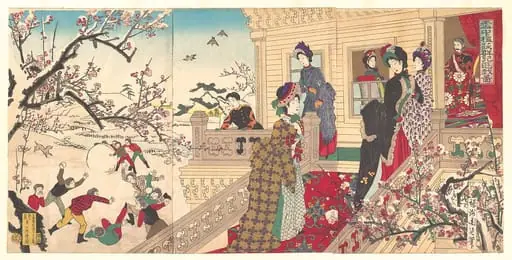 『雪中梅荘群児遊戯 図』|Children Playing in the Snow under Plum Trees in Bloom (Secchū baisō gunji yūgi zu)
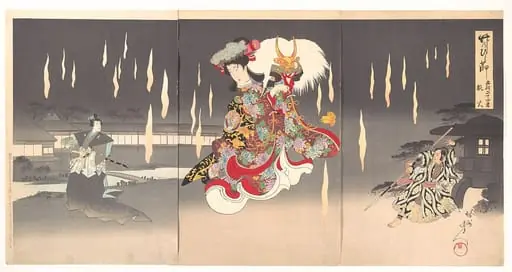 Untitled
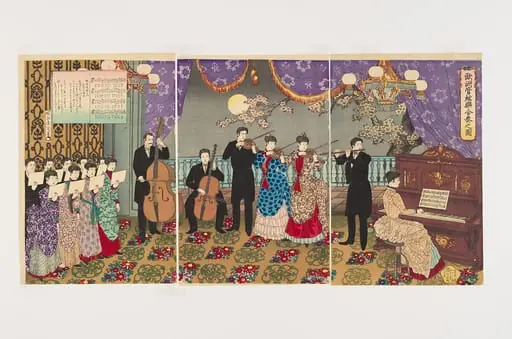 『欧州管絃楽合奏之図』|Concert of European Music (Ōshū kangengaku gassō no zu)
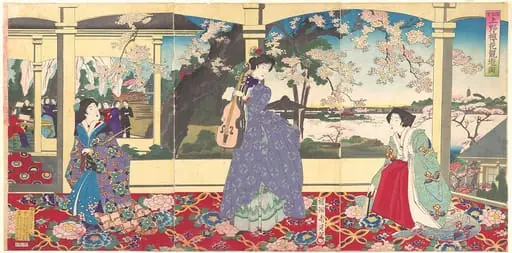 『踏舞会 上野桜花観 遊ノ図』|A Dance Party: Enjoying Cherry Blossom Viewing at Ueno (Tōbukai Ueno ōka yūran no zu)
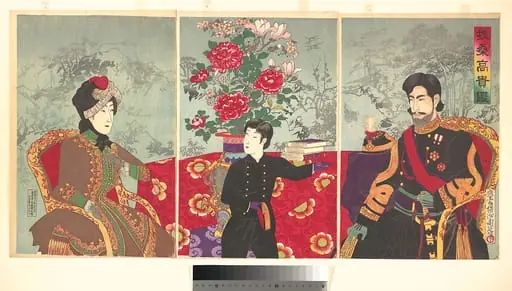 『扶桑高貴鑑』|A Mirror of Japan’s Nobility: The Emperor Meiji, His Wife, and Prince Haru (Fūsō kōki kagami)
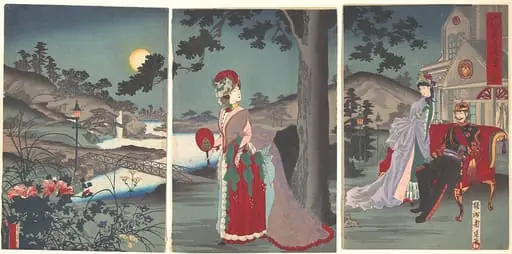 『高貴納涼ノ図』|Nobility in the Evening Cool (Koki nōryō no zu)
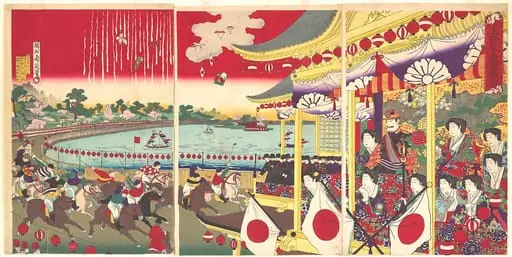 『上野不忍競馬図』|View of the Horse Track at Shinobazu in Ueno Park (Ueno shinobazu keiba zu)
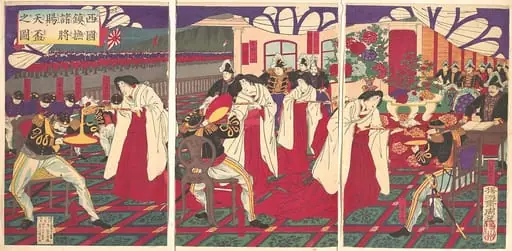 西国鎮静撫諸将天杯賜之図|Illustration of the Commanders who Pacified Western Japan, Receiving the Emperor's Gift Cups (Saigoku chinbu shoshō tenpai o tamau no zu)
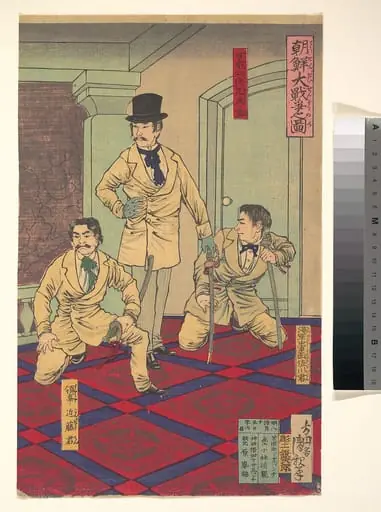 朝鮮大戦争之図|Illustration of the Great Korean War (Chōsen dai sensō no zu)
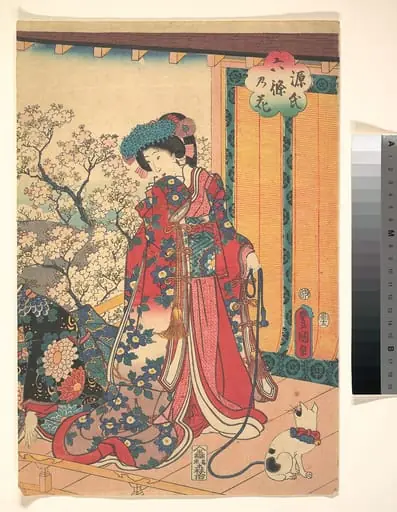 Untitled
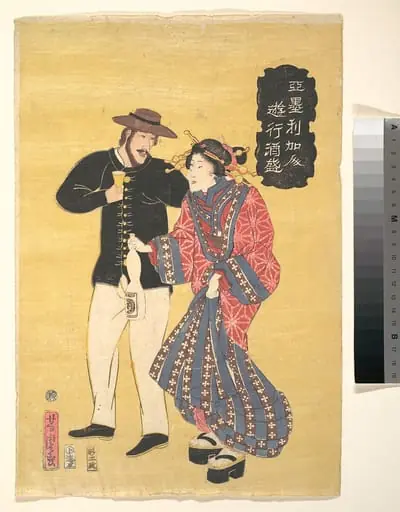 Amerika jin Yuko Sakamori|An American Carousing
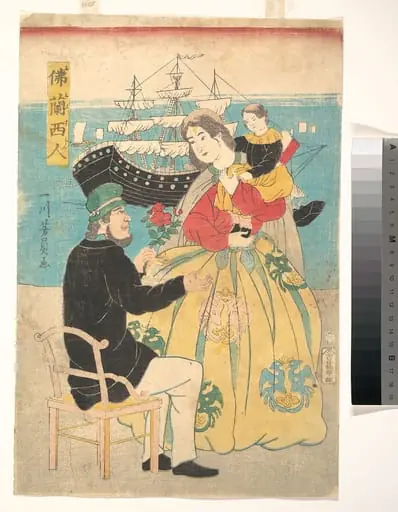 Untitled
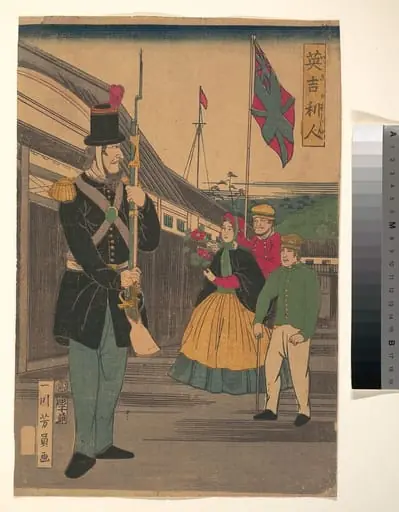 Igirisujin|英吉利人|Englishmen
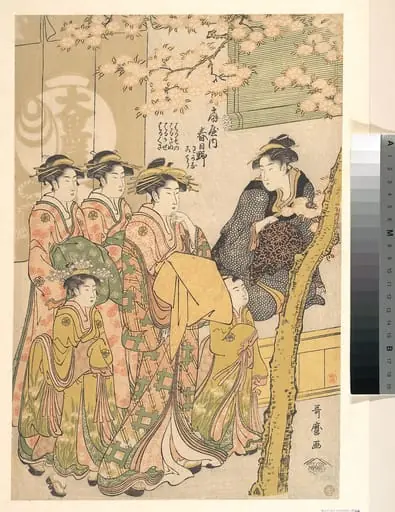 扇屋内春日野|The Oiran Kasugano of Ogiya on Parade under Blossoming Cherry Trees
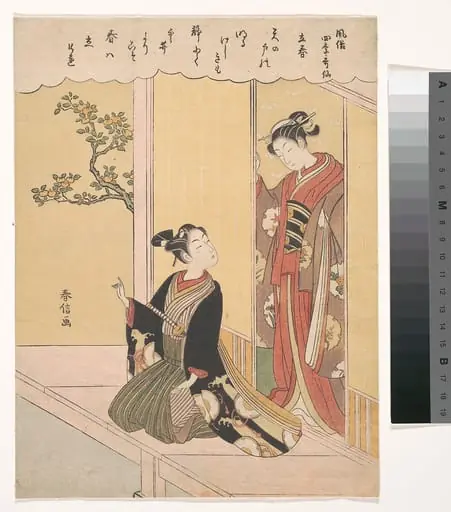 鈴木春信画「風俗四季歌仙 立春」|The First Day of Spring (Risshun), from the series Fashionable Poetic Immortals of the Four Seasons (Fūzoku shiki Kasen)
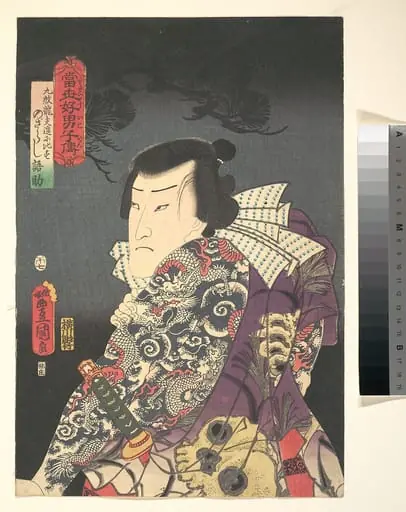 当世好男子伝」松 「九紋竜支進に比すのざらし語助」三代目市川市蔵|The Actor Ichikawa Ichizō III as Nozarashi Gosuke, likened to Shi Jin the Nine Dragoned (Kyūmonryū Shishin ni hisu), from the “Pine” triptych of the series A Modern Water Margin (Tōsei suikoden)
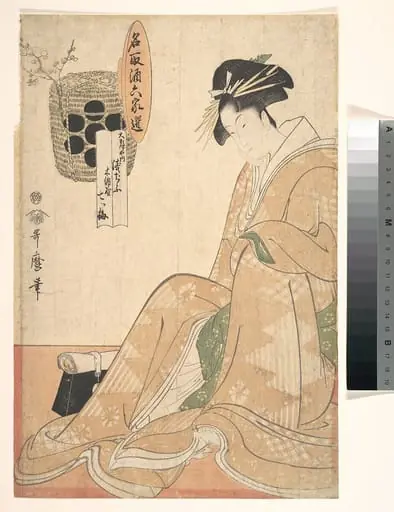 名取酒六家選 大もんぢや内浅じふ 木綿屋七ッ梅|A Courtesan
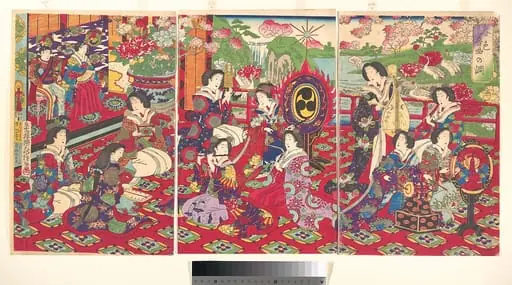 Shunshoku, Onkyoku no Shirabe|Spring Scenery; Melody of a Musical Performance