Artwork
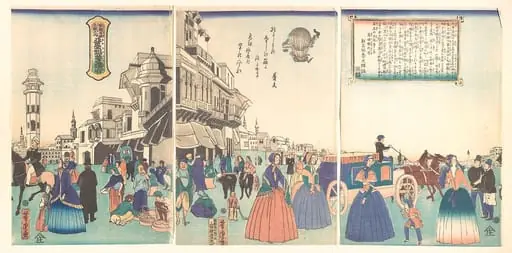
亜米利加国|American Balloon Ascension (Amerikakoku)
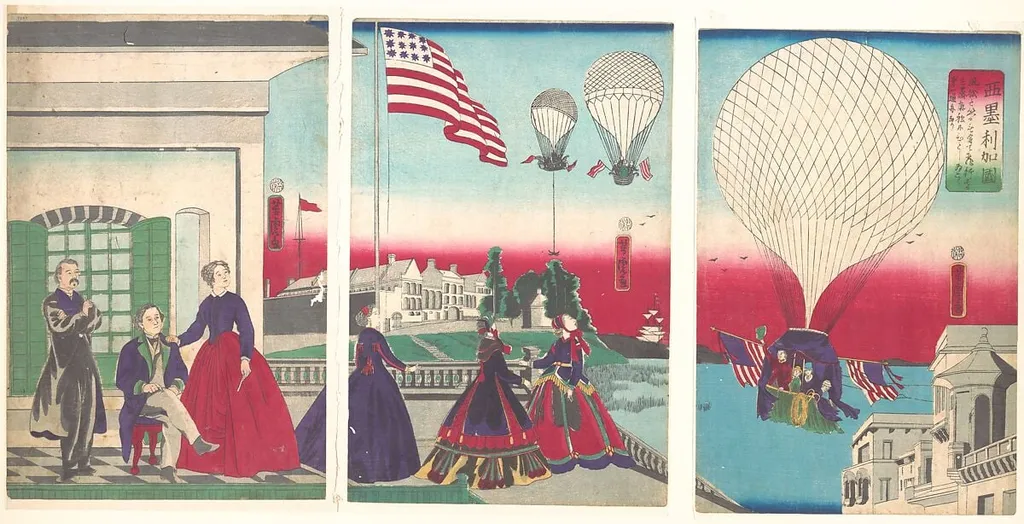
亜米利加国|American Balloon Ascension (Amerikakoku) is an ink print by the Impressionist artist Utagawa Yoshitora. It dates from 1867 and is held in the collection of the Metropolitan Museum of Art.
About this work
Overview
It is part of the collection at The Metropolitan Museum of Art, where it represents mid-19th-century Japanese engagement with foreign innovations.
Created in 1867 by Utagawa Yoshitora, this triptych consists of three woodblock prints on paper, rendered in ink and color. It depicts a sequence of scenes centered on the arrival of a hot air balloon in Japan, a novelty at the time. The work combines domestic interiors with aerial views, reflecting contemporary fascination with Western technology. It is part of the collection at The Metropolitan Museum of Art, where it represents mid-19th-century Japanese engagement with foreign innovations.
Subject & Meaning
The triptych narrates a moment of cultural encounter: the first panel shows observers indoors, reacting to news of the balloon; the following panels depict the balloon aloft, marked by a flag and floating above water. The imagery suggests awe and curiosity toward Western invention, not as a threat but as a spectacle. The inclusion of Japanese figures in traditional dress underscores the contrast between local life and imported technology, framing the balloon as an object of wonder rather than conquest.
Technique & Style
Yoshitora employed traditional ukiyo-e woodblock methods with vibrant mineral pigments—red, blue, and green dominate the palette. Cross-hatching and fine line work define textures in clothing and architecture, while layered printing creates subtle tonal shifts. The composition is divided clearly across three panels, each with distinct spatial focus. Though rooted in Edo-period conventions, the subject matter and dynamic perspective reveal an openness to Western visual influences, particularly in the rendering of aerial space.
History & Provenance
Produced in 1867, the triptych emerged during a period of rapid change in Japan, as the country opened to foreign trade after centuries of isolation. The balloon depicted likely references early Western aerial demonstrations, possibly those seen in Europe or America, which reached Japanese audiences through imported prints and reports. The work was acquired by The Metropolitan Museum of Art in the 20th century, where it remains a rare example of ukiyo-e responding directly to global technological developments.
Context
In 1867, Japan was transitioning from the Tokugawa shogunate to imperial rule, and foreign objects and ideas were entering public consciousness through limited channels. Balloons, recently demonstrated in Europe and the U.S., became symbols of modernity. Yoshitora’s print captures this moment of cultural curiosity, blending traditional print formats with unprecedented subject matter. It reflects how Japanese artists interpreted foreign phenomena through familiar visual languages, without direct observation.
Legacy
This triptych stands as a document of Japan’s early engagement with Western science and spectacle. While not widely reproduced or influential in shaping later art movements, it remains a valuable record of how ordinary citizens might have encountered global innovation. Its preservation in major collections allows continued study of ukiyo-e’s adaptability and the visual culture of Japan’s opening era.
Artist & collection

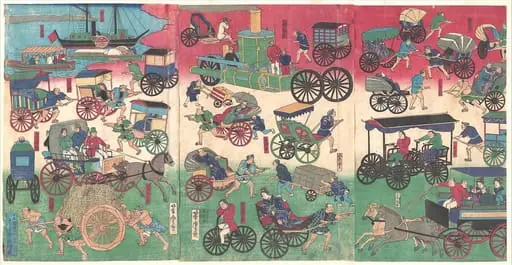 Untitled
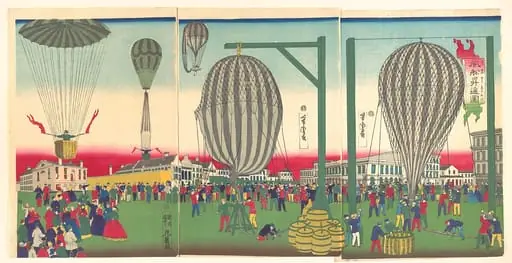 風船昇遥図|Illustration of a Balloon Ascending (Fūsen shōyō no zu)
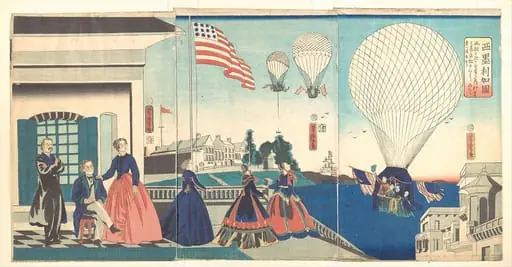 「亜墨利加國」|“America”: Enjoying Hot Air Balloons
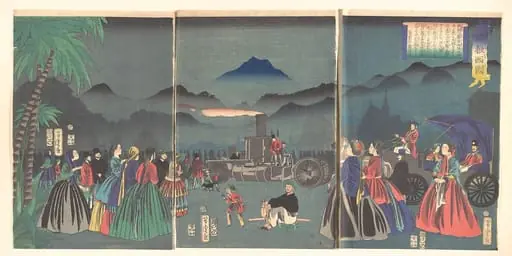 仏蘭西国|France (furansukoku)
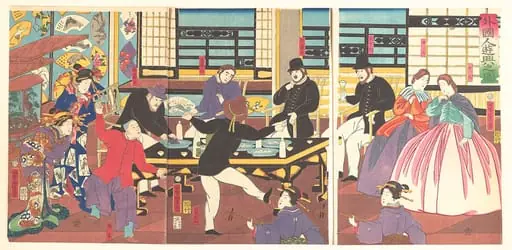 歌川義虎画 『外国人遊興之図』|Foreigners Enjoying a Party (Gaikokujin yūkyō no zu)
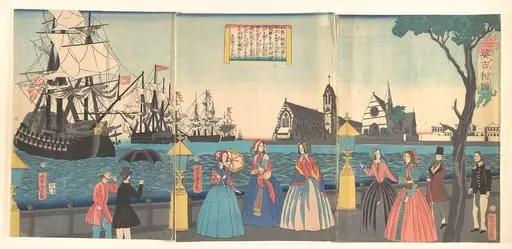 英吉利国|England (Igirisukoku)
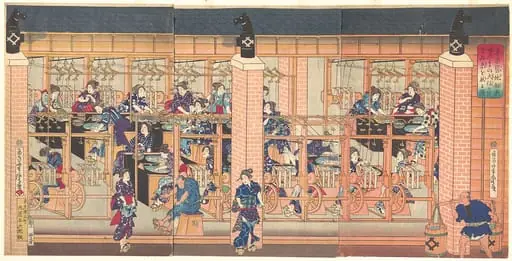 『東京築地舶来ぜんま い大仕かけきぬ糸をとる図』|Imported Silk Reeling Machine at Tsukiji in Tokyo
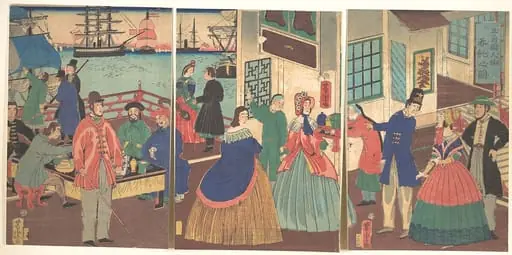 歌川芳虎画 『五箇国人物 呑飥之図』|People of the Five Nations Drinking and Eating (Gokakoku jinbutsu dontaku no zu)
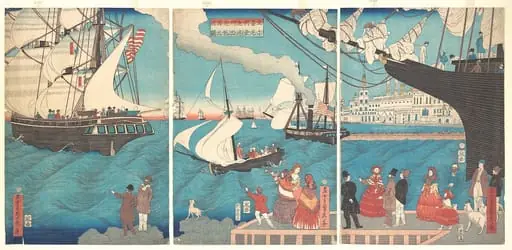 Amerika Karuhorunia Ko shuppan no zu|Sailing from a California Port
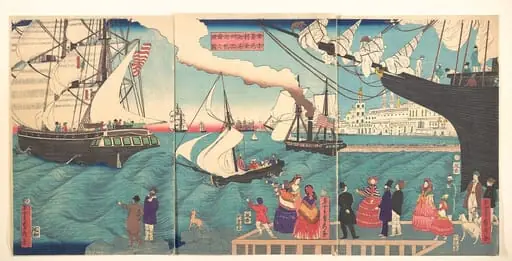 Untitled
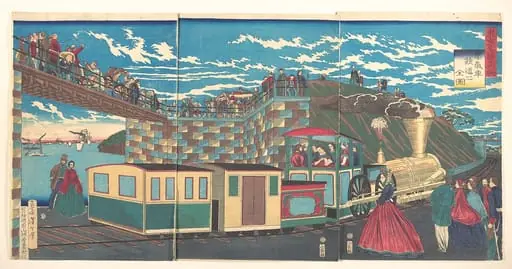 東京名勝高輪 蒸気車鉄道之全図|Illustration of Steam Locomotive Tracks at Takanawa, from the series Famous Places in Tokyo (Tōkyō meishō Takanawa-jōki kikansha no zen zu)
 Amerika Washinton fu|City of Washington in America
 Untitled
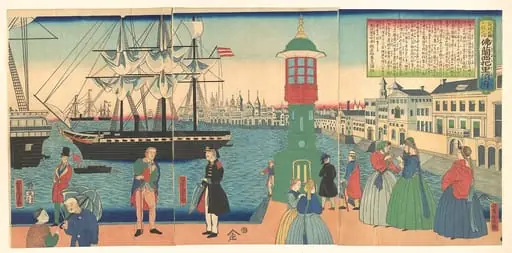 Furansu Paris no fu|Paris, France
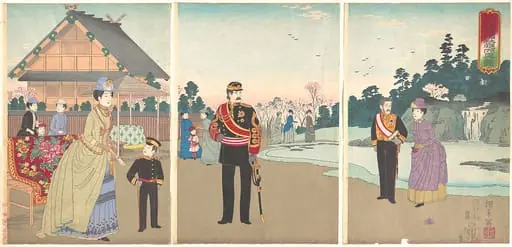 九段坂上靖国神社庭内真図|True View of the Courtyard of Yasukuni Shrine at Kudan Sakaue (Kudan Sakaue Yasukuni jinsha teinai shin zu)
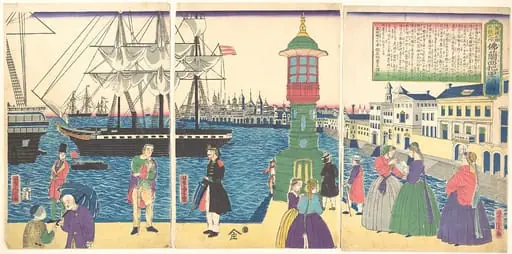
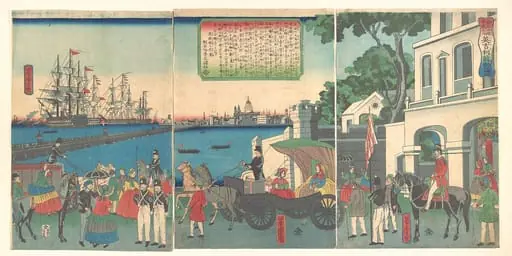 Igirisu Rondon no kaiko|The Port of London England