Artwork
Michiyuki no embō|Evening Glow on a Traveling Drama [Chinese watching a Kabuki play]
![Michiyuki no embō|Evening Glow on a Traveling Drama [Chinese watching a Kabuki play], by Utagawa Yoshitora, ink, 1](https://artifactworldgallery.com/img/utagawa-yoshitora--michiyuki-no-embo-evening-glow-on-a-traveling-drama-chinese--d1f5bd27ea6e846c-w1024.webp)
Michiyuki no embō|Evening Glow on a Traveling Drama [Chinese watching a Kabuki play] is an ink print by the Impressionist artist Utagawa Yoshitora. It dates from 1 and is held in the collection of the Metropolitan Museum of Art.
About this work
Overview
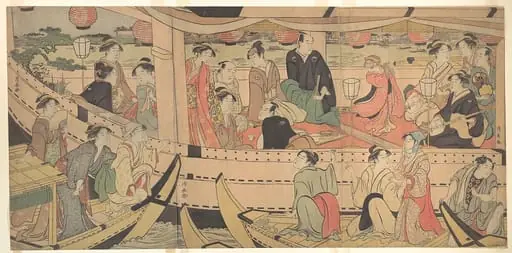
This woodblock print by Utagawa Yoshitora depicts a moment from a Kabuki performance, rendered in ink and color on paper. Created in the mid-19th century, it captures an audience witnessing a dramatic scene on stage. The print is part of the collection at The Metropolitan Museum of Art, where it represents the vibrant tradition of ukiyo-e theater imagery during the Edo period.
Subject & Meaning
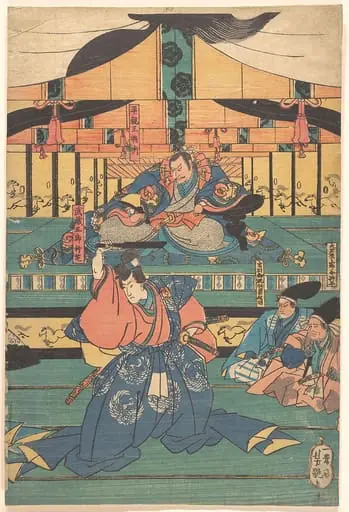
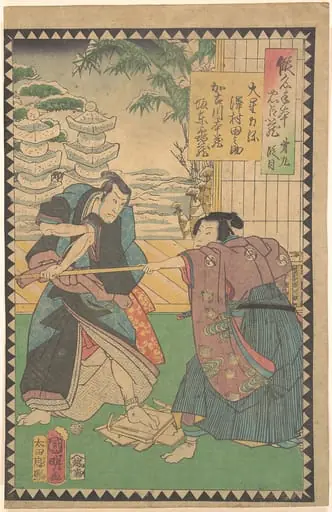
The scene portrays a female character in motion, brandishing a sword on an elevated stage, while a man seated below observes her intently.
The scene portrays a female character in motion, brandishing a sword on an elevated stage, while a man seated below observes her intently. Several audience members in the foreground, dressed in contemporary Edo-period attire, are absorbed in the performance. The inclusion of onlookers underscores the cultural significance of Kabuki as public spectacle, blurring the line between staged drama and real-life observation.
Technique & Style
Yoshitora employs bold outlines and flat areas of color typical of ukiyo-e woodblock printing. The contrast between the dynamic figure of the actress and the stillness of the audience enhances the theatrical tension. Background elements like distant hills and trees are rendered with minimal detail, directing focus to the stage and its spectators, while the use of red and blue accents heightens visual impact.
History & Provenance
The print was produced during a period when Kabuki theater flourished in Edo, and woodblock prints served as popular souvenirs for theatergoers. Though the exact date of creation is uncertain, stylistic elements align with Yoshitora’s output in the 1850s–60s. It entered the Metropolitan Museum of Art’s collection through established acquisition channels, reflecting early 20th-century Western interest in Japanese prints.
Context
Kabuki performances were central to urban entertainment in Edo, often featuring exaggerated gestures and elaborate costumes. Prints like this one functioned both as advertising and as mementos, allowing audiences to relive dramatic moments. The presence of spectators in the composition reflects a broader trend in ukiyo-e to depict theater as a social experience, not merely a visual spectacle.
Legacy
Yoshitora’s work contributes to a broader archive of Edo-period theater imagery that influenced later artists and Western collectors. While not among the most widely reproduced prints of the era, it remains a valuable record of how Kabuki was perceived and consumed by its contemporary audience, preserving the interplay between performance and public engagement.
Artist & collection

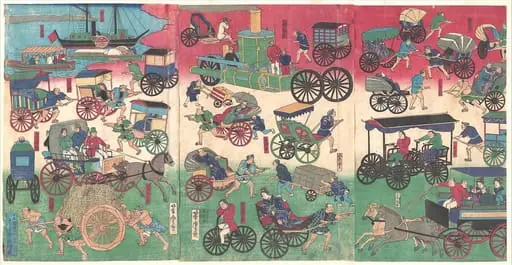 Untitled
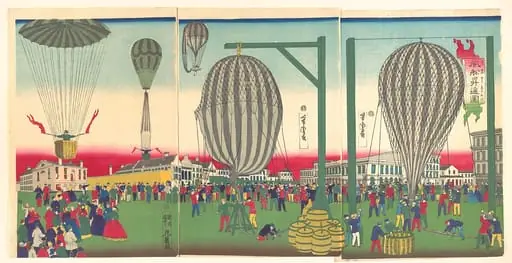 風船昇遥図|Illustration of a Balloon Ascending (Fūsen shōyō no zu)
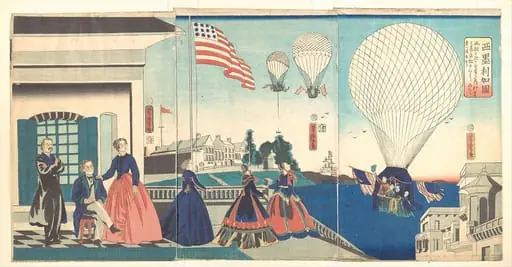 「亜墨利加國」|“America”: Enjoying Hot Air Balloons
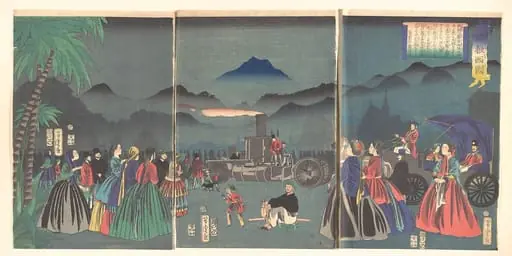 仏蘭西国|France (furansukoku)
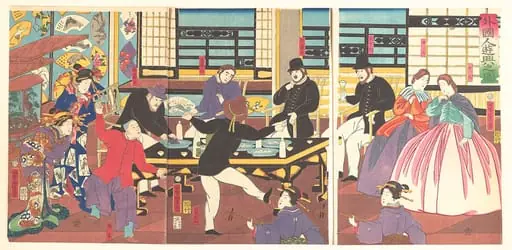 歌川義虎画 『外国人遊興之図』|Foreigners Enjoying a Party (Gaikokujin yūkyō no zu)
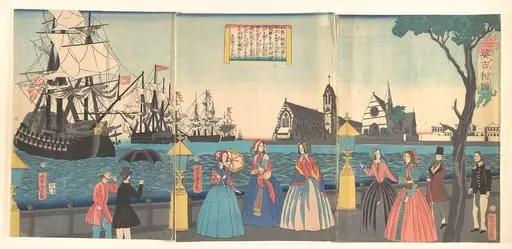 英吉利国|England (Igirisukoku)
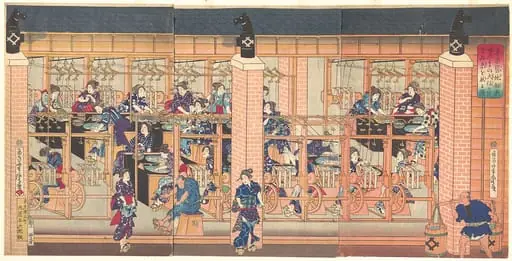 『東京築地舶来ぜんま い大仕かけきぬ糸をとる図』|Imported Silk Reeling Machine at Tsukiji in Tokyo
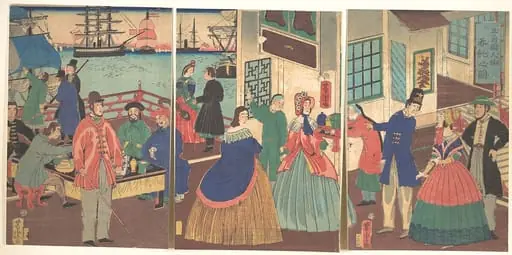 歌川芳虎画 『五箇国人物 呑飥之図』|People of the Five Nations Drinking and Eating (Gokakoku jinbutsu dontaku no zu)