Artwork
Nazareth
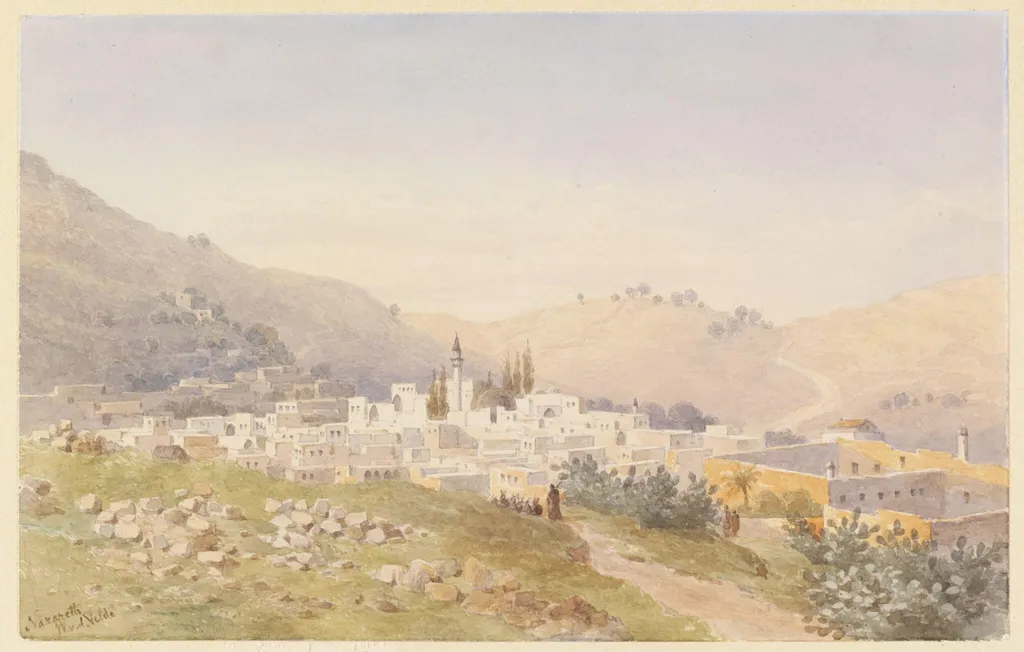
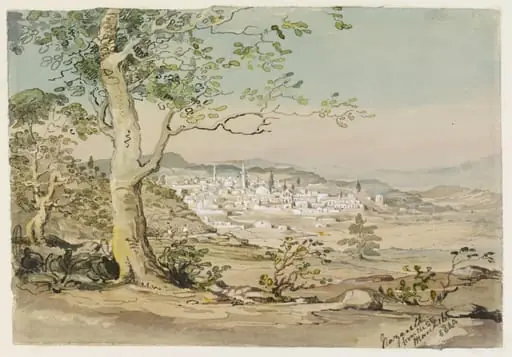
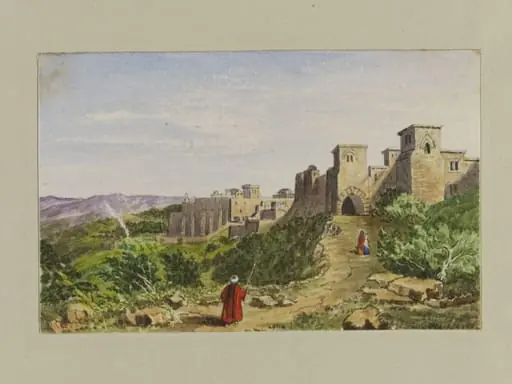
Nazareth is a watercolor work on paper by the British Romanticist artist Charles William Meredith van de Velde. It dates from 1852 and is held in the collection of the Victoria and Albert Museum.
About this work
Overview
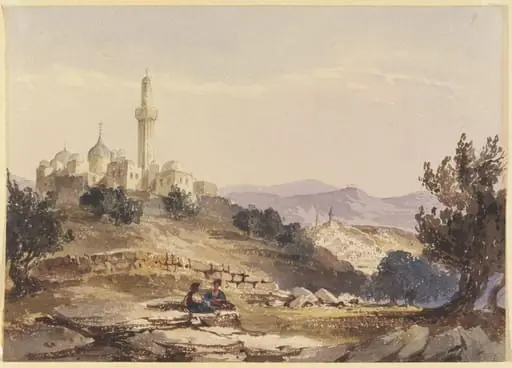
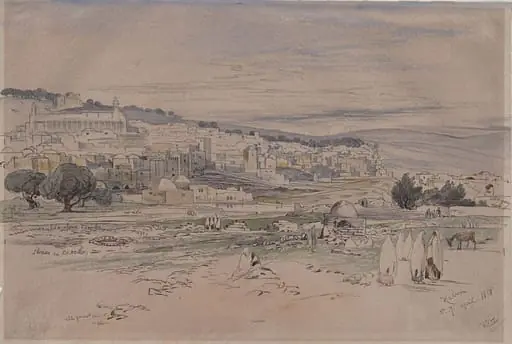
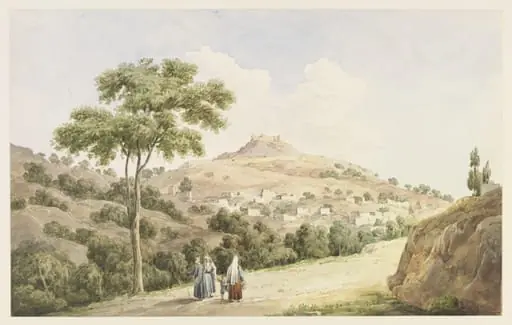
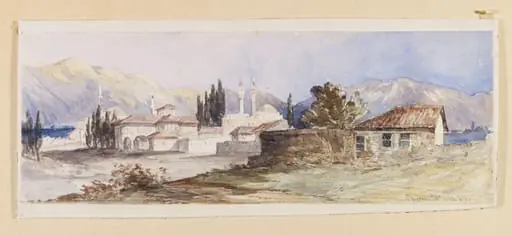
Charles William Meredith van de Velde’s watercolour *Nazareth* (1852) depicts a modest settlement perched amid rolling hills. White, flat‑roofed structures cluster together, while a few trees punctuate the dry landscape. Figures traverse a rocky foreground path, and a small group gathers near an arched doorway, all under a pale sky that merges with distant mountains.
Subject & Meaning
The composition presents a tranquil, everyday scene of a village life, emphasizing the interaction between human activity and the surrounding terrain. The placement of walkers and the gathering near the doorway suggest communal movement and a sense of shared space within a modest architectural setting.
Technique & Style
Van de Velde employs a restrained palette of earth tones, interspersed with subtle hints of green and blue. Light is rendered to model depth, with shadows beneath the buildings and a gentle illumination on the hillsides, creating a realistic sense of atmosphere characteristic of mid‑19th‑century watercolour realism.
History & Provenance
The work entered the public market when it was sold at Sotheby’s on 4 May 1978, fetching £71 according to auction records compiled by Rodney Searight. Its provenance prior to that sale is not documented in the available sources.
Artist & collection
Artist
Charles William Meredith van de Velde
Dutch artist Charles William Meredith van de Velde painted quiet, detailed watercolors of towns and landscapes in the 1800s.