Artwork
Henham Park, Suffolk
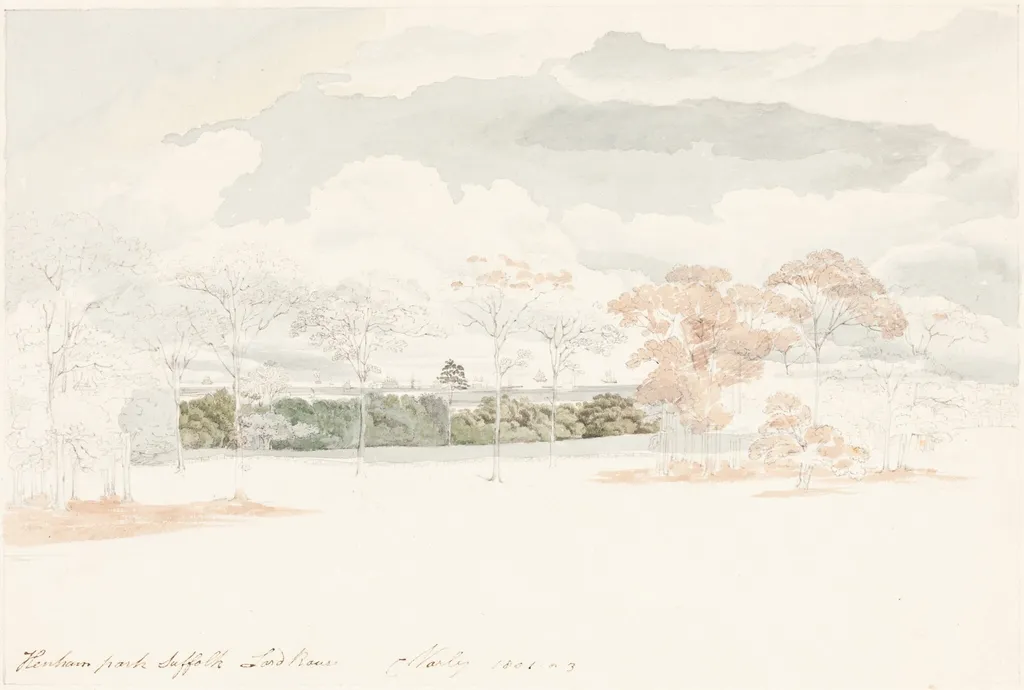
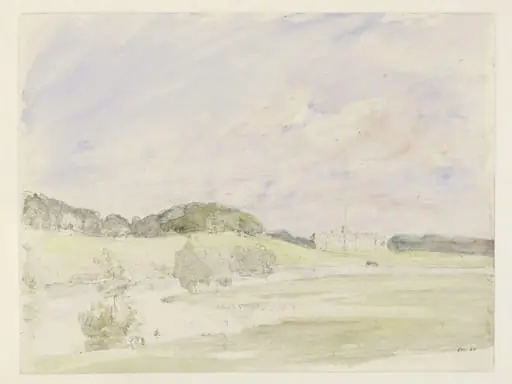
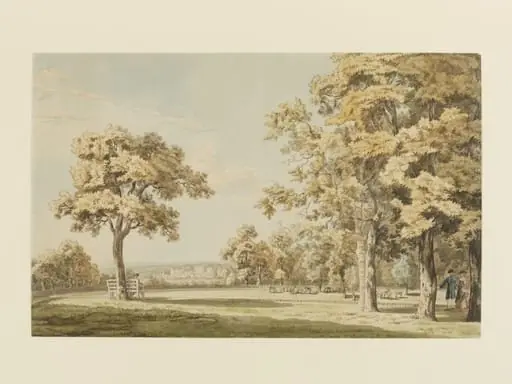
Henham Park, Suffolk is a graphite drawing by the Romanticist artist Cornelius Varley. It dates from 1802 and is held in the collection of the National Gallery of Art.
About this work
Overview
Cornelius Varley created Henham Park, Suffolk in 1802, a drawing that combines graphite and watercolor on wove paper. It is a representative work by the British artist, who was also a printmaker and inventor of optical instruments.
Subject & Meaning
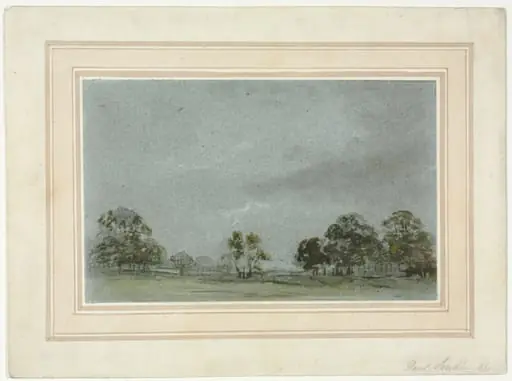
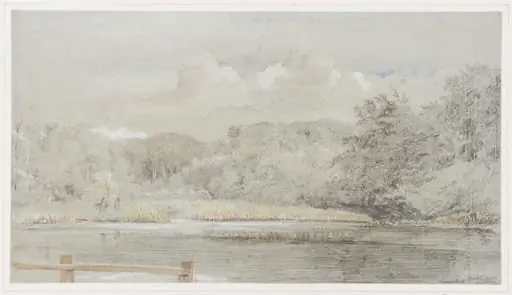
The drawing depicts Henham Park, a rural estate in Suffolk, characterized by a serene landscape with a line of trees, a distant fence, and a cloudy sky. The scene captures the transition of seasons, with some trees bare and others showing early signs of autumn.
Technique & Style
Varley employed light washes of watercolor to convey depth, leaving certain areas sketchy. The use of graphite and watercolor on wove paper allowed for a nuanced representation of the landscape, with subtle variations in tone and texture.
History & Provenance
The drawing is now part of the National Gallery of Art, Washington, collection. It was created during a time when topographical views were in demand among British artists, reflecting the era's interest in detailed documentation of landscapes.
Artist & collection

Artist
Cornelius Varley, FRSA (21 November 1781 – 2 October 1873) was a British painter, mostly in watercolour, printmaker and optical instrument-maker. He invented the graphic telescope and the graphic microscope.

![Chatsworth [recto], by David Cox](https://artifactworldgallery.com/img/david-cox--chatsworth-recto--3f4d97adb21a8333-w320.webp)