Artwork
Ruins of Kerry Castle
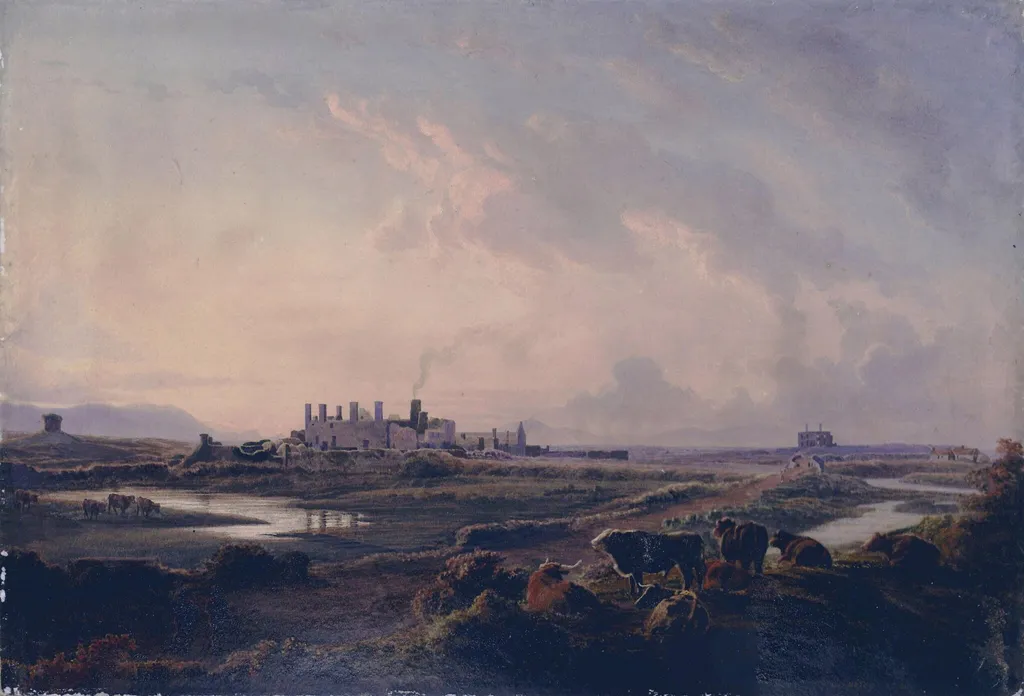
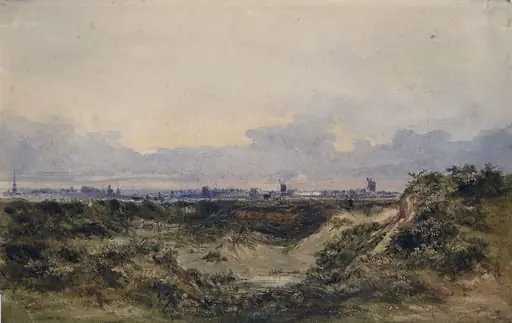
Ruins of Kerry Castle is a watercolor work on paper by the British Romanticist artist Cornelius Varley. It dates from 1808 and is held in the collection of the Victoria and Albert Museum.
About this work
Overview
Rendered in transparent watercolour, it reflects a quiet, contemplative mood, characteristic of early 19th-century British landscape drawing.
Cornelius Varley created this watercolour in 1808, capturing the ruins of Kerry Castle in County Kerry, Ireland. The work is signed and dated by the artist, with the title clearly inscribed. Rendered in transparent watercolour, it reflects a quiet, contemplative mood, characteristic of early 19th-century British landscape drawing. The piece belongs to a broader tradition of topographical watercolours that documented architectural remnants with observational precision.
Subject & Meaning
The painting presents Kerry Castle as a weathered stone structure perched on a gentle hill, overlooking a meandering river. Cows graze in the foreground, suggesting pastoral continuity amid decay. Smoke curling from a tower hints at lingering human presence, while the misty atmosphere evokes transience. The scene invites reflection on time’s erosion of power and habitation, aligning with Romantic sensibilities that found emotional resonance in ruins.
Technique & Style
Varley employed delicate washes and subtle gradations to convey atmospheric depth. The soft blending of light and shadow across the sky and hills creates a hazy, ethereal quality. Fine linework defines the castle’s crumbling stonework without harshness, while the grazing cattle are rendered with loose, suggestive strokes. The watercolour medium allowed for luminous transparency, enhancing the sense of ambient moisture and diffuse daylight.
History & Provenance
The work was completed during Varley’s travels in Ireland, part of his broader practice of documenting architectural sites. It entered the Victoria and Albert Museum’s collection as part of a significant group of 19th-century British watercolours. Its preservation reflects institutional interest in topographical art as both record and aesthetic expression, though specific ownership details prior to museum acquisition remain undocumented.
Context
Produced during the height of Romanticism, the painting aligns with contemporary interests in nature, melancholy, and the sublime. While not overtly dramatic, its quiet ruin and mist-laden sky echo the era’s preference for subdued emotional tone over grandeur. Varley’s approach—precise yet lyrical—mirrors the work of contemporaries like J.M.W. Turner and Thomas Girtin, who similarly used watercolour to explore mood and place.
Legacy
Varley’s watercolour contributes to the historical record of Irish architecture and the evolution of British landscape watercolour. Though not widely exhibited today, it remains a representative example of how artists of the period engaged with ruins—not as mere subjects, but as vessels of memory and quiet contemplation. Its presence in the V&A underscores its role in the institutional canon of 19th-century British art.
Artist & collection

Artist
Cornelius Varley, FRSA (21 November 1781 – 2 October 1873) was a British painter, mostly in watercolour, printmaker and optical instrument-maker. He invented the graphic telescope and the graphic microscope.

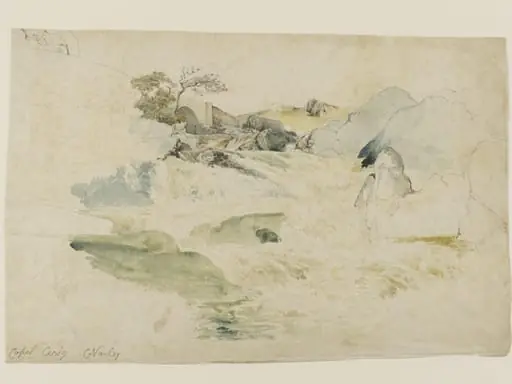
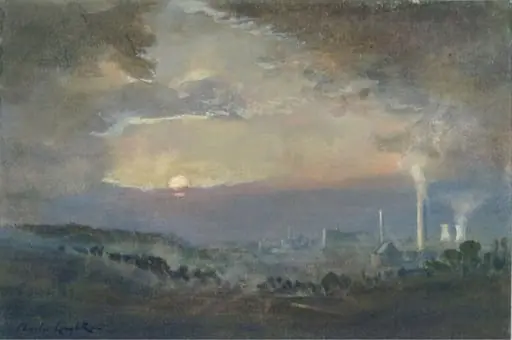 Sunset and Industry
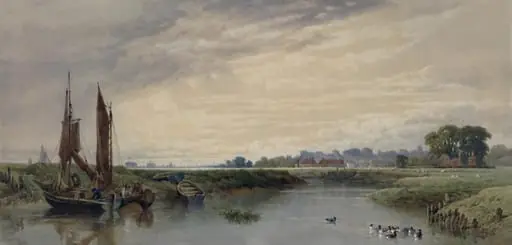 Gillingham on the Medway, Kent
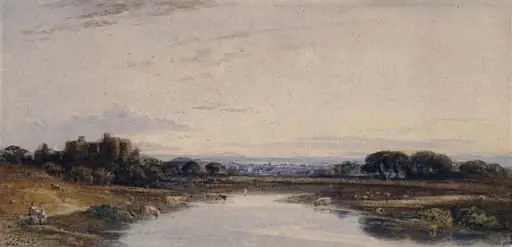 Landscape
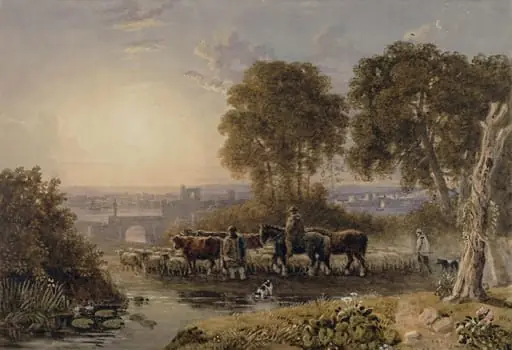 Landscape with Drovers
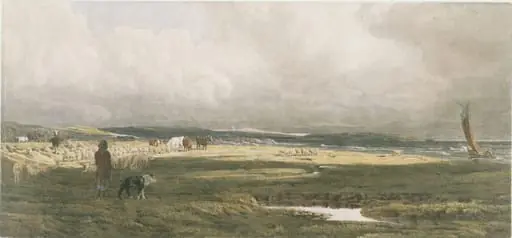 View from Salt Marsh near Shinhampton, Gloucestershire
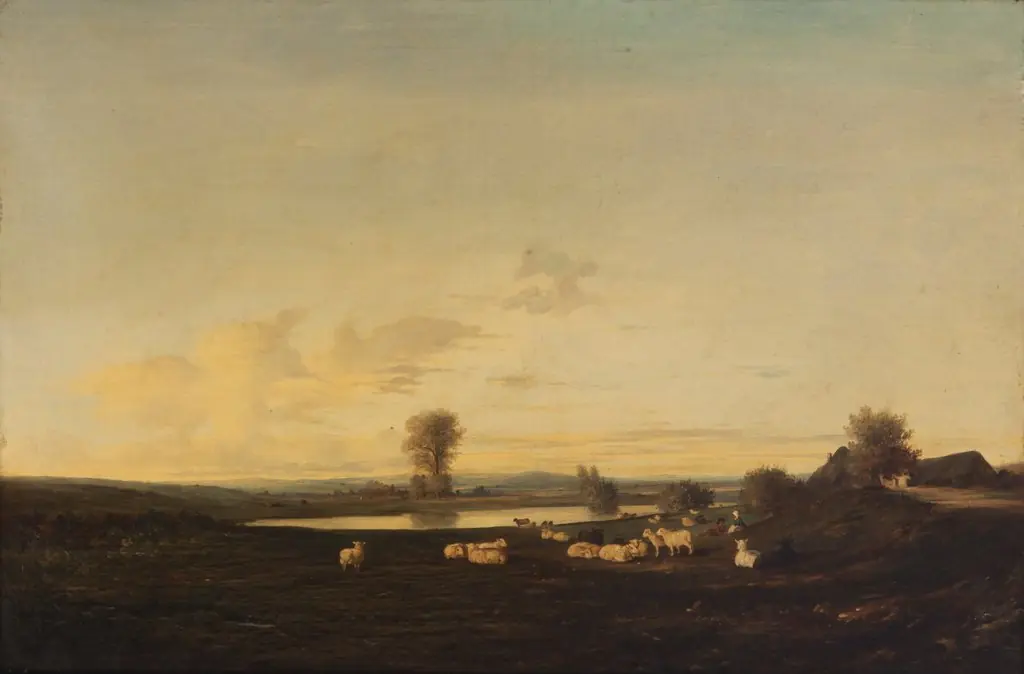 Landscape with people and animals
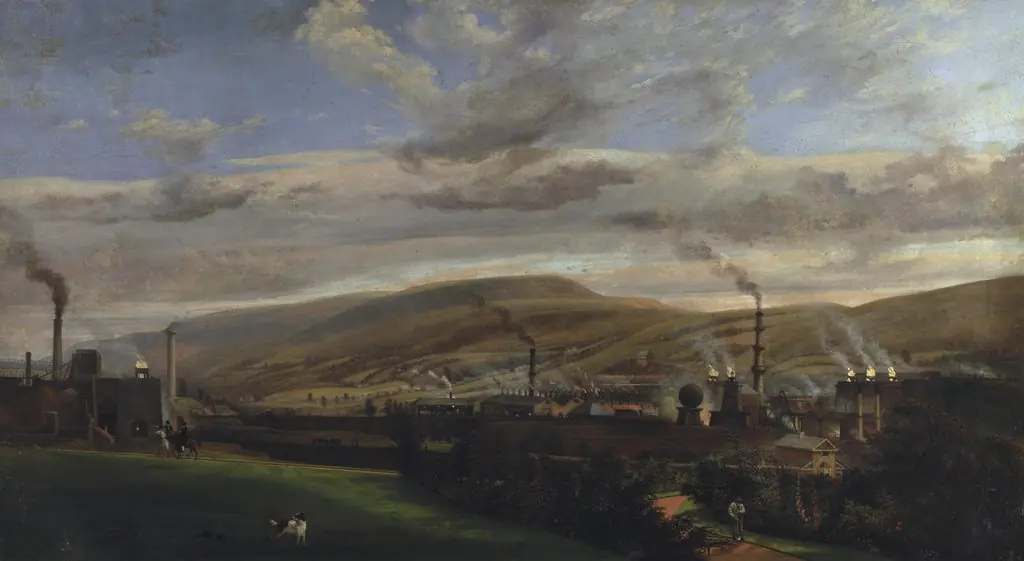 South Wales industrial landscape
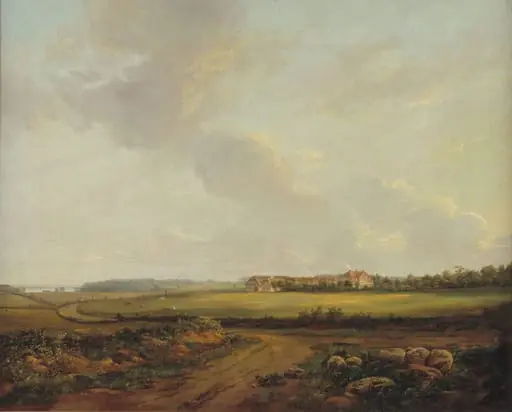 View of Engelholm at Præstø in Zealand
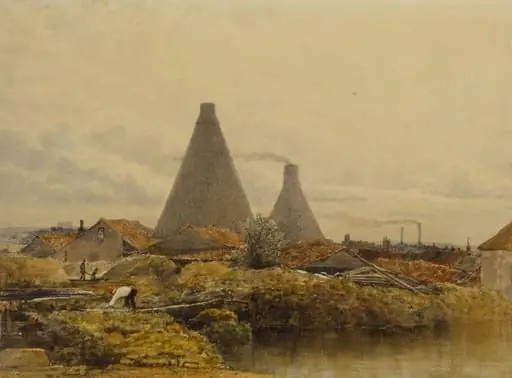 Tile Kilns
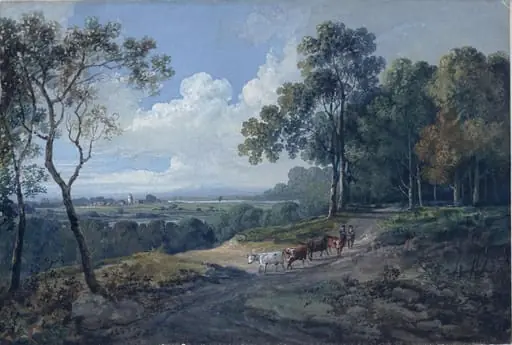 Landscape with cattle
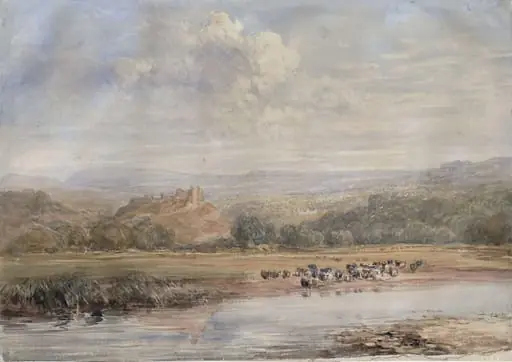 Dryslyn Castle, in the Vale of Towy, South Wales
 Heath Scene