Artwork
Evening on a Lake. A Pavilion on the Marble Embankment in Rajnagar (Udaipur principality)
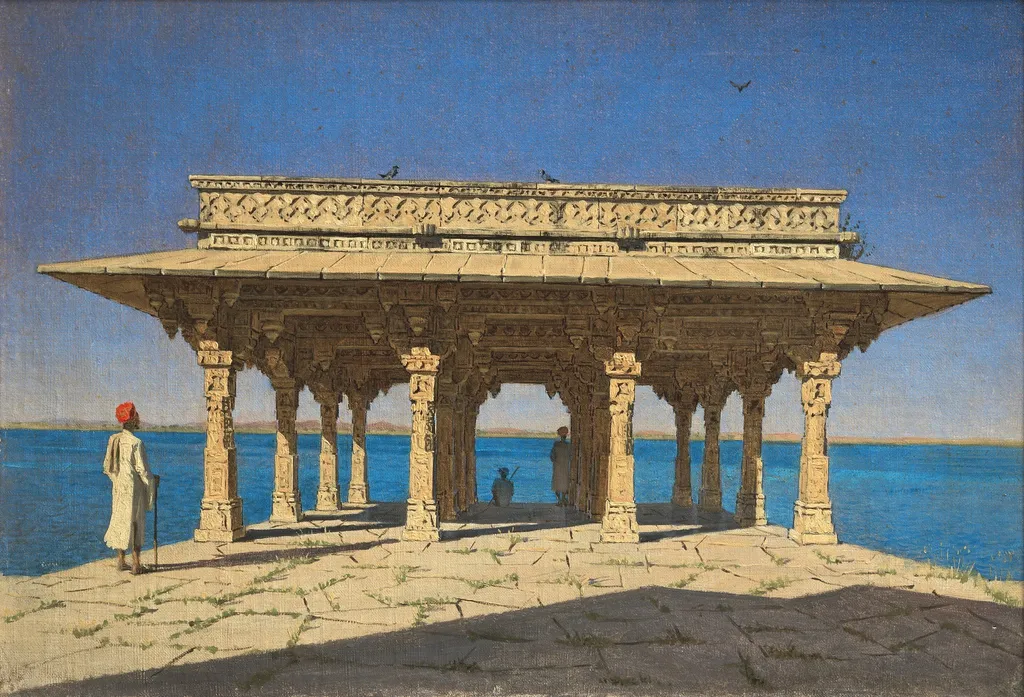
Evening on a Lake. A Pavilion on the Marble Embankment in Rajnagar (Udaipur principality) is an oil painting by the Realist artist Vasily Vereshchagin. It dates from 1874 and is held in the collection of the Tretyakov Gallery.
About this work
Overview
Painted in 1874 by Russian artist Vasily Vereshchagin, this oil-on-canvas work captures a tranquil lakeside pavilion in Rajnagar, part of the Udaipur principality. Executed during one of his travels through India, the piece reflects his interest in documenting architectural and cultural scenes beyond the battlefields for which he was better known. It resides today in the Tretyakov Gallery in Moscow.
Subject & Meaning
The scene depicts a marble pavilion rising from the edge of a still lake, surrounded by figures in light garments and red headwear, seemingly at rest.
The scene depicts a marble pavilion rising from the edge of a still lake, surrounded by figures in light garments and red headwear, seemingly at rest. The quiet atmosphere suggests a moment of leisure or ritual, not grand ceremony. Vereshchagin avoids romanticization, presenting the architecture and its human context with observational neutrality, emphasizing harmony between structure and environment rather than narrative drama.
Technique & Style
Vereshchagin employs precise brushwork to render the texture of carved stone, the sheen of water, and the folds of fabric with quiet accuracy. The composition balances architectural symmetry with natural elements—birds in flight, ripples on the lake—while the clear, even light of late afternoon enhances spatial depth. His approach aligns with realism: no idealization, just careful observation of form, light, and detail.
History & Provenance
Created during Vereshchagin’s 1873–1874 journey through India, the painting was among several works he produced after visiting princely states like Udaipur. It entered the Tretyakov Gallery’s collection shortly after its completion, likely acquired through the patronage of Pavel Tretyakov, who systematically gathered works reflecting Russian and foreign realist traditions. The painting has remained in the gallery’s holdings since.
Context
Vereshchagin traveled extensively across Asia and the Middle East, often accompanying military expeditions but also documenting civilian life. This painting emerged during a period when European artists increasingly turned to non-Western locales for subject matter. Unlike Orientalist fantasies, his approach was grounded in direct observation, influenced by his scientific curiosity and commitment to visual truth over exoticism.
Legacy
Though less known than his war scenes, this work exemplifies Vereshchagin’s broader artistic project: recording the world with documentary precision. It contributes to a late 19th-century shift in Russian art toward global engagement, offering a restrained, non-sensational view of Indian architecture and daily life. The painting remains a quiet testament to his belief in art as a witness, not a spectacle.
Own this work as a print
Artist & collection
Artist
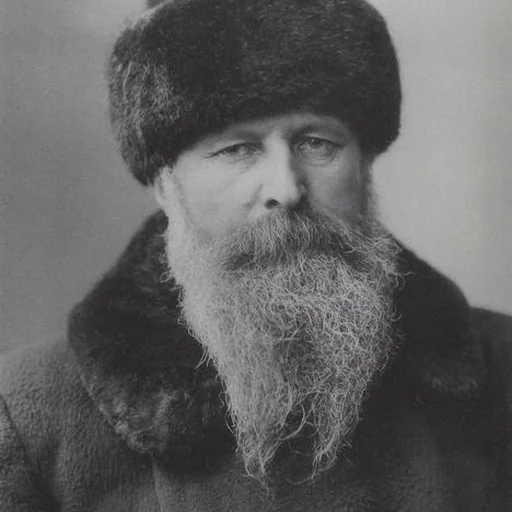
Vasily Vasilyevich Vereshchagin (Russian: Васи́лий Васи́льевич Вереща́гин; 26 October 1842 – 13 April 1904) was a Russian painter, war artist, and traveller.

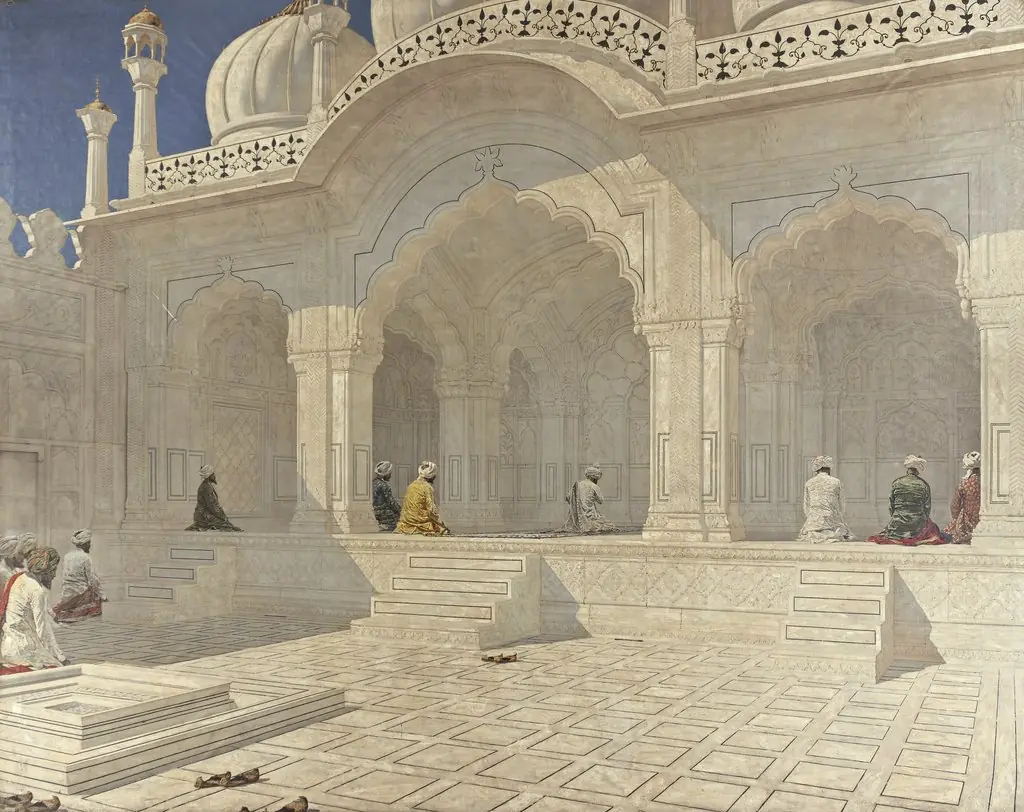 Pearl Mosque, Delhi
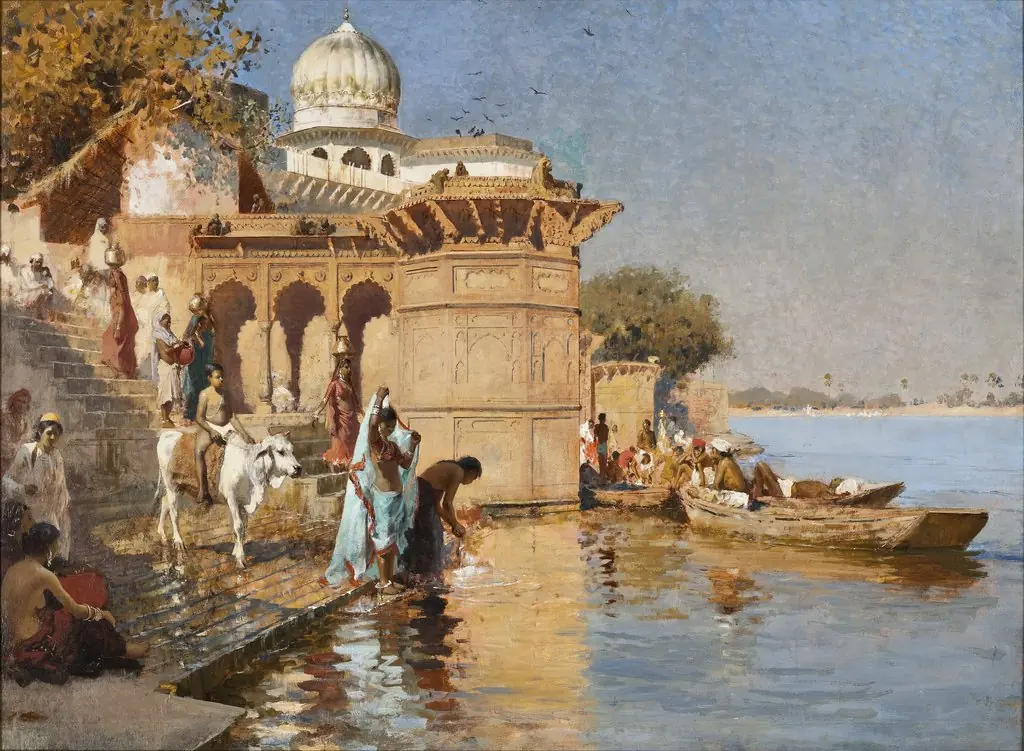 Along the Ghats, Mathura
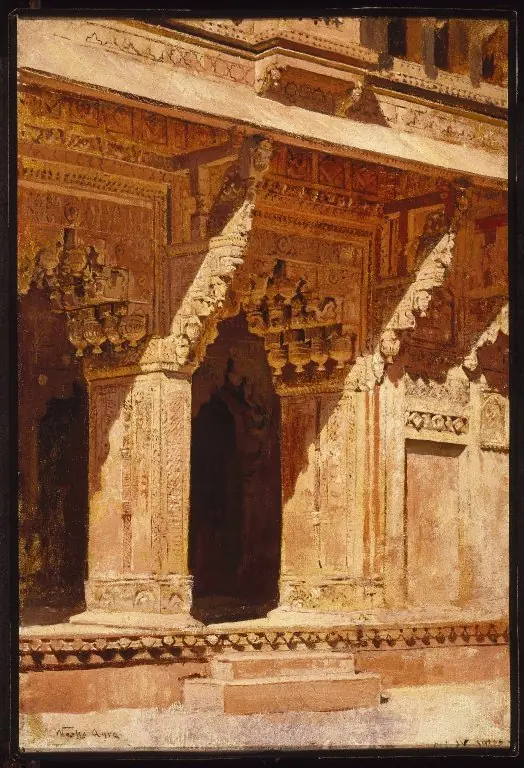 Curiously Wrought Red Sandstone Arches, Fort Agra, India
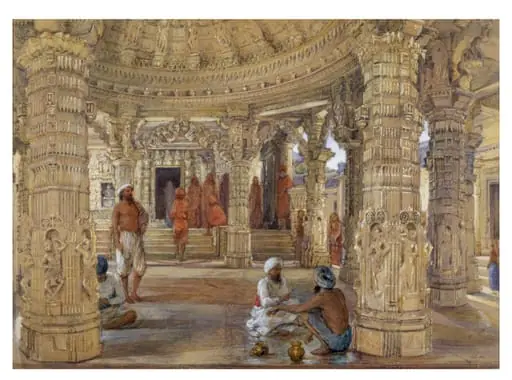 Interior of the domed entrance to the Neminath temple, Dilwara, Mount Abu
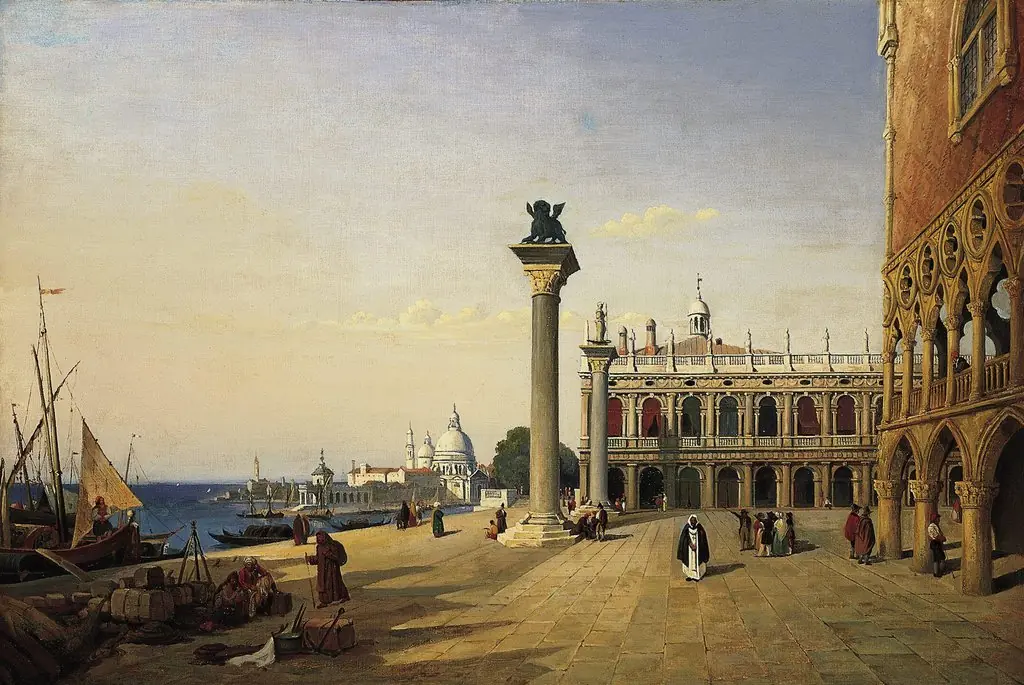 Venise, La Piazetta
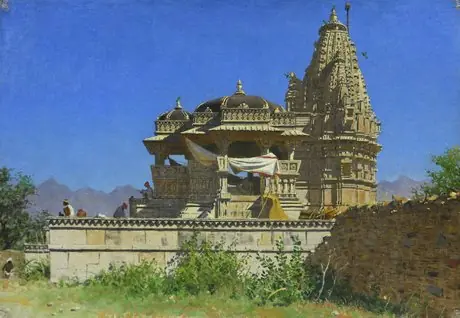 Brahmi temple in Udaipur
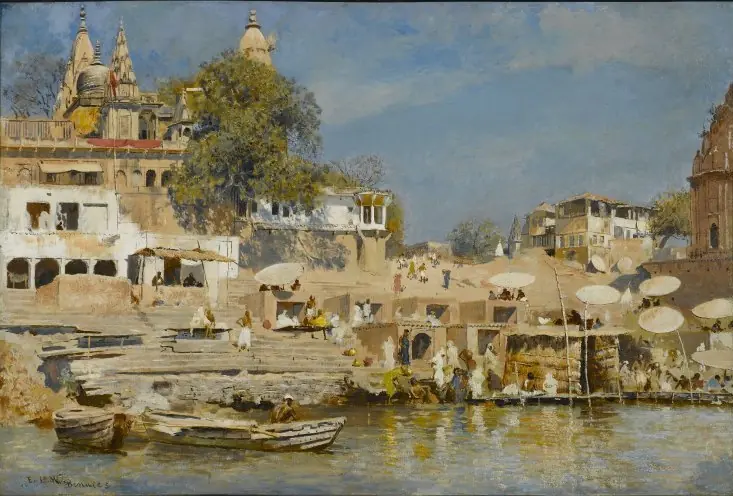 Temples and Bathing Ghat at Benares
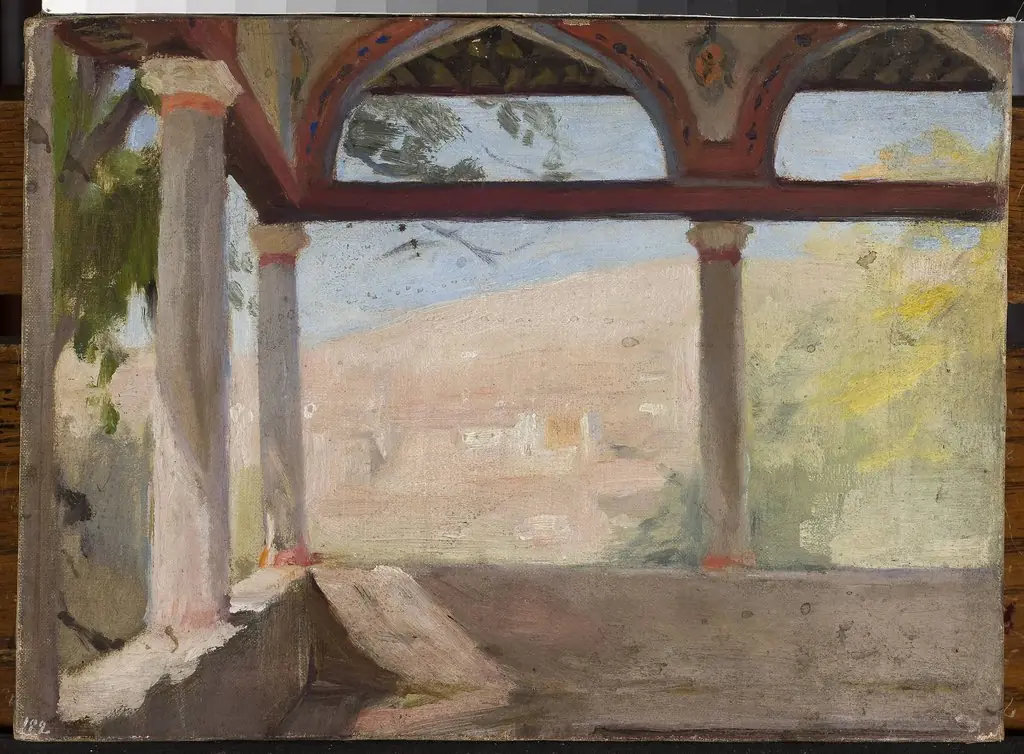 Summer house of Maria Potocka in Bakhchisaray. From the journey to Crimea
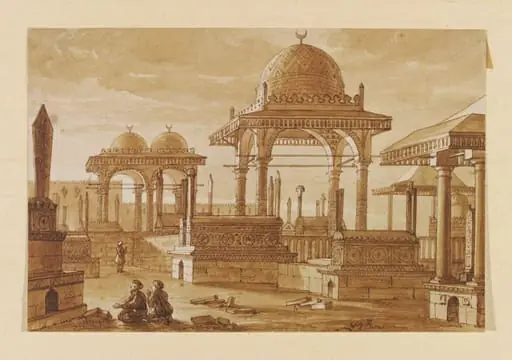 Part of the City of Tombs at Cairo
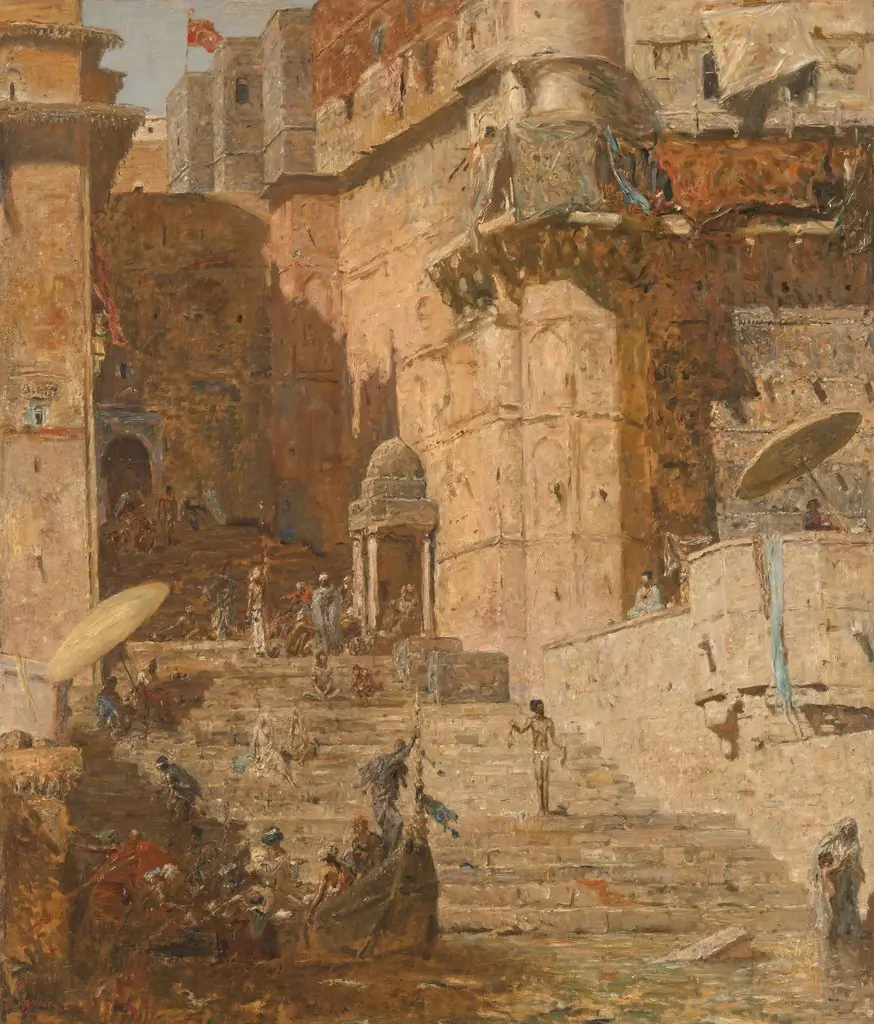 Benares, 1913
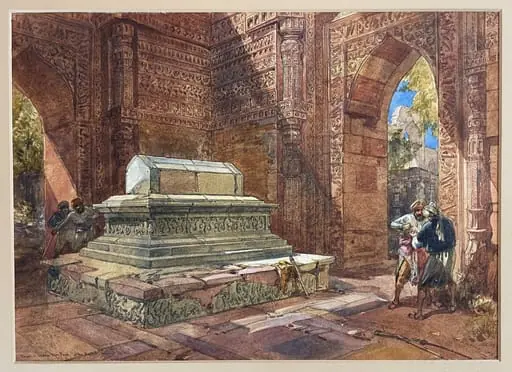 Tomb of Shams ud-Din Iltutmish at the Qutub Minar, Delhi
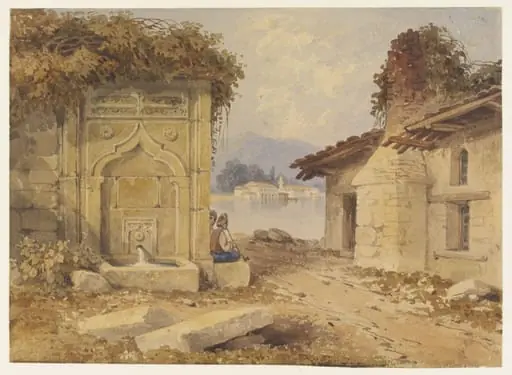 View of Büyükdere and the Bosphorus