Artwork
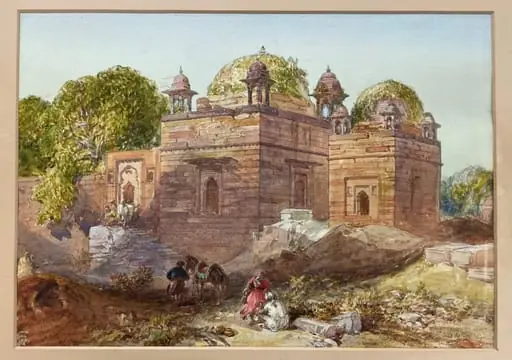
Tomb of Shams ud-Din Iltutmish at the Qutub Minar, Delhi
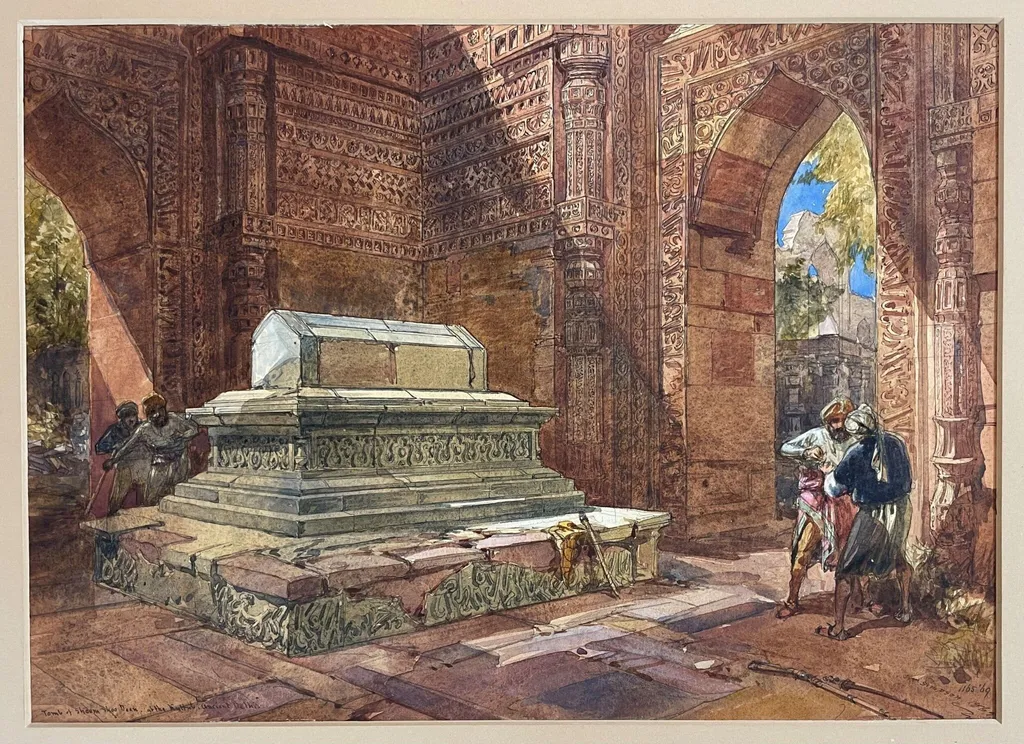
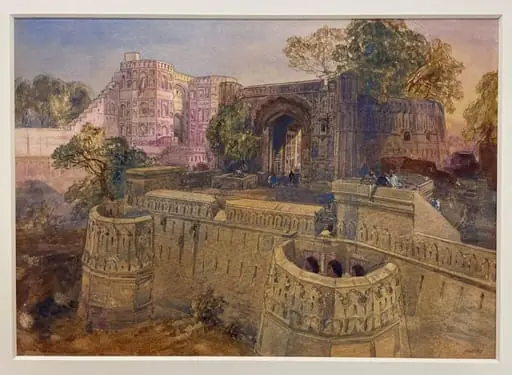
Tomb of Shams ud-Din Iltutmish at the Qutub Minar, Delhi is a paint painting by the Impressionist artist William Simpson. It dates from 1865 and is held in the collection of the Victoria and Albert Museum. This watercolour depicts the tomb of Shams ud‑Din Iltutmish within the Qutub Minar complex in Delhi.
About this work
The painting shows the Tomb of Shams ud-Din Iltutmish at the Qutub Minar, Delhi.
It was created after the artist's return to London.
The artist's journey to India was a significant factor in this work, as he was commissioned to sketch sites associated with the Revolt of 1857.
You can learn more about the style of this painting by looking into Impressionism.
Overview
This watercolour depicts the tomb of Shams ud‑Din Iltutmish within the Qutub Minar complex in Delhi. Executed in London after the artist’s return from India, the work presents the monument’s architectural form against a luminous sky, rendered in the delicate washes characteristic of mid‑nineteenth‑century British watercolour.
Subject & Meaning
The tomb commemorates Shams ud‑Din Iltutmish, the founder of the Delhi Sultanate in the early thirteenth century. By portraying this historic structure, the painting links the medieval past of Delhi with the contemporary interest of a Victorian audience in India’s architectural heritage.
Technique & Style
The artist employed rapid pencil sketches made on site as the basis for the final composition, translating them into a fully realised watercolour after returning to England. The piece combines precise architectural detailing with atmospheric colour washes, reflecting a Romantic sensibility rather than the looser brushwork of later Impressionism.
History & Provenance
Commissioned by the London lithography firm Day and Sons, the artist travelled to India in 1859 to document sites associated with the 1857 Indian Rebellion. After completing field studies in Delhi, he finished the watercolour in 1862, after which it entered the firm’s portfolio for publication and sale.
Context
The work belongs to a broader series of sketches and paintings produced by the artist during his Indian tour, intended to satisfy British curiosity about the subcontinent following the upheaval of 1857. The Qutub Minar complex, a UNESCO World Heritage site, was a focal point for such visual records.
Artist & collection

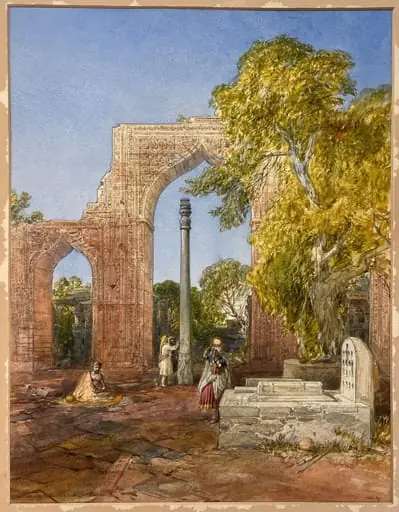 Iron Laht at the Kootub, Old Delhi
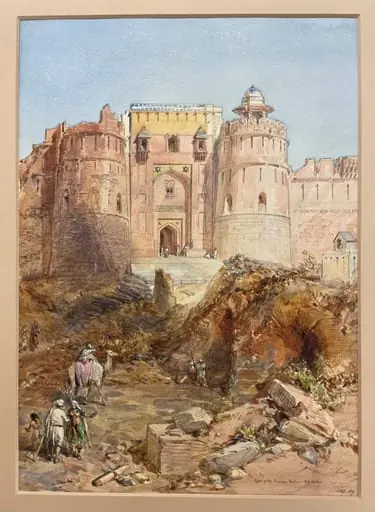 Gate of Purana Qila, Old Delhi
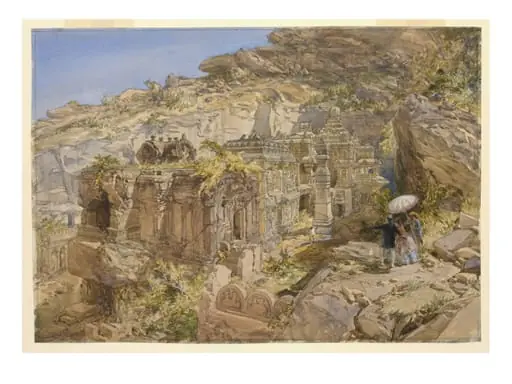 Kailasanatha temple, Ellora
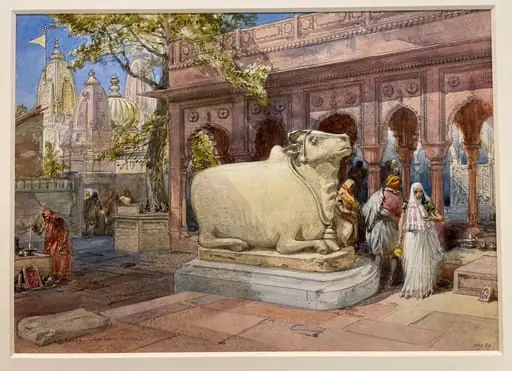 The Bull Nandi in the courtyard of the Golden Temple, Benares
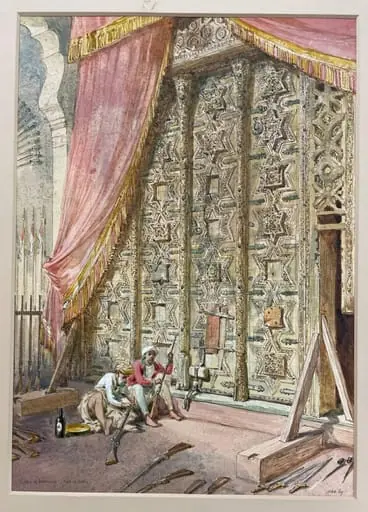 The Somnath gates, Fort Agra
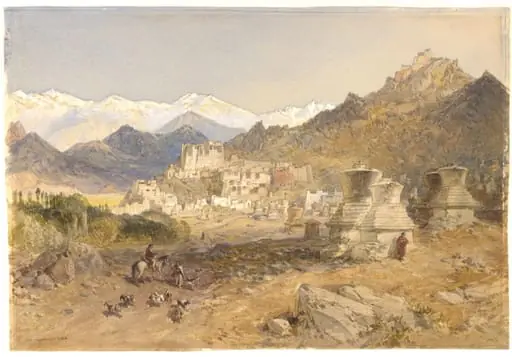 The Palace at Leh with stupas in the foreground
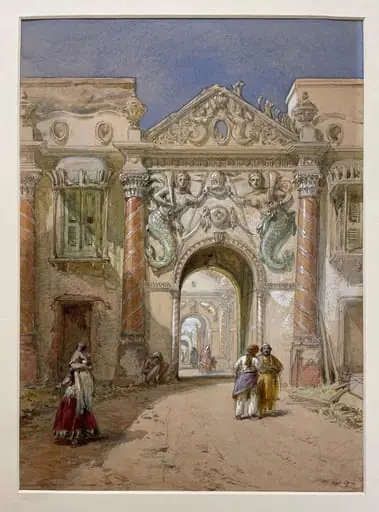 Mermaid gate, Kaiserbagh, Lucknow
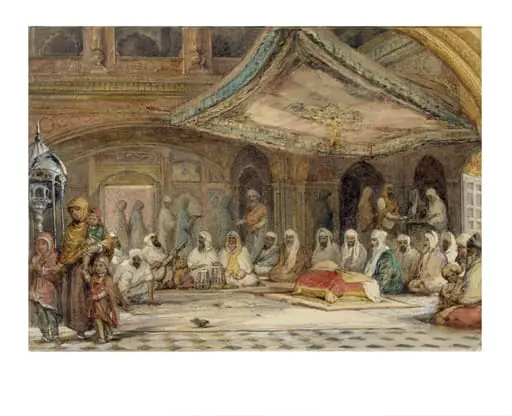 Interior of the Golden Temple, Amritsar
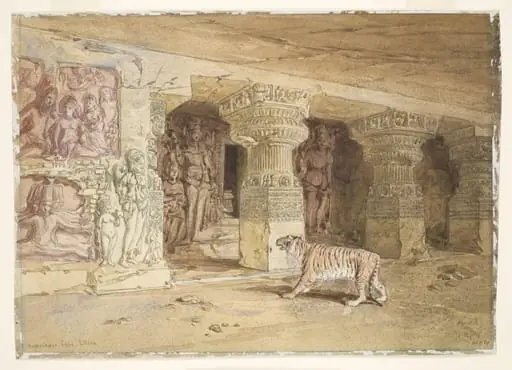 Rameshwar cave, Ellora
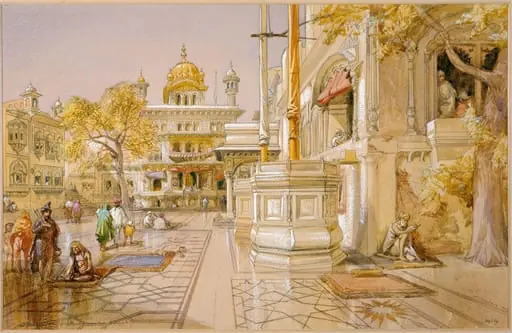 Akal Boonga at the Golden temple. Umritsar. Punjaub
 Taxali Darwaza, Lahore