Artwork
Ecce Homo
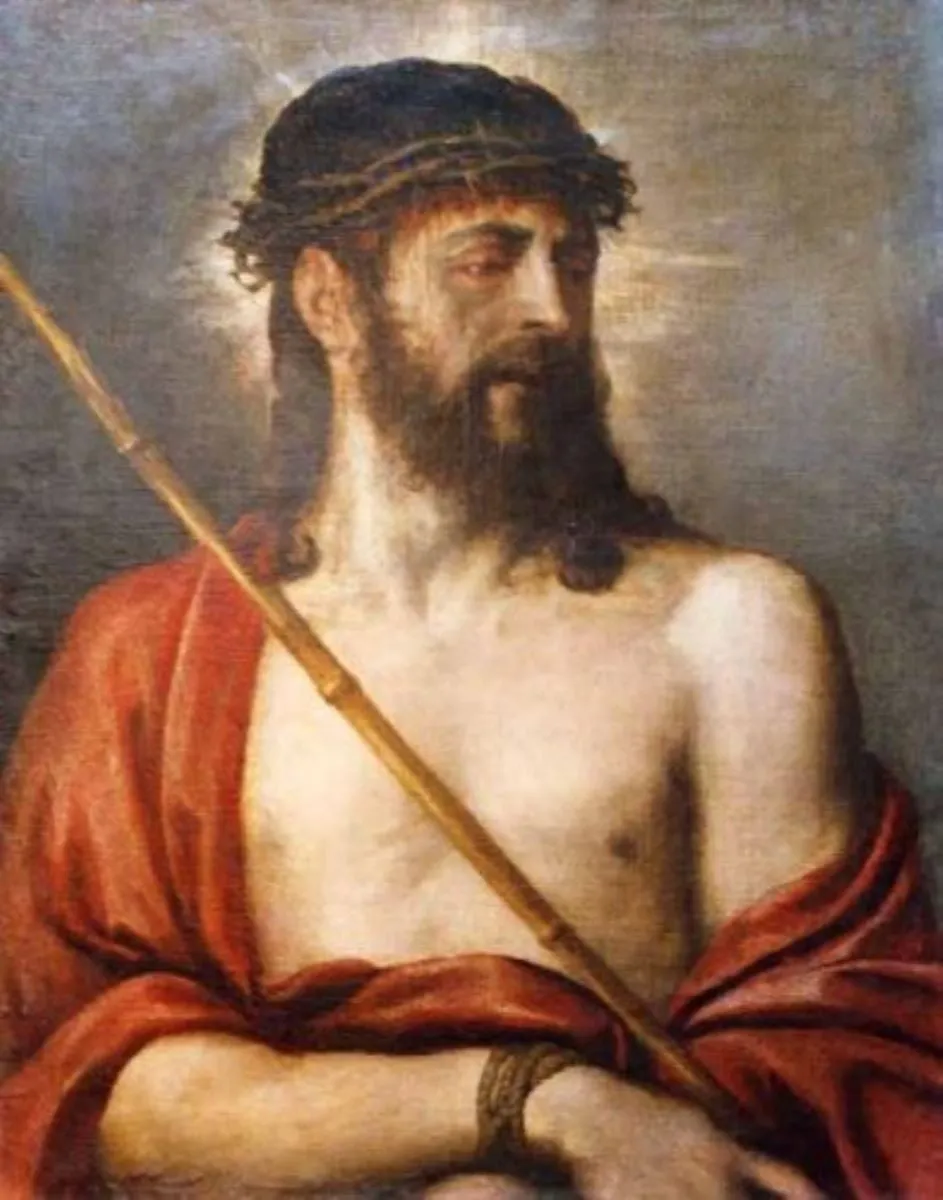
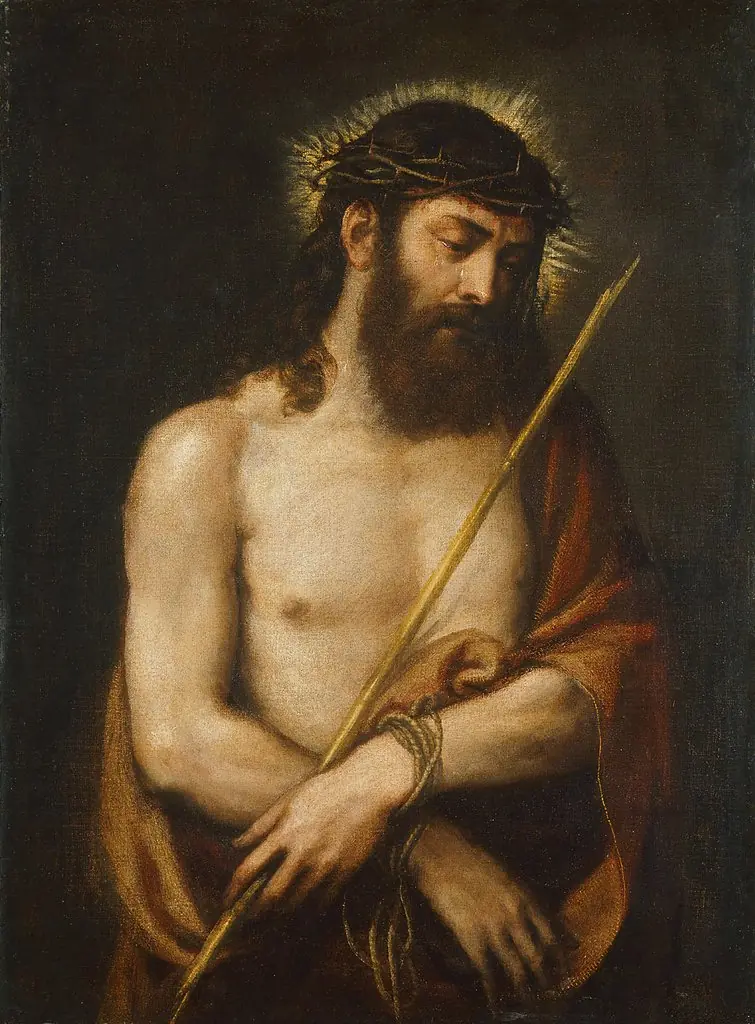
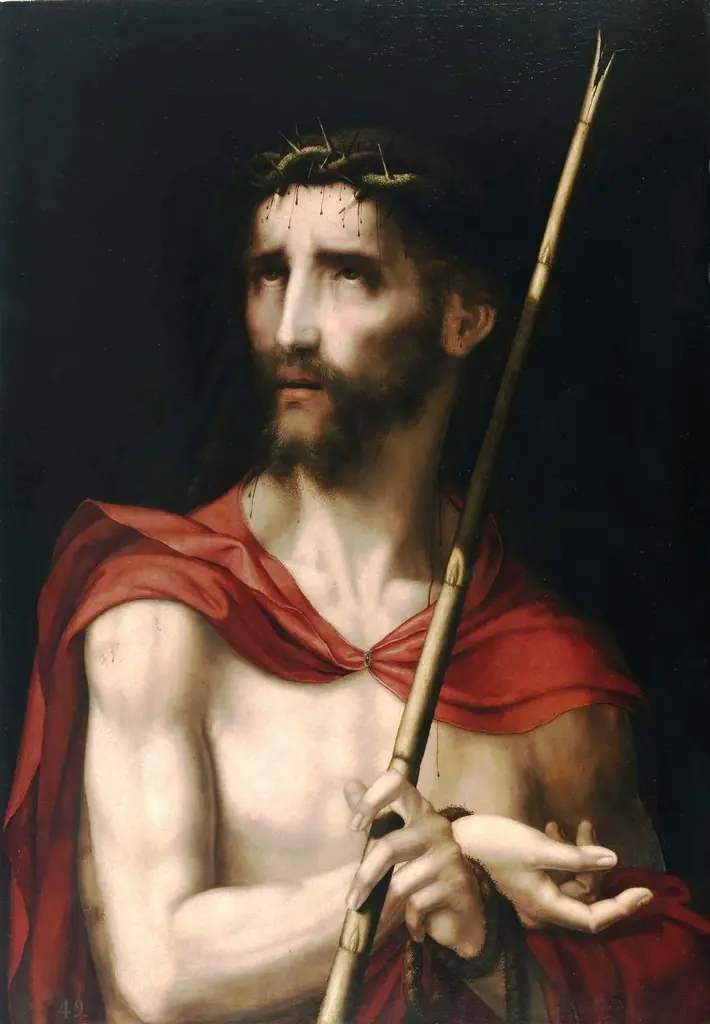
Ecce Homo is an unspecified painting by the High Renaissance artist Tiziano, zis da Cadore Vecellio. It dates from 1550 and is held in the collection of the Brukenthal National Museum.
About this work
Overview
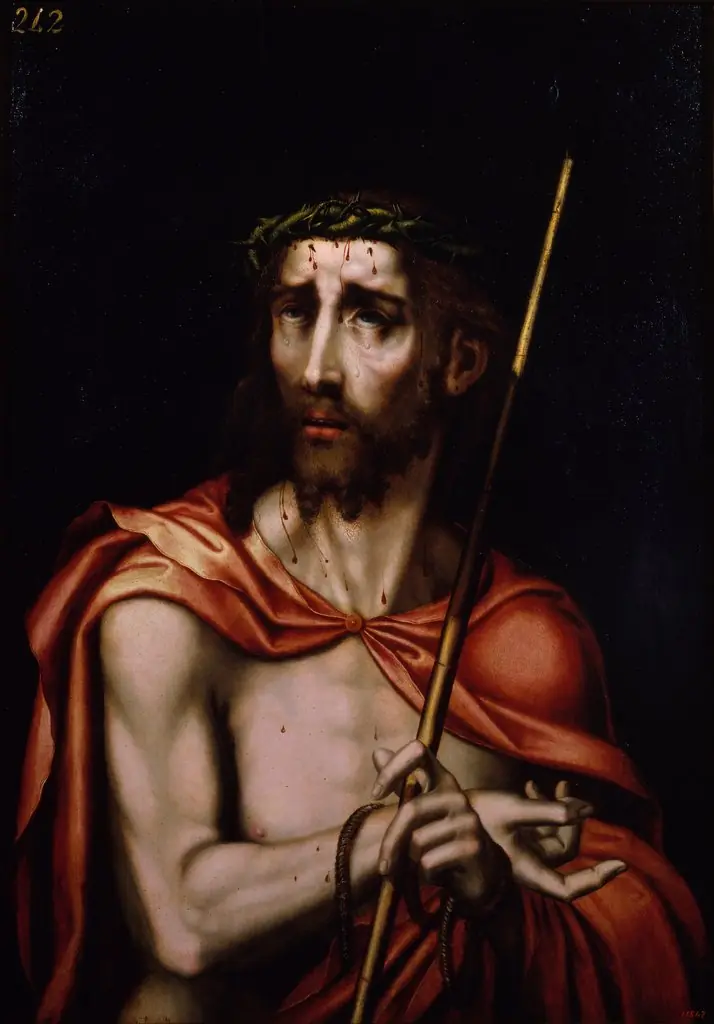
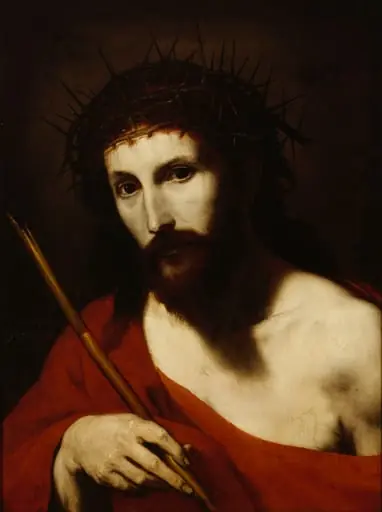
Titian’s mid‑sixteenth‑century painting titled Ecce Homo presents a solitary figure rendered against a deep, indistinct backdrop. The composition centers on a bearded man whose expression and accoutrements identify him as a biblical character, while the stark contrast of light and shadow emphasizes his physical presence.
Subject & Meaning
The central figure bears a crown of thorns and holds a wooden staff, attributes traditionally linked to the suffering of Christ. His bare torso, draped with a red cloth over the shoulders, and his solemn gaze convey themes of sacrifice and humility, inviting contemplation of the Passion narrative.
Technique & Style
Titian employs a pronounced chiaroscuro, allowing the illuminated face and torso to emerge from the enveloping darkness. The warm, sun‑kissed tones of the skin contrast with the muted background, while the red fabric provides a vivid accent, showcasing the master’s skill in manipulating light to model form.
History & Provenance
Created around 1550, the work belongs to the later period of Titian’s prolific career. Though specific ownership records are sparse, the painting reflects the artist’s ongoing engagement with religious subjects during the Counter‑Reformation, a time when such imagery was in high demand across European collections.
Artist & collection
Artist
Tiziano, zis da Cadore Vecellio
This 16th-century painter made dramatic religious scenes with bold figures and warm Venetian light.