Artwork
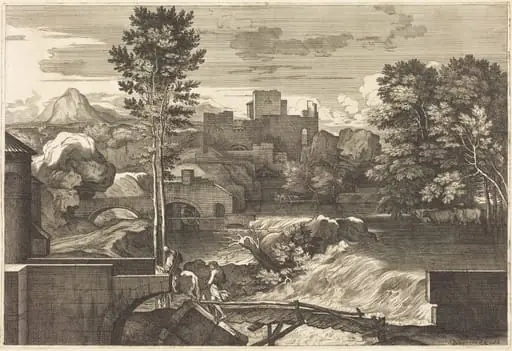
Cascade under a Stone Bridge
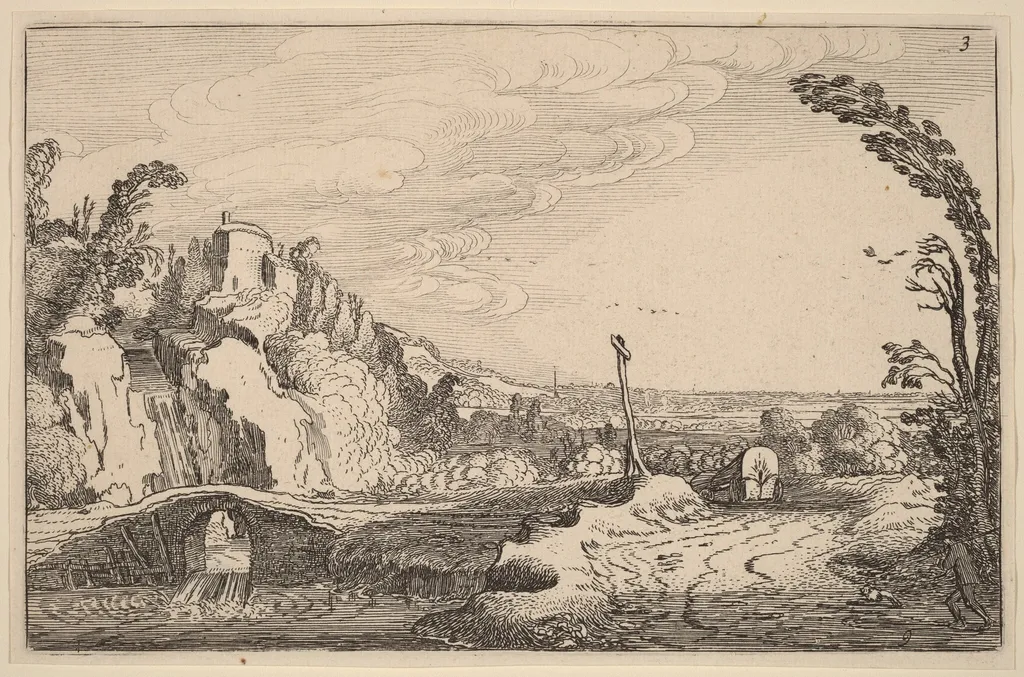
Cascade under a Stone Bridge is an ink print by the Baroque artist Jan van de Velde. It dates from 1616 and is held in the collection of the National Gallery of Art.
About this work
Overview
Created around 1616, *Cascade under a Stone Bridge* is an etching on laid paper by Jan van de Velde II, a Dutch printmaker active during the early Golden Age.
Created around 1616, *Cascade under a Stone Bridge* is an etching on laid paper by Jan van de Velde II, a Dutch printmaker active during the early Golden Age. The work belongs to a body of landscape prints that reflect his interest in natural scenes and atmospheric detail. Unlike many of his contemporaries who focused on urban or mythological themes, van de Velde turned to quiet rural settings, capturing the interplay of water, stone, and vegetation with precision and restraint.
Subject & Meaning
The scene portrays a gentle waterfall descending beneath a sturdy stone arch, framed by dense trees and a soft, overcast sky. A narrow path winds through the foreground, guiding the viewer’s gaze into the depth of the composition. There is no human presence, emphasizing solitude and the quiet rhythm of nature. The image conveys a contemplative mood, aligned with Dutch sensibilities of the time that valued harmony between human observation and the natural world.
Technique & Style
Van de Velde employed etching to achieve fine gradations of tone, using varied line density to suggest shadow beneath the bridge and the delicate texture of foliage. The laid paper’s subtle texture enhances the tactile quality of the scene, while the controlled use of cross-hatching creates depth without overt drama. His approach is restrained, avoiding theatricality in favor of nuanced observation, characteristic of his broader printmaking practice.
History & Provenance
The print was produced during van de Velde’s early career in Haarlem, a center for printmaking in the Netherlands. It circulated among collectors and artists who valued landscape etchings for their technical finesse. While specific early ownership records are sparse, the work appears in later 17th-century collections, indicating its recognition among connoisseurs of Dutch graphic art. It remains part of institutional holdings today, preserved as an example of early 17th-century printmaking.
Context
In early 17th-century Holland, landscape prints gained popularity as affordable, portable images of nature, distinct from large-scale paintings. Van de Velde’s work contributed to this trend, offering intimate views that appealed to a growing middle-class audience. His focus on natural elements—water, rock, foliage—aligned with broader cultural interests in empirical observation and the moral value of quiet, unspoiled scenery.
Legacy
Jan van de Velde II’s etchings, including this one, influenced later Dutch printmakers through their emphasis on atmospheric detail and compositional balance. Though less celebrated than his son’s still lifes or Rembrandt’s dramatic etchings, his work represents a quiet, persistent strand of Dutch graphic art—one that valued subtlety over spectacle. His prints remain studied for their technical discipline and evocative restraint.
Artist & collection
Artist
Jan van de Velde the younger (1593 – c. 1 November 1641) was a Dutch Golden Age painter and printmaker, mostly of animal, landscape and still-life subjects. He was the son of Jan van de Velde the Elder and the father of…

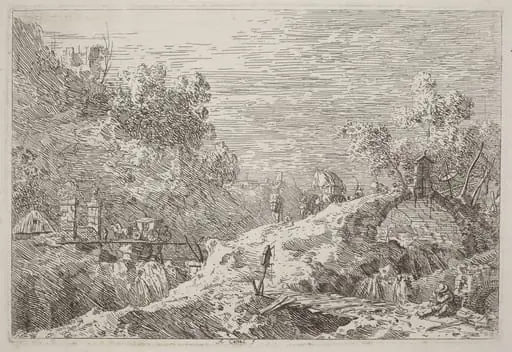 Mountain Landscape with Five Bridges
![Mountain Landscape with Five Bridges [lower right], by Canaletto](https://artifactworldgallery.com/img/canaletto--mountain-landscape-with-five-bridges-lower-right--69277fee18bd5080-w320.webp) Mountain Landscape with Five Bridges [lower right]
Mountain Landscape with Five Bridges [lower right]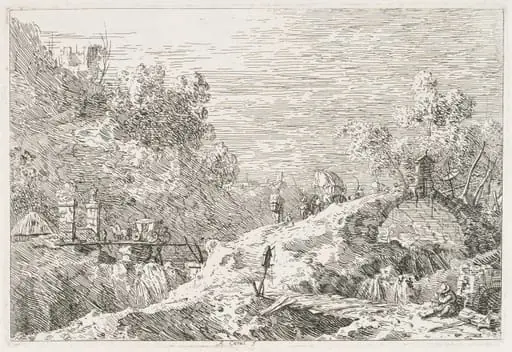 Views: Mountain Landscape with Five Bridges
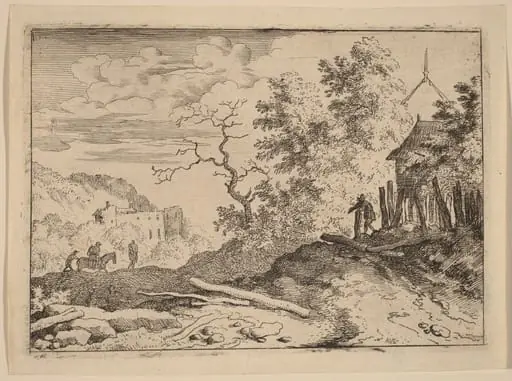 Hut with the Remains of a Hedge
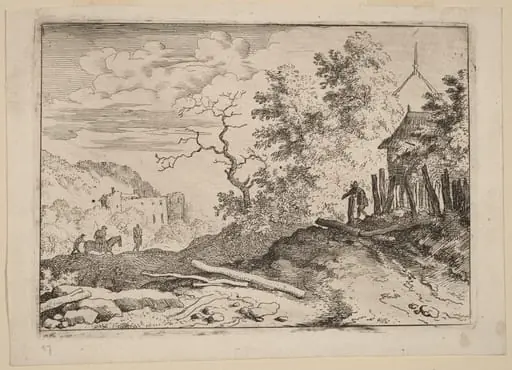 Hut with the Remains of a Hedge
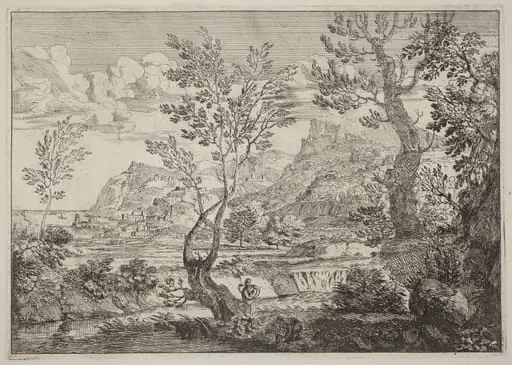 A Waterfall
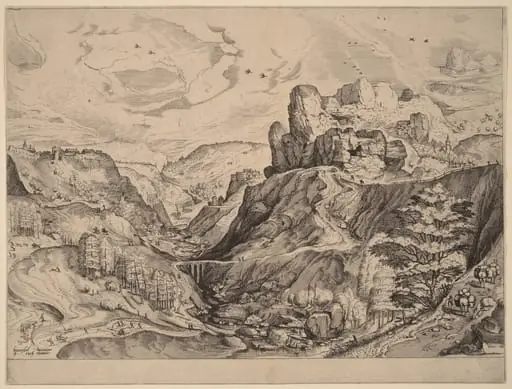 Alpine Landscape
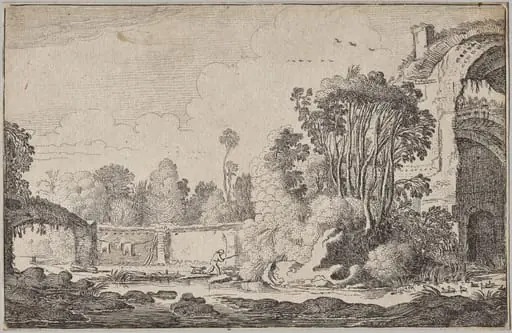 Landscapes, part III: Roman Ruins in Wooded Surroundings
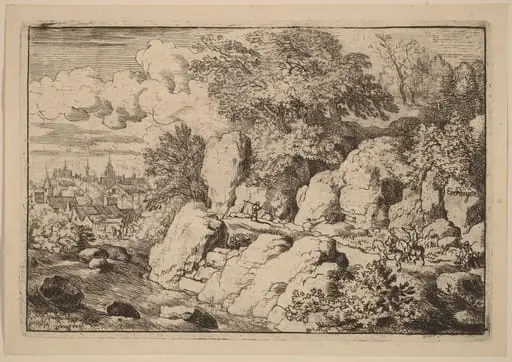 Two Horsemen on a Rocky Path
 Landscape with Two Figures on a Bridge
![Landscape with Tower and Two Ruined Pillars [left], by Canaletto](https://artifactworldgallery.com/img/canaletto--landscape-with-tower-and-two-ruined-pillars-left--60d58ba162fec5aa-w320.webp) Landscape with Tower and Two Ruined Pillars [left]
Landscape with Tower and Two Ruined Pillars [left]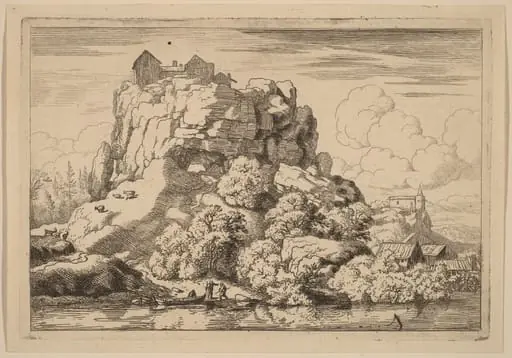 River at the Foot of a High Rock