Artwork
Village Road
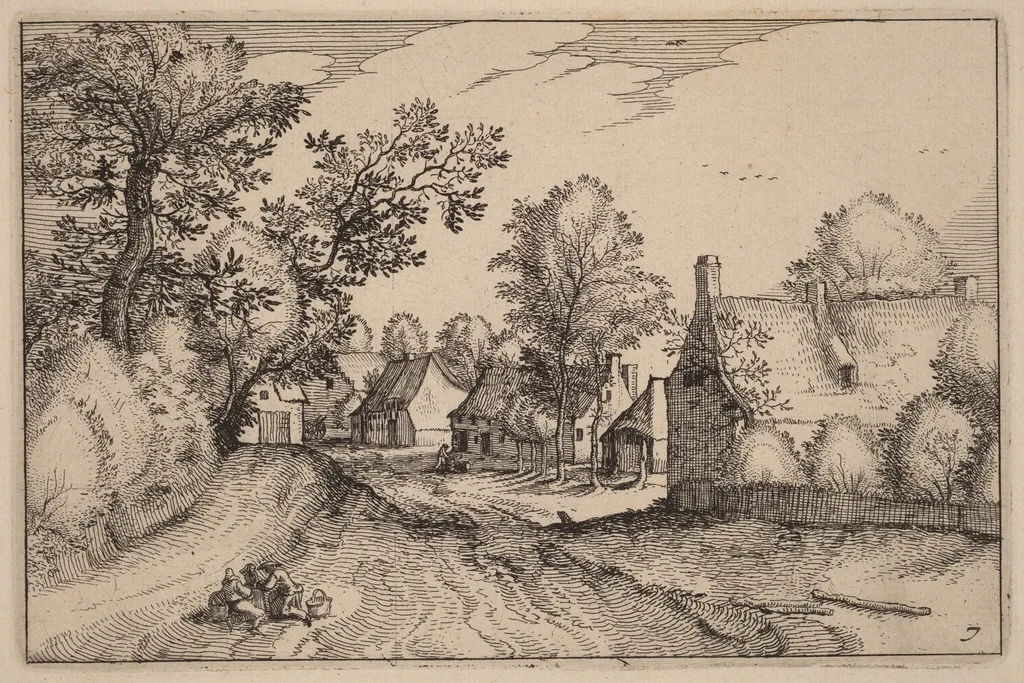
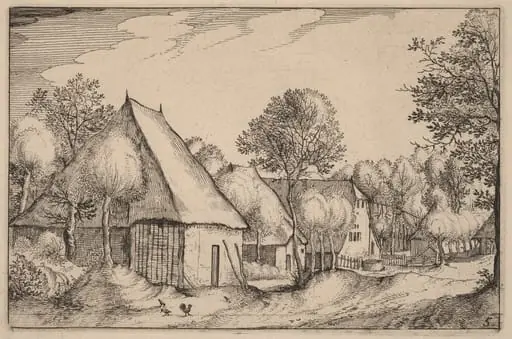
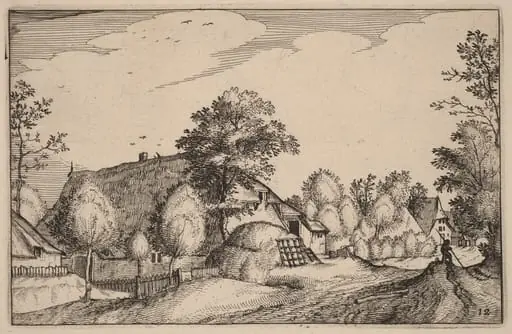
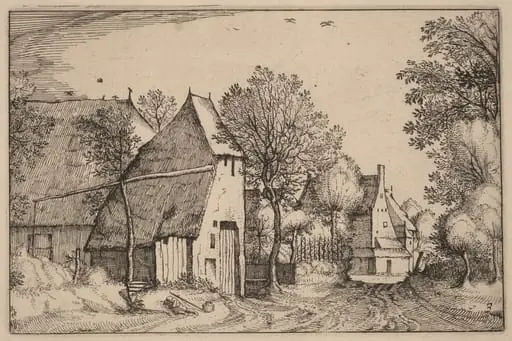
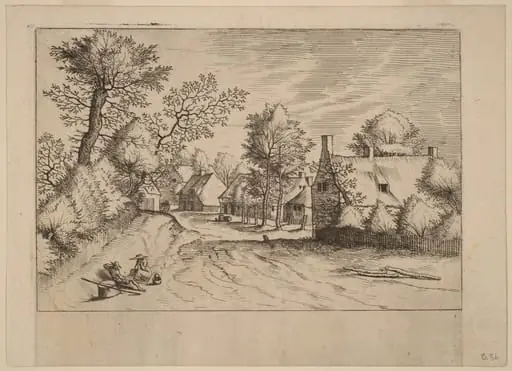
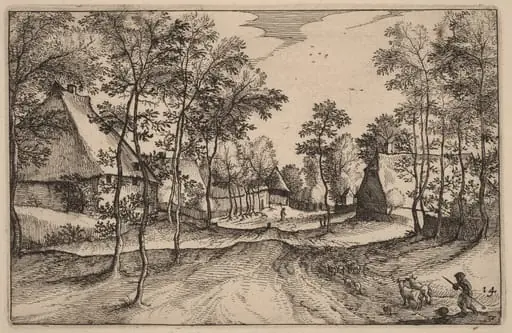
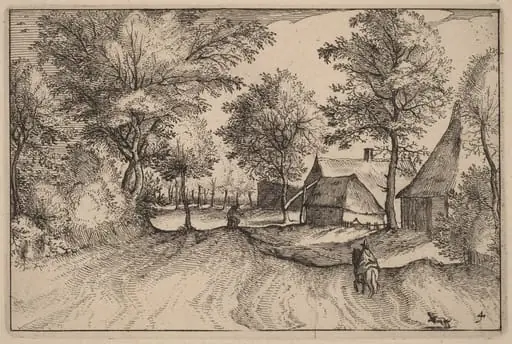
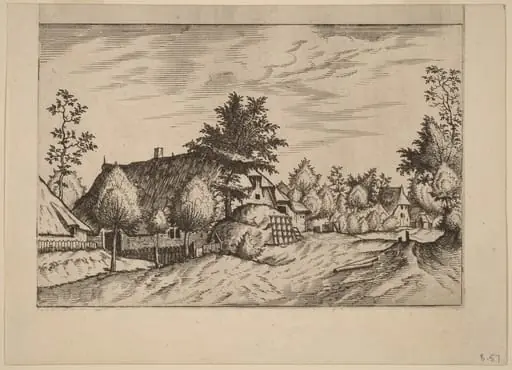
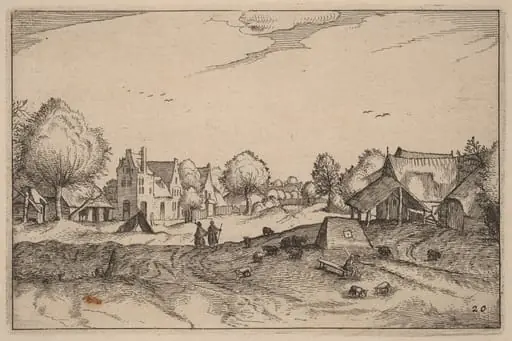
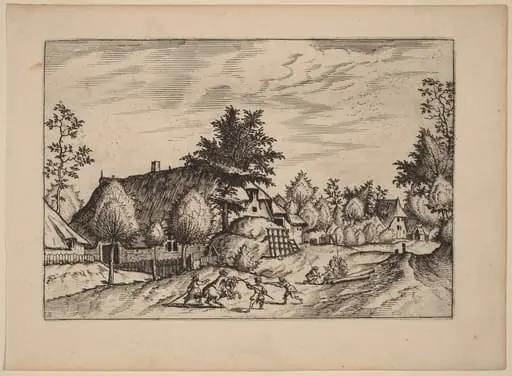
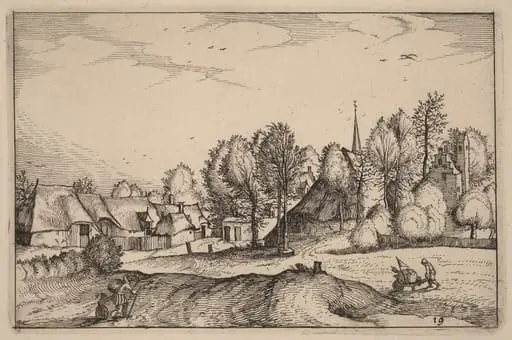
Village Road is an ink print by the Baroque artist Claes Jansz Visscher. It dates from 1612 and is held in the collection of the National Gallery of Art.
About this work
Overview
Visscher, known for his cartographic work and printmaking enterprise in Amsterdam, applied his precision to this intimate landscape.
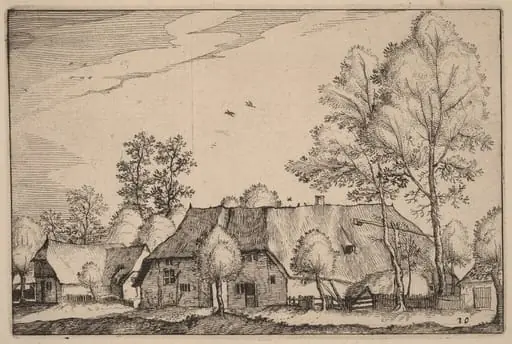
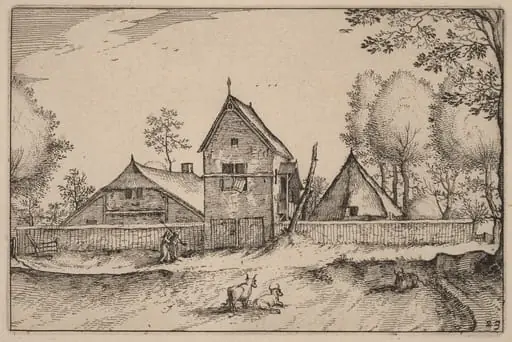
Created in 1612 by Claes Janszoon Visscher, *Village Road* is a black-and-white etching that captures a tranquil Dutch rural scene. Visscher, known for his cartographic work and printmaking enterprise in Amsterdam, applied his precision to this intimate landscape. The composition centers on a winding path through modest dwellings, rendered with delicate line work characteristic of early 17th-century Northern European printmaking.
Subject & Meaning
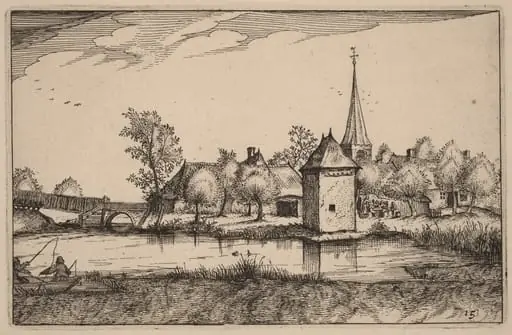
The scene portrays a quiet village lane with scattered cottages, a tall chimney, and a large tree, suggesting everyday life in the Dutch countryside. Two figures near a body of water—one holding a long pole—hint at fishing or tending to watercraft. The inclusion of grazing animals and dense foliage conveys a sense of seasonal stillness, reflecting the period’s appreciation for unidealized, observable nature rather than grand narratives.
Technique & Style
Visscher employed etching to achieve fine, controlled lines that define textures: ripples in water, swaying grass, and the roughness of thatch. The plate was incised with acid, allowing for intricate detail and tonal variation without heavy shading. The composition avoids dramatic perspective, favoring a level, observational gaze typical of Dutch graphic arts, where clarity and precision outweigh theatricality.
History & Provenance
As part of Visscher’s broader output in print and map publishing, *Village Road* likely circulated among collectors and artisans in the Dutch Republic. Though not signed or dated on the plate, its style aligns with his early 17th-century work. Its survival in institutional collections suggests it was valued for its technical skill and documentary quality, rather than as a standalone artistic statement.
Context
In early 1600s Holland, printmaking flourished as a medium for both commerce and cultural documentation. Visscher’s workshop produced maps and topographical views that served practical and aesthetic purposes. *Village Road* fits within this tradition—offering a quiet, unembellished view of rural life that resonated with urban audiences seeking connection to the land beyond city walls.
Legacy
The etching exemplifies the Dutch Golden Age’s shift toward secular, observational imagery. While Visscher is better known for cartography, works like this reveal his versatility and influence on landscape printmaking. His precise linework became a model for later engravers, helping establish a visual language of rural realism that endured in Northern European art for decades.
Artist & collection

Artist
Claes Janszoon Visscher (1587 – 19 June 1652) was a Dutch Golden Age draughtsman, engraver, mapmaker, and publisher.