Artwork
Suliman Aga, the last of the old Mamelukes
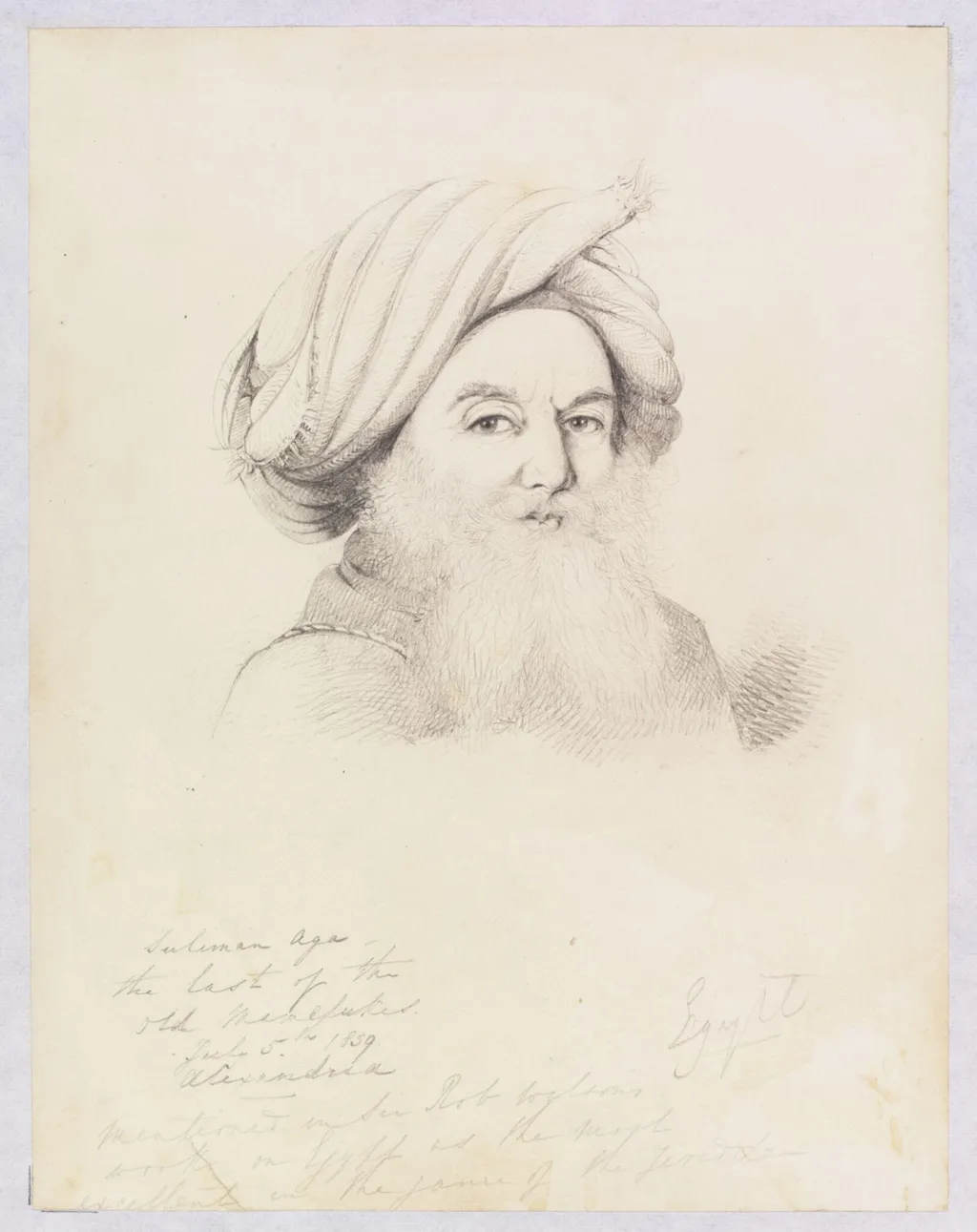
Suliman Aga, the last of the old Mamelukes is a watercolor work on paper by the Orientalist artist Godfrey Thomas Vigne. It dates from 1839 and is held in the collection of the Victoria and Albert Museum.
About this work
The fur collar and turban suggest someone from a different culture, drawn during a time when European artists traveled and recorded distant people.
This sketch shows a bearded man in profile, wearing a loose turban and a fur collar. His face is drawn with quick, sketchy lines, and the turban’s folds are loose and flowing. The paper has faint handwritten notes in the corners, but the drawing itself is simple and focused on his strong features.
The artist wrote that this was Suliman Aga, the last of a group called the Mamelukes, in 1839. The fur collar and turban suggest someone from a different culture, drawn during a time when European artists traveled and recorded distant people.
Next, look up Vigne, Godfrey Thomas (FRGS) to see more of his sketches from travels.
Overview
Created in 1839, this watercolour portrait by Godfrey Thomas Vigne captures Suliman Aga, identified as the final representative of the traditional Mameluke class. The drawing presents the figure in profile, emphasizing his beard, loose turban, and fur collar, rendered with swift, sketch‑like lines that focus on his distinctive facial features.
Subject & Meaning
Suliman Aga served as the keeper of the arsenal under Muhammad Ali, the 19th‑century ruler of Egypt, and was noted for his contributions to Cairo’s architecture. Vigne’s notation links the sitter to the fading Mameluke tradition, highlighting a moment of cultural transition as the once‑powerful military caste waned.
Technique & Style
Executed in watercolor on paper, the work relies on minimal washes and rapid pen strokes. The loose rendering of the turban’s folds and the sketchy contour of the face convey immediacy, characteristic of travel sketches intended to record subjects quickly during journeys.
History & Provenance
Vigne produced the portrait during his return from India to England in 1839. The drawing entered the museum’s collection in 1971 after being purchased from Henry D’Olier Vigne, the artist’s great‑nephew, who inherited the work from his family.
Context
The portrait belongs to a broader body of Vigne’s travel sketches, many of which document people and places encountered on his extensive journeys across the Middle East and South Asia. Such works reflect the 19th‑century European interest in recording exotic subjects encountered abroad.
Artist & collection


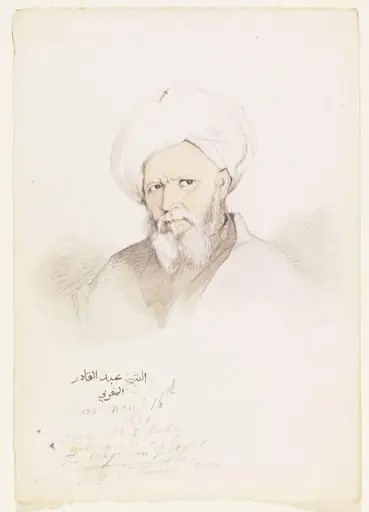
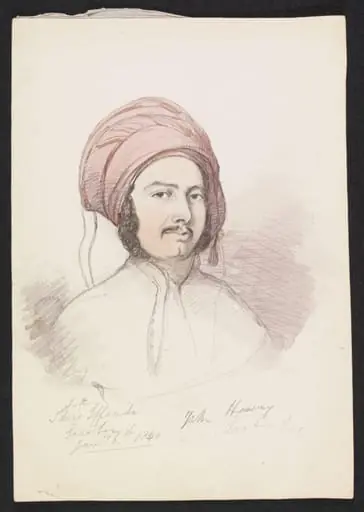
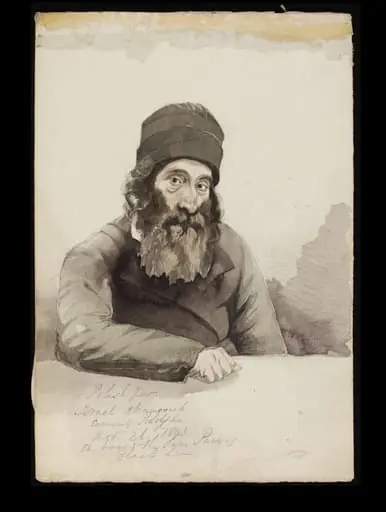
 H Beard Print Collection
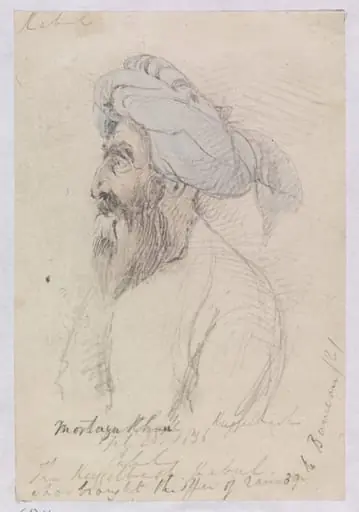 Mortaza Khan Kuzzelbash
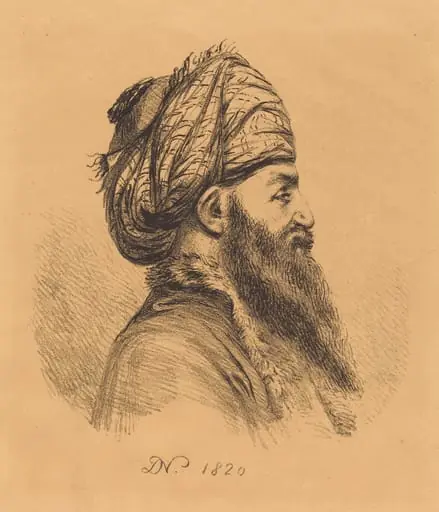 Profile Head of a Man in a Turban
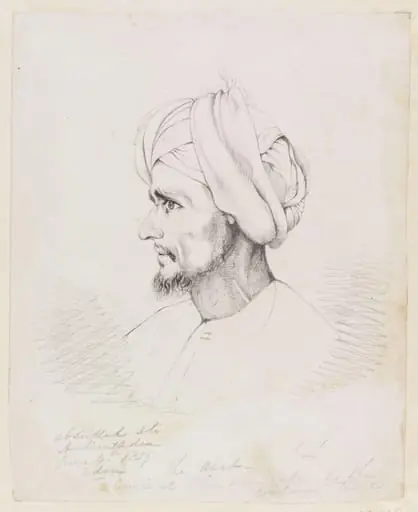 Abdullah Ali Hakim of Aden
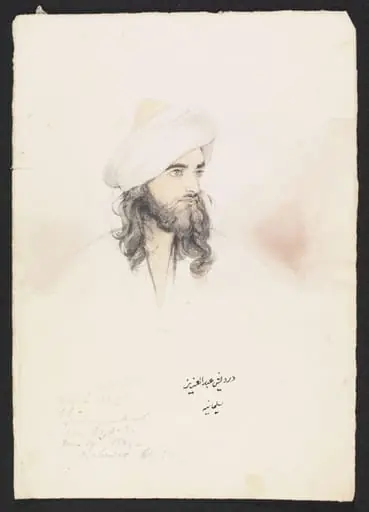 Dervish Abdul Aziz - Suleiman Momd from Bagdad
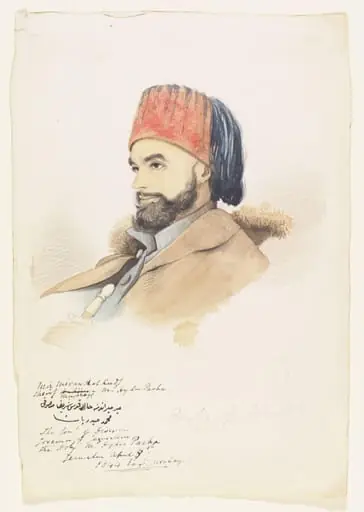 Mir Miran Hal Kuds Sherif Mushrafi Md. Hyder Pacha
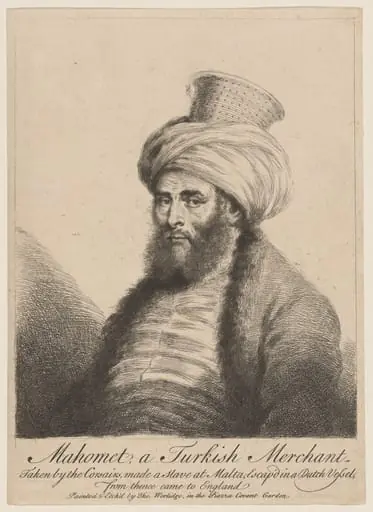 Mahomet, a Turkish Merchant
![Ameer Khan Lohani Cheiftain [sic], by Godfrey Thomas Vigne](https://artifactworldgallery.com/img/godfrey-thomas-vigne--ameer-khan-lohani-cheiftain-sic--7c6575efa84f0a9c-w320.webp) Ameer Khan Lohani Cheiftain [sic]
Ameer Khan Lohani Cheiftain [sic]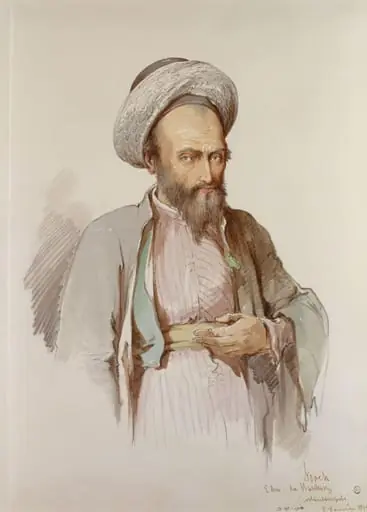 Portrait of Isaac, a Karaite Jew from Hasköy near Constantinople
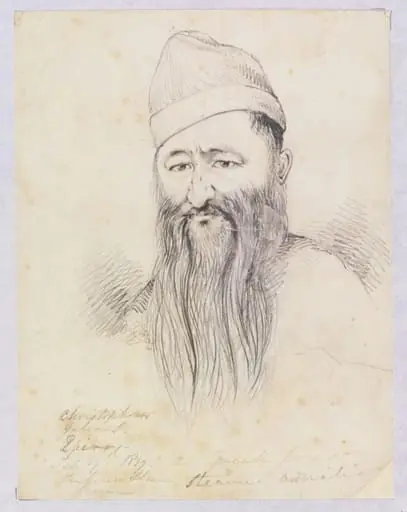 Christophoros Galinos. a Greek priest
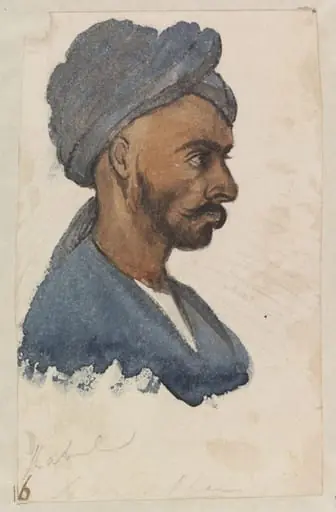 Suliman Khan Kabul