Artwork
God dividing light from darkness
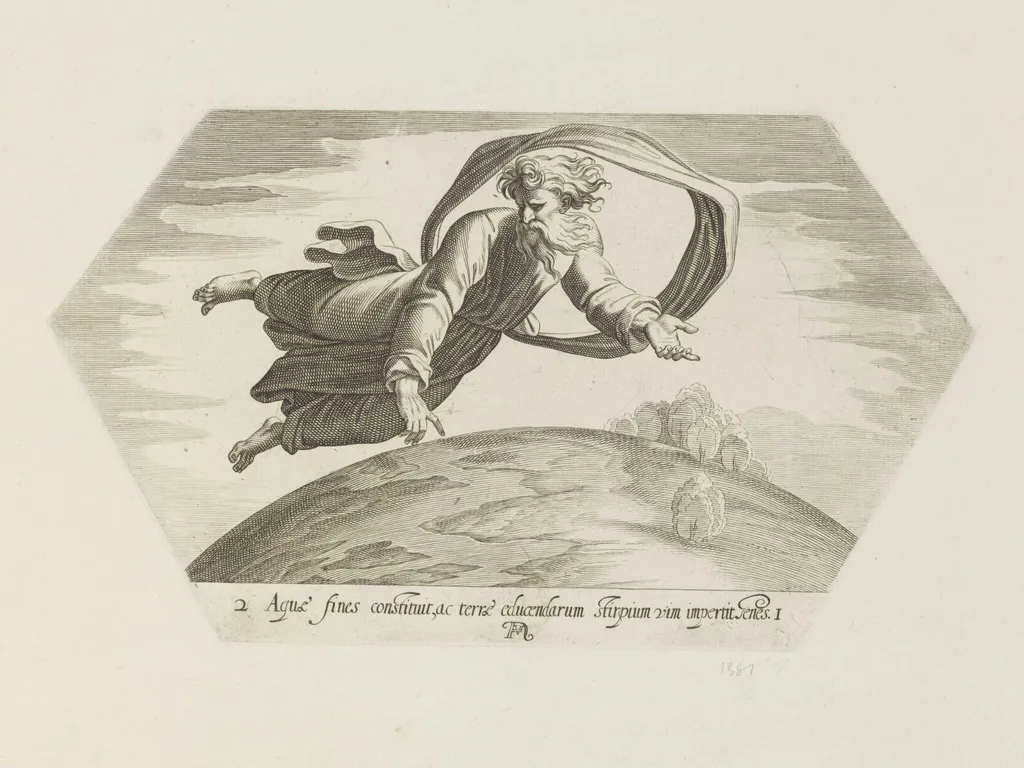
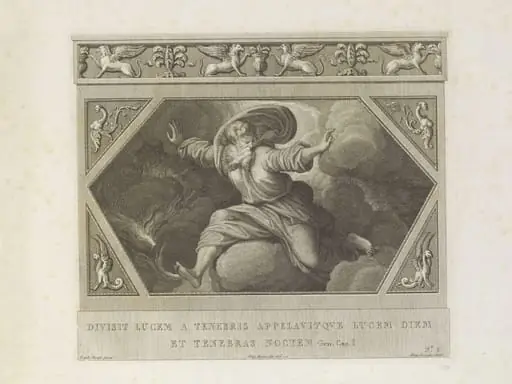
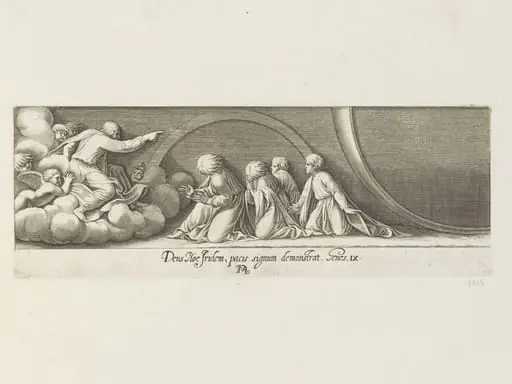
God dividing light from darkness is a print by the Baroque artist Francesco Villamena. It is held in the collection of the Victoria and Albert Museum.
About this work
Overview
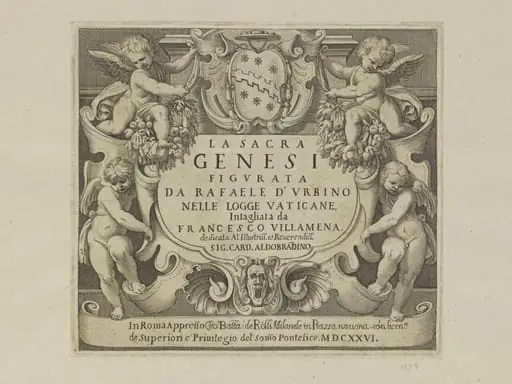
Part of a series of twenty prints reproducing biblical scenes, this work translates Raphael’s composition into the medium of etching on paper.
Francesco Villamena’s 1626 etching captures a moment from the Creation narrative, derived from Raphael’s fresco cycle in the Vatican Loggie. Part of a series of twenty prints reproducing biblical scenes, this work translates Raphael’s composition into the medium of etching on paper. The Latin inscription cites Genesis 1:6–7, anchoring the image in its scriptural origin and reinforcing its devotional intent within early 17th-century print culture.
Subject & Meaning
The central figure, bearded and dynamically posed, embodies the divine act of separation between light and darkness. His outstretched arm and billowing cloak suggest motion and authority, while his intense expression conveys focused power. The imagery does not depict a literal deity but rather an allegorical representation of divine will, aligning with Renaissance theological interpretations of Genesis that emphasized order emerging from chaos through divine command.
Technique & Style
Villamena employed fine, controlled lines typical of etching to render the figure’s muscular form and the gradations of light and shadow. The background transitions subtly from pale to deep tones, enhancing spatial depth without overt modeling. The composition’s energy arises from the figure’s torsion and the contrast between the solid, sculptural body and the fluid, atmospheric surroundings, reflecting Mannerist influences adapted to reproductive printmaking.
History & Provenance
Created in 1626, the print was one of twenty issued as a set reproducing Raphael’s Vatican frescoes, likely intended for collectors and scholars interested in classical religious art. Villamena, an Italian engraver active in Rome, specialized in translating high Renaissance compositions into print. The work circulated among educated audiences, serving both as a devotional aid and a demonstration of artistic lineage from Raphael to contemporary printmakers.
Context
In early 17th-century Italy, reproductive prints were vital for disseminating the imagery of celebrated painters to wider audiences. Villamena’s etching emerged during a period when the Church encouraged visual representations of biblical narratives to reinforce doctrine. The choice of Raphael’s composition—already revered for its harmony and clarity—underscored the continuity between ancient artistic ideals and contemporary religious expression.
Legacy
Though not widely exhibited today, Villamena’s print remains a documented example of how Renaissance compositions were preserved and transmitted through print. It reflects the enduring influence of Raphael’s iconography and the role of engravers in shaping visual theology. The work contributes to the broader history of print as a vehicle for religious education and artistic continuity in post-Reformation Europe.
Artist & collection
Artist
Francesco Villamena (1564–1624) was an Italian engraver, drawing teacher and art collector.