Artwork
Carthusian Worship Beyond Death
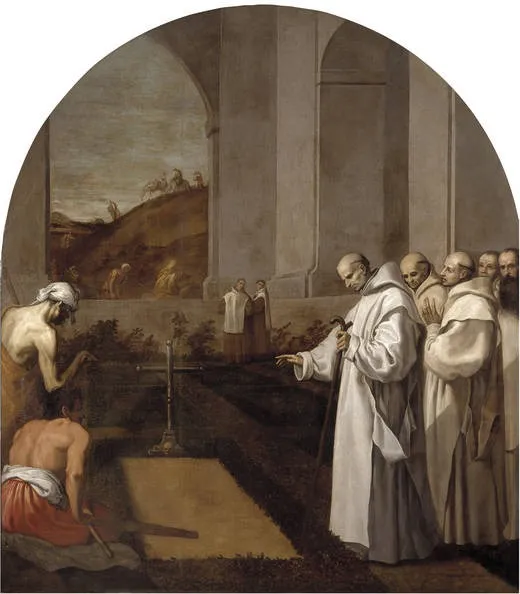
Carthusian Worship Beyond Death is an oil painting by the Early Baroque Italian artist Vincenzo Carducci. It dates from 1632 and is held in the collection of the Museo del Prado.
About this work
Overview
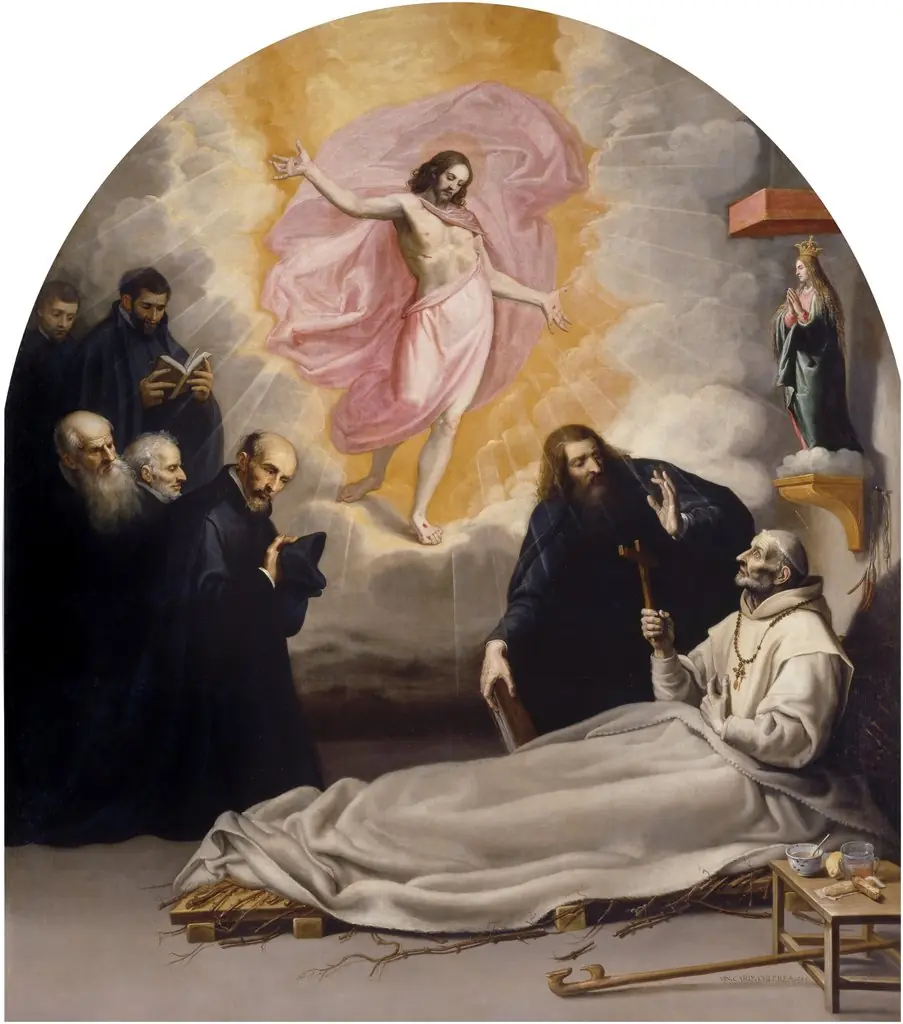
Created in 1632 by Vincenzo Carducci, an Italian artist who spent his professional life in Spain, this oil painting is part of the Prado Museum’s collection. The work presents a solemn scene of monks gathered around an open tomb, with a crucifix prominently displayed, reflecting the devotional concerns of its era.
Subject & Meaning
The composition centers on a group of robed figures—presumably Carthusian monks—who stand vigil over a raised tomb lid. A man dressed in white holds a cross and gestures toward the interior, while a laborer kneels nearby. The arrangement suggests a meditation on mortality and the promise of resurrection within a monastic context.
Technique & Style
Executed in the early Baroque idiom, the painting employs strong chiaroscuro, contrasting deep shadows with illuminated faces and garments. This dramatic lighting heightens the emotional intensity of the scene and underscores the spiritual focus on the crucifix and the open grave.
History & Provenance
Carducci, born between 1576 and 1578, relocated to Spain where he worked until his death in 1638. After its creation, the painting entered the Spanish royal collections and eventually was transferred to the Museo del Prado, where it remains on display.
Context
The work reflects the Counter‑Reformation emphasis on vivid, affective religious imagery intended to inspire piety. Its depiction of Carthusian ritual aligns with contemporary Spanish interest in monastic reform and the visual articulation of death as a passage to divine salvation.
Artist & collection
Artist
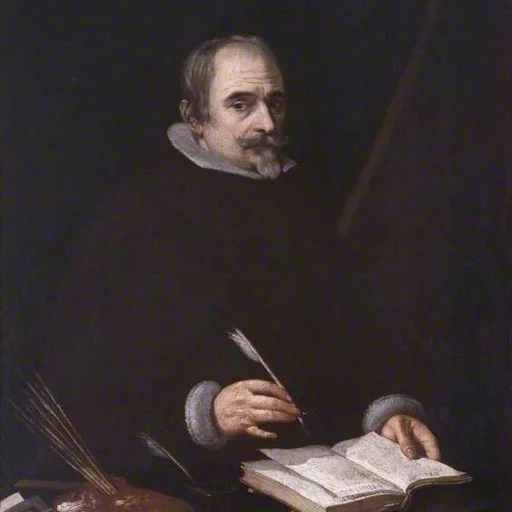
Vincenzio Carduccio (in Spanish, sometimes Vicencio or Vicente Carducho; 1576 or 1578–1638) was an Italian painter who spent his career in Spain.

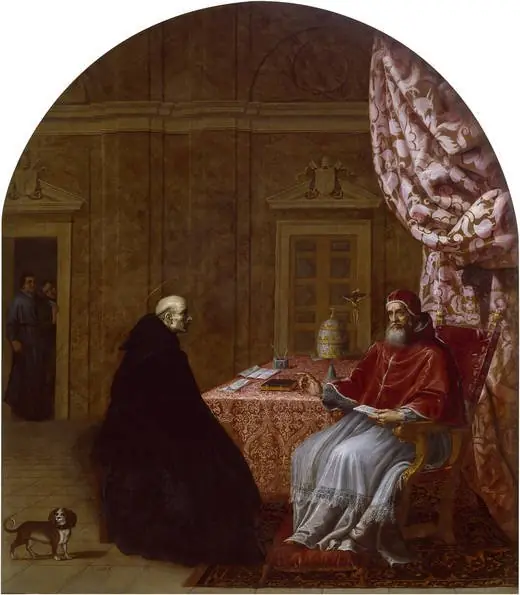
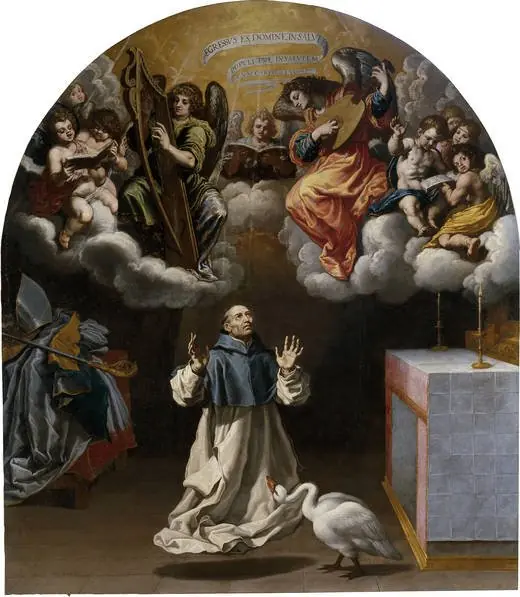
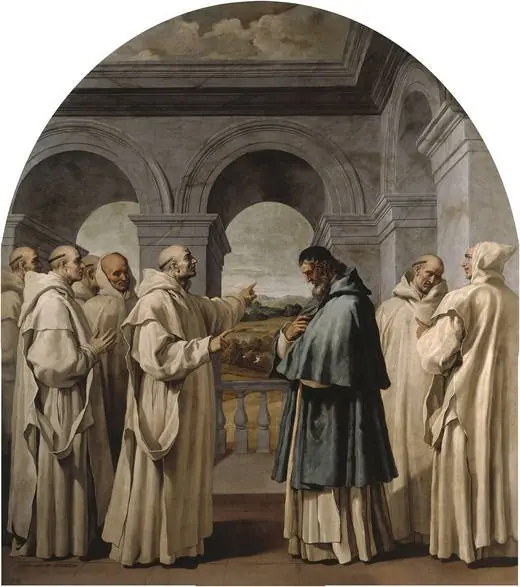 Saint Bruno Bids Farewell to Saint Hugo
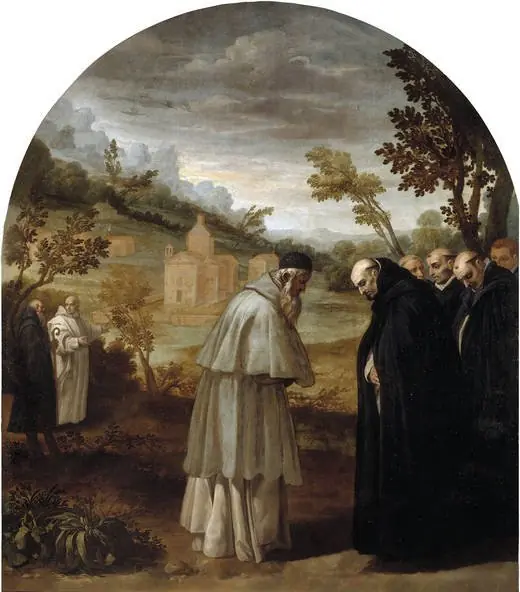 Saint Bruno Bids Farewell to Saint Hugo Before his Trip to Rome
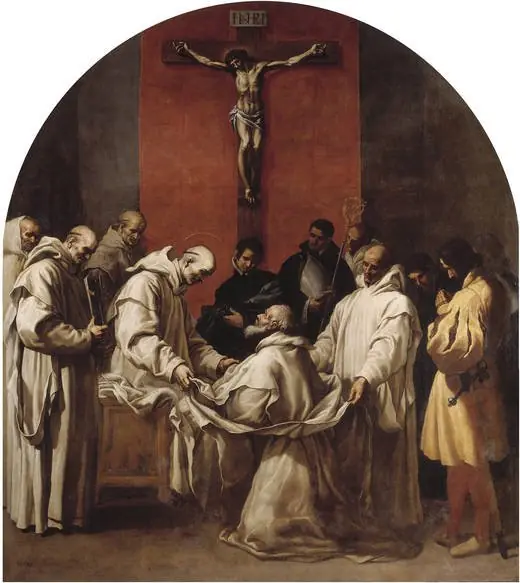 Bishop Hugo wears the Carthusian Habit
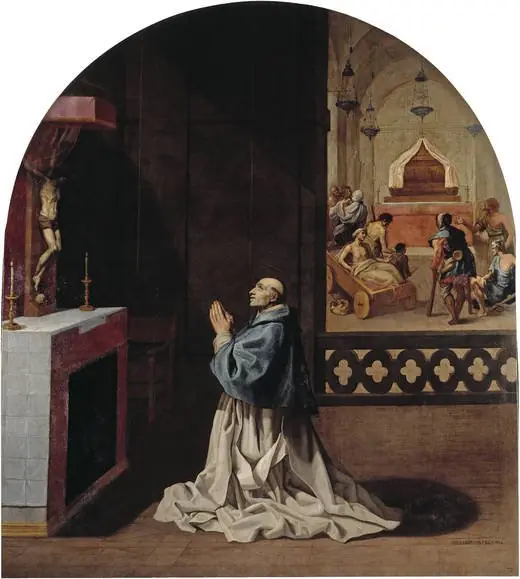 Father Bernard Praying in the Portes Charterhouse
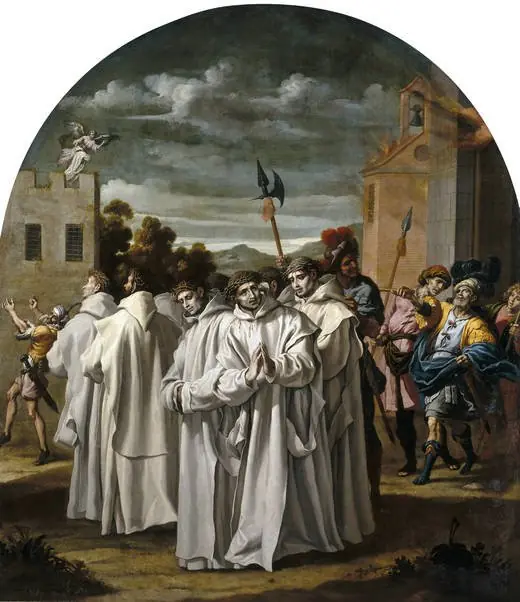 The Burning of the Prague Charterhouse and the Persecution of the Carthusians
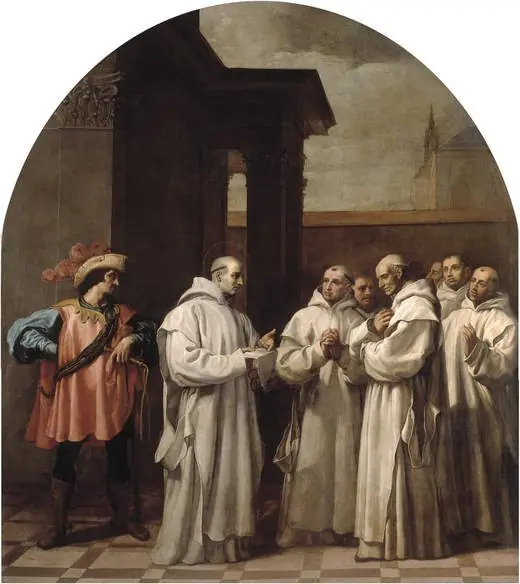 Pope Urban II Calls Saint Bruno to Rome
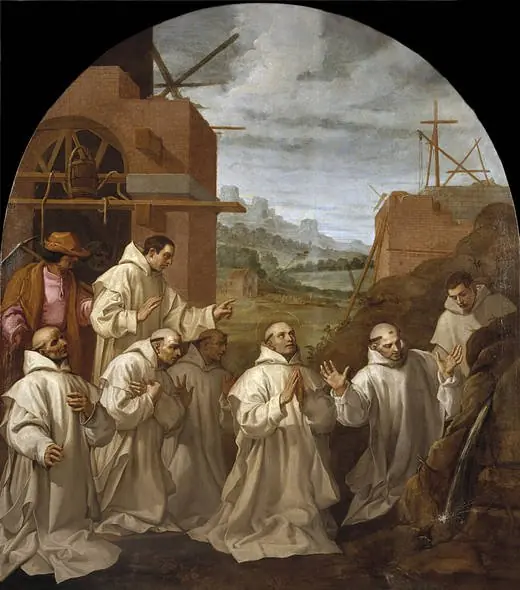 The Miracle of the Spring
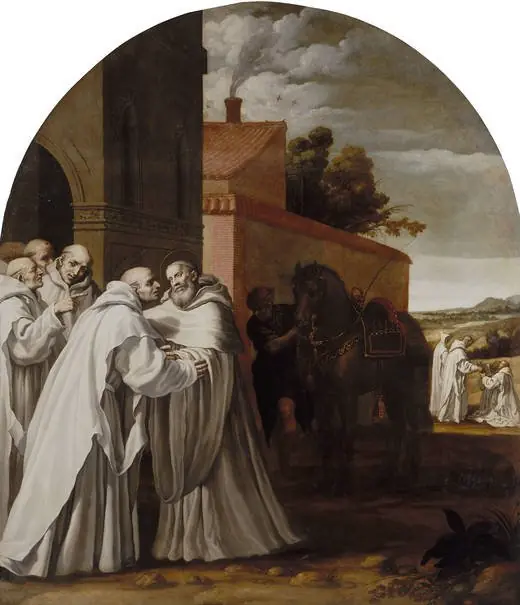 Saint Bernard of Clarivaux visits Guigo I at the Charterhouse
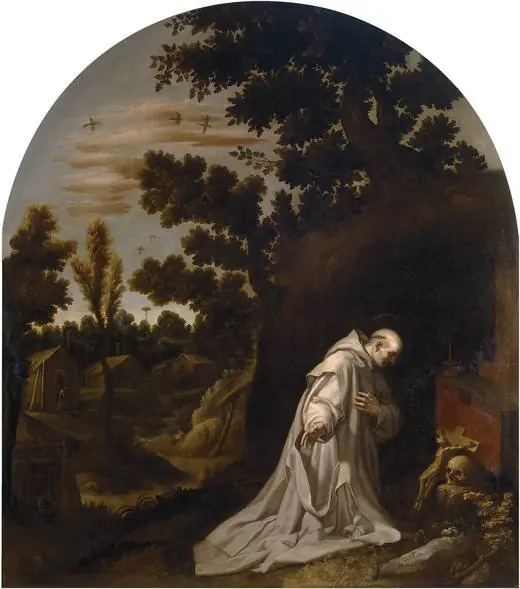 Saint Bruno Prays in La Torre Calabria
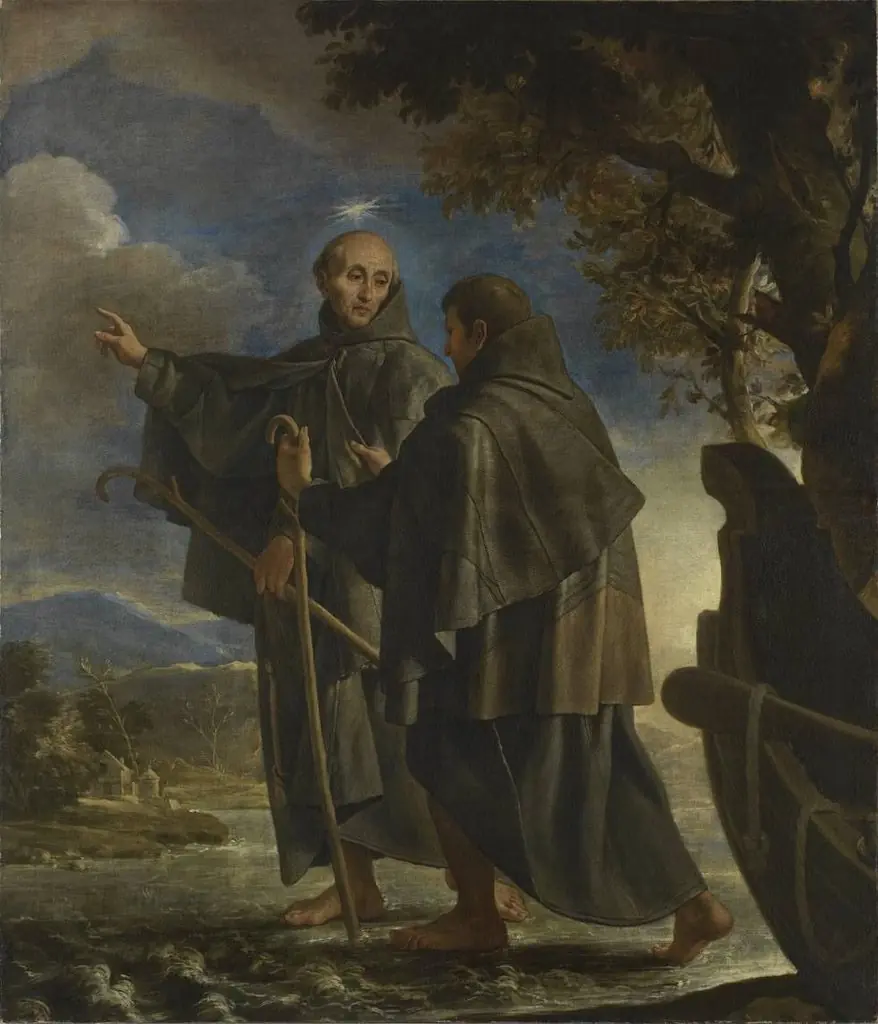 Der hl. Petrus von Alcántara wandelt über den Fluss Quadiana
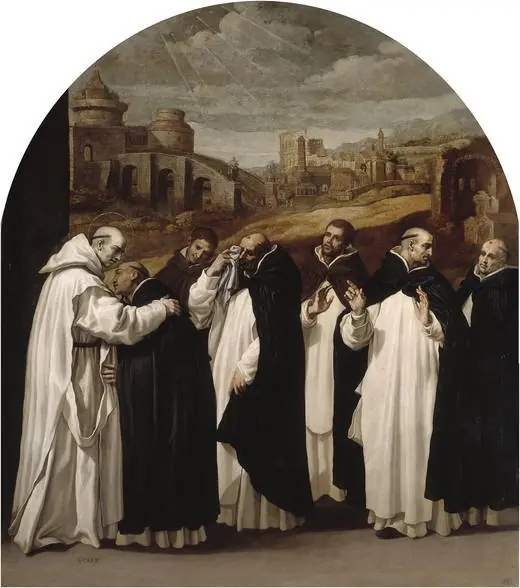 Saint Bruno Bids Farewell to his Companions in Rome
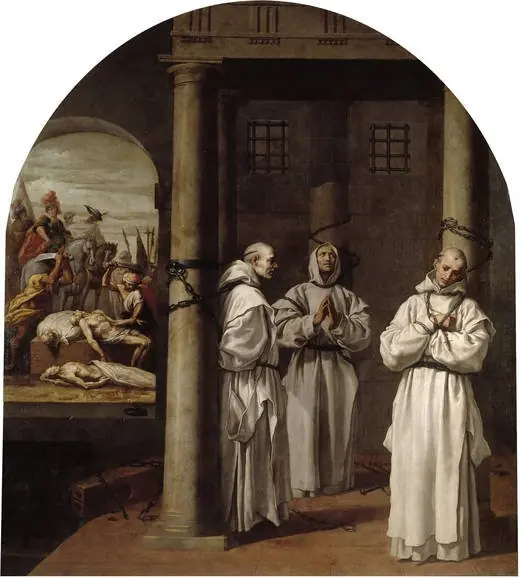 The Martyrdom of the Priors of the English Charterhouses of London Nottingham and Axholme