Artwork
Prior Boson Revives a Mason
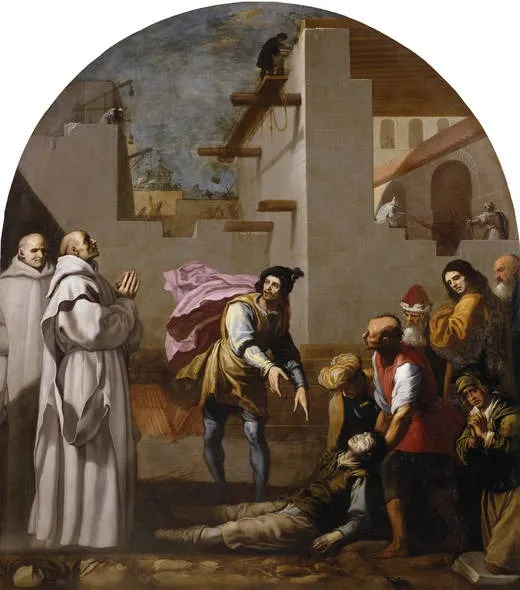
Prior Boson Revives a Mason is an oil painting by the Early Baroque Italian artist Vincenzo Carducci. It dates from 1630 and is held in the collection of the Museo del Prado.
About this work
Overview
Carducci, an Italian artist who settled in Spain, employed the medium to explore narrative scenes rooted in religious and social life.
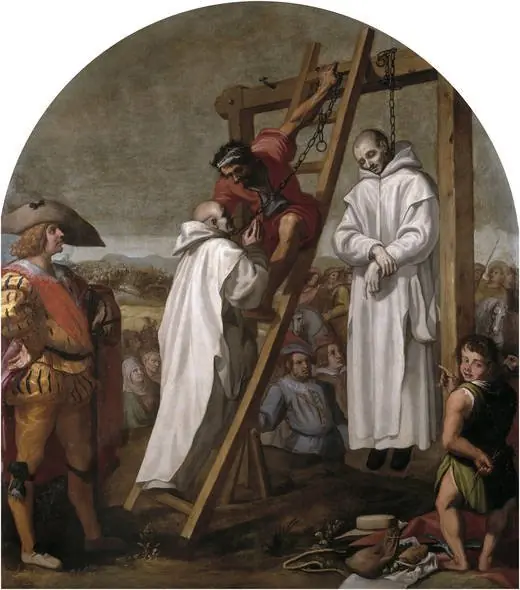
Painted in 1630 by Vincenzo Carducci, this oil-on-canvas work depicts a moment of intervention in a stone courtyard. Carducci, an Italian artist who settled in Spain, employed the medium to explore narrative scenes rooted in religious and social life. The painting is held in the Museo del Prado, Madrid, and reflects his role in adapting Italian Baroque conventions to Spanish artistic contexts during the early 17th century.
Subject & Meaning
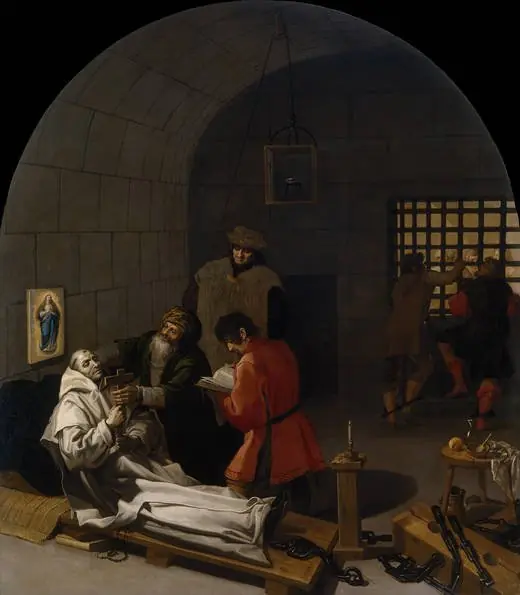
The scene portrays a prior, identified by his pink cloak, directing aid toward a fallen mason. Another figure, in a red vest, assists the injured man, while onlookers in white robes and varied attire observe. The moment suggests a moral or spiritual intervention, possibly referencing monastic responsibility toward laborers. The narrative aligns with Counter-Reformation ideals, emphasizing charity and the dignity of manual work within a religious framework.
Technique & Style
Carducci uses chiaroscuro to model the figures with strong contrasts between light and shadow, enhancing their three-dimensionality. The clothing and architectural details—arches, stone steps, and textured fabrics—are rendered with precise observation. The composition directs attention to the central group through directional gestures and spatial depth, characteristic of Baroque storytelling. The palette is restrained yet effective, with muted tones punctuated by vivid accents in the garments.
History & Provenance
Created during Carducci’s decades-long tenure in Spain, the painting entered the Spanish royal collection before being transferred to the Museo del Prado. Its survival through centuries reflects its recognition within royal and ecclesiastical circles. Though Carducci was Italian by birth, his integration into Spanish court circles ensured his works were preserved as part of the nation’s artistic heritage.
Context
In early 17th-century Spain, religious institutions maintained significant influence over daily life, and art often illustrated moral or theological narratives. Carducci’s work emerged amid a broader trend of Italian artists influencing Spanish painting, particularly through naturalism and dramatic lighting. This painting exemplifies how Italian Baroque techniques were localized to serve Spanish devotional and social ideals.
Legacy
Carducci’s paintings, including this one, contributed to the development of a distinctly Spanish Baroque idiom that balanced Italian formal rigor with local subject matter. While less widely known than contemporaries like Velázquez, his works remain important for understanding the transmission of artistic styles across the Pyrenees and the role of foreign artists in shaping Spain’s visual culture.
Artist & collection
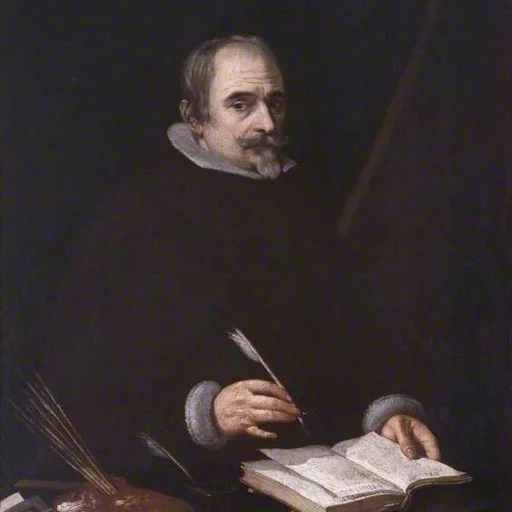
Artist
Vincenzio Carduccio (in Spanish, sometimes Vicencio or Vicente Carducho; 1576 or 1578–1638) was an Italian painter who spent his career in Spain.

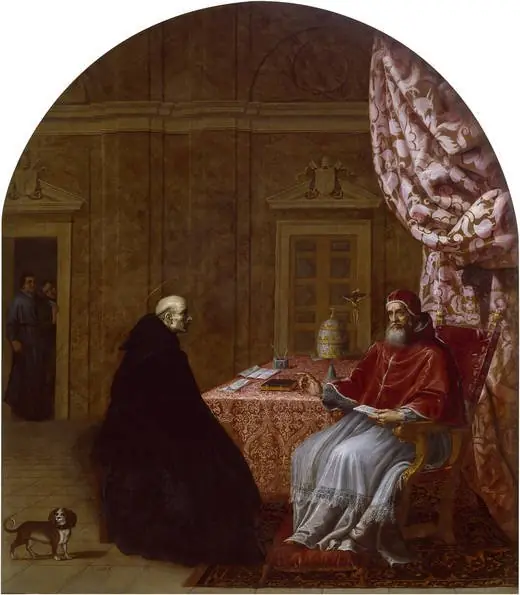
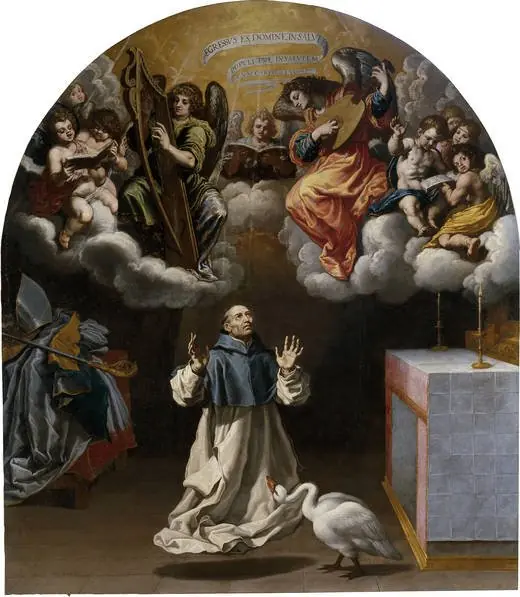
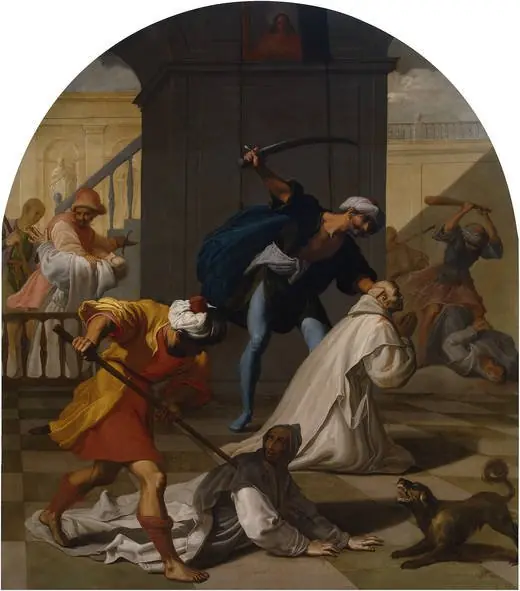 The Martyrdom of the Mauerbach Carthusians
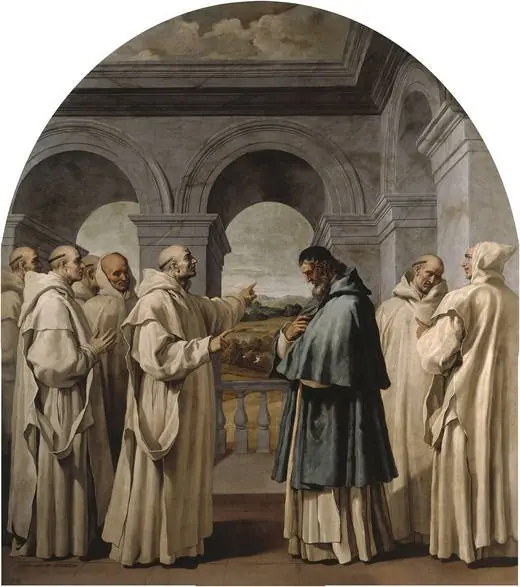 Saint Bruno Bids Farewell to Saint Hugo
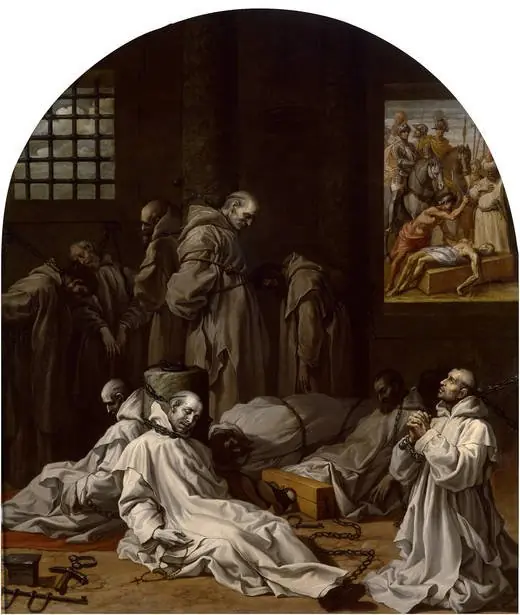 Prison and Death of the Ten Members of the London Charterhouse
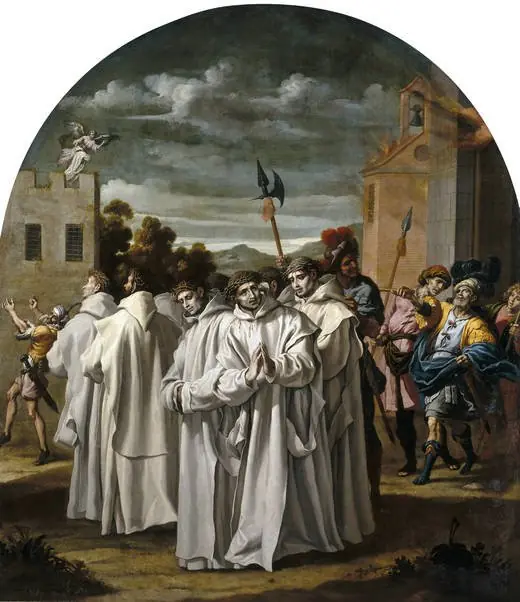 The Burning of the Prague Charterhouse and the Persecution of the Carthusians
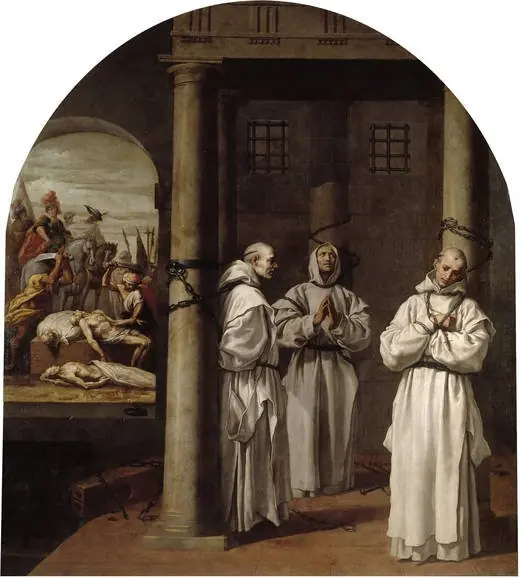 The Martyrdom of the Priors of the English Charterhouses of London Nottingham and Axholme
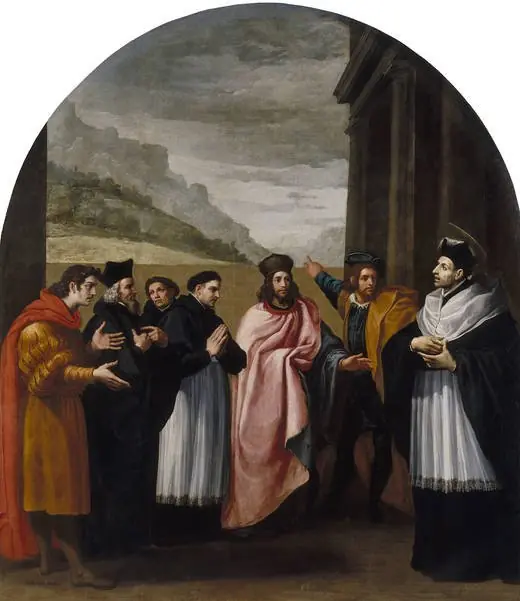 Saint Bruno and His Six Companions Withdraw from Active Life
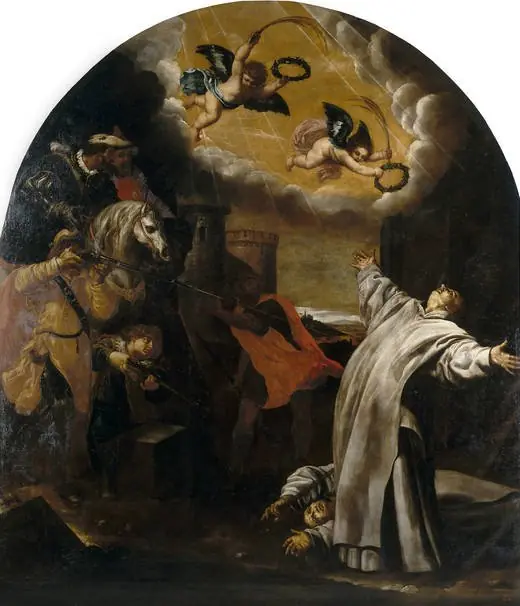 The Martyrdom at Roermond of Vinzenz Herck and Jan Van Loewen
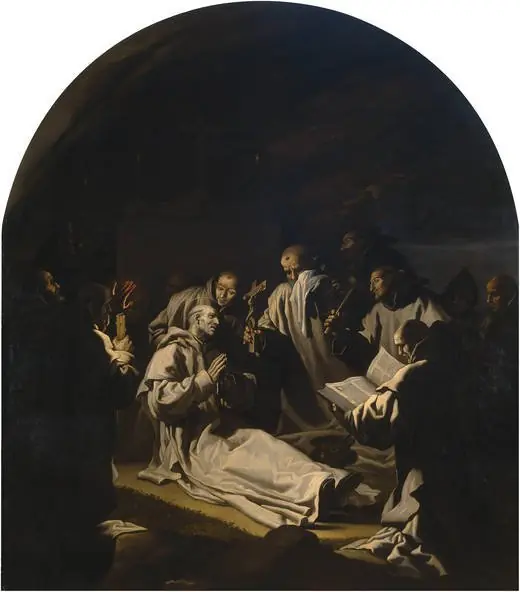 The Death of Saint Bruno
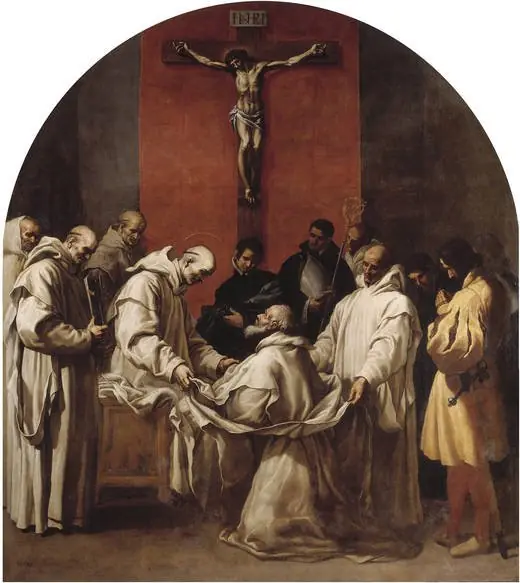 Bishop Hugo wears the Carthusian Habit
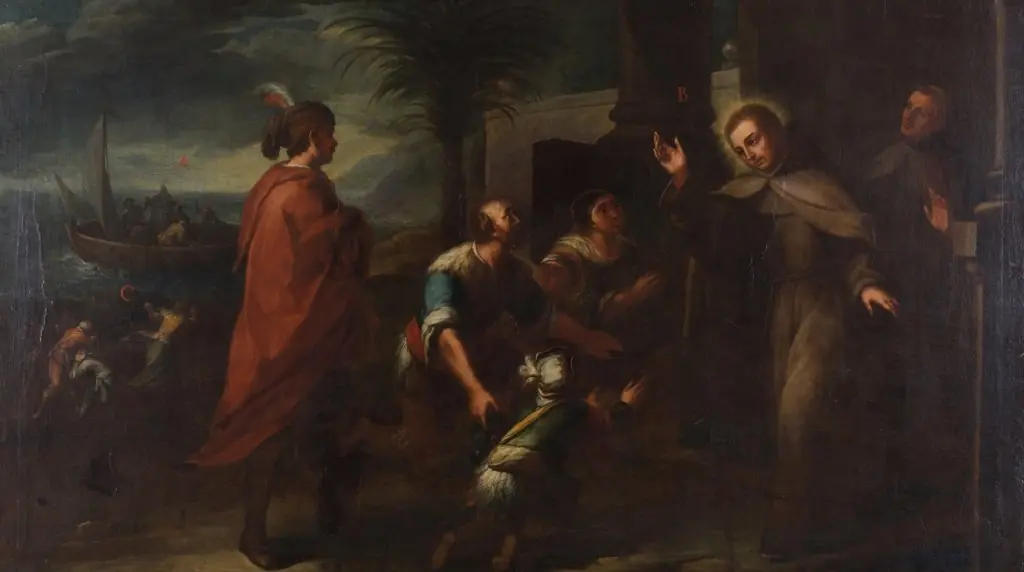 San Diego de Alcalá en las islas Canarias
 The Martyrdom of Fathers John Rochester and James Walworth