Artwork
Boar Hunt
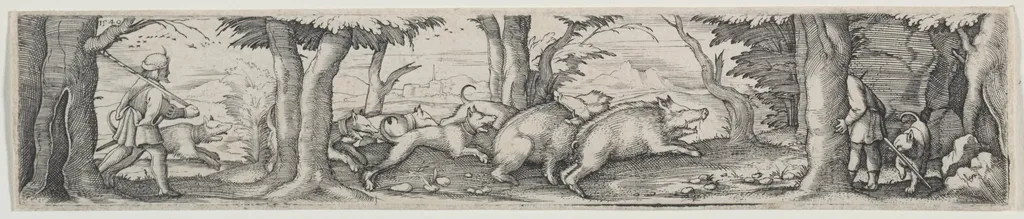
Boar Hunt is a print by the Renaissance artist Virgil Solis. It dates from 1540 and is held in the collection of the Cleveland Museum of Art.
About this work
Overview
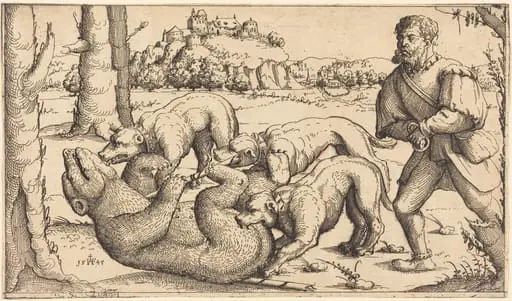
Virgil Solis’s print Boar Hunt, executed around 1540, depicts a dramatic chase in a wooded setting. Two hunters pursue a charging wild boar; one thrusts a spear while the other watches intently. The animal’s dark silhouette cuts sharply against the surrounding trees, creating a sense of movement and tension.
Subject & Meaning
The composition illustrates a common German motif of the sixteenth century, where boar hunting symbolized both sport and a communal effort to protect crops and villages from the animal’s destructive potential. The work conveys the peril of the hunt and the coordinated bravery required to confront such a formidable creature.
Technique & Style
Solis renders the scene with meticulous line work, emphasizing the texture of foliage and the detailed attire of the hunters. Fine hatching defines the musculature of the boar and the play of light among the trees, characteristic of Northern Renaissance printmaking that prized precision and narrative clarity.
History & Provenance
Created in the mid‑16th century, Boar Hunt entered the collection of the Cleveland Museum of Art, where it is currently conserved. The print reflects Solis’s prolific output as an engraver and illustrator for German publishers, contributing to the visual culture of hunting literature of his era.
Artist & collection

Artist
Virgil Solis or Virgilius Solis (1514 – 1 August 1562), a member of a prolific family of artists, was a German draughtsman and printmaker in engraving, etching and woodcut who worked in his native city of Nuremberg.

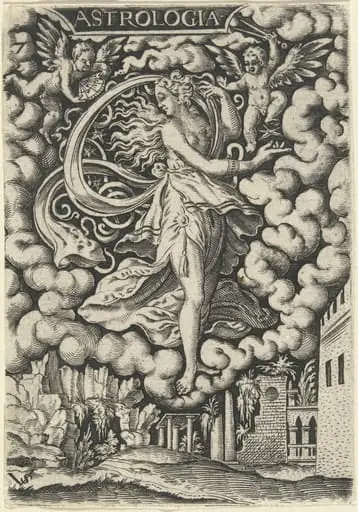
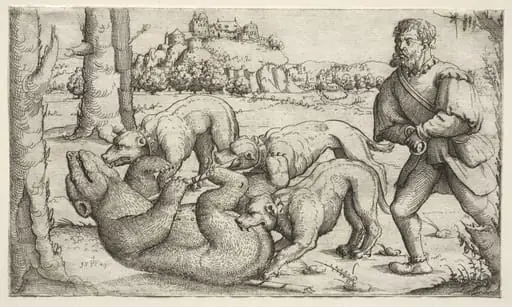 A Bear Hunt
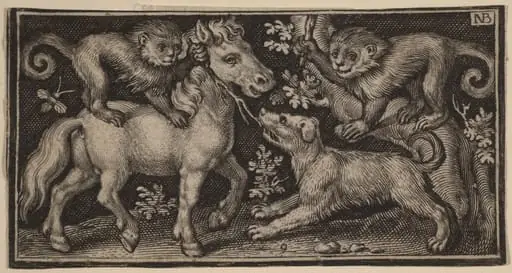 Horse with Two Monkeys and a Dog
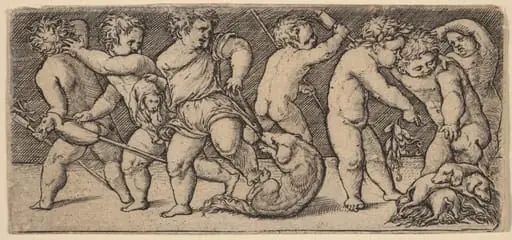 Children Playing with a Bitch and Three Young Dogs
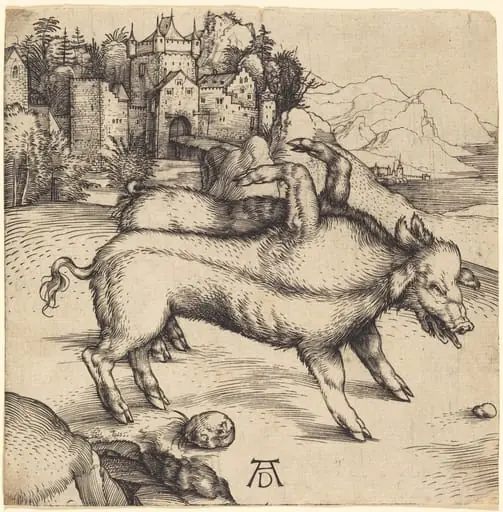 The Monstrous Pig of Landser
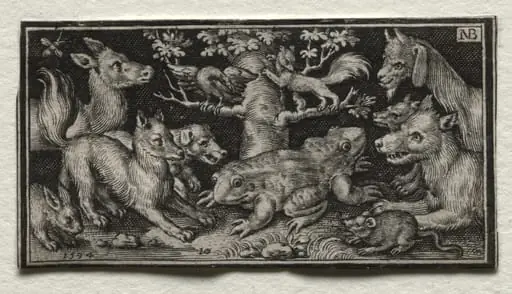 Two-headed Frog surrounded by Animals
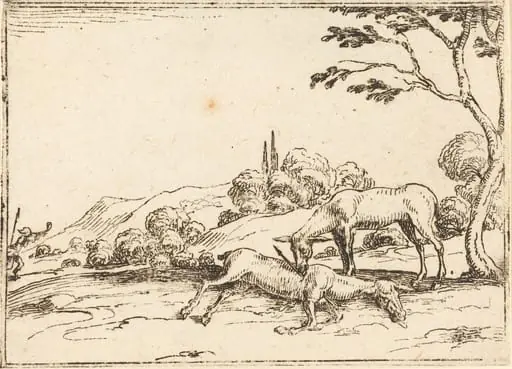 Doe Mourning her Foal
 Doe Mourning her Foal
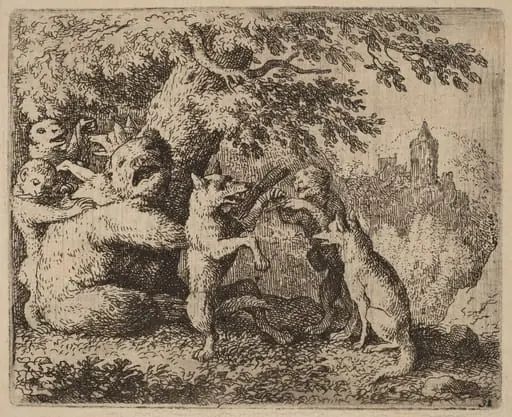 The Bear and the Wolf are Persecuted
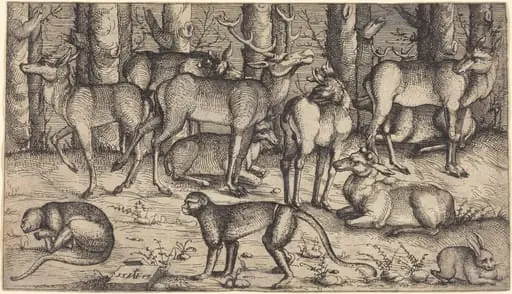 Stags in the Forest
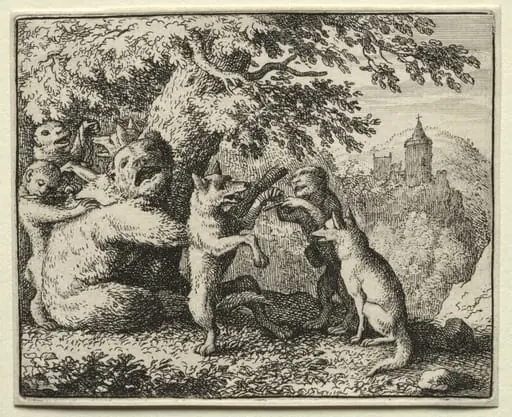 Reynard the Fox: Reynard Equipped for his Pilgrimage
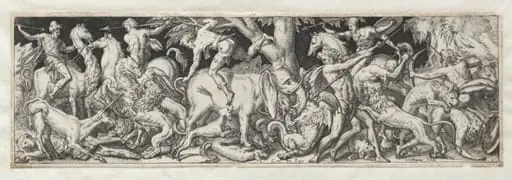 Combats and Triumphs No. 6
 Bear Hunt