Artwork
Village Road
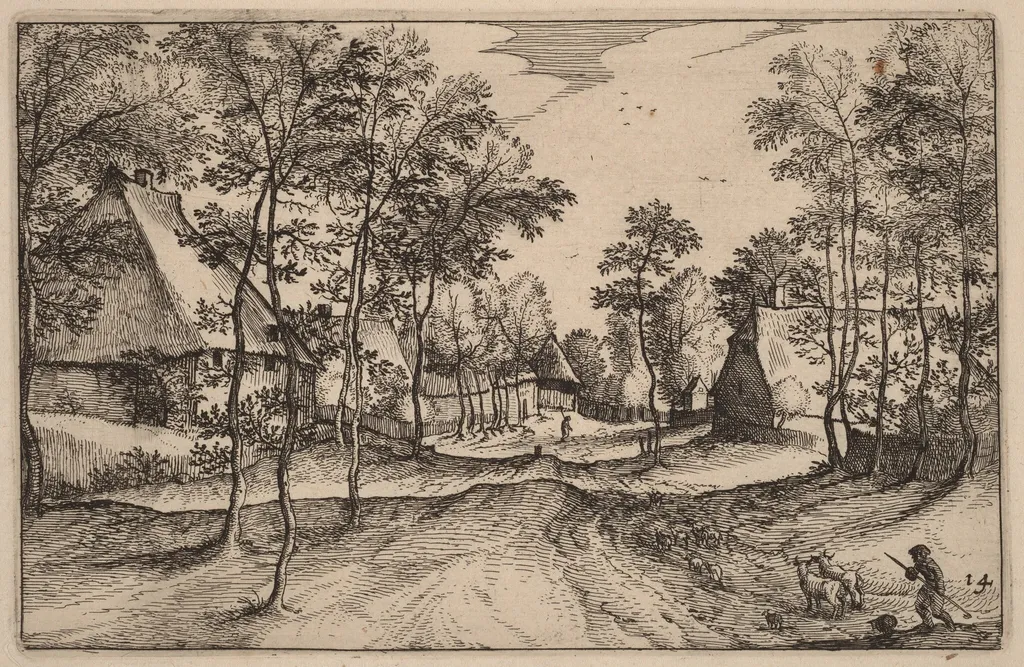
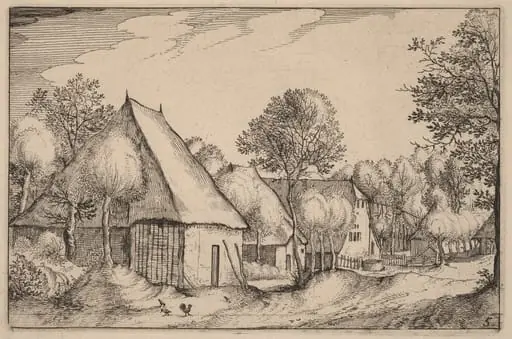
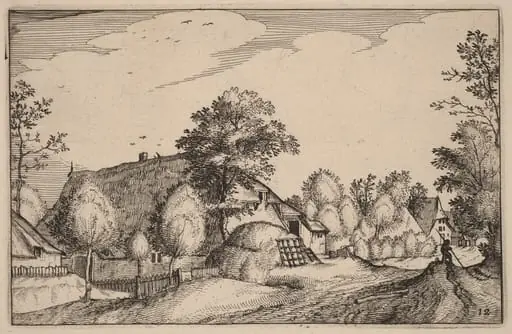
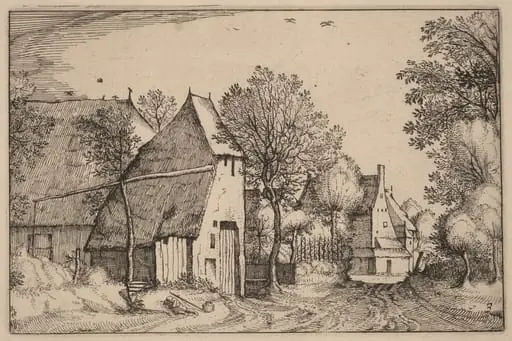
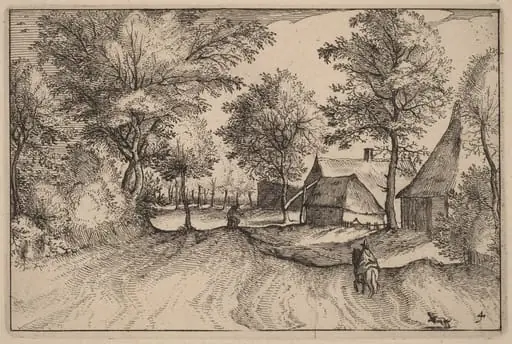
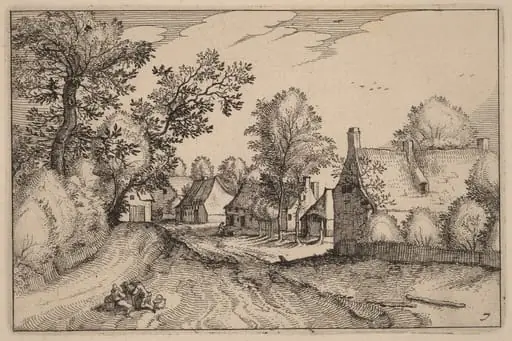
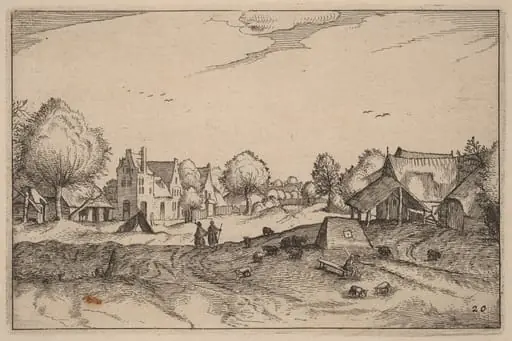
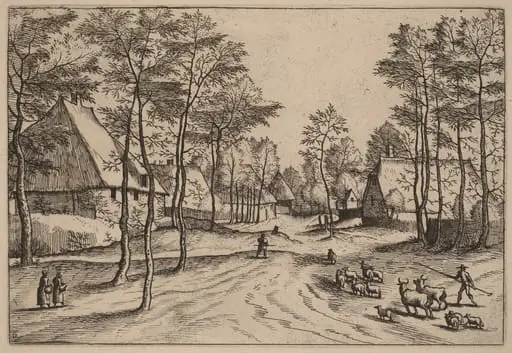
Village Road is an ink print by the Baroque artist Claes Jansz Visscher. It dates from 1612 and is held in the collection of the National Gallery of Art.
About this work
Overview
Created in 1612 by Claes Janszoon Visscher, *Village Road* is a black-and-white etching that captures a quiet rural scene in the Dutch countryside.
Created in 1612 by Claes Janszoon Visscher, *Village Road* is a black-and-white etching that captures a quiet rural scene in the Dutch countryside. As a skilled engraver and publisher based in Amsterdam, Visscher produced works that combined topographical accuracy with everyday observation. This print exemplifies the era’s flourishing print culture, where detailed imagery was reproduced for a broad audience beyond elite patrons.
Subject & Meaning
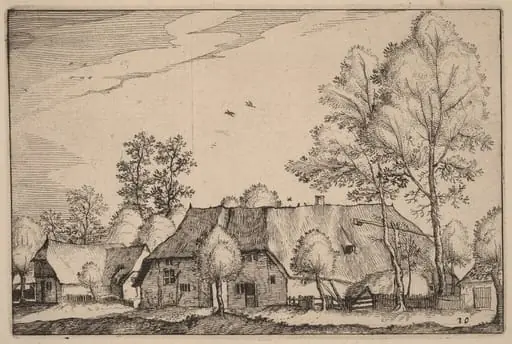
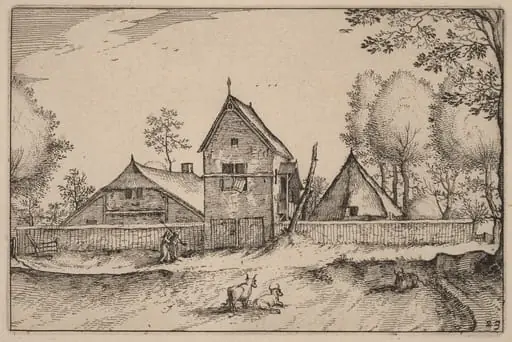
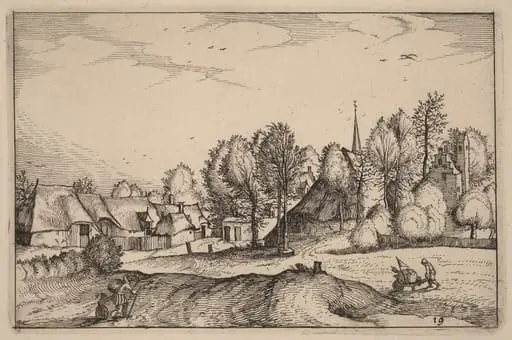
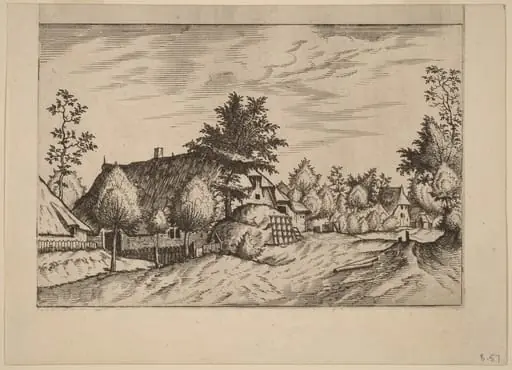
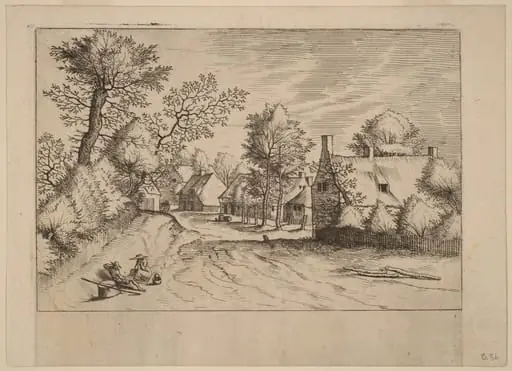
The scene portrays a modest village settlement along a winding path, with thatched cottages, scattered trees, and a gentle stream. Figures—pedestrians and a herder with livestock—move quietly through the landscape, suggesting routine rural life rather than dramatic event. The composition avoids idealization, instead presenting a grounded, unembellished view of agricultural existence, reflecting the Dutch interest in authentic, observable reality.
Technique & Style
Visscher employed etching, a method involving acid-bitten lines on a metal plate to hold ink. Fine, controlled strokes render the texture of tree bark, thatch, and foliage with precision. The contrast between dark lines and the white paper enhances depth and detail without color, relying on line quality and density to suggest form and atmosphere. This technique allowed for consistent reproduction, making the image accessible to a wider public.
History & Provenance
Claes Janszoon Visscher established a successful print-publishing dynasty in Amsterdam, and *Village Road* was produced during the early phase of his career. While the specific early ownership of this print is undocumented, it aligns with the commercial output of his workshop, which distributed topographical and genre scenes across Europe. Its survival reflects the durability and demand for such prints in the 17th century.
Context
In early 17th-century Holland, printmaking thrived as both art and commerce. With rising literacy and a growing middle class, demand grew for affordable, detailed images of landscapes and daily life. Visscher’s work, including this etching, contributed to a broader cultural shift toward valuing the ordinary, grounded in the region’s Protestant ethos and economic prosperity.
Legacy
Visscher’s prints, including *Village Road*, helped standardize the visual representation of Dutch rural life for contemporary and later audiences. His workshop’s influence extended through generations, shaping how landscapes were recorded and circulated. Though not a solitary artistic triumph, the work endures as a quiet testament to the precision and quiet observation characteristic of Dutch print culture.
Artist & collection

Artist
Claes Janszoon Visscher (1587 – 19 June 1652) was a Dutch Golden Age draughtsman, engraver, mapmaker, and publisher.