Artwork
Lion of Saint Mark
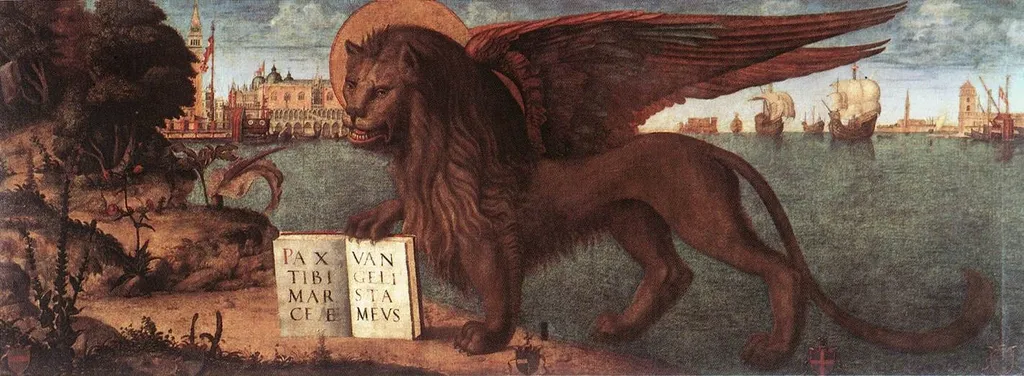
Lion of Saint Mark is a tempera painting by the High Renaissance artist Vittore Carpaccio. It dates from 1516 and is held in the collection of the Doge's Palace.
About this work
Overview
Created in 1516 by Venetian painter Vittore Carpaccio, the tempera work titled *Lion of Saint Mark* is displayed in the Doge’s Palace. The composition presents a winged lion, the emblem of Venice’s patron saint, standing upright on its hind legs and holding an open book, set against a calm watery landscape with a distant city.
Subject & Meaning
The lion, rendered with an open mouth exposing its teeth, serves as a visual representation of Saint Mark’s symbol, embodying authority and protection. The Latin inscription on the book—"PAX TIBI MARCE EVANGELISTA MEVS" on one page and "VAN GELI STA MEVS" on the other—reinforces the connection to the evangelist and the city’s patronage.
Technique & Style
Carpaccio employed tempera, a medium that allows fine detail and layered coloration, giving the figure a tactile presence. The artist’s handling of precise architectural elements in the background and his vivid, saturated palette reflect influences from Gentile Bellini, Antonello da Messina, and Early Netherlandish painting, while retaining a distinct Venetian sensibility.
History & Provenance
The painting was produced during the early sixteenth‑century High Renaissance period and has remained in the Doge’s Palace, serving as a decorative and symbolic piece within the civic complex that celebrated Venice’s patron saint.
Context
In the early 1500s, Venice emphasized its identity through visual symbols such as the winged lion. Carpaccio’s work aligns with this civic program, integrating religious iconography with a serene urban vista that reflects the city’s maritime power and cultural confidence.
Artist & collection
Artist
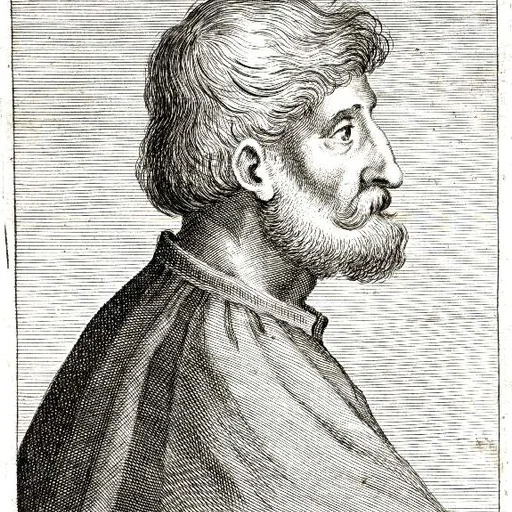
Vittore Carpaccio (UK: kar-PATCH-ee-oh, US: -PAHTCH-, Italian: ; c. 1460/65 – c. 1525) was an Italian painter of the Venetian school who studied under Gentile Bellini. Carpaccio was largely influenced by the style of…