Artwork
Vasul are fundul plat din care pornesc pereții înalți terminați în partea superioară cu gura care are marginea ondulată. La exterior, vasul are culoare galbenă, fiind ornamentat cu cornul (ghiocel). Vasul este smălțuit, la interior având culoarea lutului ars. Cromatică: alb; maro; verde; cărămiziu.
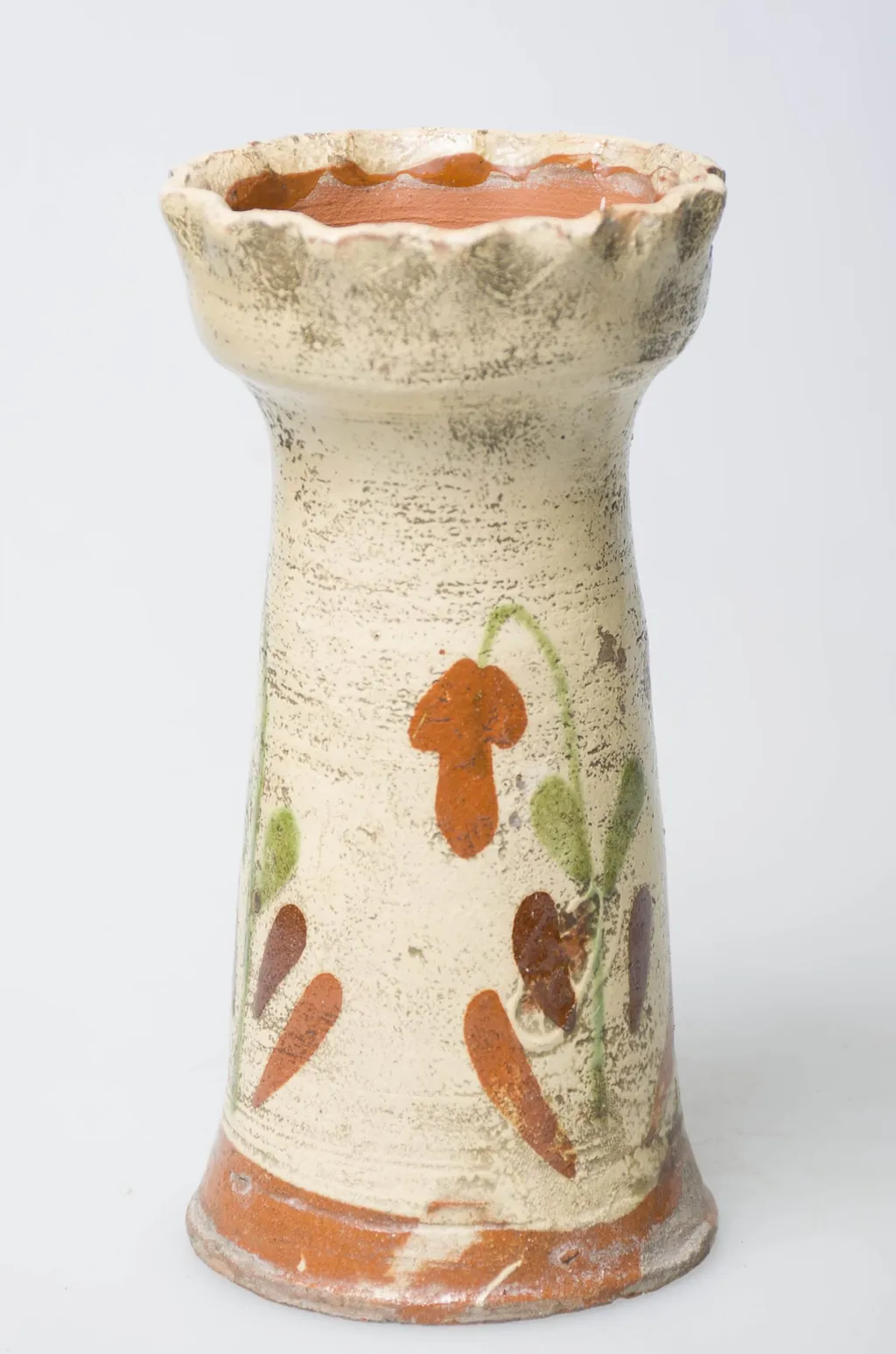
Vasul are fundul plat din care pornesc pereții înalți terminați în partea superioară cu gura care are marginea ondulată. La exterior, vasul are culoare galbenă, fiind ornamentat cu cornul (ghiocel). Vasul este smălțuit, la interior având culoarea lutului ars. Cromatică: alb; maro; verde; cărămiziu. is a photography by Vladu Tudor. It is held in the collection of the ASTRA National Museum Complex. This ceramic vessel features a wide, flat base rising into tall, uneven walls that flare outward at the top, forming a wavy rim.
About this work
Overview
The overall form is utilitarian, with no symmetry or refined finish, indicating a functional origin rather than ceremonial display.
This ceramic vessel features a wide, flat base rising into tall, uneven walls that flare outward at the top, forming a wavy rim. Its exterior is coated in a pale yellow glaze with a rough, speckled texture, suggesting handcrafting and everyday use. The interior retains the natural reddish-brown hue of fired clay, unglazed and unpolished. The overall form is utilitarian, with no symmetry or refined finish, indicating a functional origin rather than ceremonial display.
Subject & Meaning
Decorative motifs include simplified floral patterns—orange-brown blooms and green stems—painted in loose, rapid brushwork. These elements resemble wild plants rather than cultivated specimens, hinting at a connection to local flora or rural life. The absence of complex symbolism or narrative suggests the decoration served a decorative or personal function, possibly reflecting the maker’s immediate environment rather than ritual or mythological themes.
Technique & Style
The vessel was formed by hand, evidenced by its irregular contours and uneven rim. The glaze is applied unevenly, revealing patches of raw clay beneath, while the painted designs appear hastily executed, with minimal detail and no outlining. Colors are limited to earth tones—ochre, green, brick red—applied in broad, unblended strokes. The technique prioritizes immediacy over precision, aligning with folk or vernacular ceramic traditions.
History & Provenance
No documented origin or maker is recorded, but the form and decoration align with early 20th-century Romanian rural pottery traditions. Its worn surface and crude execution suggest prolonged domestic use. The reference to Vladu Tudor, a known folk artist from the region, implies a possible cultural lineage, though direct attribution remains unverified. The piece likely emerged from a local workshop or household production context.
Context
Produced in a setting where mass-produced goods were scarce, this vessel reflects the material culture of rural Romania, where pottery was made for daily needs—storage, cooking, or serving. Its aesthetic, unrefined and functional, contrasts with urban or institutional ceramics of the period. The use of local clay and natural pigments underscores a self-sufficient, place-based craft tradition rooted in practicality and inherited skill.
Legacy
This object exemplifies a quiet continuity in Romanian folk ceramics, where handmade utility retained cultural value despite industrialization. Its preservation highlights a shift in appreciation from purely functional objects to artifacts of vernacular artistry. While not widely exhibited, it contributes to broader studies of non-elite material culture and the resilience of regional craft practices in the face of modernization.
Artist & collection
Artist
Vladu Tudor had a habit of signing his name on the inside of bowls like a shy confession.

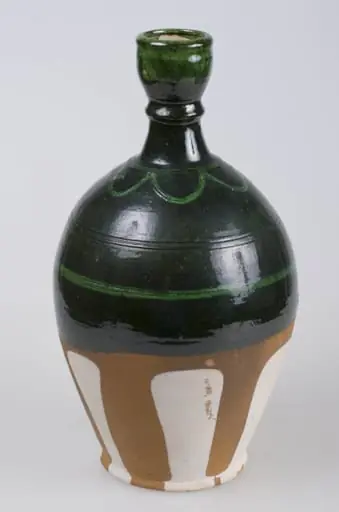 Vasul este zvelt și înalt, cu baza îngustă ce se lărgește spre pântecul vasului înălțat, gâtul subțire și lung, buza mai groasă și lată. De jumătatea gâtului se prinde toarta cu țâț printr-un guler. Jumătatea de jos este nesmălțuită și prezintă dungi verticale, de vopsea albă. Jumătatea de sus este smălțuită în verde închis. Decorul este format dintr-un brâu de semicercuri în jurul gâtului - două dungi paralele pe pântec realizat prin incizie de culoare verde închis. Cromatică: alb; maro; verde.
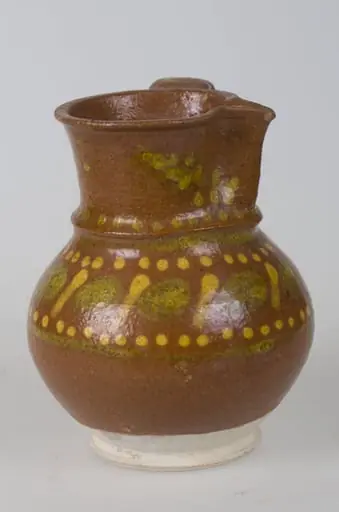 Vas cu corpul de formă cilindrică, cu fundul plat, corpul pântecos, gâtul înalt și gura largă, este prevăzută cu un cioc de scurgere așezat la nouăzeci grade față de toartă. Decorul pictat a fost realizat cu pensula în zona pântecului și a gâtului, format din motive geometrice. Pe pântecul vasului a fost pictat un registru încadrat între două linii de culoare verzuie, între care se află alte două linii realizate din puncte de culoare galbenă. În interiorul liniilor menționate anterior se află registre circulare format din pete de culoare verzuie, separate de linii galbene orizontale înclinate. Pe marginea vasului și pe toartă au fost pictate trei flori de culoare verde, de tipul „spicului de grâu”. Cromatică: alb (fund), maro-roșcat restul suprafeței; motive: galben; verde.
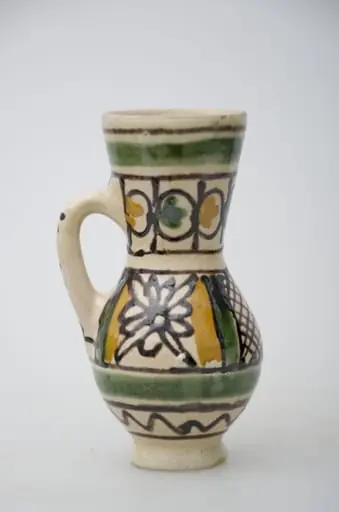 Vas ceramic de formă bitronconică, smălțuit de mici dimensiuni, cu baza plată și bombat în zona „pântecelui”. Prezintă o toartă ce pornește din zona gâtului redus ca dimensiuni și se termină în zona diametrul maxim al vasului. Decorul vasului este compus din două registre picturale. În primul registru, mărginit de două linii drepte subțiri, de culaore maro închis, au fost pictate două flori conturate cu negru și încadrate de câte două linii groase de culoare verde și galben. Cel de-al doilea registru este compus din boboci de culoare verde și galben, fiind dispuși concentric pe gâtul vasului. Ambele registre picturale sunt încadrate între două linii groase circulare, verzi. Pe toartă a fost redactat textul: „KORUND”. Prezintă uzură funcțională. Cromatică: fond: alb; motive: galben, verde, maro închis.
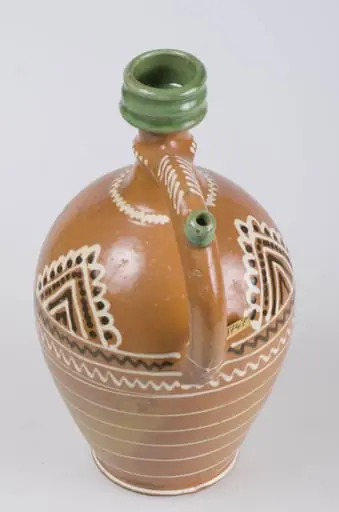 Vasul este zvelt și înalt, cu baza îngustă ce se lărgește spre pântecul vasului situat în partea de sus a lui, gâtul subțire, buza vasului largă, în trei trepte suprapuse, smălțuită verde. Până spre pântecul vasului, de la bază, opt linii circulare, paralele (în ultimele două a fost pictat motivul valului). Pe pântecul vasului decor geometric în alb și maro închis. Gâtul vasului marcat de un zig-zag alb. Toarta este decorată cu puncte și linii albe. Cromatică: maro; verde; alb.
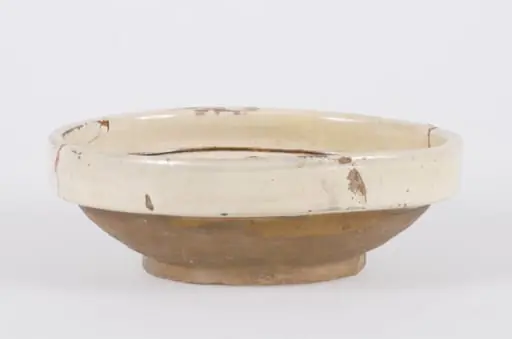 Vasul ceramic are formă tronconică, cu pereții evazați și buza dreaptă și ieșită în afară. Exteriorul pereților și fundul, au fond cărămiziu, restul suprafeței interioare și buza exterioară, având fond alb-gălbui. Decorul este format din două registre despărțite de două cercuri concentrice: unul plasat în marginea buzei și altul în centrul fundului vasului. Primul registru central este decorat cu o floare cu frunze verzi, petale maro și un punct albastru în centru. Al doilea registru amplasat pe pereții interiori ai vasului este format din două flori similare cu cea centrală mărginite spre tulpină și vârf de mai multe frunze, despărțite de două aglomerări de linii de diferite dimensiuni. Cromatică: fond: alb-gălbui; motive: verde; maro; albastru.
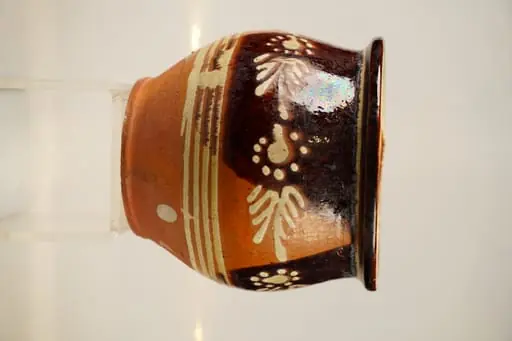 Vas cu corp ușor sferic, buză evazată și cu muchia buzei verticală; este prevăzut cu o toartă laterală de prindere sub formă de bandă, cu puncte de inserție la buză și în zona mediană a corpului. Jumătatea superioară a vasului este parțial acoperită cu angobă maro, inclusiv toarta acestuia. Decorul este realizat prin pictare cu cornul cu humă albă și se compune din următoarele motive: un brâu format din cinci linii circulare de culoare albă, neglijent realizate, dispuse imediat sub baza torții; o ghirlandă continuă, dispusă circular deasupra zonei de inserție a torții la corp, formată din motive florale și vegetale geometrizate (flori cu centrul rotund și petale din puncte mici albe, și din grupuri de frunze). Suprafața ornamentată a vasului este acoperită cu un strat de smalț transparent (baza vasului este nesmălțuită). Cromatica: alb, pe fondul roșu al lutului ars, maro.
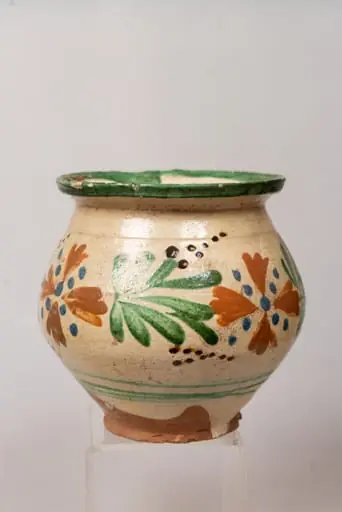 Piesă cu toartă în partea laterală, cu baza mai îngustă, joasă, cu corp sferic, cu gât scurt, buză îngustă și răsfrântă. Toartă simplă, în bandă, cu punctele de inserție la gura și la partea centrală a corpului. Vasul este angobat în întregime cu humă albă. Decorat la exterior, prin pictare cu pensula si cu cornul, cu motive florare și fitomorfe (patru flori de culoare siena arsă, cu petale sub forma frunzelor de trifoi cu puncte albastre între ele și cu frunze verzi) pe suprafața corpului și cu motive geometrice (linii paralele pe toartă). Partea inferioară a corpului este decorată cu patru linii paralele circulare, de culoare verde. Muchia buzei este marcată de o dungă verde. Smălțuit pe exterior și pe interior cu smalț transparent. Cromatica: alb, albastru, siena arsă, verde.
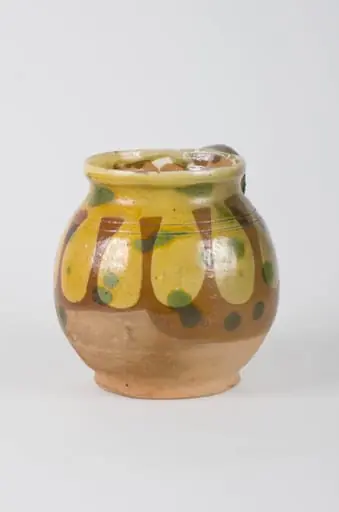 Vas din lut cu corp foarte bombat, cu gât scurt, buză evazată și ridicată. O toartă pornește din buză și este fixată pe corp la nivelul diametrului maxim. Pe umăr este decorată cu motive geometrice: două linii incizate. Din buză pornesc vertical loburi de angobă. Partea de jos nesmălțuită. Partea de sus smălțuită galben și stropită cu verde. Interior neangobat dar smălțuit. Cromatică: fond: cărămiziu; motive: galben; verde.
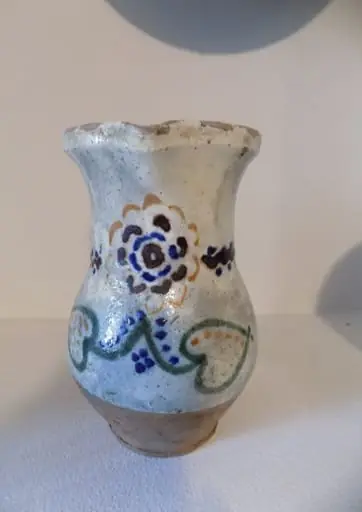 Cană
Cană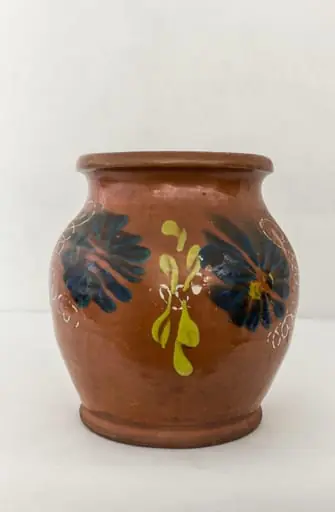 Vas cu corp bombat, cu buza răsfrântă, cu o toartă prinsă în două puncte, smălțuit în exterior și parțial în interior, decorat pe suprafața exterioară prin pictare cu motive fitomorfe (frunze) și florale (albăstrele), încadrate de linii spiralate. Cromatică: albastru, alb, galben, verde, maro, cărămiziu.
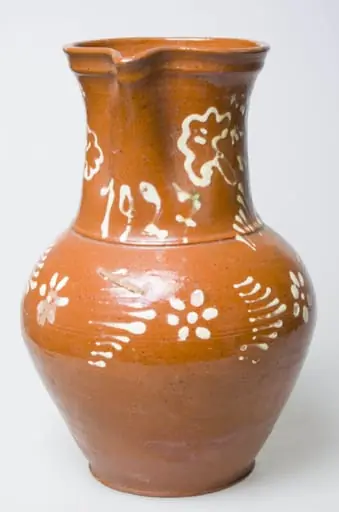 Vasul are forma tronconică, cu fund lat, gât gros, toartă și cioc opus acesteia. Decorul este unul floral, stilizat pe partea superioară imediat sub cioc. Obiectul este smălțuit pe ambele părti, fiind prevăzut cu o toartă pentru prindere. Cromatică: fondul este maro, iar motivele sunt pictate cu alb.
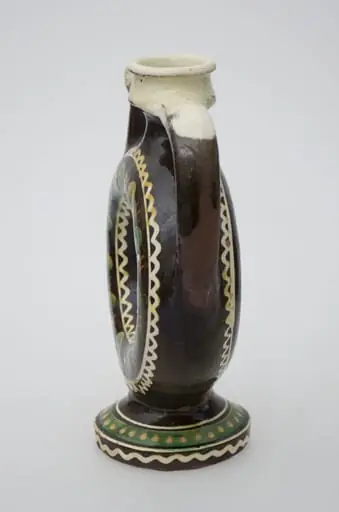 Ulcior-covrig cu manușă puternic arcuită având ”țâța” în părți: ornament cu"ochișori" încadrat de o linie dreptă și una șerpuită; Cromatică: fond: maron; motive: verde; cărămiziu; alb; crem.