Artwork
William Fielding, First Earl of Denbigh
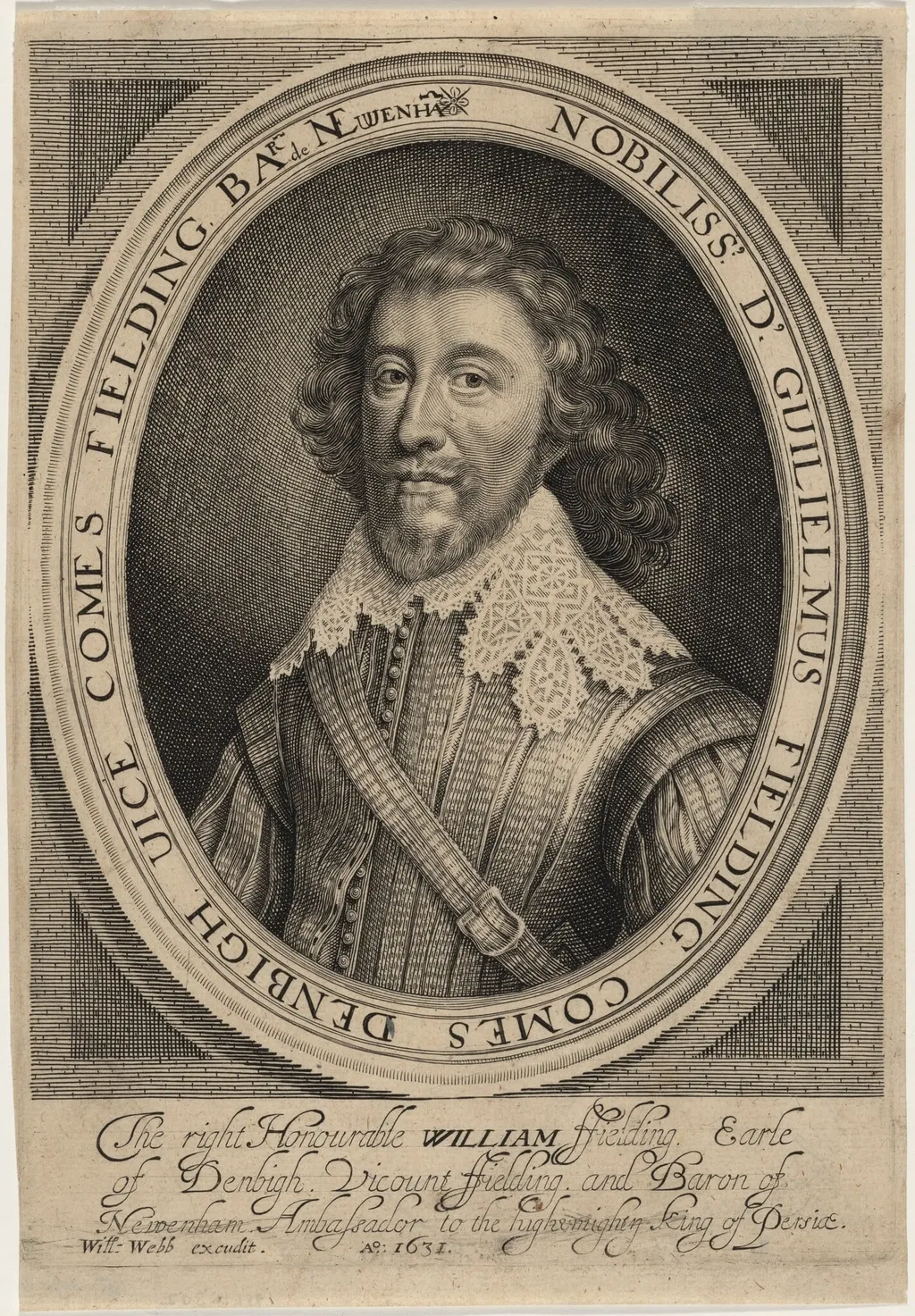
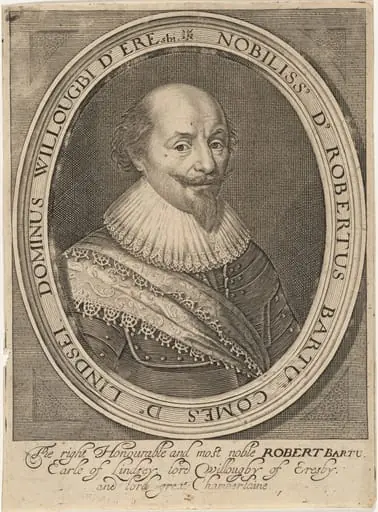
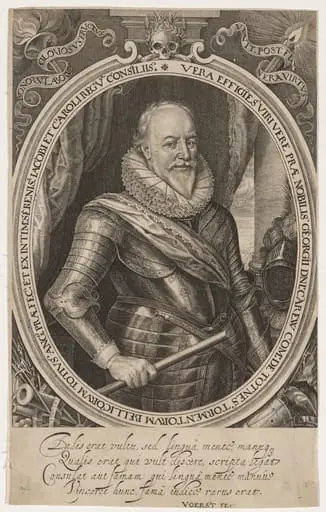
William Fielding, First Earl of Denbigh is an ink print by the Renaissance artist Robert van Voerst. It dates from 1616 and is held in the collection of the National Gallery of Art.
About this work
Overview
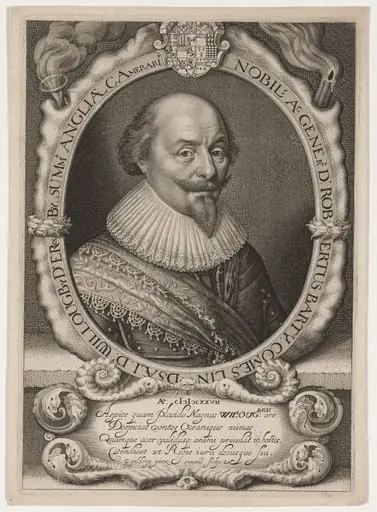
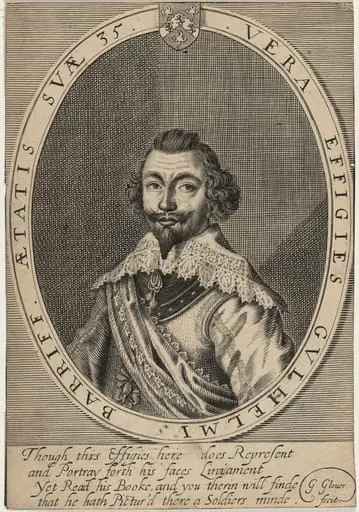
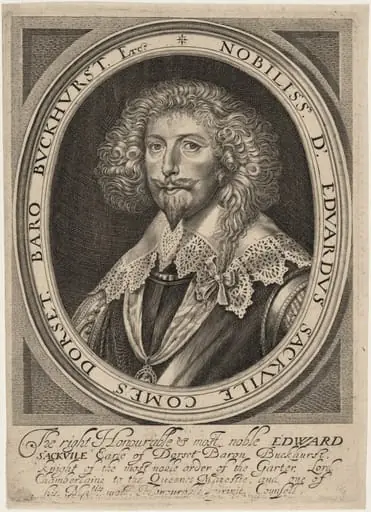
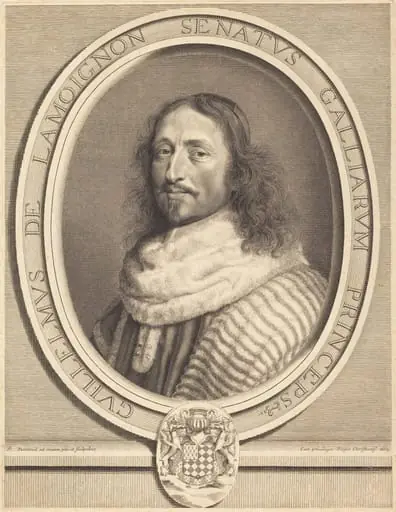
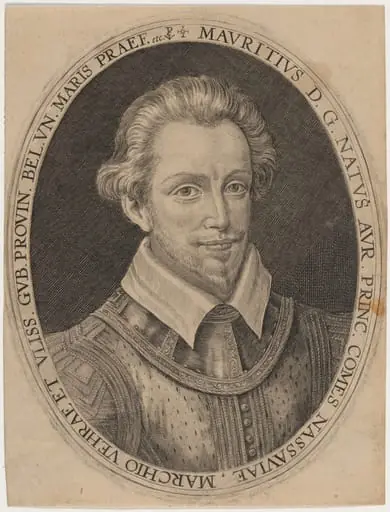
This 1616 engraving by Robert van Voerst depicts William Fielding, the first Earl of Denbigh, as a formal portrait. Executed in fine line work on paper, the image captures the subject in three-quarter view against a dark, unmodeled background. The composition emphasizes the sitter’s facial features and attire, reflecting the conventions of early 17th-century English portraiture.
Subject & Meaning
The image functions as a visual assertion of nobility, common among portraits commissioned by the English gentry during the Jacobean era.
The Earl is portrayed with solemn dignity, his direct gaze and composed posture conveying authority and status. His elaborate lace collar and buttoned jacket signify aristocratic rank, while the absence of symbolic objects focuses attention on personal presence rather than heraldic identity. The image functions as a visual assertion of nobility, common among portraits commissioned by the English gentry during the Jacobean era.
Technique & Style
Van Voerst employed meticulous engraving techniques, using fine, controlled lines to render texture in the lace, fabric, and hair. Subtle gradations of tone, achieved through line density, create a sense of volume and light, echoing Renaissance chiaroscuro. The background remains flat, isolating the figure and enhancing the psychological intensity of the face, a hallmark of Northern European printmaking traditions.
History & Provenance
Created in 1616, the engraving was likely produced to circulate the Earl’s likeness among court circles or as a gift. Van Voerst, a Dutch artist active in England, was known for his portrait engravings of nobility. The print’s survival in institutional collections suggests it was valued for its accuracy and craftsmanship, though its early ownership remains undocumented.
Context
This work emerged during a period when engraved portraits were increasingly used to disseminate the images of the elite beyond painted originals. Van Voerst’s style reflects the influence of Flemish and Dutch printmakers, adapting continental techniques to English tastes. The portrait aligns with broader trends in Jacobean visual culture, where personal identity and social standing were visually codified.
Legacy
Though not widely reproduced today, the engraving remains a representative example of early Stuart portraiture in print. It contributes to the understanding of how aristocratic identity was constructed through graphic media before the rise of photography. Van Voerst’s precision in this work underscores the role of engravers as key intermediaries in the visual culture of the period.
Artist & collection