Artwork
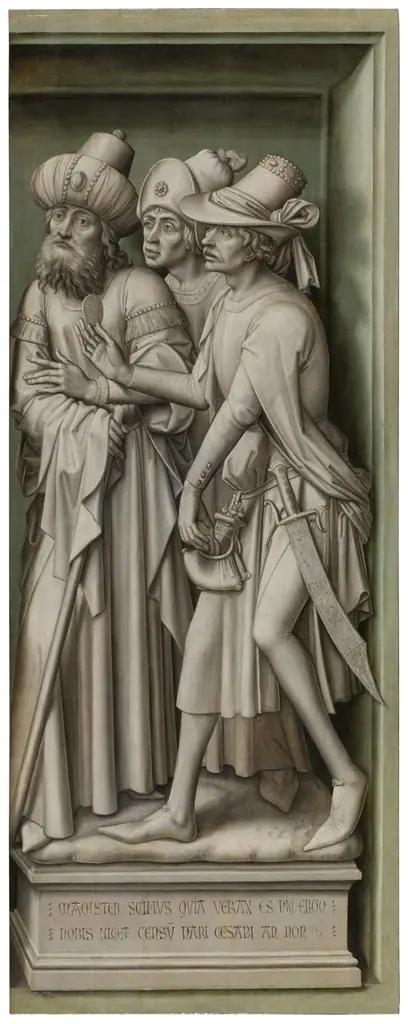
Redemption Triptych: Tribute to Caesar
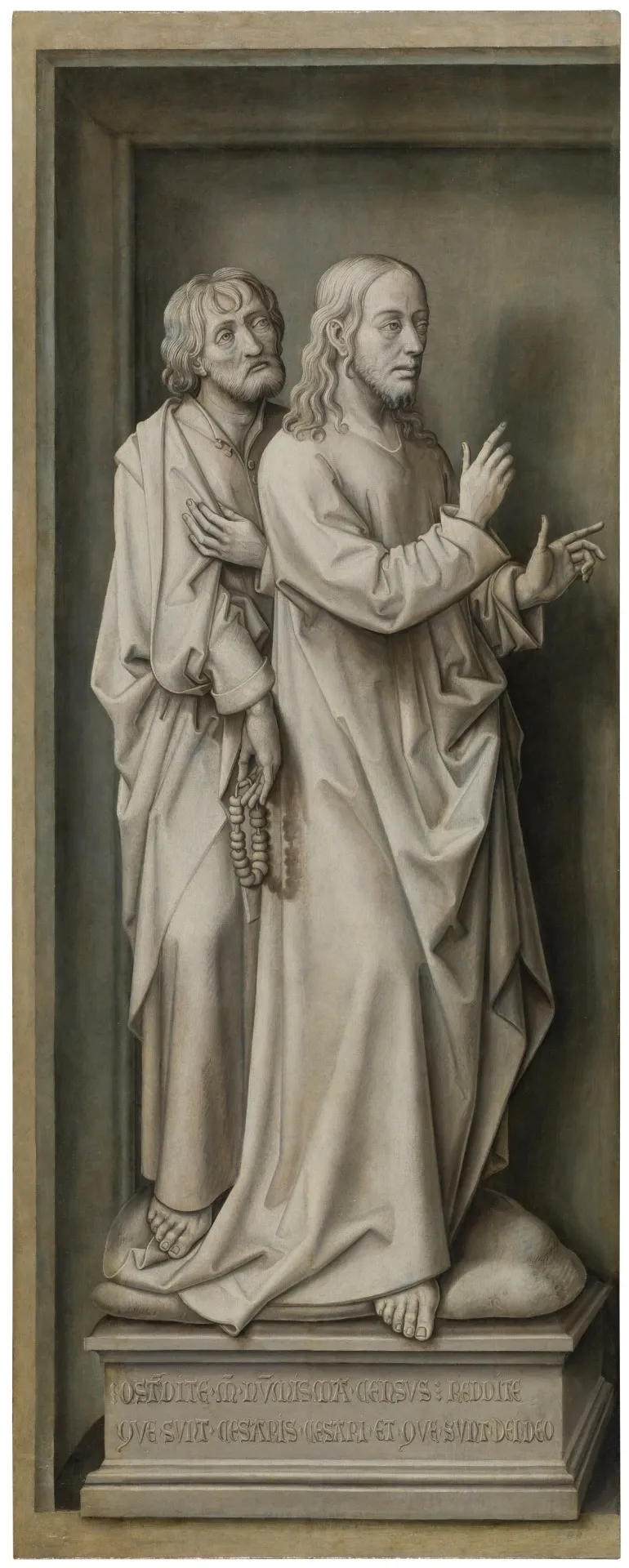
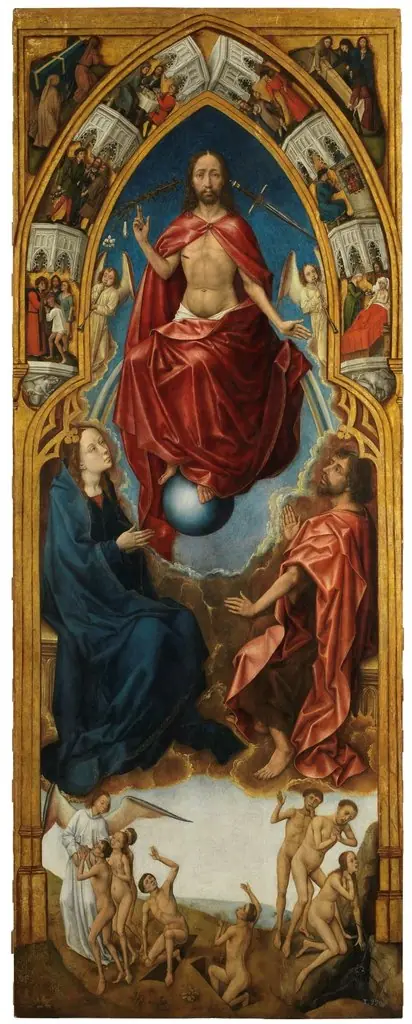
Redemption Triptych: Tribute to Caesar is an unspecified painting by the Northern Renaissance artist Vrancke van der Stockt. It dates from 1450 and is held in the collection of the Museo del Prado.
About this work
Overview
The Redemption Triptych: Tribute to Caesar is a 15th-century painting by Vrancke van der Stockt, a Netherlandish artist known for his work in the style of Rogier van der Weyden. Created around 1450, it is now housed at the Museo del Prado in Madrid.
Subject & Meaning
The triptych depicts a religious scene featuring two men. The figures are characterized by their attire and gestures, with the man on the right wearing a long robe and pointing upwards, while the man on the left has a simpler robe and a rope tied around his waist.
Technique & Style
The painting showcases the artist's use of chiaroscuro, a technique that utilizes strong contrasts between light and dark to create a three-dimensional effect. The folds in the robes are rendered in detail, adding to the overall sense of realism.
Context
The work is a product of the Northern Renaissance, a period marked by detailed realism and a focus on religious subject matter. Van der Stockt's style reflects the influence of Rogier van der Weyden, a prominent artist of the time.
Artist & collection
Artist
Vrancke van der Stockt (before 1420 - 14 June 1495) was an early Netherlandish painter. He is most notable as a "direct heir and popularizer" of Rogier van der Weyden.

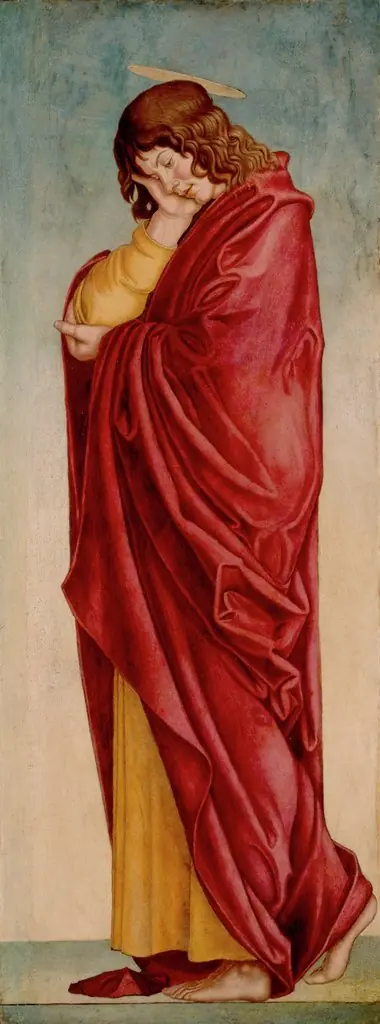 The Mourning Saint John
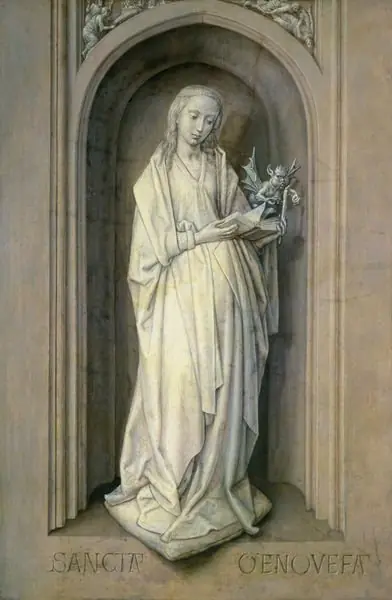 Genevieve
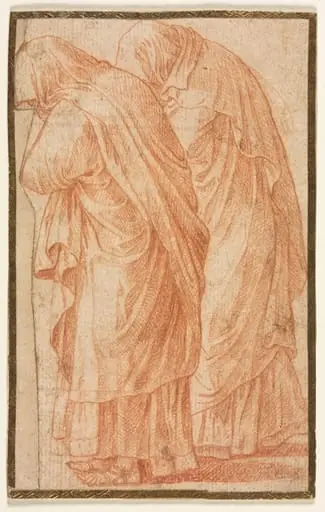 Study of Monks
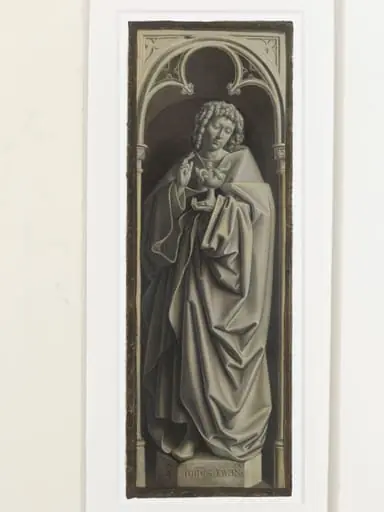 Copy of a detail of the Ghent Altarpiece, St John the Evangelist, by Hubert and Jan van Eyck in the church of St Bavon, Ghent.
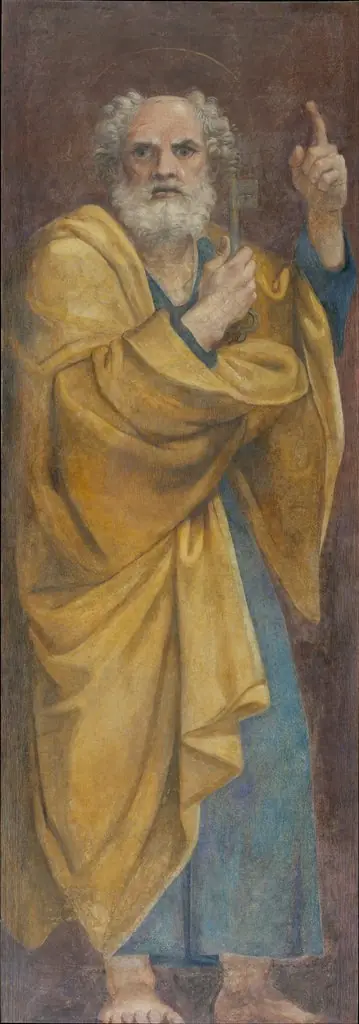 Saint Peter
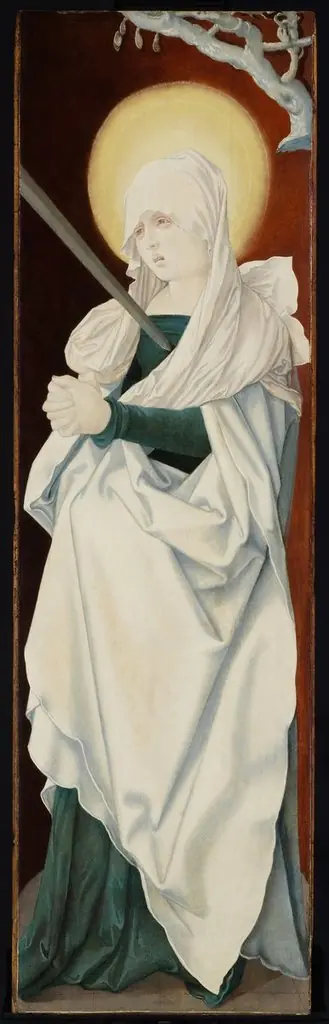 The Virgin of Sorrows (Mater Dolorosa)
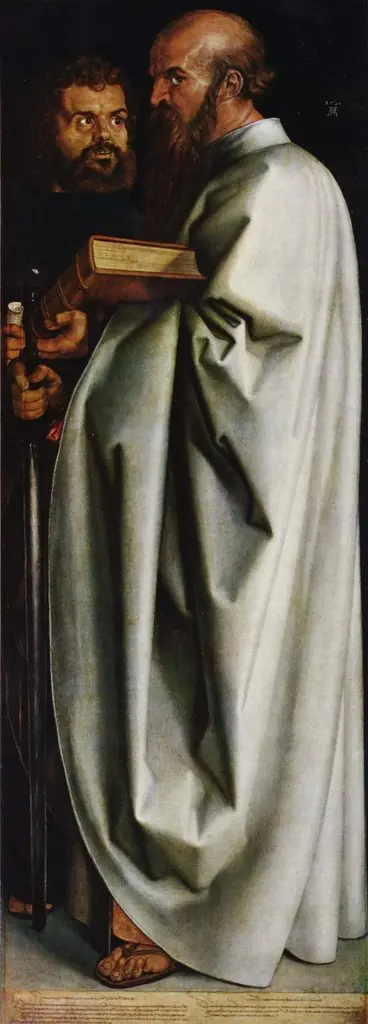 The Four Apostles: Saints Mark and Paul
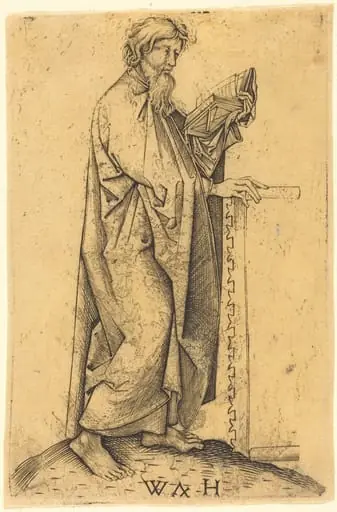 The Apostle Simon
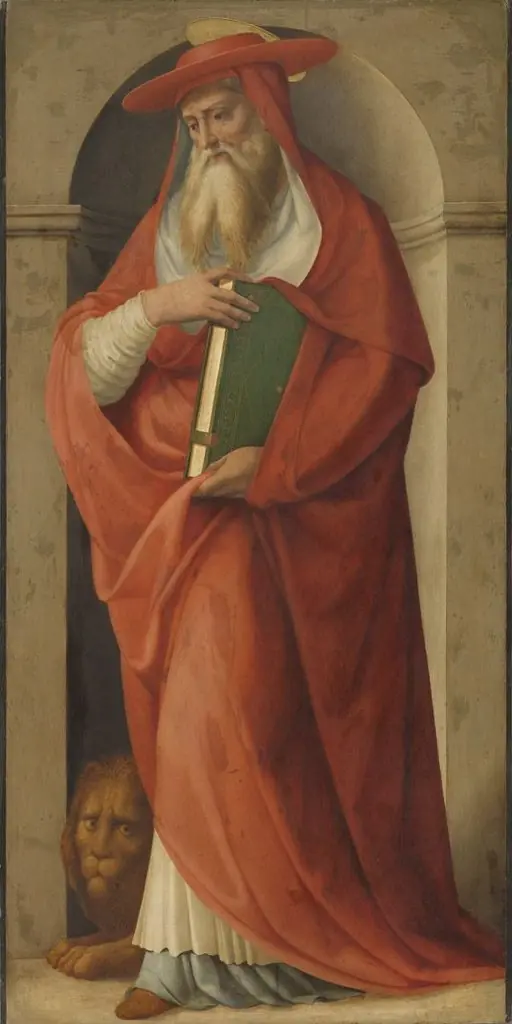 Saint Jerome
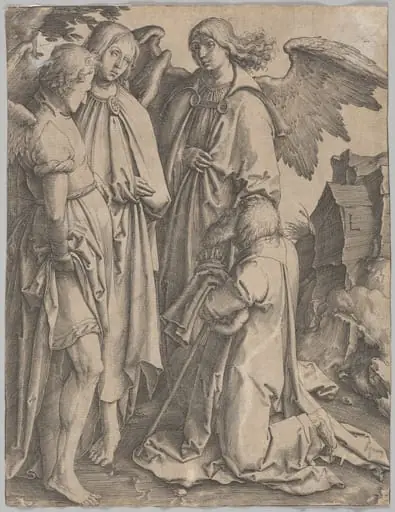 Abraham and the Angels
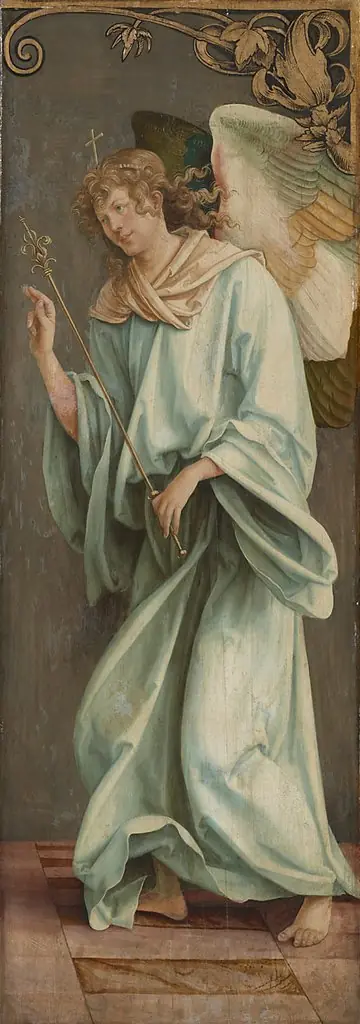 Verkündigung Mariae: Engel