Artwork
Redemption Triptych: The Crucifixion
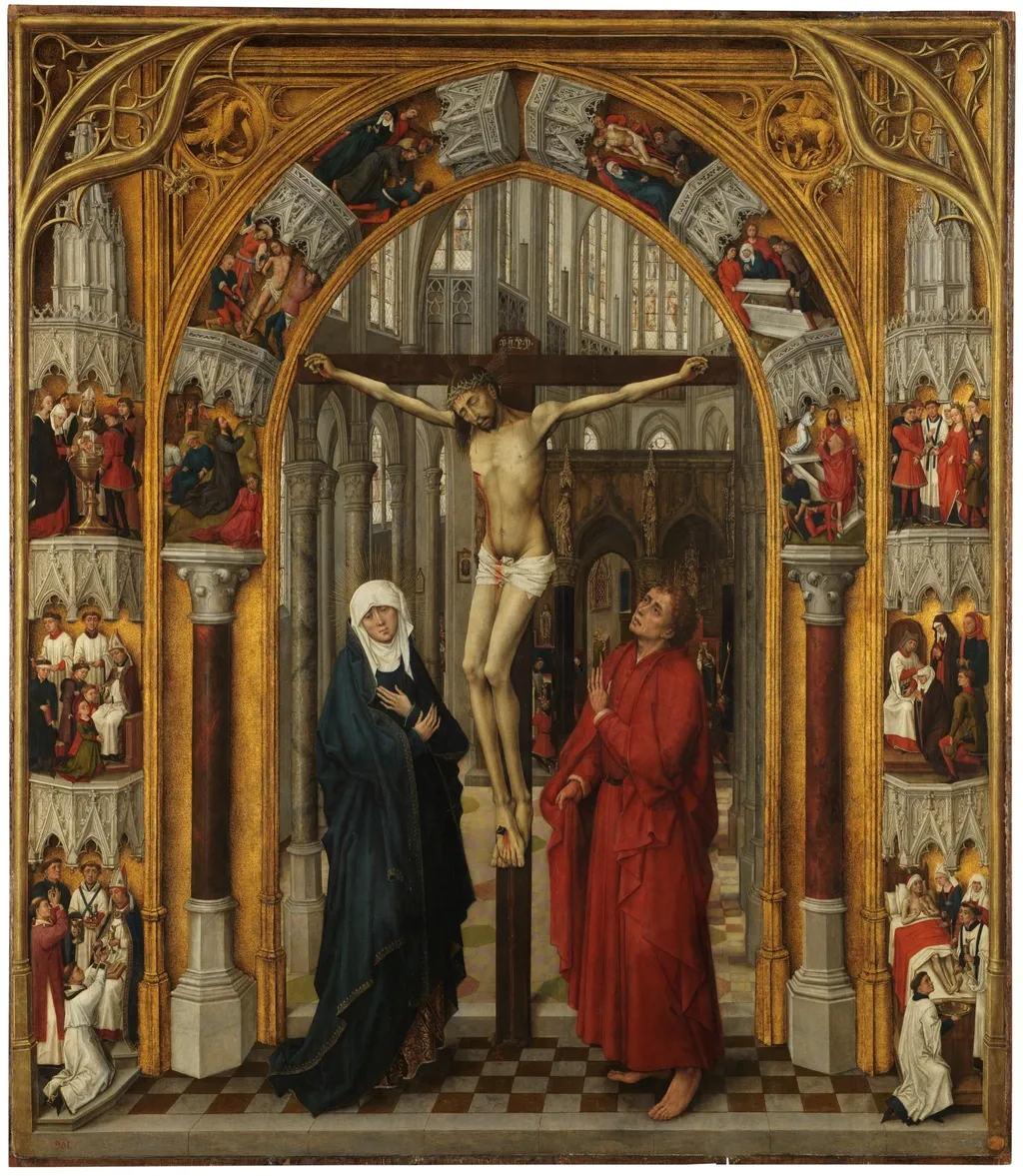
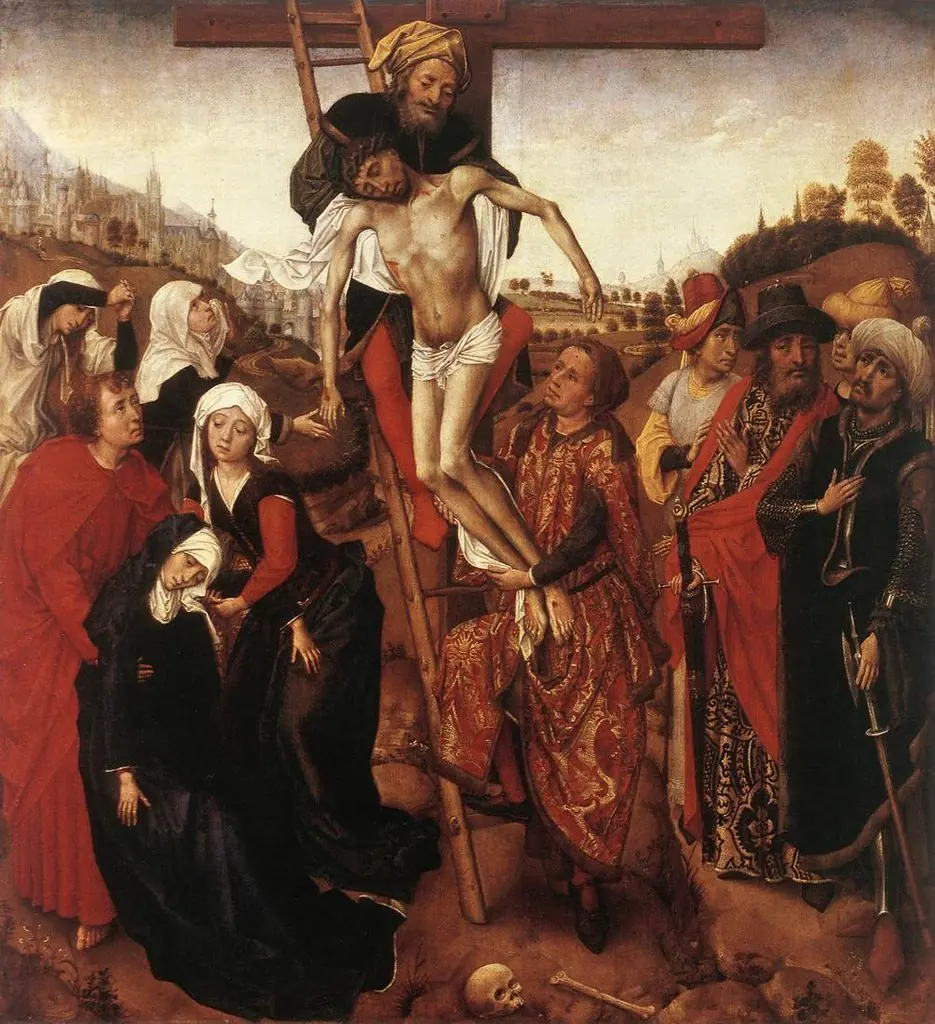
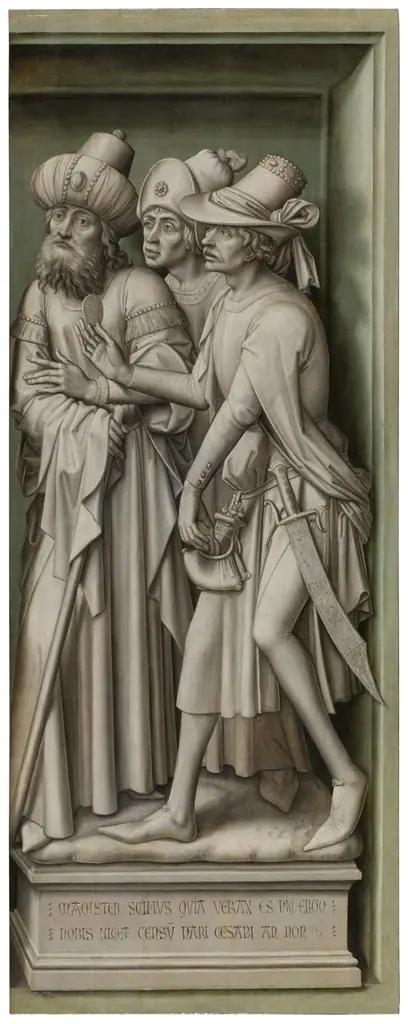
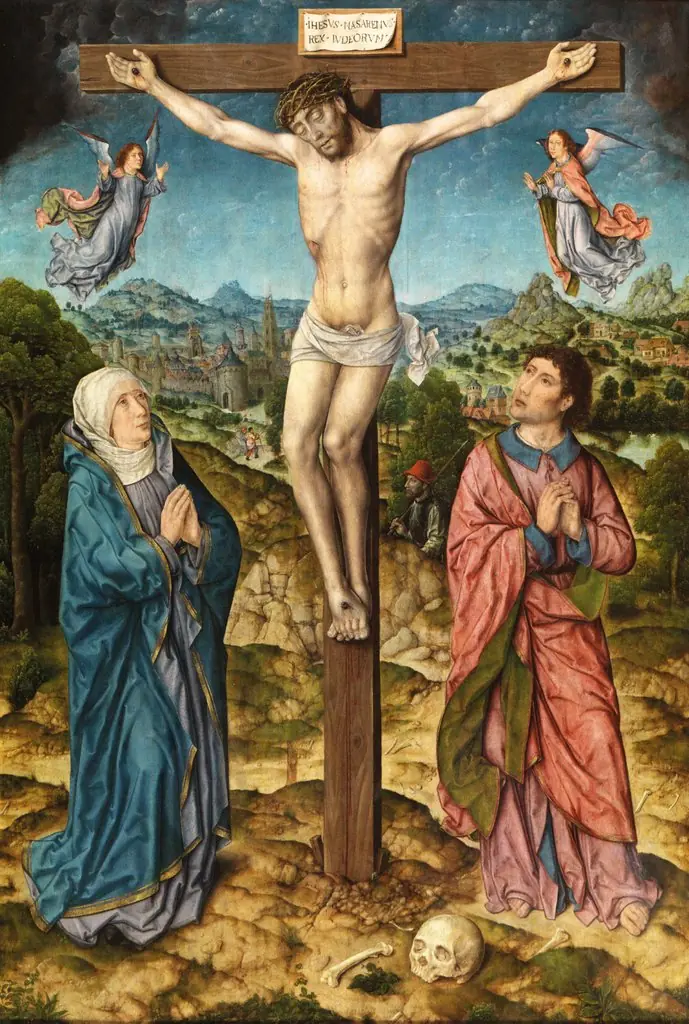
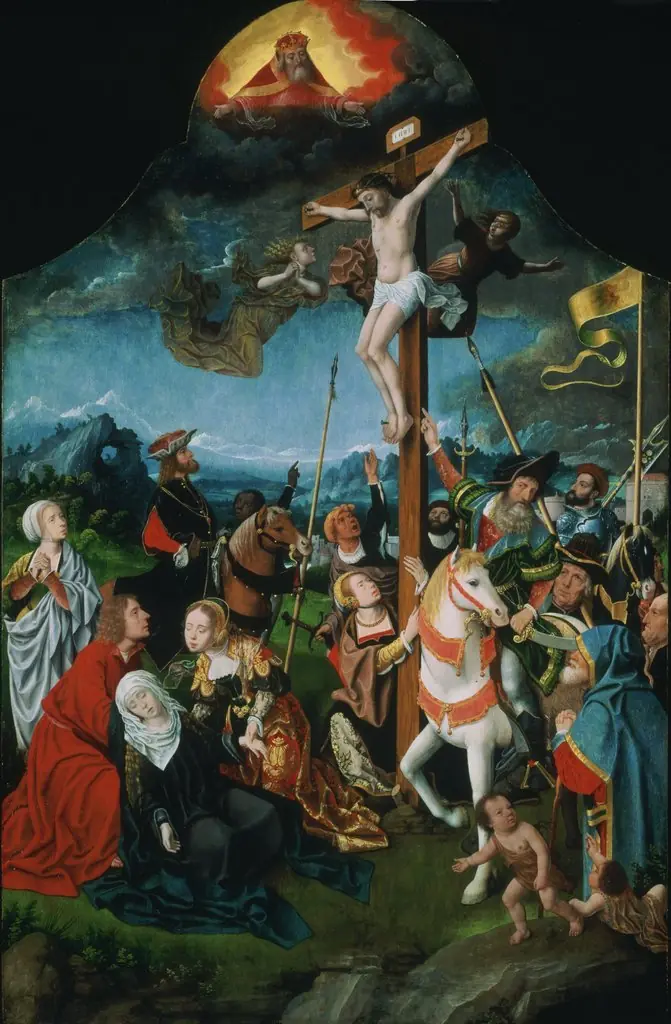
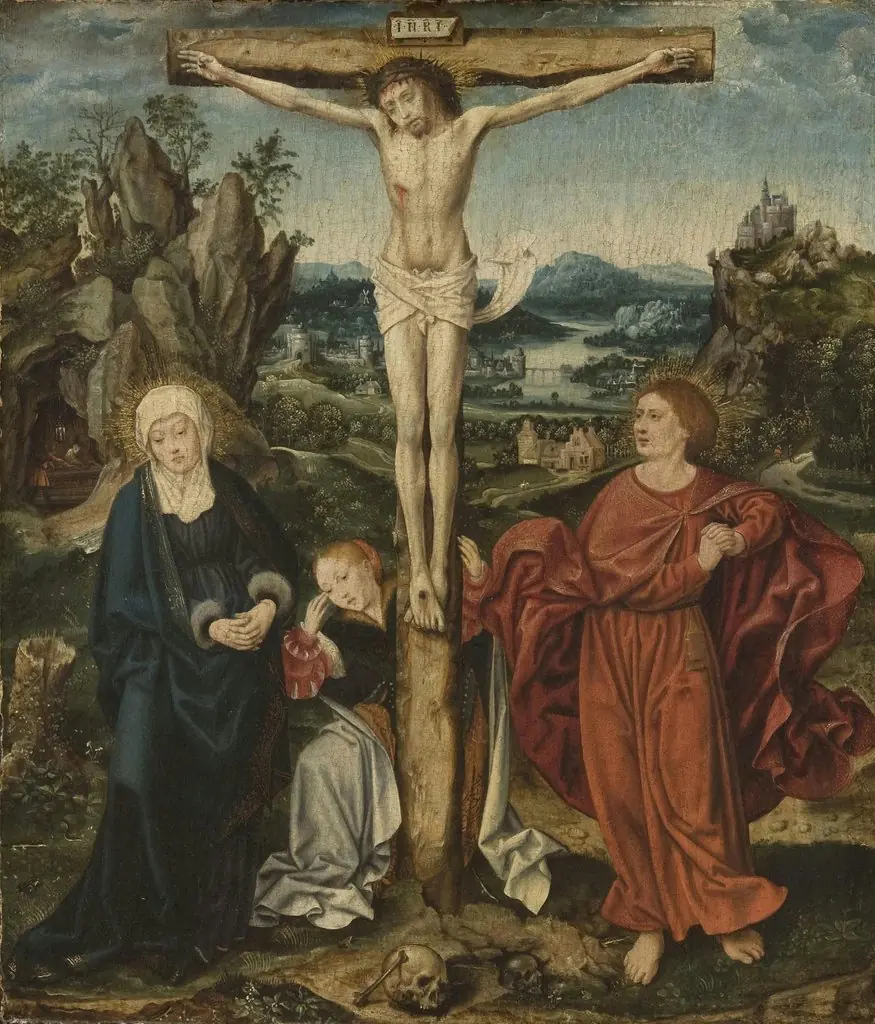
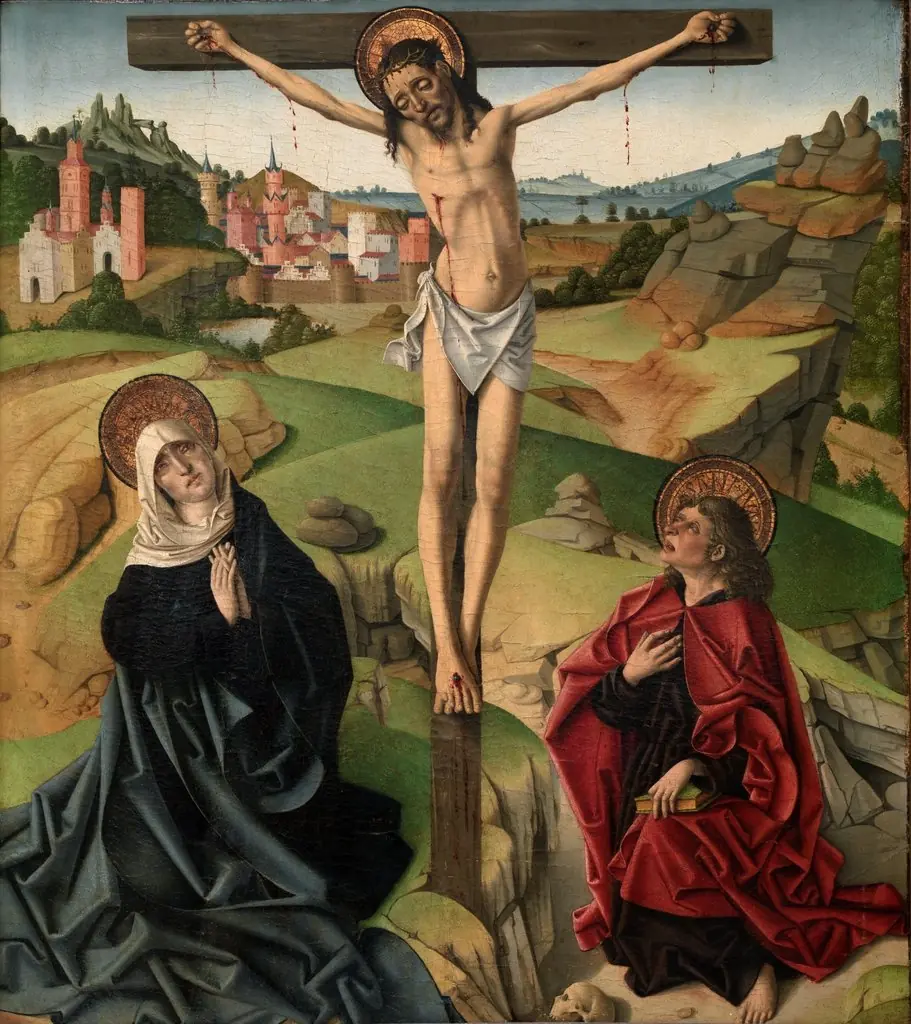
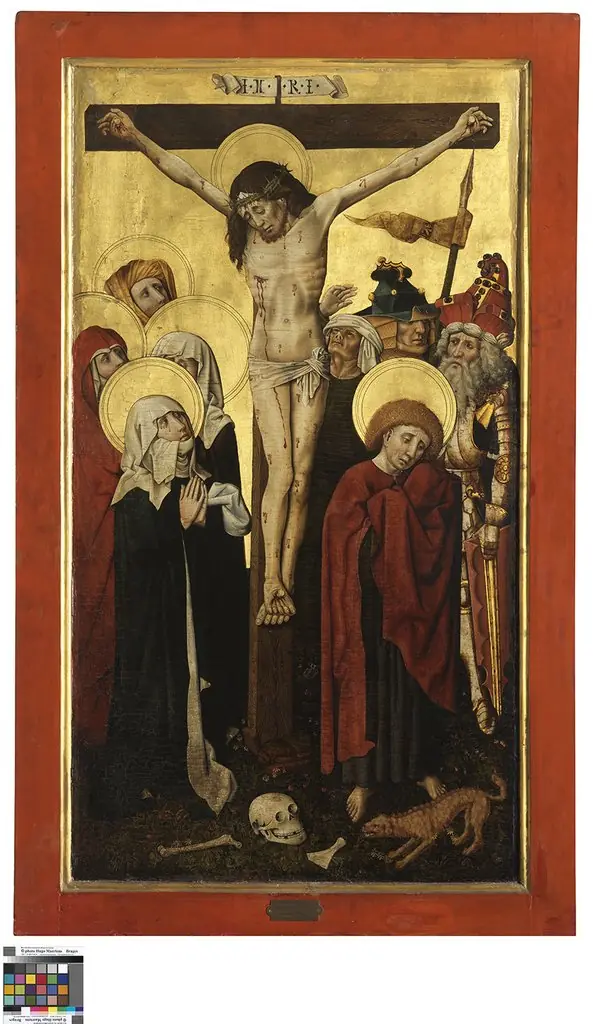
Redemption Triptych: The Crucifixion is an oil painting by the Northern Renaissance artist Vrancke van der Stockt. It dates from 1450 and is held in the collection of the Museo del Prado. Created circa 1450, the Redemption Triptych presents a central scene of the crucifixion flanked by two auxiliary panels.
About this work
Overview
Executed in oil on wood, the work measures roughly the dimensions typical of portable devotional triptychs and is presently housed in Madrid’s Museo del Prado.
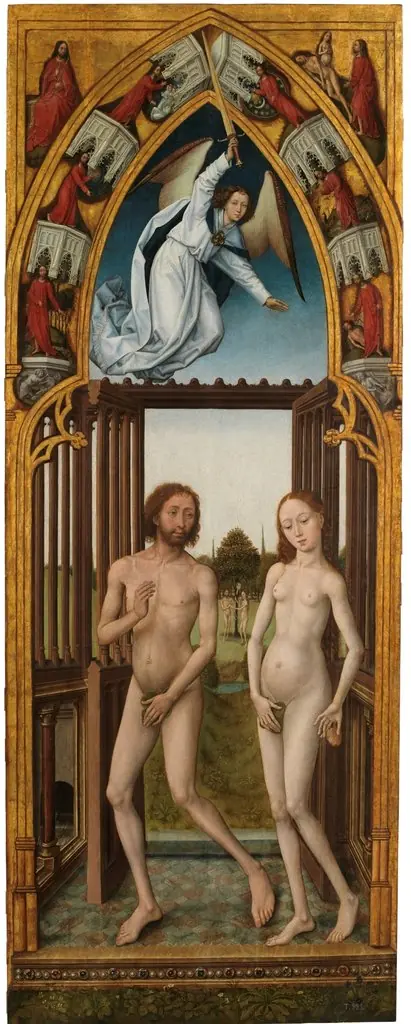
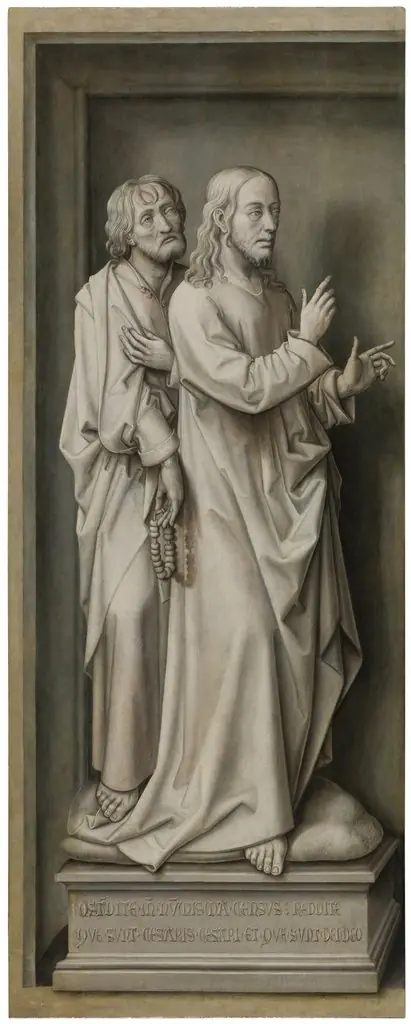
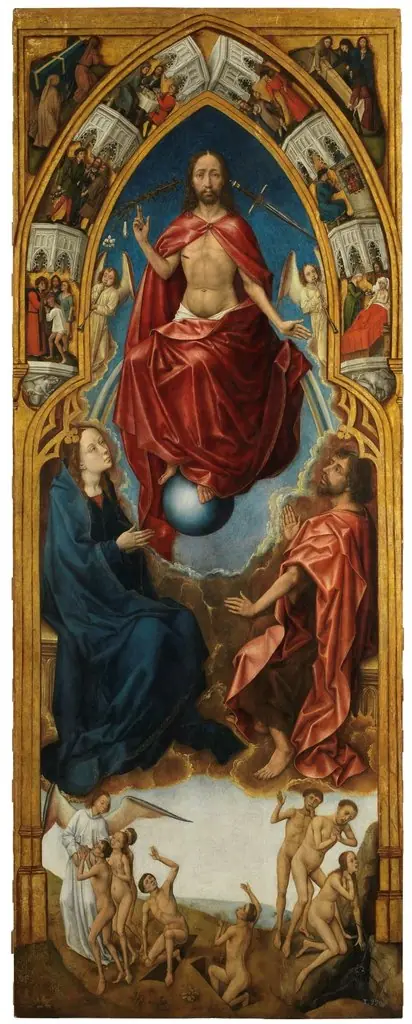
Created circa 1450, the Redemption Triptych presents a central scene of the crucifixion flanked by two auxiliary panels. Executed in oil on wood, the work measures roughly the dimensions typical of portable devotional triptychs and is presently housed in Madrid’s Museo del Prado. Its composition centers on a lifelike depiction of Christ on the cross, framed by architectural elements that recede into a tiled floor.
Subject & Meaning
The central image portrays the nailed body of Jesus, modestly covered by a simple cloth, suspended against a stone edifice with arched openings. Flanking figures—most notably the Virgin Mary and St. John—gaze upward, their expressions conveying grief and contemplation. The overall tone invites meditation on sacrifice and redemption, aligning with the devotional purpose of such altarpieces in the late medieval period.
Technique & Style
Vrancke van der Stockt employed the oil medium to achieve a nuanced modeling of flesh and fabric, allowing subtle transitions of light across the figures. The painter’s handling of detail, especially in the architectural backdrop and the patterned floor, reflects the influence of Rogier van der Weyden, whose graceful lines and emotive realism are echoed in the work’s composition.
History & Provenance
The triptych is attributed to Vrancke van der Stockt, a Netherlandish artist active in the mid‑15th century who followed the stylistic lead of van der Weyden. After remaining in private or ecclesiastical collections for several centuries, the panels entered the Prado Museum’s holdings, where they have been displayed as part of the museum’s Northern Renaissance assemblage.
Context
Produced during the Northern Renaissance, the piece exemplifies the era’s shift toward heightened naturalism and individualized emotional expression in religious art. Its triptych format catered to personal devotion, allowing viewers to engage with the narrative of Christ’s passion in a compact, portable format that could be opened for contemplation and closed for everyday use.
Artist & collection
Artist
Vrancke van der Stockt (before 1420 - 14 June 1495) was an early Netherlandish painter. He is most notable as a "direct heir and popularizer" of Rogier van der Weyden.