Artwork
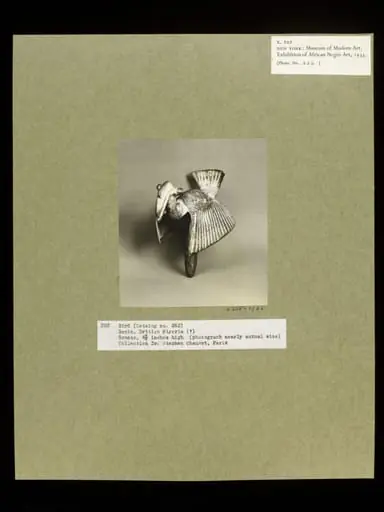
Leopard. Benin.
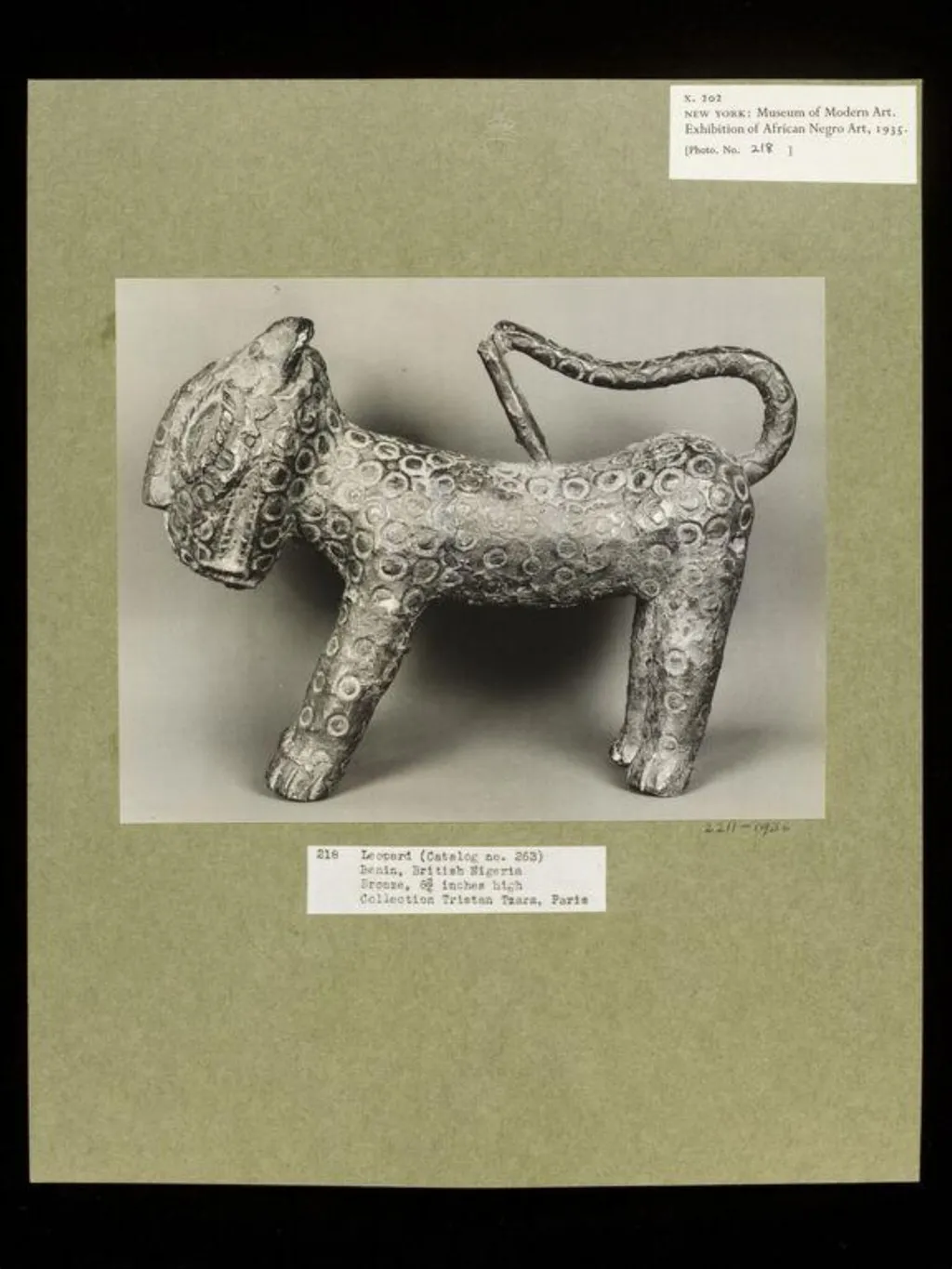
Leopard. Benin. is a photographic photography by Walker Evans. It dates from 1935 and is held in the collection of the Victoria and Albert Museum.
About this work
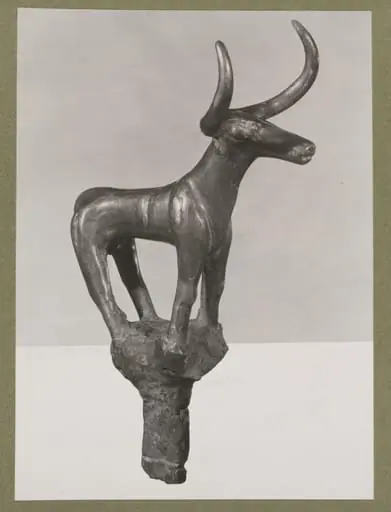
The image is a photograph of a bronze leopard sculpture from Benin, taken by Walker Evans in 1935.
The image is a photograph of a bronze leopard sculpture from Benin, taken by Walker Evans in 1935. The leopard is depicted in a standing position, facing left, with its head turned to the right. It has a long tail and a distinctive pattern of circles on its body.
The sculpture is made of bronze and has a smooth, shiny surface. The circles on its body are raised and give the sculpture a textured look. The leopard's eyes are small and bead-like, and its mouth is open, showing its teeth.
This photograph is part of the collection at the Victoria and Albert Museum.
Overview
A 1935 photograph by Walker Evans captures a Benin bronze leopard sculpture, preserved in the Victoria and Albert Museum’s collection. The image documents the object in profile, emphasizing its formal qualities rather than its cultural context. The photograph reflects early 20th-century ethnographic practices, where African artifacts were often recorded as isolated specimens, detached from their original ceremonial or political significance.
Subject & Meaning
The leopard, a symbol of royal authority in the Kingdom of Benin, represents power and vigilance. Its depiction in bronze, a material reserved for royal commissions, links it to the Oba’s court. The open mouth and alert posture suggest readiness, while the patterned body may reference leopard skin, a motif associated with sovereignty. The sculpture was likely part of a larger ensemble used in rituals or palace decoration, affirming the ruler’s connection to the natural world.
Technique & Style
Cast using the lost-wax method, the sculpture exhibits fine detail and a polished surface. Raised circular motifs cover the body, creating rhythmic texture against smooth contours. The head is turned sharply to the right while the body faces left, introducing dynamic tension. Small, bead-like eyes and bared teeth convey alertness. The elongated tail curls naturally, enhancing the sense of contained motion. These features reflect the high technical skill of Benin’s bronze casters.
History & Provenance
The sculpture originates from the Kingdom of Benin, likely created between the 15th and 17th centuries. It was taken during the British punitive expedition of 1897, when thousands of royal artifacts were looted and dispersed across Europe and North America. Walker Evans photographed it in 1935 during his work for the Museum of Modern Art, documenting objects in European collections. Its presence in the V&A reflects post-colonial institutional acquisition patterns.
Context
In Benin, such leopards were not mere decorations but sacred emblems tied to the Oba’s divine right to rule. They were displayed in palace courtyards or used in ceremonies honoring ancestral spirits. The British colonial framing of these objects as 'primitive art' obscured their complex symbolism. Evans’s photograph, though technically precise, inherits this detached gaze, reducing the sculpture to an aesthetic object within a Western museum framework.
Legacy
The photograph endures as a record of an artifact removed from its cultural milieu. It contributes to ongoing discussions about restitution, colonial collecting, and the ethics of display. While the sculpture’s artistry is acknowledged, its original meaning remains partially obscured by the lens through which it was first documented. Contemporary scholarship seeks to restore its context, challenging earlier classifications that reduced it to an exotic curiosity.
Artist & collection
Artist
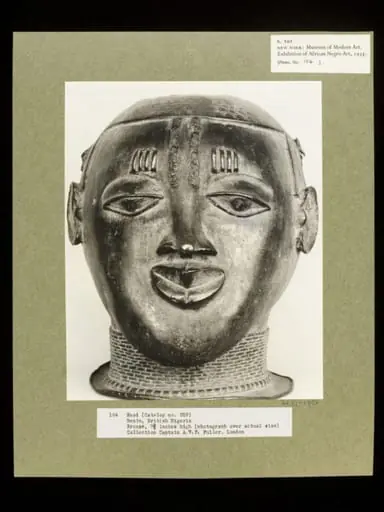
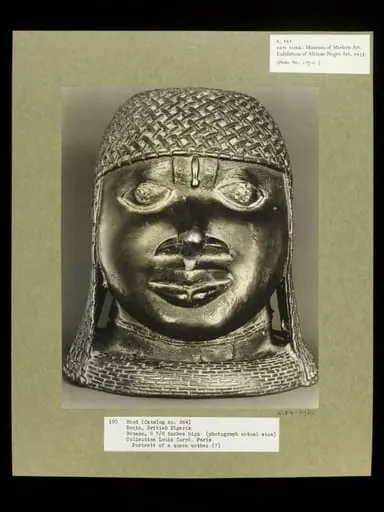
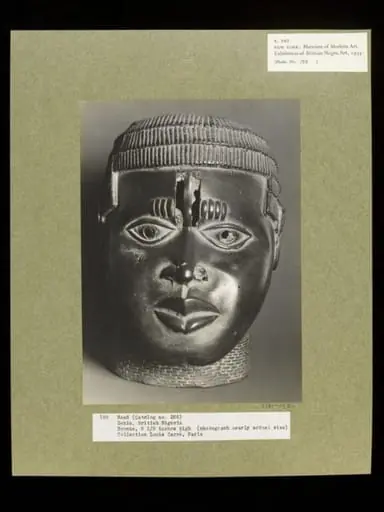
Walker Evans made stark black-and-white photos of carved wooden heads from Benin in 1935.