Artwork
Untitled
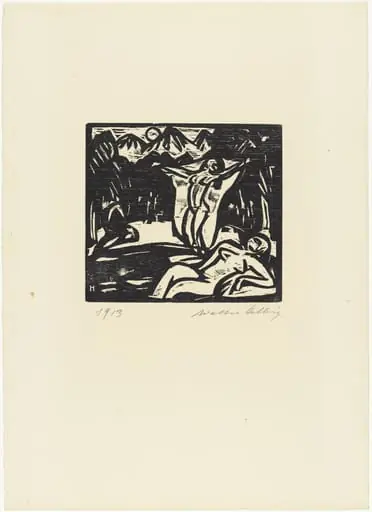
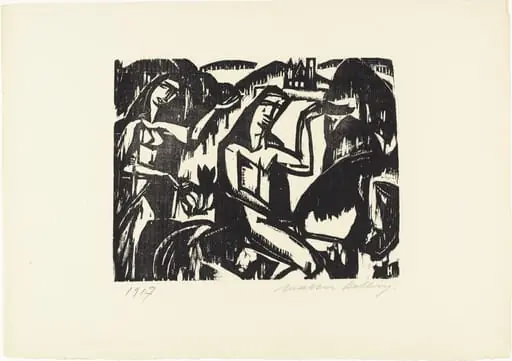
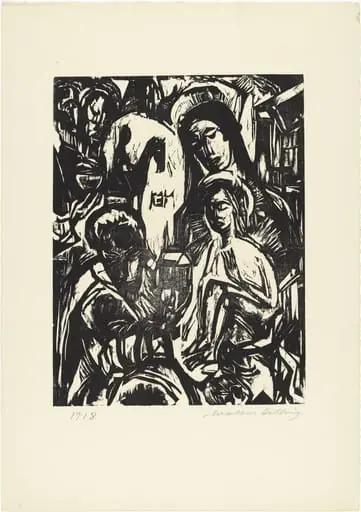
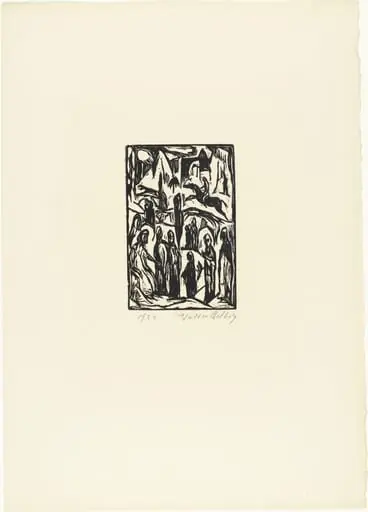
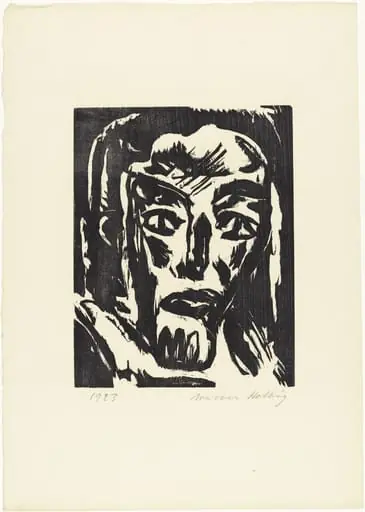
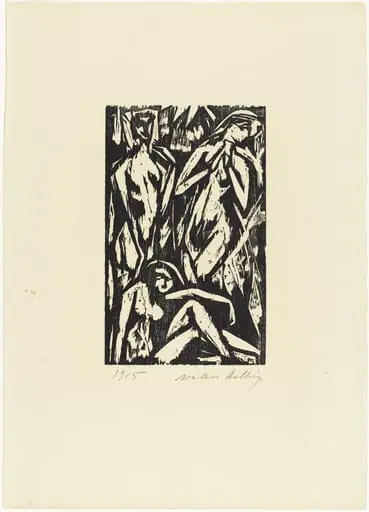
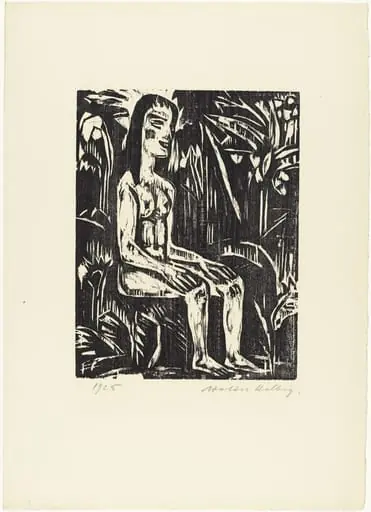
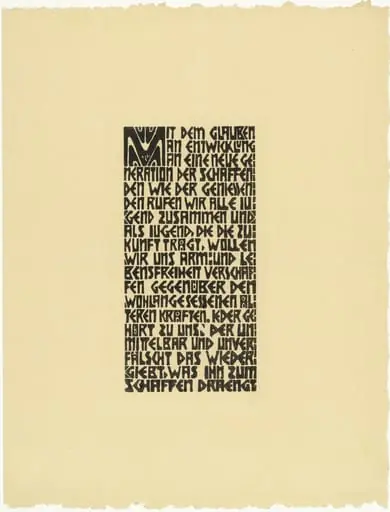
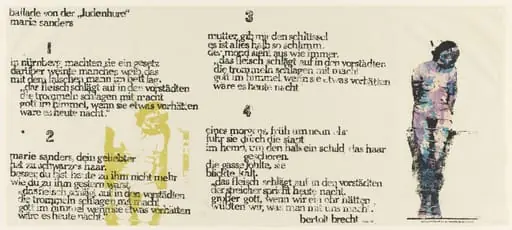
Untitled is an ink print by Walter Helbig. It dates from 1918 and is held in the collection of the Museum of Modern Art.
About this work
Overview
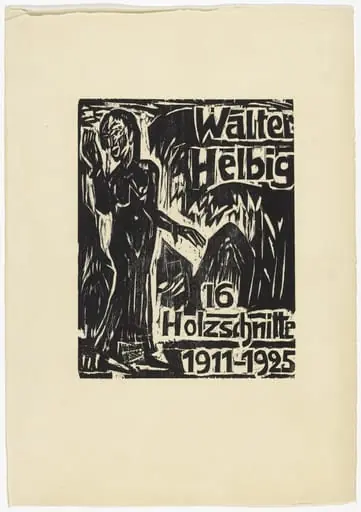
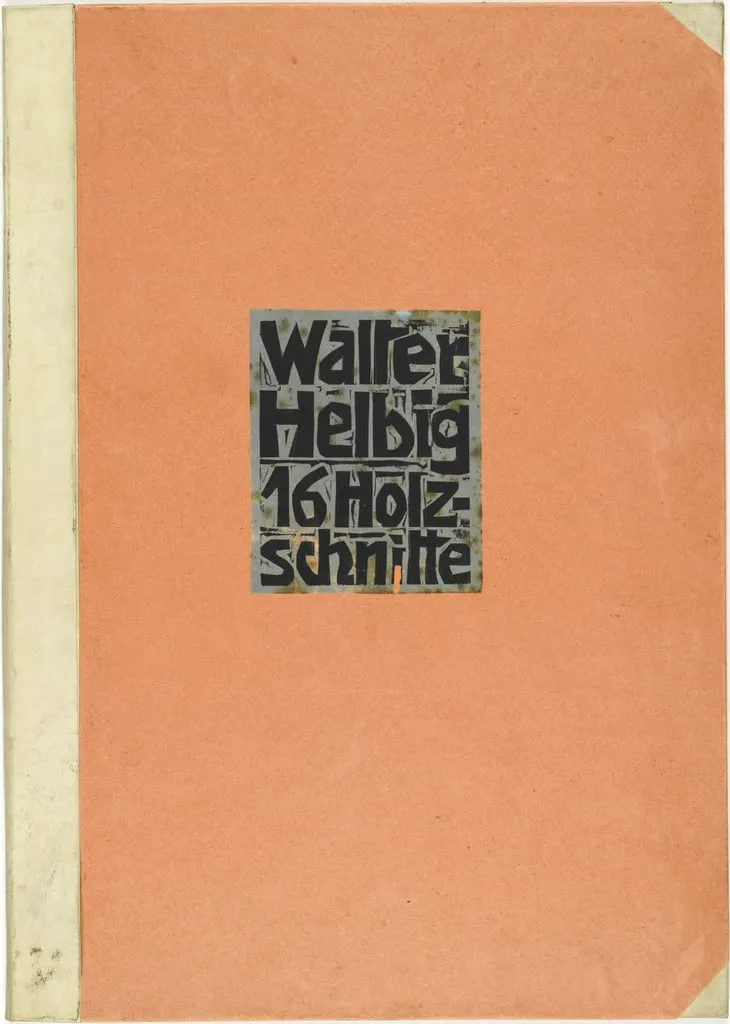
This work is one component of a 1918 portfolio by Walter Helbig, comprising sixteen woodcuts along with a title page, table of contents, cover, and colophon.
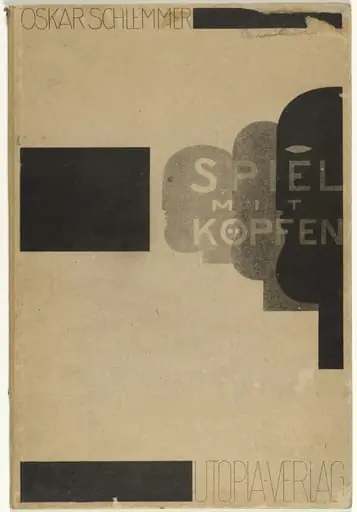
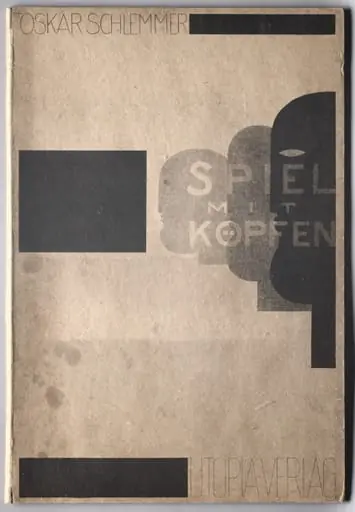
This work is one component of a 1918 portfolio by Walter Helbig, comprising sixteen woodcuts along with a title page, table of contents, cover, and colophon. The cover features a peach-toned surface with a hand-assembled collage of cut paper elements, arranged asymmetrically. Bold, irregular lettering spells out the artist’s name and the number of prints, suggesting a deliberate rejection of mechanical precision. The entire portfolio was produced as a unified, handcrafted object.
Subject & Meaning
The portfolio carries no explicit narrative or figural subject. Instead, its meaning emerges from its materiality and structure: the collage elements and uneven typography evoke a sense of personal expression, possibly reflecting postwar uncertainty. The absence of imagery on the cover shifts focus to the act of bookmaking itself, positioning the portfolio as a meditation on the artist’s process rather than a representation of external themes.
Technique & Style
Helbig employed hand-carved woodblocks to produce the prints, emphasizing the tactile qualities of the medium. The cover’s collage elements—cut paper shapes and letters—were likely applied by hand, contrasting with the carved lines of the woodcuts. Rough edges, layered textures, and irregular spacing reinforce a handmade aesthetic, distinguishing the work from mass-produced publications and aligning it with early 20th-century experimental print practices.
History & Provenance
The portfolio was created in 1918 and later acquired by The Museum of Modern Art. Its survival as a complete set is uncommon, as such artist books were often dispersed or deteriorated. The museum’s preservation of all seventeen components—including the colophon—allows for full contextual study. No earlier exhibition or publication history is documented, suggesting it remained a private or limited circulation project during Helbig’s lifetime.
Context
Produced in the final year of World War I, the portfolio reflects broader European artistic shifts toward abstraction and material experimentation. Artists were moving away from traditional representation, embracing the physicality of print media. Helbig’s use of collage and irregular typography aligns with contemporaneous movements like Dada and Expressionism, which valued spontaneity and the handmade over industrial uniformity.
Legacy
Though Helbig is not widely known, this portfolio stands as a rare example of early 20th-century German artist books that prioritized process over product. Its preservation at MoMA ensures its place in the study of print experimentation during a period of radical artistic change. It contributes to understanding how artists used the book form to explore autonomy, materiality, and the boundaries between art and craft.
Artist & collection