Artwork
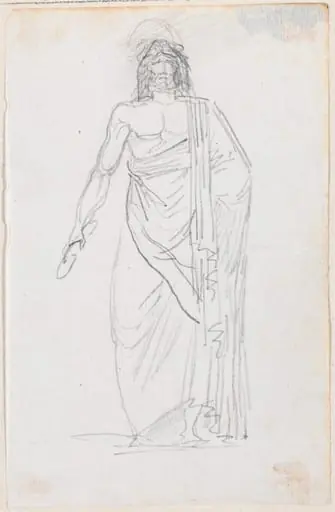
Figure of Bubaste or Isis
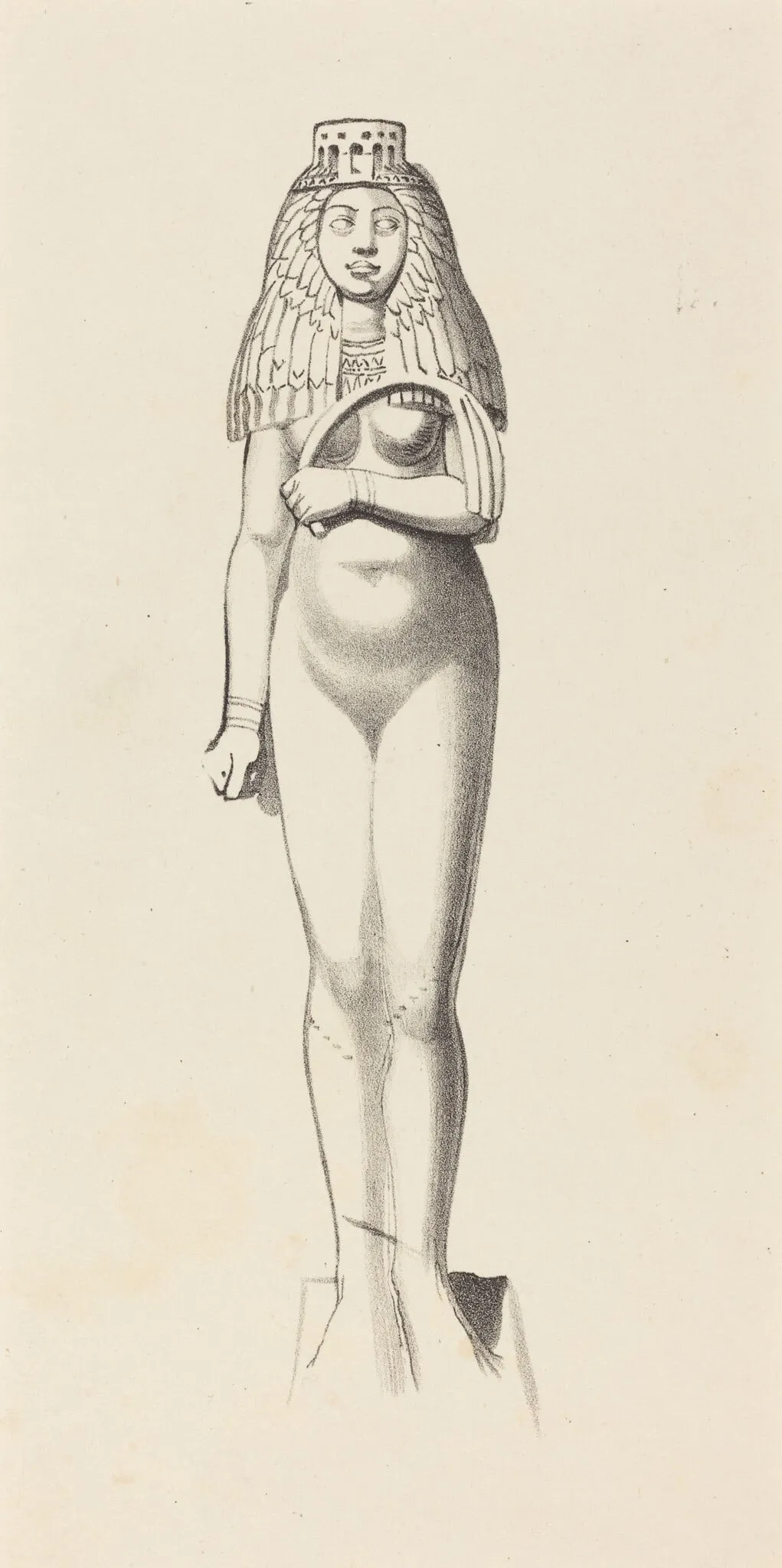
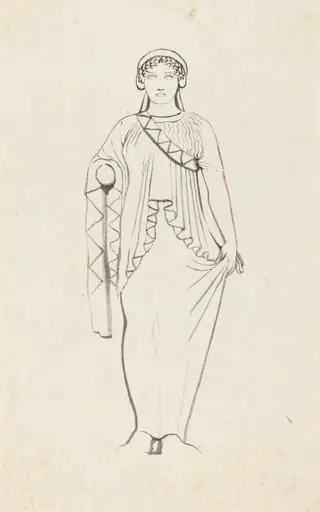
Figure of Bubaste or Isis is an ink print by the Romanticist artist W. Walton. It dates from 1829 and is held in the collection of the National Gallery of Art. This 1829 lithographic proof by W.
About this work
Overview
This 1829 lithographic proof by W. Walton presents a solitary female figure rendered in a restrained, linear style. The print, executed before the addition of inscriptions, isolates the subject against a featureless ground, emphasizing form and gesture over narrative detail.
Subject & Meaning
The figure has been identified as either Bubaste, the feline-headed Egyptian goddess, or Isis, deity of magic and motherhood. The attributes—crown, jewelry, and composed posture—align with nineteenth-century European interpretations of ancient iconography, though the exact symbolic intent remains ambiguous.
Technique & Style
Walton employs the lithographic process to achieve crisp contours and subtle tonal modulation. The figure’s downward gaze and relaxed contrapposto evoke the quiet dignity characteristic of Romantic-era depictions of antiquity, while the unadorned background reinforces a focus on idealized form.
History & Provenance
Produced in 1829, this proof impression precedes the final published state. Lithography, then a relatively new reproductive medium, allowed artists to disseminate classical and exotic motifs to a broader audience. The work’s early provenance remains unrecorded, though its survival as a proof suggests it was part of a larger project.
Context
The lithograph reflects the early nineteenth-century fascination with Egyptian and Near Eastern antiquities, spurred by Napoleonic campaigns and archaeological discoveries. Walton’s interpretation participates in a broader Romantic engagement with the ancient world, blending archaeological curiosity with aesthetic idealization.
Artist & collection


 Venus Aphrodite, by Alcamanes
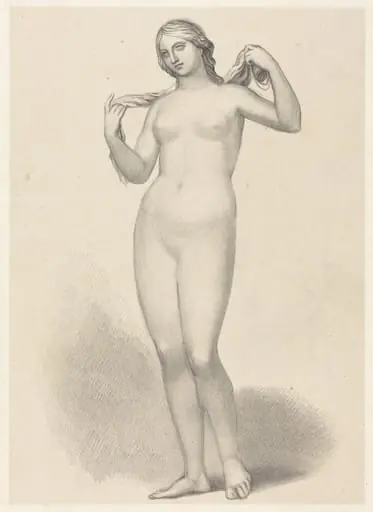 Venus Aphrodite, by Alcamanes
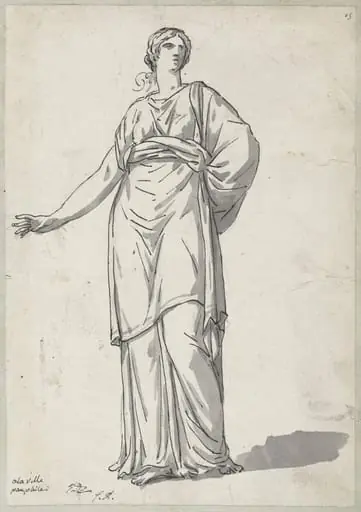 Woman from the Villa Pamphili
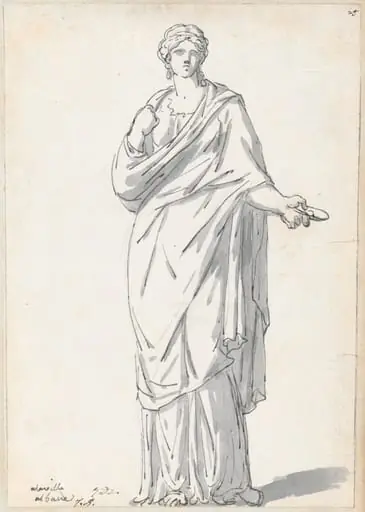 Woman from the Villa Albani
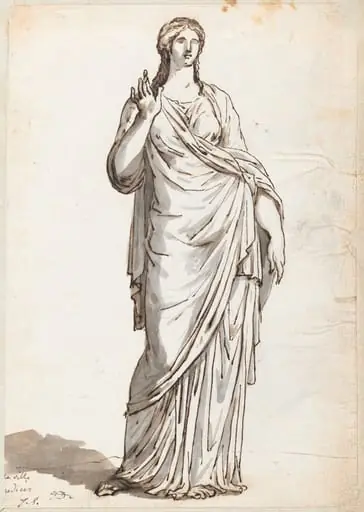 Woman with a Raised Hand, from the Villa Medici
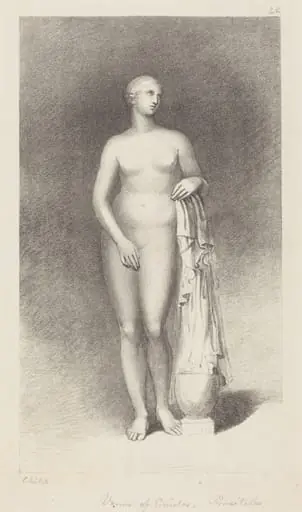 Venus of Cnidos, by Praxiteles
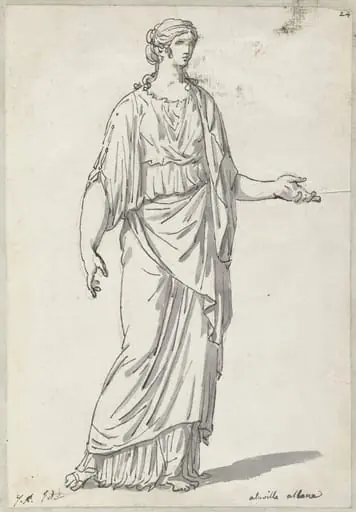 Classical Sculpture of a Woman with an Outstretched Arm
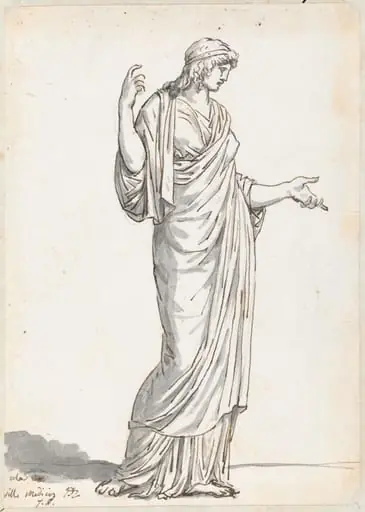 Woman from the Villa Medici
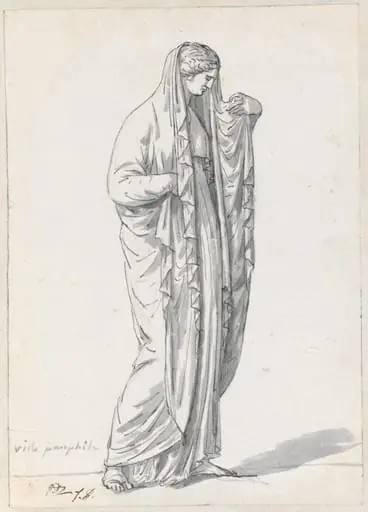 Draped Woman from the Villa Pamphili
 Statue of Zeus Holding a Thunderbolt