Artwork
Horses and Foals
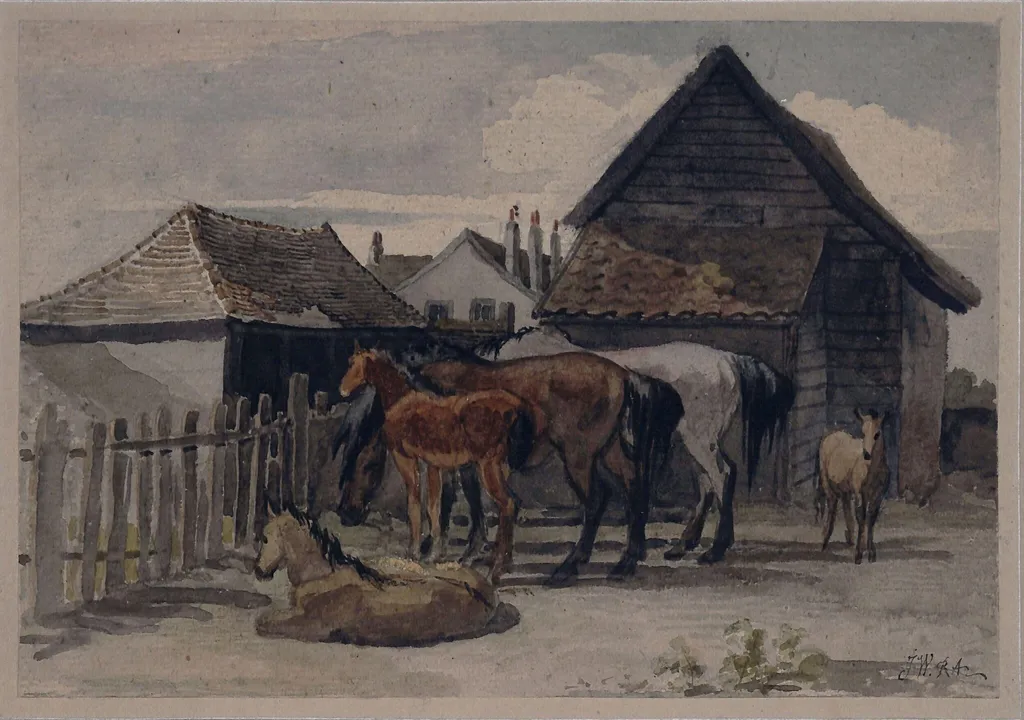
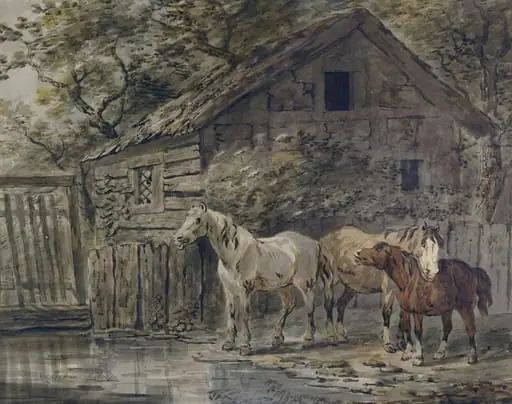
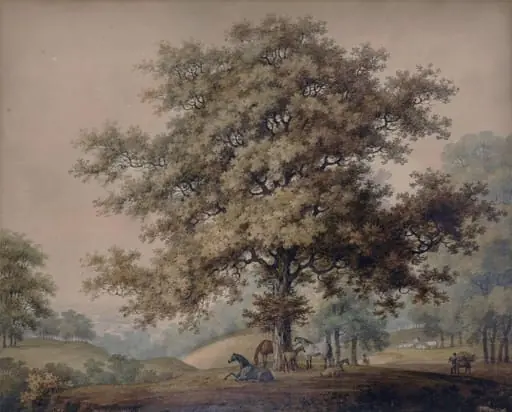
Horses and Foals is a watercolor work on paper by the British Romanticist artist James Ward. It dates from 1750 and is held in the collection of the Victoria and Albert Museum. This watercolour presents a quiet rural scene featuring three adult horses and two foals.
About this work
Overview
This watercolour presents a quiet rural scene featuring three adult horses and two foals. The composition centers on the animals near a wooden fence, with one foal resting on the ground. Distant farm buildings, including a tall barn with a thatched roof, frame the background. The palette is subdued, dominated by earth tones and soft grays, contributing to a calm, unembellished atmosphere.
Subject & Meaning
The scene captures a moment of stillness in farm life, emphasizing the bond between mares and their young. The foal lying down suggests rest or vulnerability, contrasting with the upright posture of the adults. There is no narrative drama—only an observation of daily existence. The absence of human figures reinforces the focus on animal life within a domesticated landscape.
Technique & Style
The artist employed loose, fluid brushwork typical of watercolour, allowing pigment to bleed slightly at the edges for a soft, atmospheric effect. Forms are suggested rather than sharply defined, particularly in the distant buildings and sky. The medium’s transparency lends a delicate, weathered quality, enhanced by subtle fading that gives the work an aged, contemplative tone.
History & Provenance
The painting’s origin and early ownership are undocumented. It entered the Victoria and Albert Museum’s collection as part of a broader acquisition of 19th-century British watercolours. Its modest scale and unassuming subject suggest it was likely created for private rather than public display, possibly as a study or personal record of rural life.
Context
Created during a period when British artists increasingly turned to everyday rural scenes, this work reflects a shift away from grand historical or romanticized landscapes. It aligns with a growing interest in authentic, unidealized depictions of agricultural life, often rendered in watercolour for its immediacy and portability by artists working outdoors.
Legacy
Though not widely exhibited or reproduced, the painting contributes to a quieter tradition of British watercolour that valued observation over spectacle. Its preservation in a major museum underscores its value as an example of modest, sincere documentation of rural animal husbandry, offering insight into the visual culture of its time.
Artist & collection