Artwork
Six large upright landscapes with scenes from Ovid's Metamorphoses
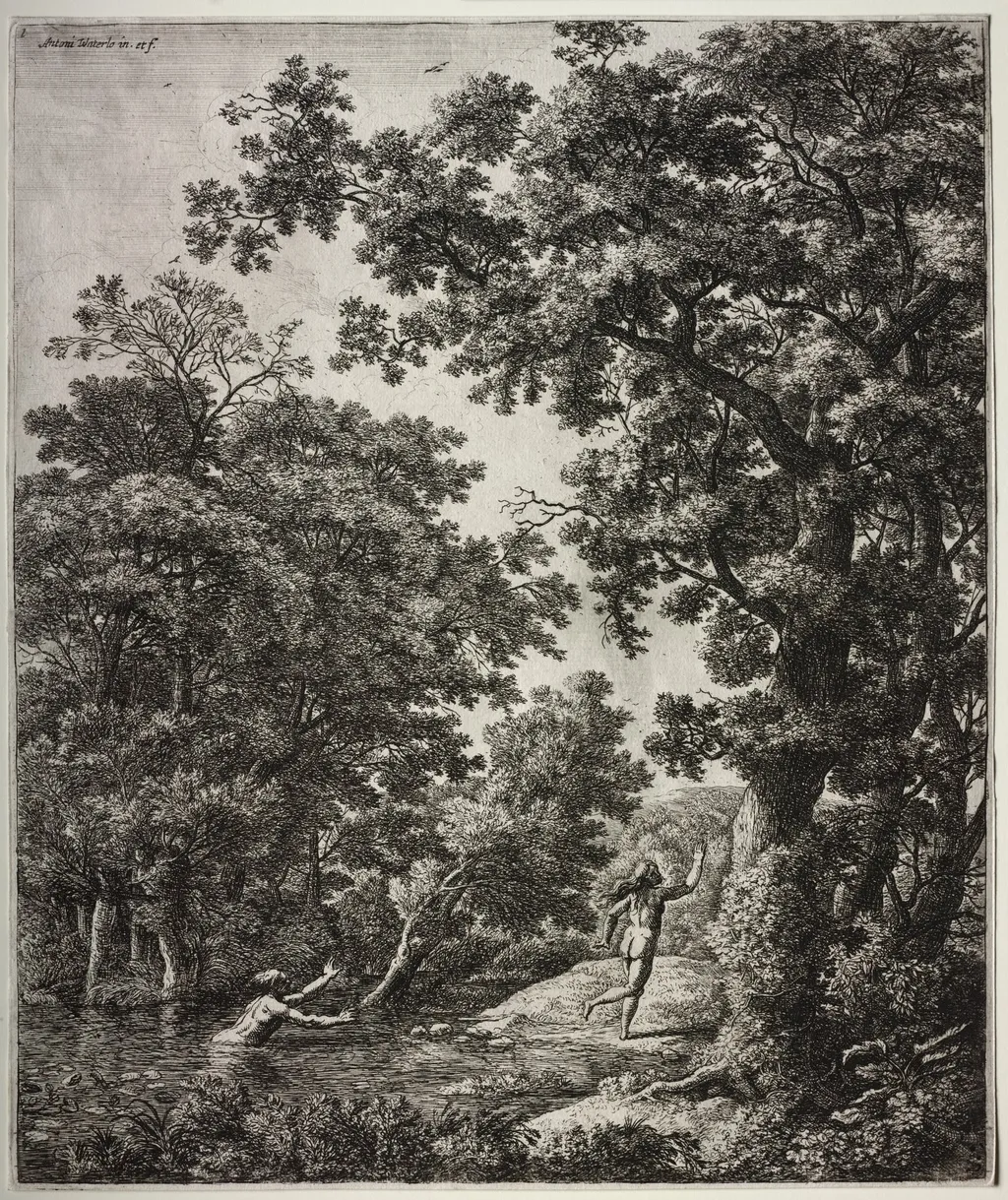
Six large upright landscapes with scenes from Ovid's Metamorphoses is a print by the Baroque artist Antonie Waterloo. It dates from 1665 and is held in the collection of the Cleveland Museum of Art. Created in 1665, this set of six vertical landscape prints by Anthonie Waterloo illustrates episodes from Ovid’s Metamorphoses.
About this work
Overview
The works are held in the collection of the Cleveland Museum of Art, where they are recognized for their narrative cohesion and atmospheric detail.
Created in 1665, this set of six vertical landscape prints by Anthonie Waterloo illustrates episodes from Ovid’s Metamorphoses. Each print presents a distinct mythological scene embedded within a natural setting, rendered in ink and wash. The works are held in the collection of the Cleveland Museum of Art, where they are recognized for their narrative cohesion and atmospheric detail. Waterloo’s approach blends topographical observation with classical storytelling.
Subject & Meaning
The prints depict moments from Ovid’s tales of transformation—figures caught mid-metamorphosis amid wooded streams and rocky terrain. Scenes include gods altering mortals, nymphs fleeing, and heroes encountering supernatural forces. The natural environment is not merely backdrop but an active element, reflecting the instability and fluidity of the myths. Water, trees, and shadows subtly reinforce themes of change, concealment, and divine intervention.
Technique & Style
Waterloo employed fine ink lines and graded washes to model form and depth, creating a sense of atmospheric perspective. The dense foliage is rendered with varied tonal gradations, while streams and skies use muted blues and grays to suggest distance and mood. His technique reflects Dutch landscape traditions but with a heightened sensitivity to light and texture, aligning with Baroque sensibilities without overt theatricality.
History & Provenance
The set was likely produced as a series for private collectors interested in classical literature and landscape art. Waterloo, a Dutch artist active in the Netherlands and Germany, may have created these prints during his time in the Rhineland. They entered the Cleveland Museum of Art’s collection in the 20th century, preserved as a cohesive group, rare for works of this scale and subject from the period.
Context
In mid-17th-century Northern Europe, illustrated editions of Ovid were popular among educated elites. Landscape prints served as both artistic expression and intellectual engagement with antiquity. Waterloo’s work fits within a broader trend of combining naturalism with mythological narrative, distinct from Italian Baroque drama but aligned with Northern European humanist interests in classical texts and observed nature.
Legacy
Though not widely exhibited today, Waterloo’s series remains a significant example of how Dutch artists interpreted classical mythology through landscape. The prints demonstrate a quiet, contemplative approach to myth—emphasizing environment over action—which influenced later generations of printmakers interested in narrative subtlety and atmospheric tone rather than grandeur.
Artist & collection

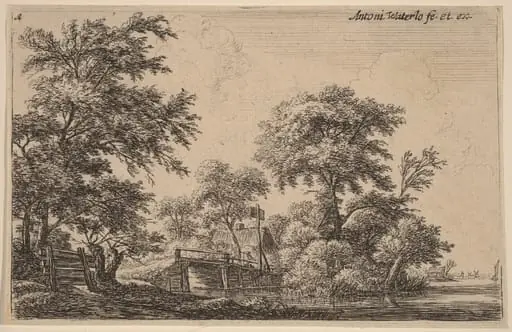
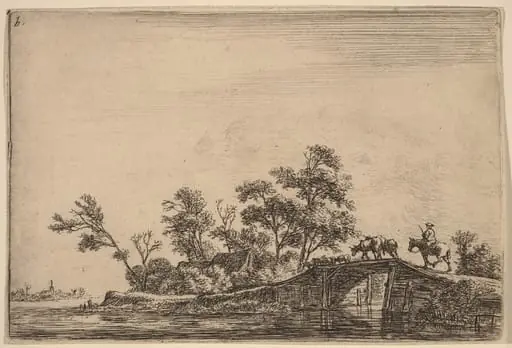
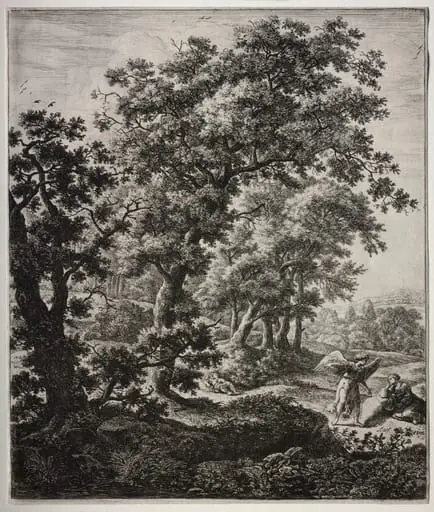 Six large upright landscapes with scenes from the Old Testament: Hagar Comforted by the Angel
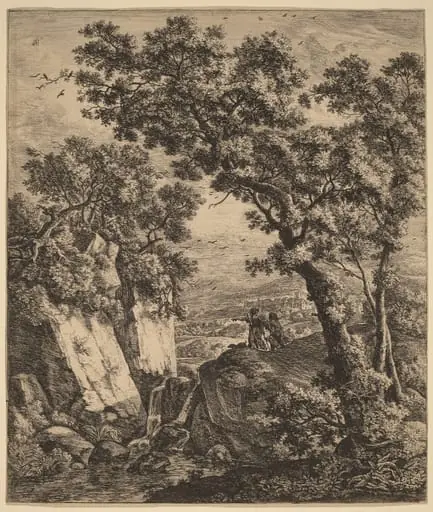
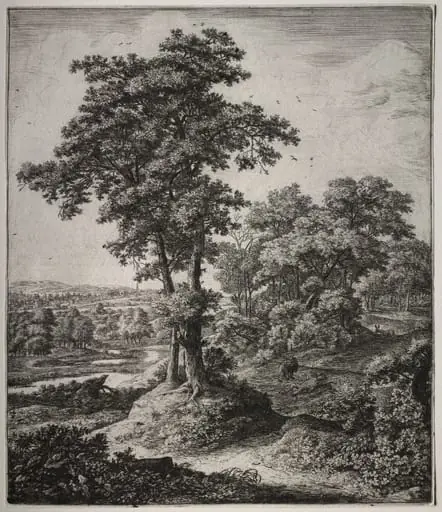 Six large upright landscapes with scenes from the Old Testament: The Unfaithful Prophet of Judah
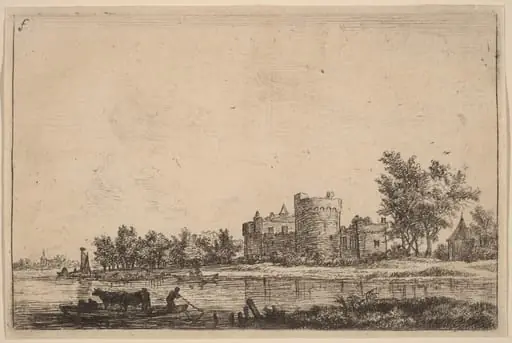
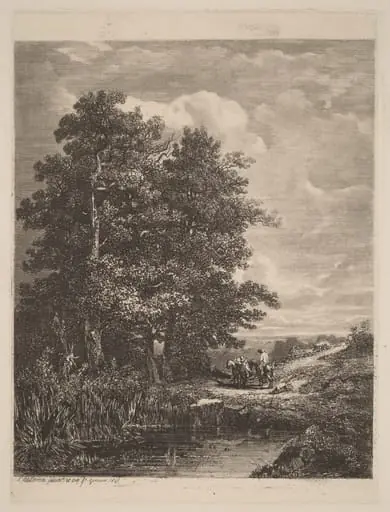 Riders by a Pond
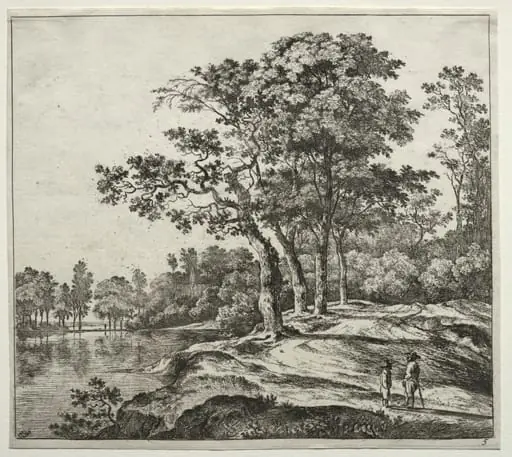 The Four Trees
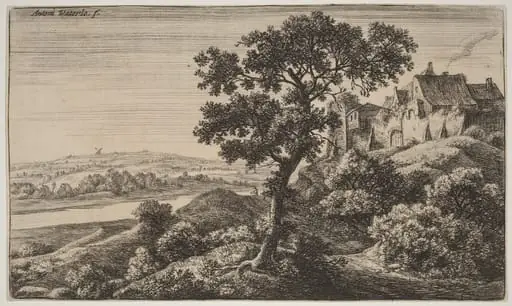
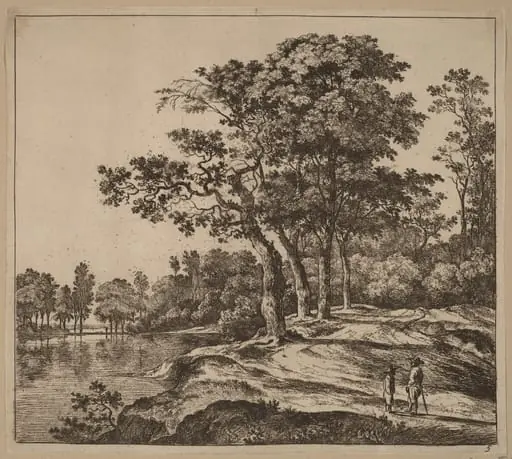 Landscape with Four Trees
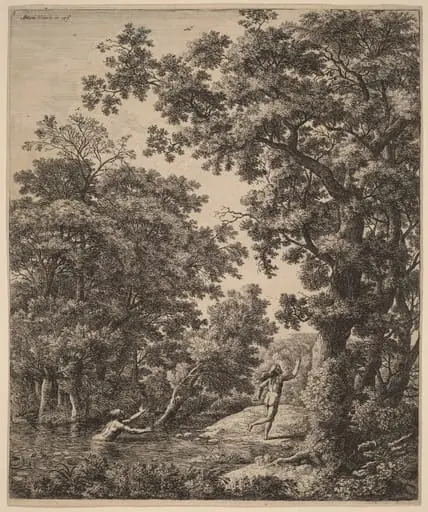
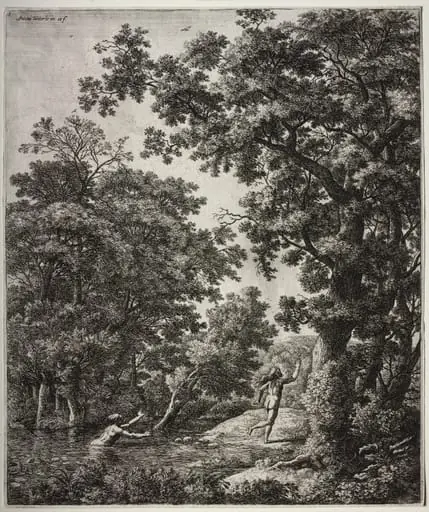 Six large upright landscapes with scenes from Ovid's Metamorphoses: Alpheus and Arethusa