Artwork
Four Men on a Stone Bridge
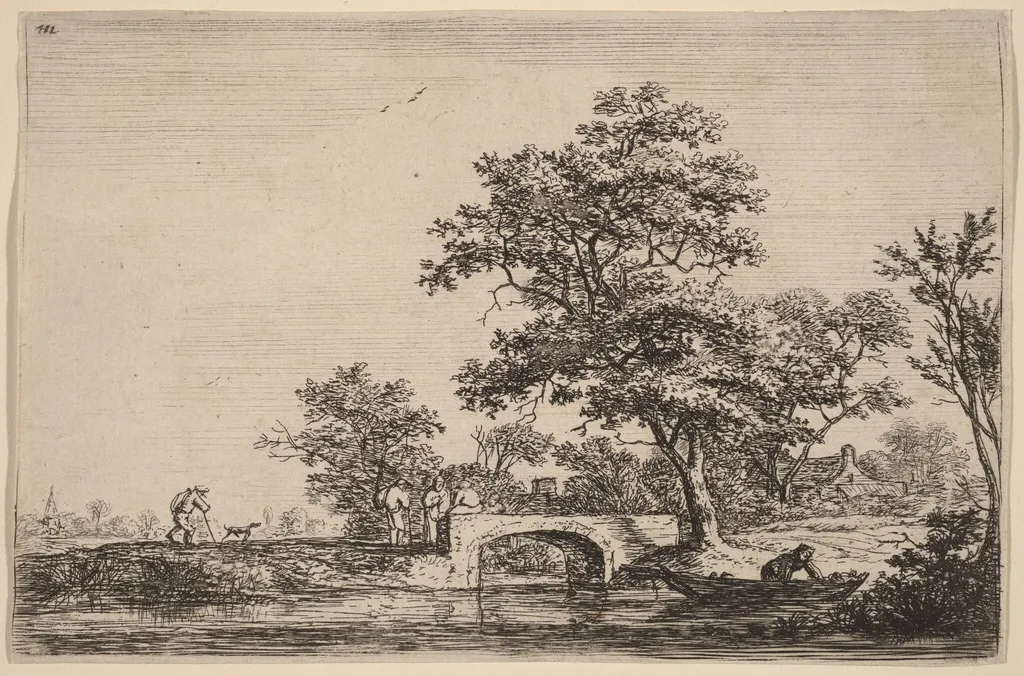
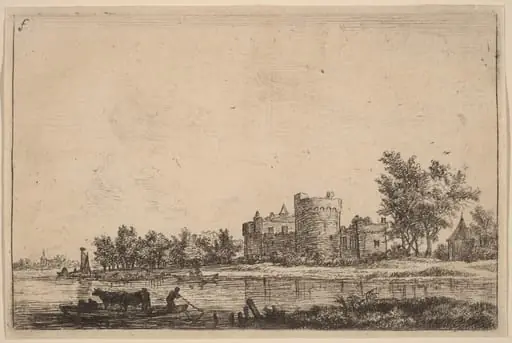
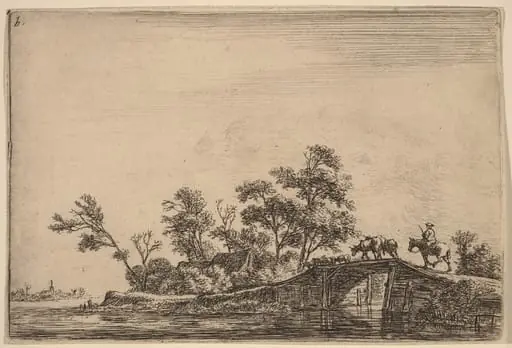
Four Men on a Stone Bridge is an ink print by the Baroque artist Antonie Waterloo. It dates from 1650 and is held in the collection of the National Gallery of Art.
About this work
Overview
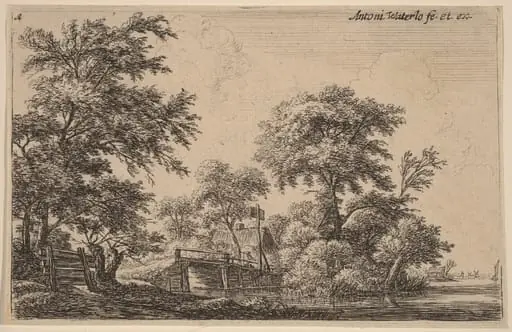
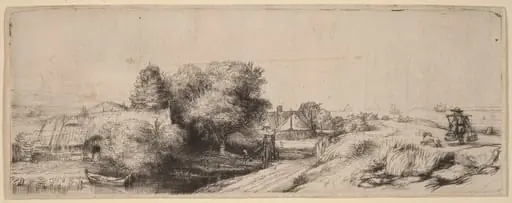
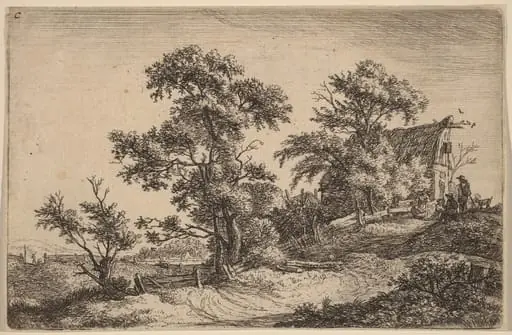
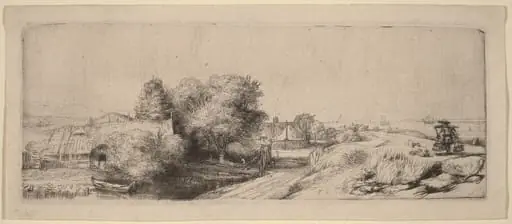
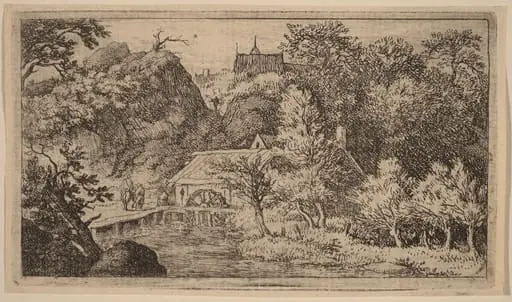
Four Men on a Stone Bridge, an etching by Anthonie Waterloo from 1650, depicts a serene riverside moment. The composition features four men positioned on either side of a stone bridge, set against a backdrop of tall, twisting trees and a calm river with scattered small boats.
Subject & Meaning
The scene conveys a sense of tranquility, with the men contemplatively overlooking the water. The subject matter suggests an emphasis on everyday, peaceful scenes, characteristic of certain 17th-century Dutch artistic themes.
Technique & Style
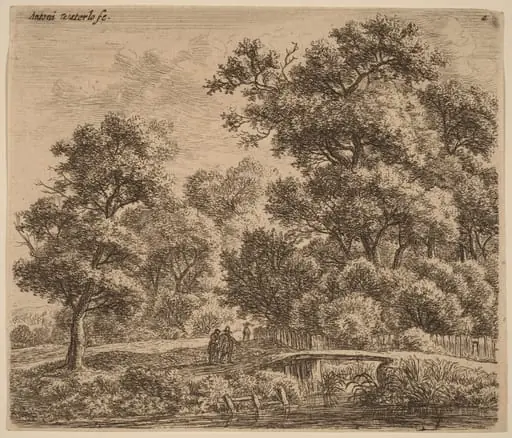
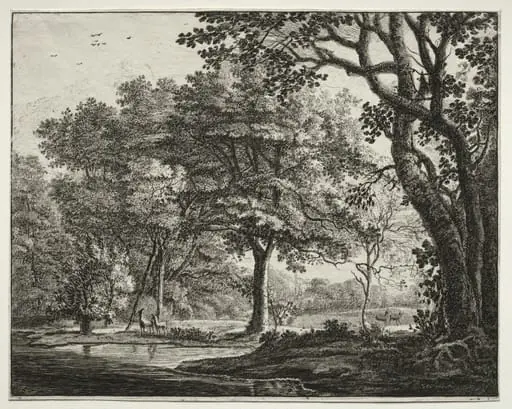
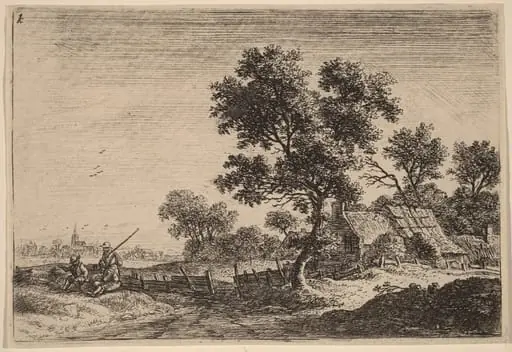
Executed in black and white, the etching utilizes fine lines to achieve depth, particularly in the rendering of the trees and the bridge's structure. This technique aligns with prevalent etching practices of the 1600s, where manual craftsmanship was integral to the creative process.
History & Provenance
Created in 1650 by Anthonie Waterloo, specific details regarding the work's provenance or notable exhibitions are not provided in the available information.
Context
Produced during the Dutch Golden Age, this etching reflects the period's artistic inclinations towards detailed, small-scale prints. The use of etching as a medium was popular for its ability to produce multiple copies, making artworks more accessible.
Legacy
While specific legacy details of 'Four Men on a Stone Bridge' are not outlined, etchings from this era continue to be valued for their technical precision and the glimpse they offer into 17th-century artistic and thematic preferences.
Artist & collection