Artwork
Nella Venuta in Roma: pl. 1
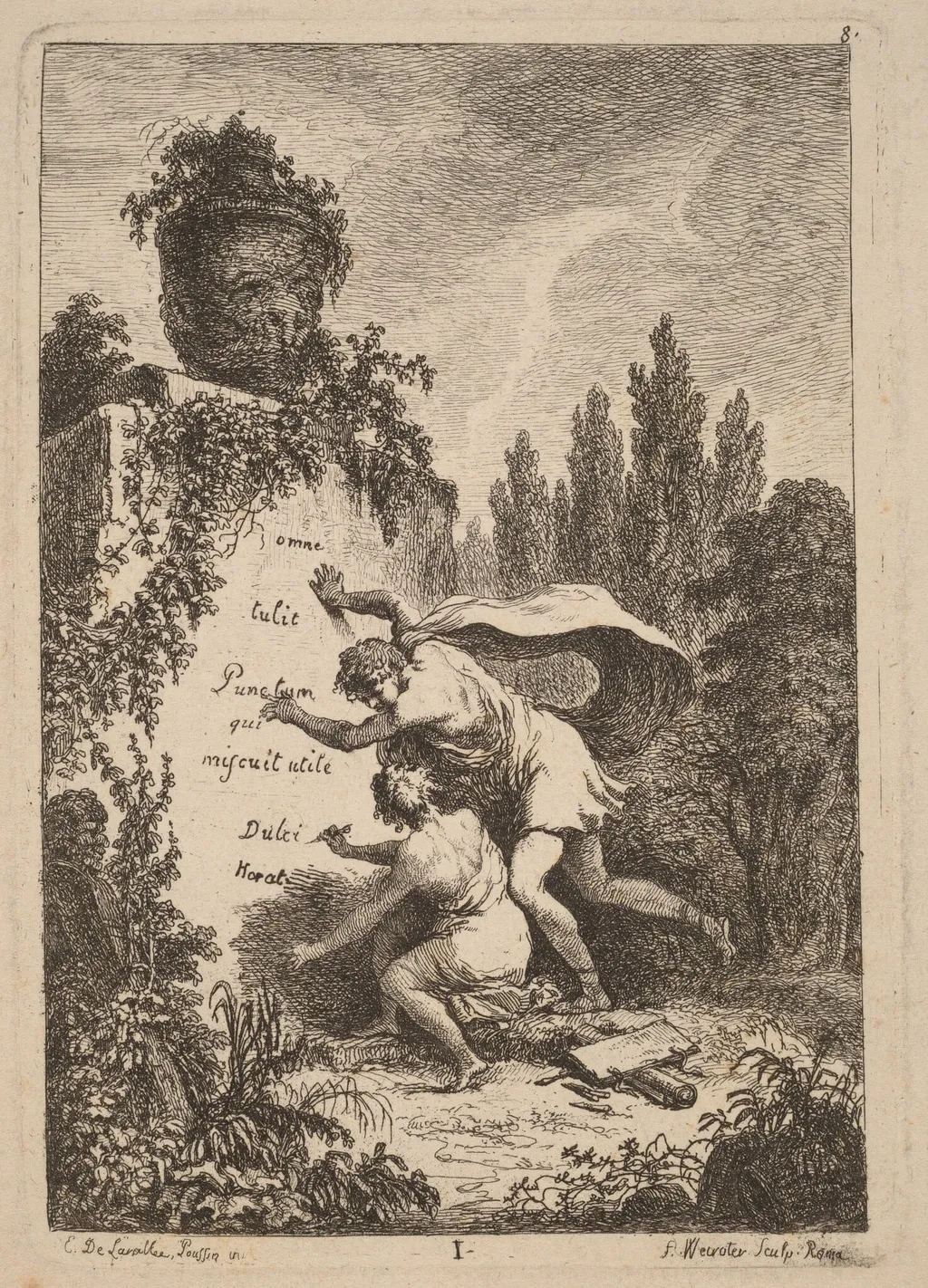
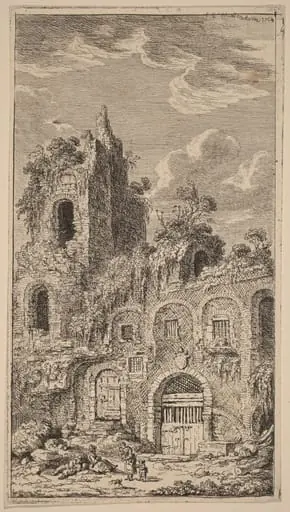
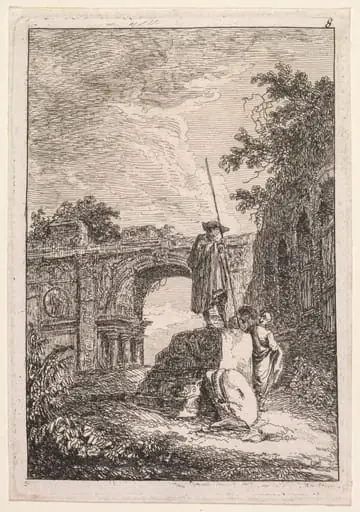
Nella Venuta in Roma: pl. 1 is an ink print by the Romanticist artist Franz Edmund Weirotter. It dates from 1764 and is held in the collection of the National Gallery of Art. Nella Venuta in Roma: pl.
About this work
To see how Weirotter’s technique worked, find another etching by Weirotter, Franz Edmund.
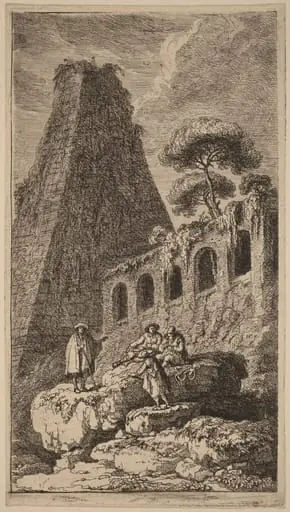
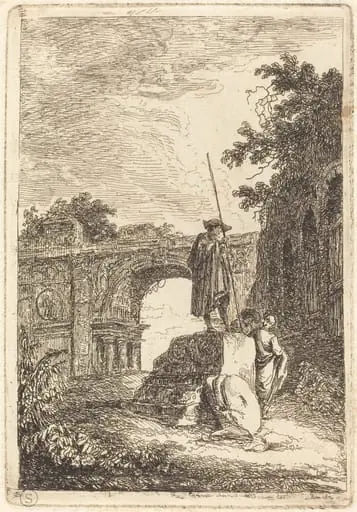
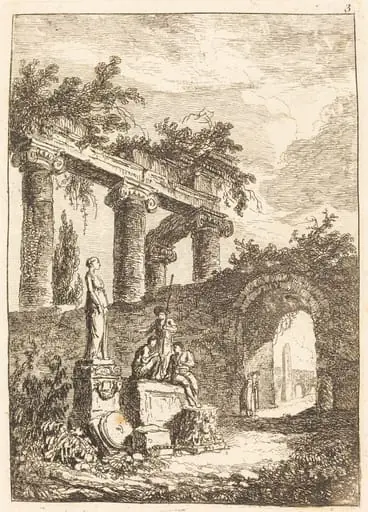
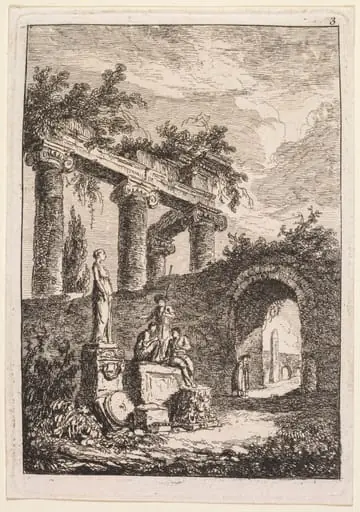
This etching shows a grand Roman gate framed by tall cypress trees. Light hits the stones while shadows pool in the arch. A few tiny figures stand near the base, just dots compared to the huge walls.
The artist carved this view in 1764 using fine lines on damp paper. The sky’s crosshatching gives a cloudy feel without color. It’s one of many scenes from his “Views of Rome” series.
To see how Weirotter’s technique worked, find another etching by Weirotter, Franz Edmund.
Overview
Nella Venuta in Roma: pl. 1 is an etching on laid paper created by Franz Edmund Weirotter in 1764, depicting a monumental Roman gate as the central subject.
Subject & Meaning
The etching portrays a grand Roman gate, flanked by tall cypress trees, with light illuminating the stone structure and shadows accentuating the arch. Tiny figures at the base underscore the gate's massive scale.
Technique & Style
Weirotter employed fine lines on damp paper to carve the image. The sky is rendered through crosshatching, conveying a cloudy atmosphere without the use of color, characteristic of his etching technique.
History & Provenance
Part of Weirotter's 'Views of Rome' series, this etching is one of multiple scenes capturing aspects of the city. The work's provenance and specific exhibition history are not detailed here.
Context
Created in 1764, the etching reflects 18th-century interest in Roman antiquity and landscape. It aligns with the period's artistic focus on capturing the grandeur of historical sites.
Legacy
As part of Weirotter's oeuvre, the etching contributes to the broader legacy of 18th-century etching practices and the documentation of Rome's architectural heritage through art.
Artist & collection