Artwork
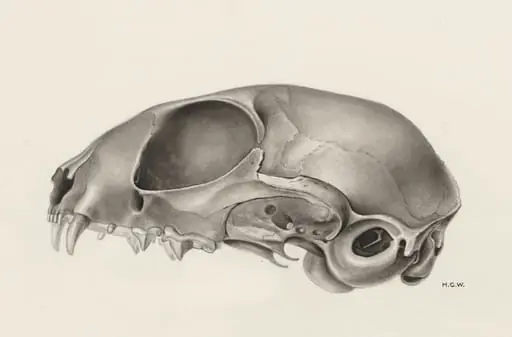
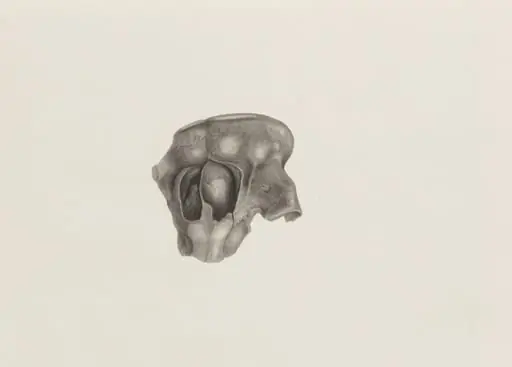
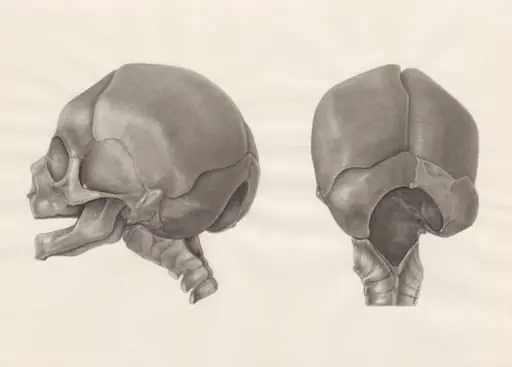
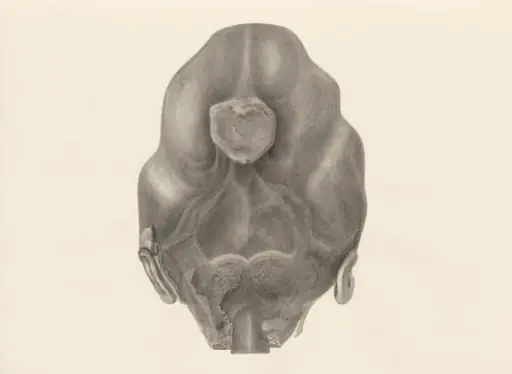
Skull of a feline seen from below
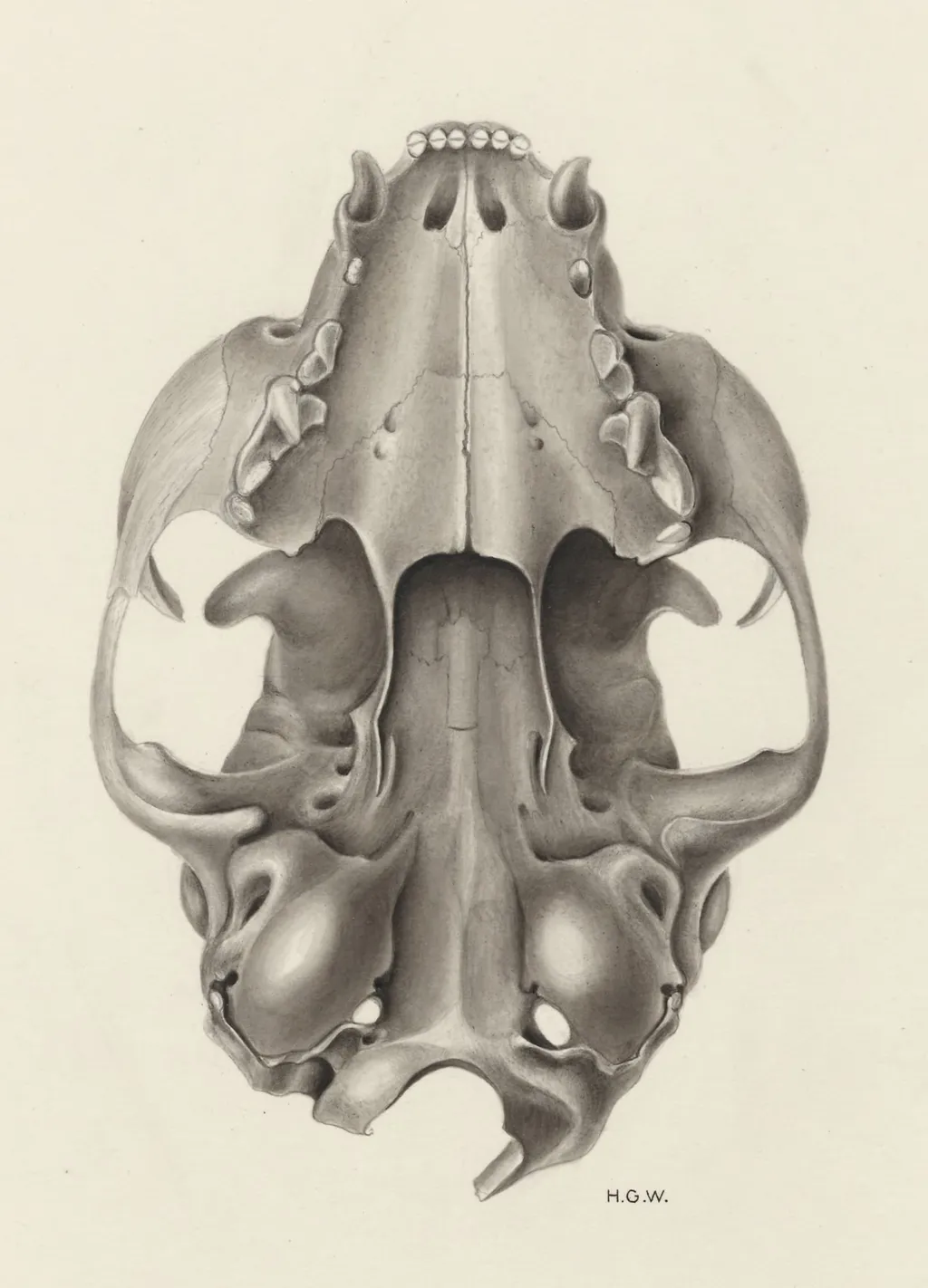
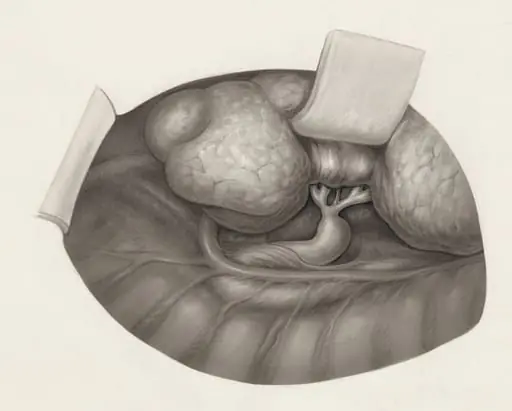
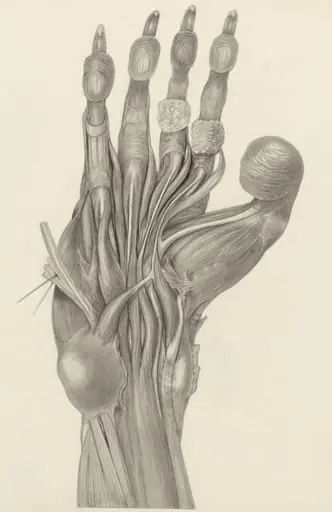
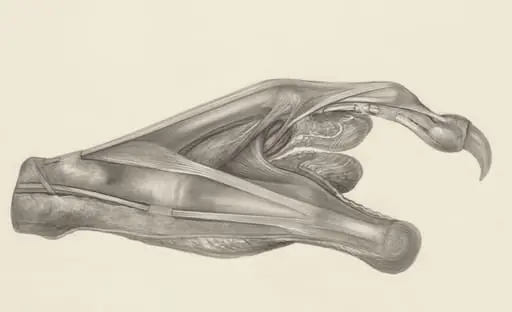
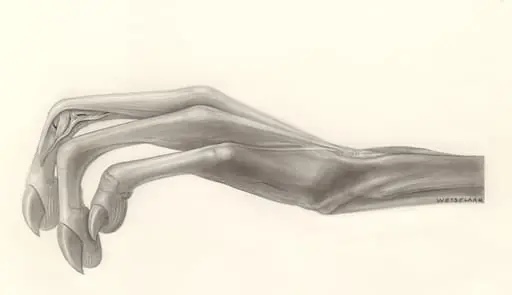
Skull of a feline seen from below is a drawing by H.G, Wetselaar. It dates from 1963 and is held in the collection of the Leiden University Libraries. Created in 1963 by H.
About this work
Overview
Created in 1963 by H.G. Wetselaar, this detailed drawing depicts the ventral view of a feline skull. Executed in ink or pencil, the work captures the intricate structure of the lower jaw, teeth, and cranial bones with clinical precision. It was produced as a scientific illustration, likely for educational or research purposes, and is now part of the Museum of Ethnography’s collection.
Subject & Meaning
By removing context and focusing solely on skeletal form, the drawing transforms the skull into an object of anatomical study.
The image isolates the underside of a cat’s skull, emphasizing the arrangement of teeth, the mandibular symphysis, and the hollow sockets where eyes once rested. By removing context and focusing solely on skeletal form, the drawing transforms the skull into an object of anatomical study. Its starkness invites examination of biological adaptation, particularly carnivorous dentition and cranial mechanics.
Technique & Style
Wetselaar employed fine, controlled lines to render each bone and tooth with clarity. Subtle shading and faint cracks in the bone suggest both realism and the fragility of the specimen. The absence of background or scale references directs attention entirely to structural detail, reflecting a tradition of scientific drawing that prioritizes accuracy over aesthetics.
History & Provenance
The drawing was made in 1963 and entered the collection of the Museum of Ethnography, where it remains today. Its origin as a study piece suggests it may have been used in teaching or comparative anatomy research. While the artist’s broader career is not widely documented, this work aligns with mid-20th-century practices of integrating observational art into biological sciences.
Context
In the 1960s, detailed anatomical illustrations remained vital in biology and veterinary science, especially before widespread photographic documentation. Such drawings allowed researchers to highlight specific features, correct distortions, and communicate complex structures. This piece reflects a time when artists and scientists collaborated closely to document natural forms with precision.
Legacy
Though not widely exhibited, the drawing endures as an example of how visual precision supports scientific understanding. It contributes to the broader archive of anatomical illustrations that bridge art and biology, offering insight into historical methods of studying animal form. Its presence in an ethnographic museum underscores the cultural significance of animal anatomy in human knowledge systems.
Artist & collection
Artist
H.G. Wetselaar spent his days hunched over microscopes in a quiet Leiden lab, sketching what most people ignore. His pencil caught the raw architecture of bodies we pretend are smooth—like the knotted muscles of a…