Artwork
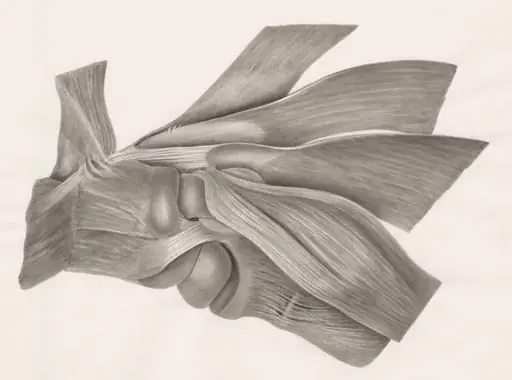
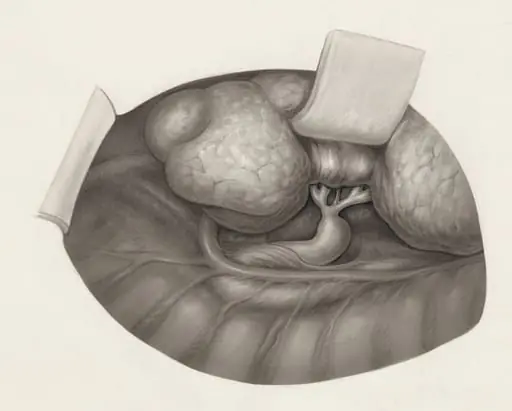
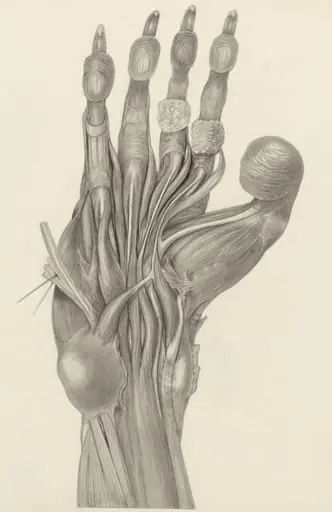
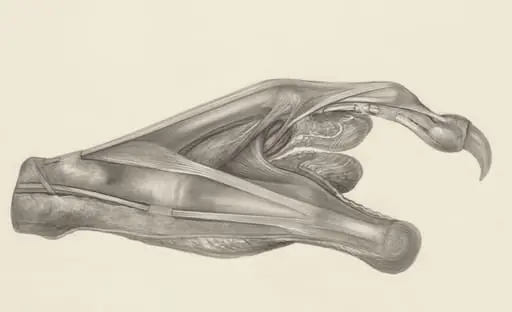
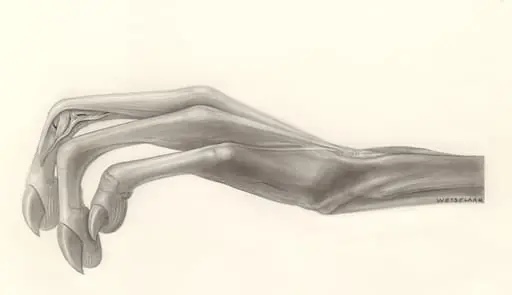
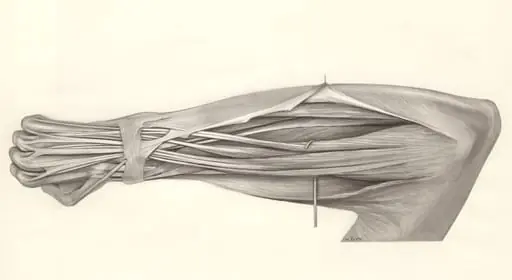
Muscular tissue of an animal arm
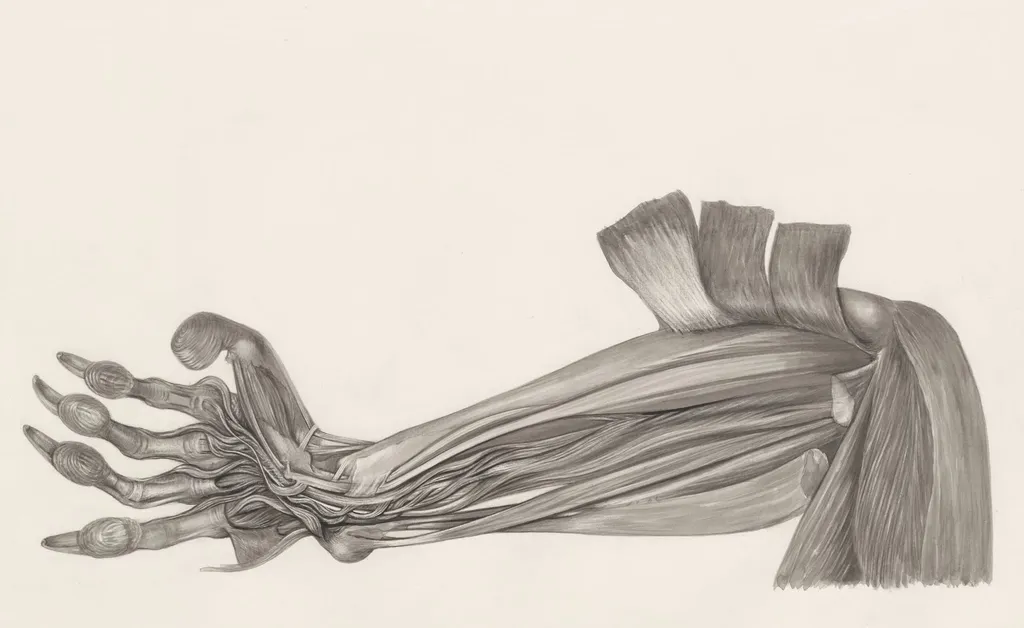
Muscular tissue of an animal arm is a drawing by H.G, Wetselaar. It dates from 1970 and is held in the collection of the Leiden University Libraries. This anatomical drawing, attributed to H.
About this work
Overview
This anatomical drawing, attributed to H.G. Wetselaar and dated around 1970, depicts the musculature of an animal’s forelimb with scientific precision. Rendered in ink on paper, it serves as a study of structure and function rather than an aesthetic composition. The work is part of the Museum of Ethnography’s collection, suggesting its use in educational or comparative biological research.
Subject & Meaning
The drawing isolates the forearm and hand of an animal, emphasizing the arrangement of muscles and tendons as they converge toward the fingers. The slight curl of the hand implies a natural resting position, reinforcing the study’s focus on functional anatomy. It reflects an intent to document how soft tissues interact during movement, likely for use in veterinary or zoological training.
Technique & Style
The artist employed fine, controlled lines and graded shading to model the volume of muscle groups. Cross-hatching and subtle tonal transitions define form without color, relying on contrast between light background and darkened contours. The precision of each stroke suggests direct observation from dissection, prioritizing clarity over artistic flourish.
History & Provenance
Created in the early 1970s, the drawing entered the Museum of Ethnography’s holdings as part of a broader collection of biological illustrations. Its origin as a working study is evident in its unadorned presentation. No record of public exhibition exists prior to its inclusion in the museum’s archive, indicating its primary role was academic rather than display-oriented.
Context
This work aligns with mid-20th-century trends in biological illustration, where detailed anatomical drawings supported research in comparative physiology. Such images were essential before widespread photographic documentation, especially in fields like ethnobiology, where understanding animal anatomy informed studies of human-animal relationships in traditional societies.
Legacy
Though not widely known outside specialized circles, the drawing remains a valuable reference for students of anatomical illustration and zoological studies. Its methodical approach continues to exemplify the role of hand-drawn documentation in scientific inquiry, preserving a pre-digital era of observational accuracy in biological research.
Artist & collection
Artist
H.G. Wetselaar spent his days hunched over microscopes in a quiet Leiden lab, sketching what most people ignore. His pencil caught the raw architecture of bodies we pretend are smooth—like the knotted muscles of a…

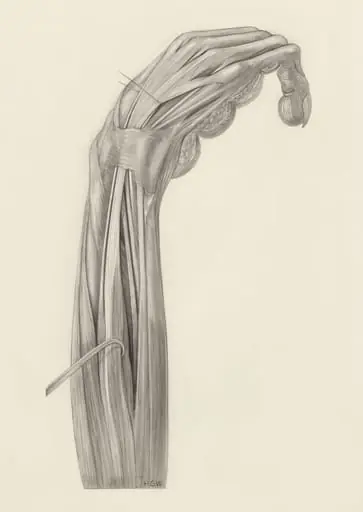 Muscular tissue of the arm of a rhesus macaque
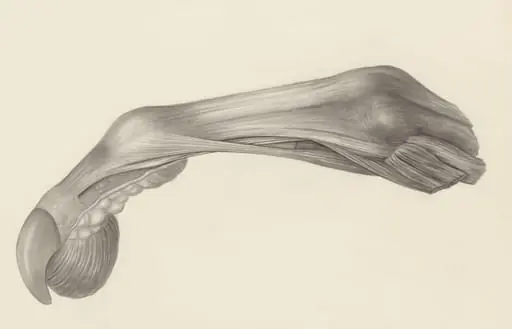 Muscular tissue of the finger of a rhesus macaque
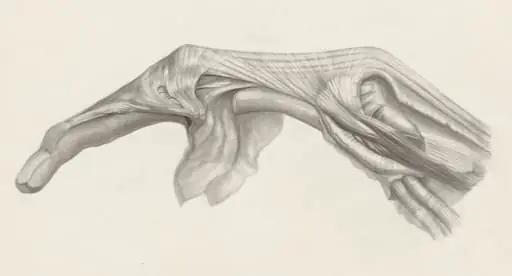 Muscular tissue of the finger
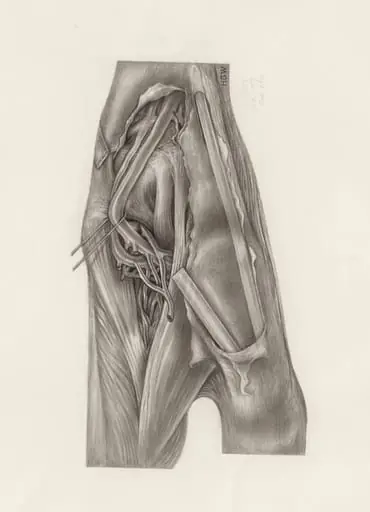 Muscular tissue of the upper extremities
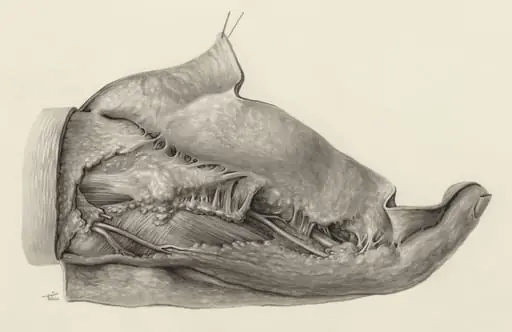 Muscular tissue of the hand and finger
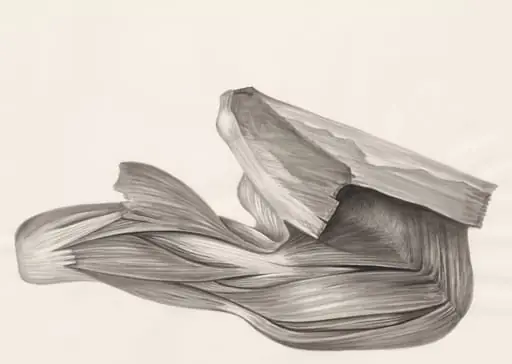 Muscular tissue of a lizards leg
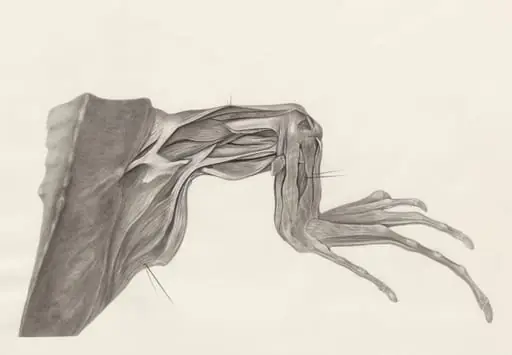 Muscular tissue of a lizards leg and claw
 Muscular tissue of the lower arm