Artwork
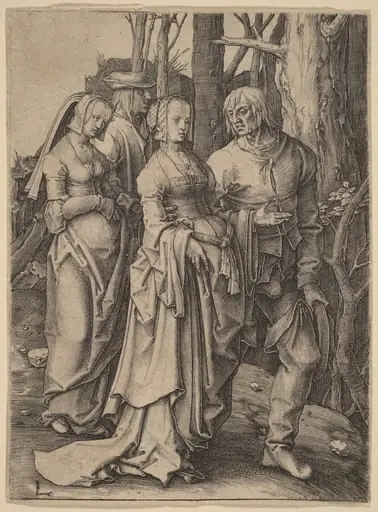
The Two Couples in the Forest
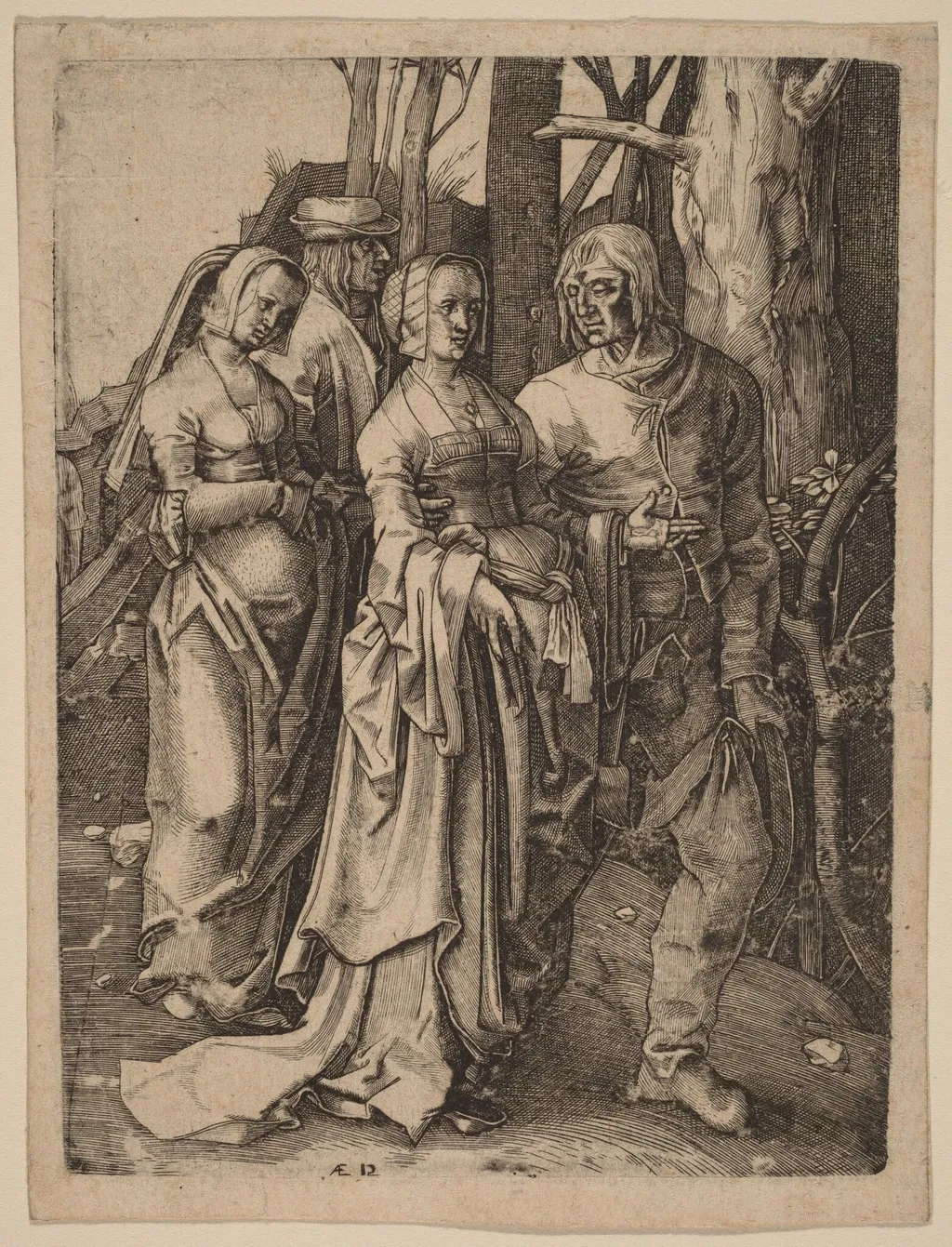
The Two Couples in the Forest is an ink print by the Renaissance artist Johan Wierix. It dates from 1586 and is held in the collection of the National Gallery of Art.
About this work
Overview
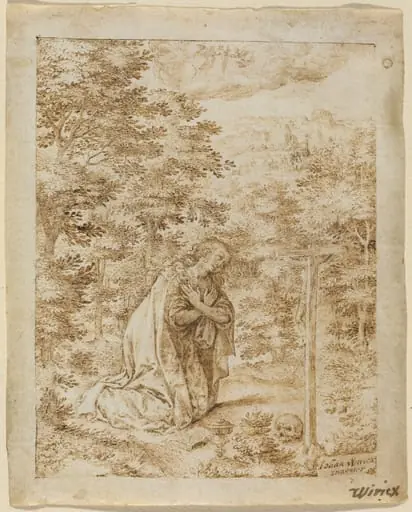
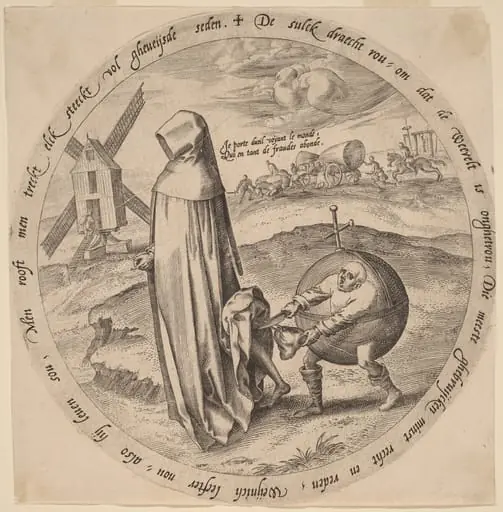
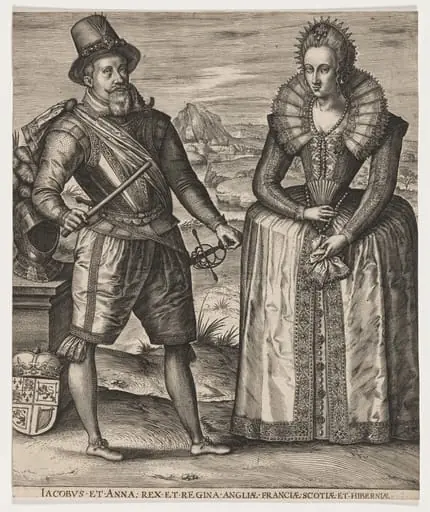
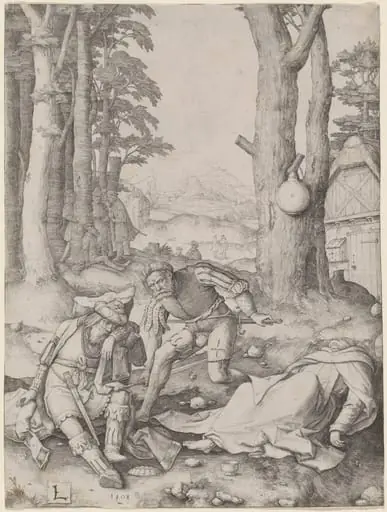
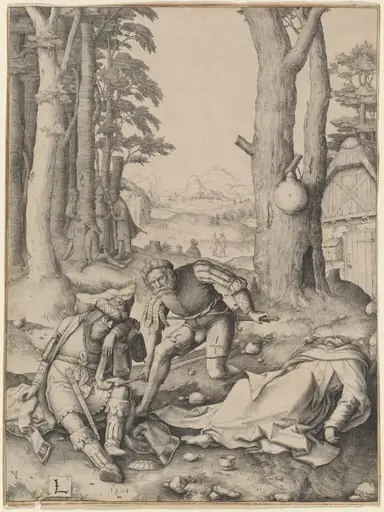
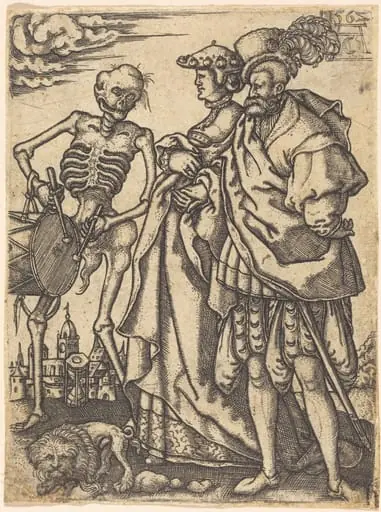
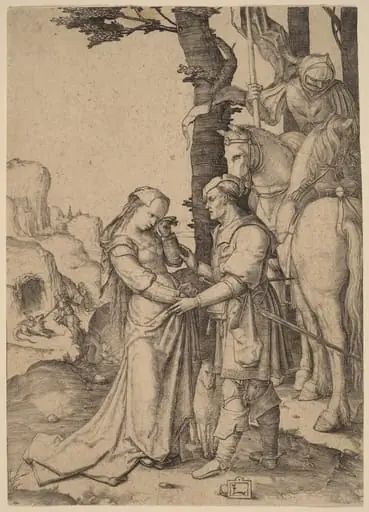
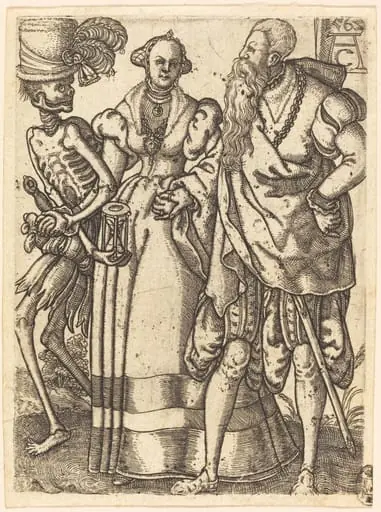
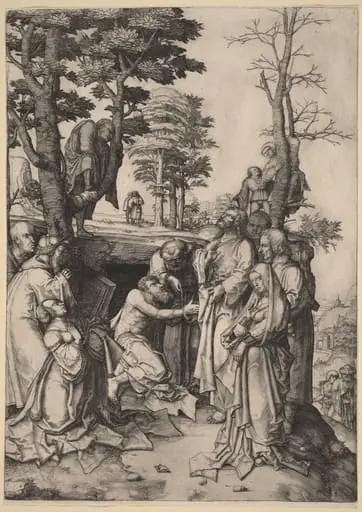
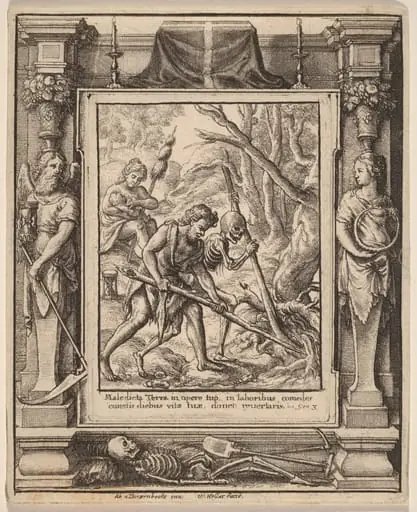
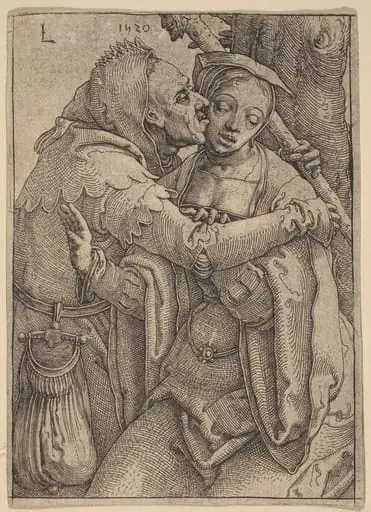
Johan Wierix’s 1586 engraving, titled *The Two Couples in the Forest*, presents a small group of four figures set within a densely rendered woodland. The composition is monochrome, relying on intricate line work to delineate the scene. Two women stand opposite one another, while two men occupy the background, each rendered with distinct attire that hints at their social roles.
Subject & Meaning
The print captures a moment of quiet interaction among the four individuals. One woman holds a fan, suggesting leisure, while the other adjusts her sleeve, perhaps indicating preparation for departure. The male figures—one capped, the other in a flowing robe with a staff—add a sense of authority or guardianship, framing the intimate exchange of the women within the natural setting.
Technique & Style
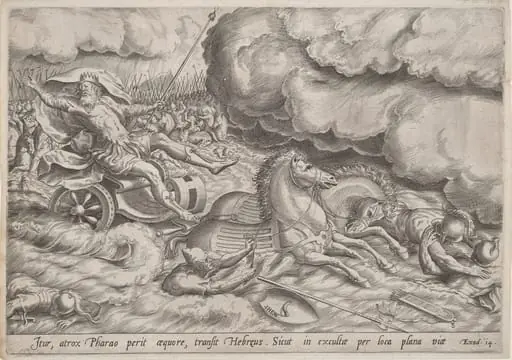
Wierix employs fine parallel lines and cross‑hatching to model volume and texture. This method builds subtle gradations of shadow across fabric folds, bark, and ground, creating a tactile sense of depth without the use of tone. The delicate line work exemplifies the precision characteristic of late‑sixteenth‑century Northern European engraving.
History & Provenance
Created in 1586, the engraving is part of Wierix’s prolific output during a period when printmaking served both artistic and documentary purposes. Though specific ownership records are scarce, the work has been catalogued in several collections of early modern prints, reflecting its circulation among connoisseurs of the era.
Context
The image aligns with contemporary interests in genre scenes that blend everyday life with pastoral environments. In the late Renaissance, such depictions often explored social interaction and courtly behavior, using the forest as a neutral backdrop that emphasizes the figures’ gestures and attire.
Legacy
Wierix’s meticulous approach to line and texture influenced subsequent engravers who sought to achieve realism through economical means. The print remains a reference point for scholars studying the development of cross‑hatching techniques in Northern European graphic arts.
Artist & collection