Artwork
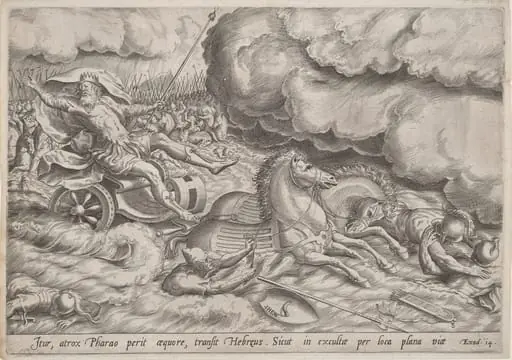
The Crossing of the Red Sea
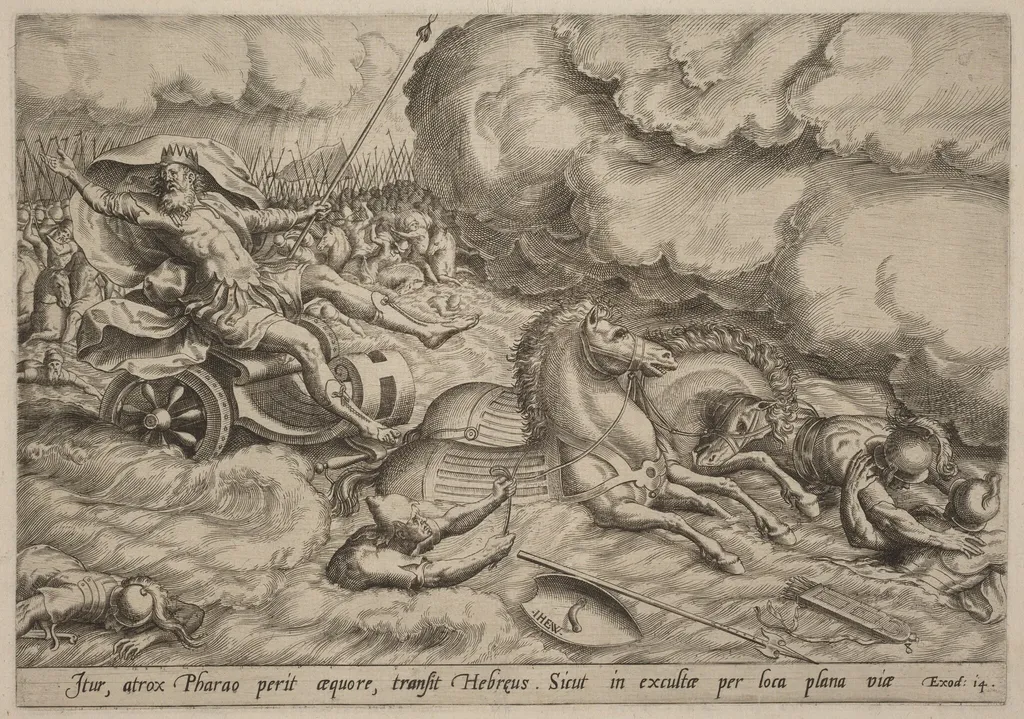
The Crossing of the Red Sea is an ink print by the Renaissance artist Johan Wierix. It dates from 1585 and is held in the collection of the National Gallery of Art.
About this work
Overview
The Crossing of the Red Sea is a 1585 engraving on laid paper by Johan Wierix, capturing a dramatic biblical scene through intricate printmaking.
Subject & Meaning
The engraving depicts a chaotic moment from the Exodus, with a crowned, robed figure in a chariot (likely Moses or an Egyptian pharaoh) amidst struggling horses and people in the water, set against a backdrop of rising smoke/steam, conveying turmoil and drama.
Technique & Style
Executed in the Renaissance printmaking tradition, this work showcases Wierix's mastery of engraving on laid paper, characteristic of the period's attention to detail and narrative depth.
History & Provenance
Created in 1585 by Johan Wierix, specific provenance details are not provided, highlighting the need for further research into the work's historical ownership and exhibition record.
Context
This engraving reflects the Renaissance interest in biblical themes and the advancement of printmaking as a medium for disseminating religious narratives across Europe.
Legacy
As part of Wierix's oeuvre, The Crossing of the Red Sea contributes to the broader legacy of Renaissance printmaking, influencing subsequent generations of artists in depicting dynamic, detailed scenes through engraving.
Artist & collection


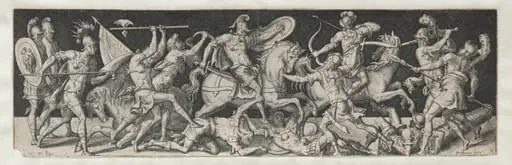 Combats and Triumphs No. 12
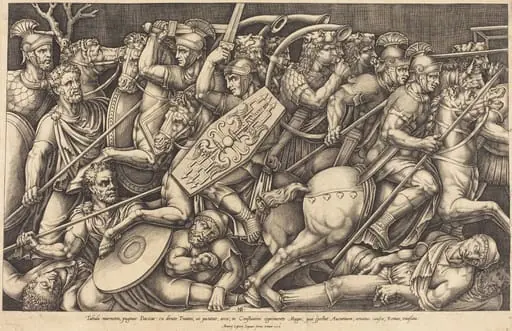 Roman Soldiers Fighting the Dacians
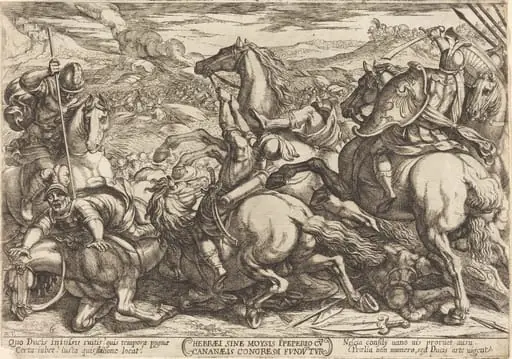 The Hebrews defeat the Canaans
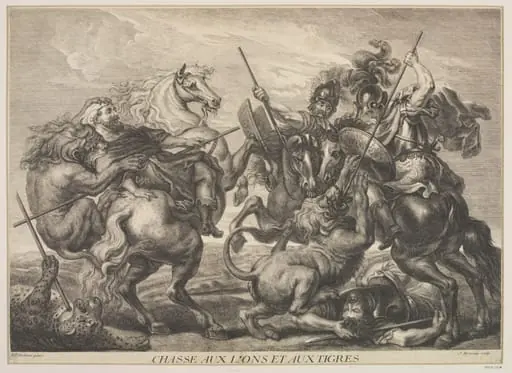 Lion and Tiger Hunting
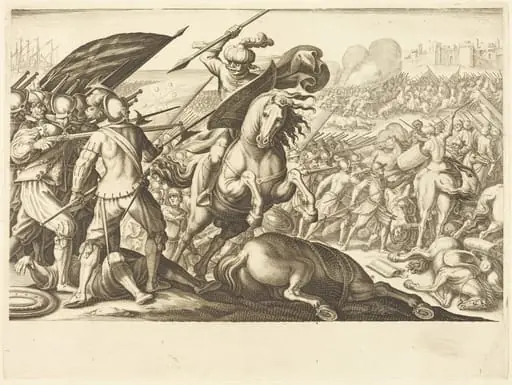 The Defeat of the Turkish Cavalry
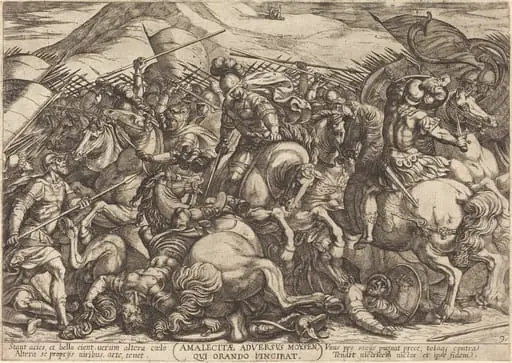 The Defeat of the Amalikits by the Hebrews
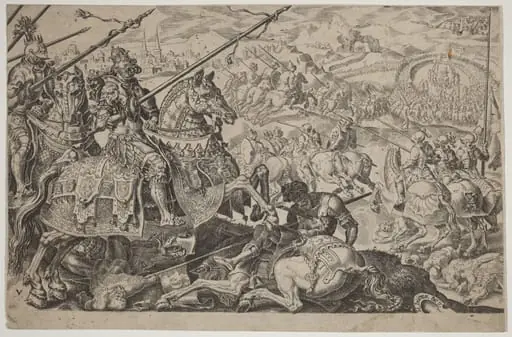 Suleiman the Magnificent Forced to Raise the Siege of Vienna
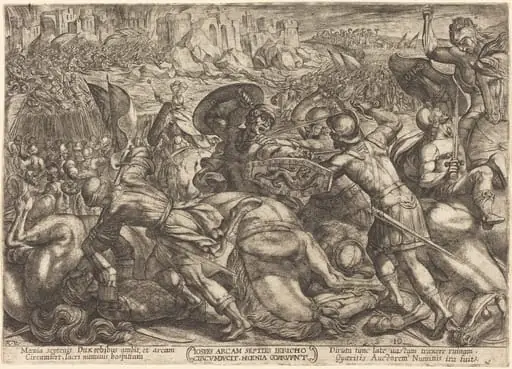 The Taking of the City of Jericho
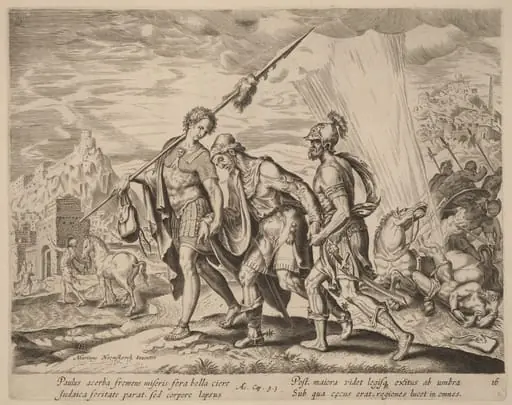 The Conversion of Saint Paul
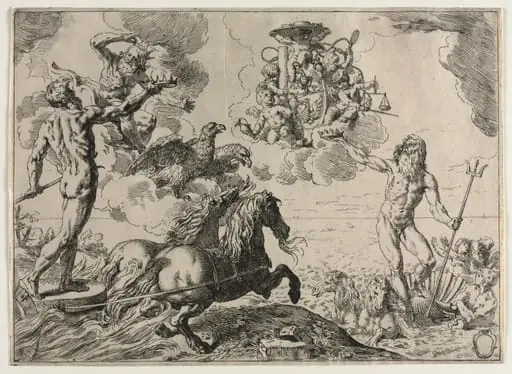 The "Quos Ego"
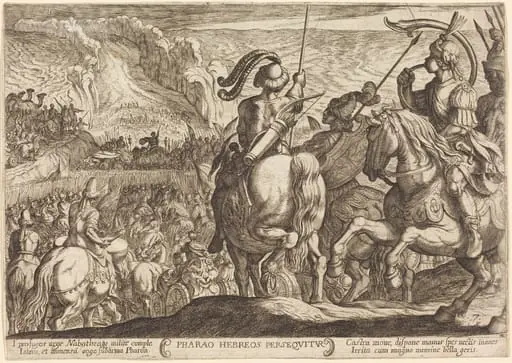 The Egyptians Pursue the Israelites