Artwork
Portrait of a Married Couple
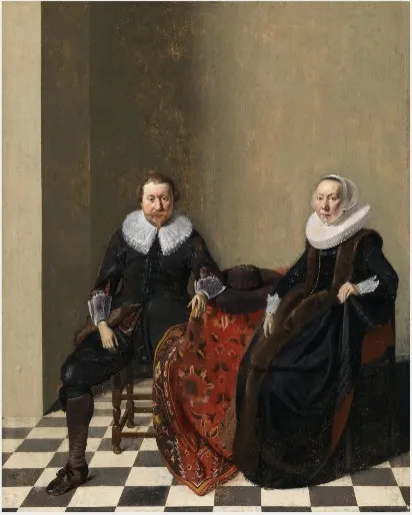
Portrait of a Married Couple is an unspecified painting by the Dutch Golden Age artist Willem Cornelisz Duyster. It dates from 1627 and is held in the collection of the National Gallery of Ireland.
About this work
Overview
Painted circa 1627 by Willem Cornelisz Duyster, this double portrait stands as an unusual subject in an oeuvre otherwise dominated by military interiors. Though Duyster is best known for scenes of soldiers in leisure, this work reflects the broader Dutch Golden Age interest in intimate domestic representation, capturing a married pair with quiet dignity rather than ceremonial grandeur.
Subject & Meaning
The couple is depicted side by side, dressed in modest but refined attire, their posture suggesting mutual composure rather than overt affection.
The couple is depicted side by side, dressed in modest but refined attire, their posture suggesting mutual composure rather than overt affection. Their gaze is directed outward, engaging the viewer with restrained formality. The absence of symbolic objects or elaborate setting emphasizes their social standing through demeanor alone, aligning with middle-class ideals of marital stability and quiet virtue.
Technique & Style
Duyster employs a restrained palette of muted browns, grays, and soft whites, characteristic of Amsterdam portraiture of the period. Brushwork is precise yet unobtrusive, with attention to fabric texture and the subtle play of light on skin and lace. The composition is balanced and frontal, avoiding theatricality in favor of psychological stillness and spatial clarity.
History & Provenance
The painting has been in the collection of the National Gallery of Ireland since the early 20th century, acquired through a private donation. Its provenance prior to that remains partially undocumented, though its style and condition suggest it remained in private Dutch or Irish hands throughout the 18th and 19th centuries without significant public exhibition.
Context
While most Dutch portraits of the era focused on individuals or family groups with clear status markers, Duyster’s choice to portray a married pair without children or possessions reflects a shift toward psychological intimacy. This aligns with broader trends in Amsterdam’s middle-class culture, where personal identity and marital harmony became subjects of artistic interest beyond aristocratic display.
Legacy
Though not widely reproduced or studied, the painting contributes to understanding the diversity of Dutch portraiture beyond formal civic or merchant types. It illustrates how artists like Duyster, known for genre scenes, adapted their skills to convey personal dignity in domestic settings, expanding the boundaries of what portraiture could express in early 17th-century Holland.
Artist & collection
Artist
Willem Cornelisz Duyster (1599–1635) was a Dutch Golden Age painter from Amsterdam, best known for his "guardroom scenes" (cortegaarddje), genre paintings showing the military life.

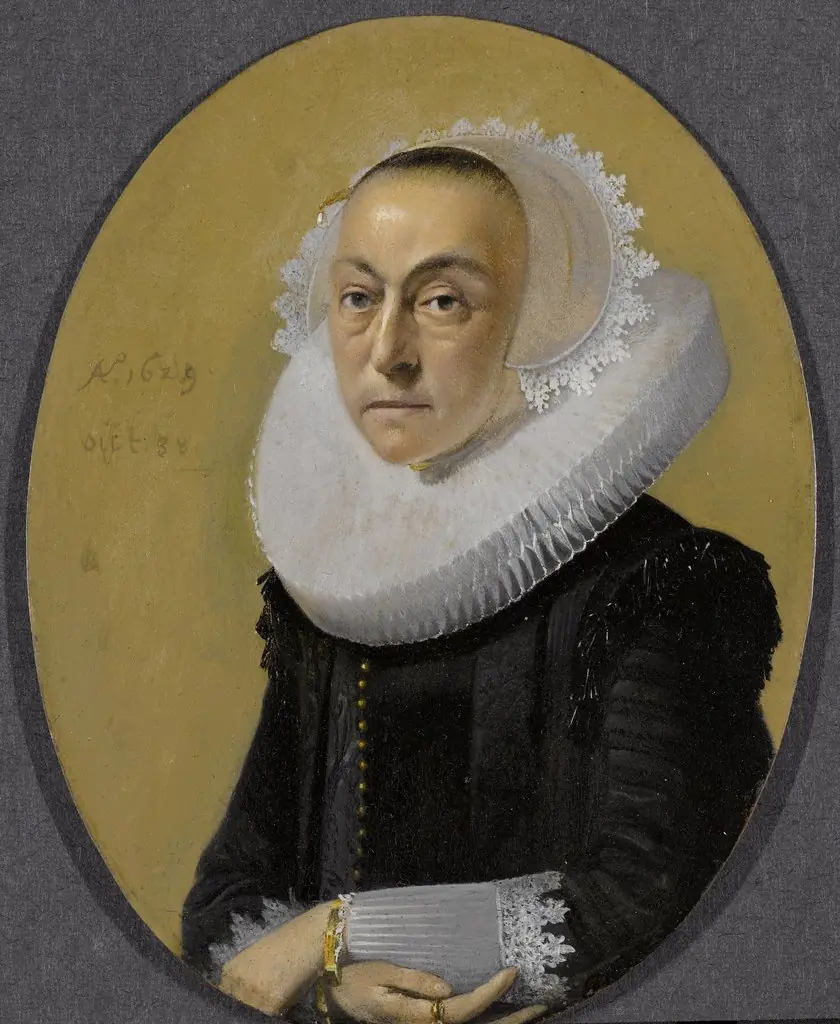 Portrait of a woman
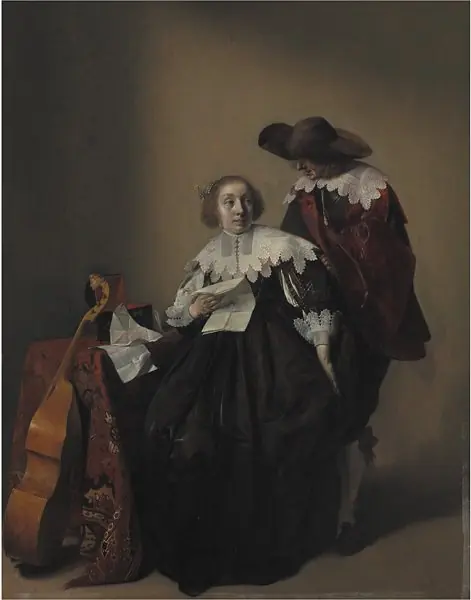 A Seated Woman with a Letter, a Gentleman Standing by Her
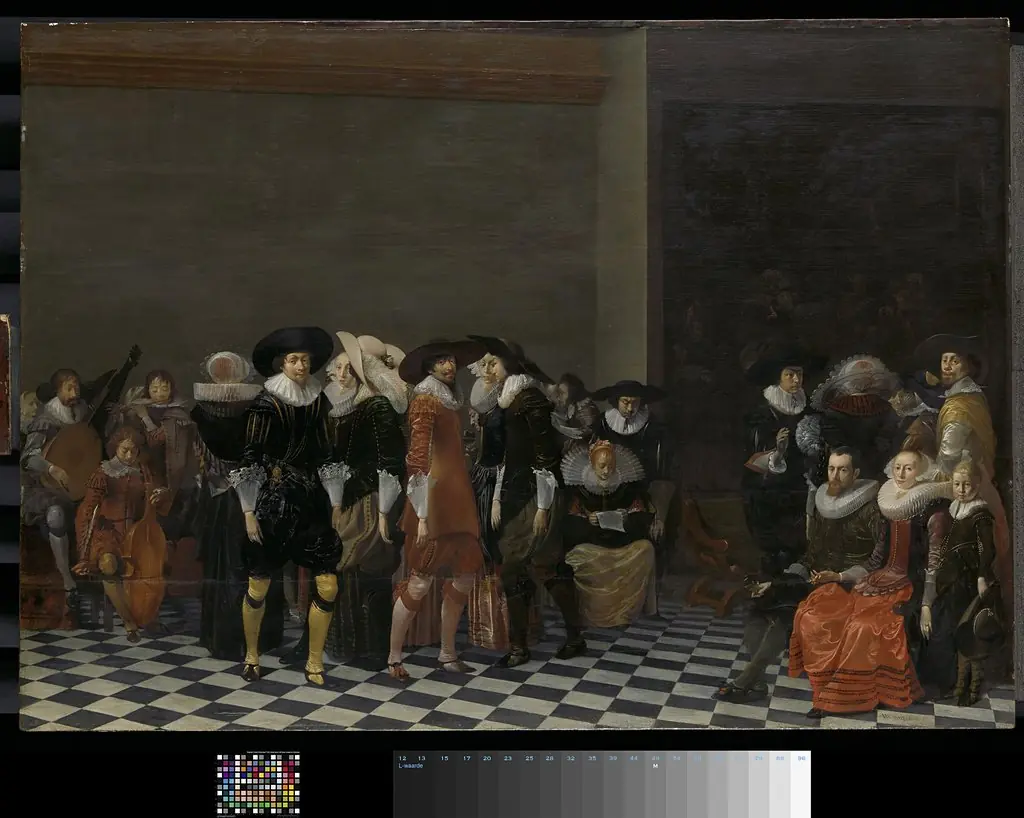 A wedding feast, traditionally called 'The wedding of Adriaen Ploos van Amstel and Agnes van Bijler', 1616
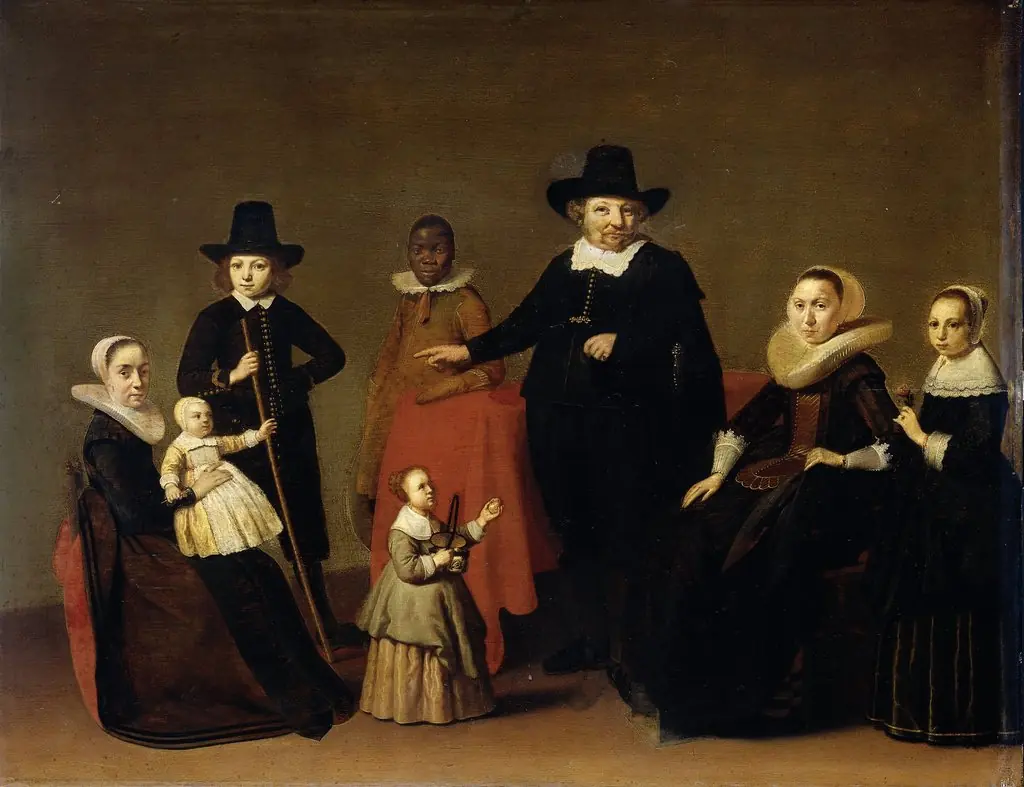 Family group with a black man
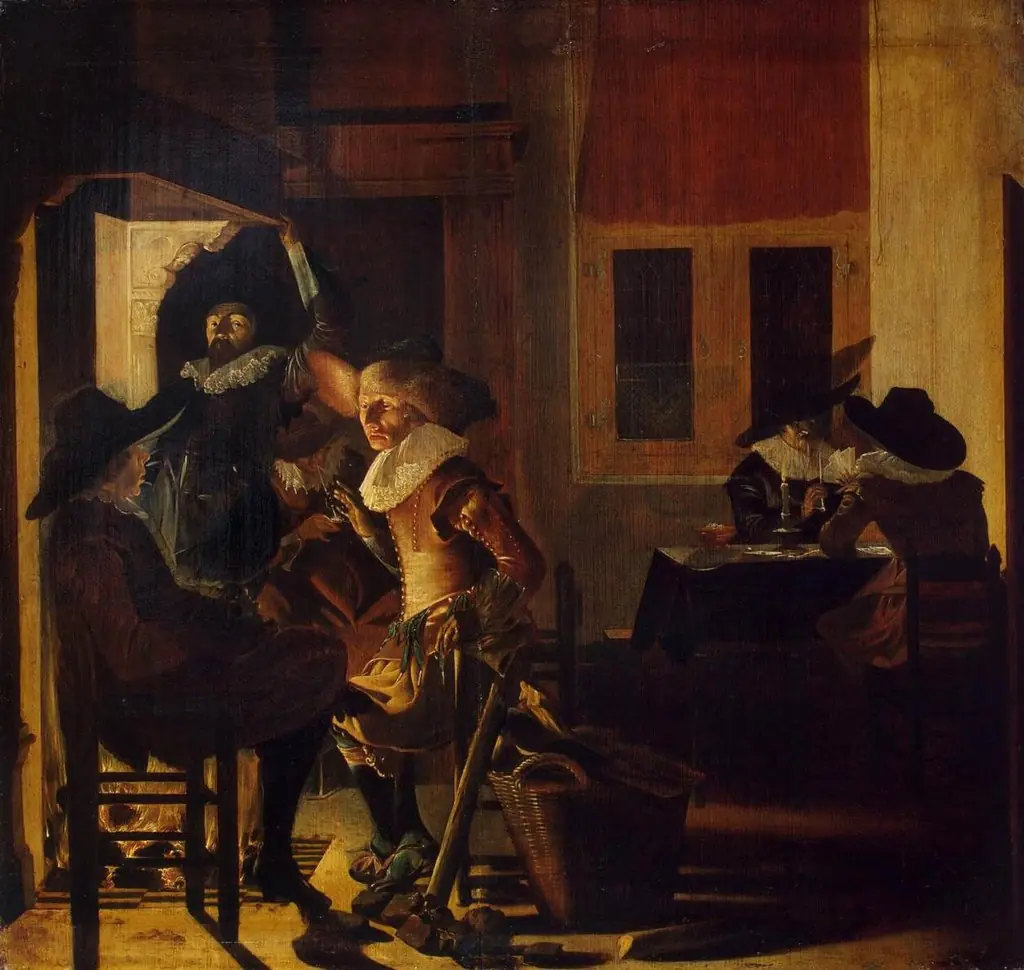 Soldiers Beside a Fireplace
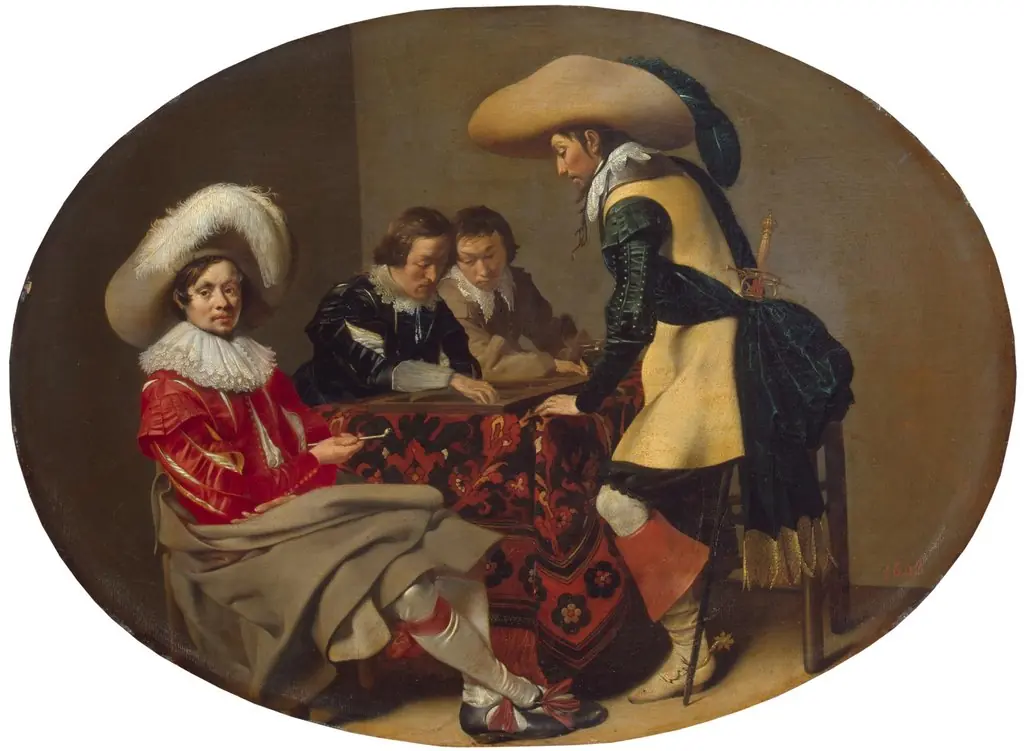 Tric-Trac Players
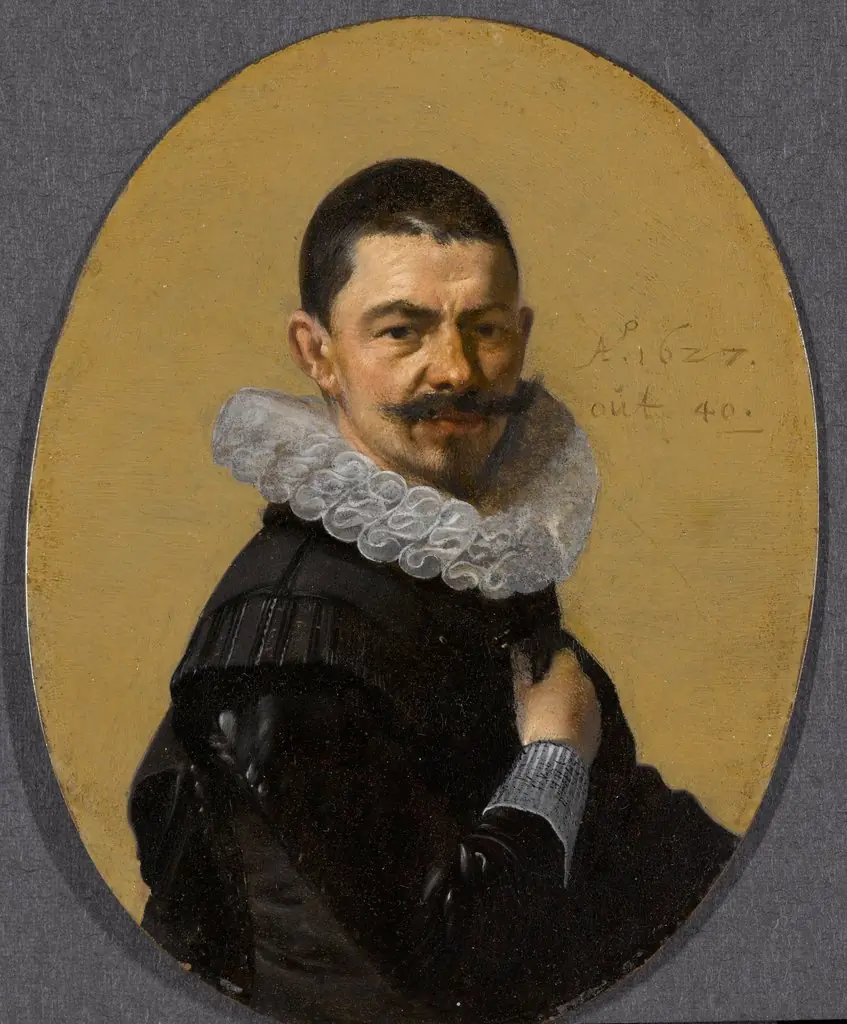 Portrait of a man
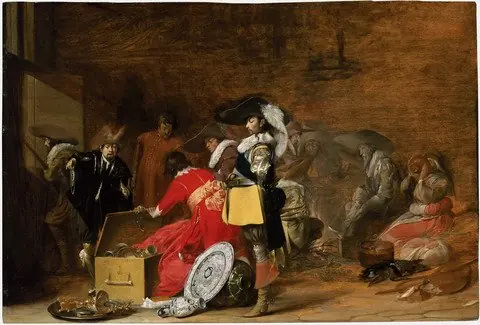 Soldiers Dividing Booty in a Barn
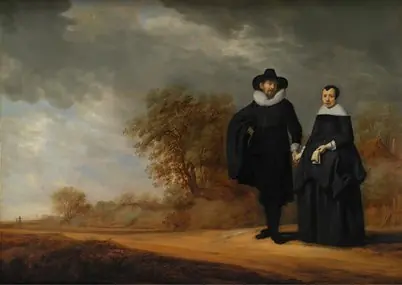 Burgomaster Cornelis Damasz. van der Gracht and his Wife, Jopken Jacobs, in a Landscape
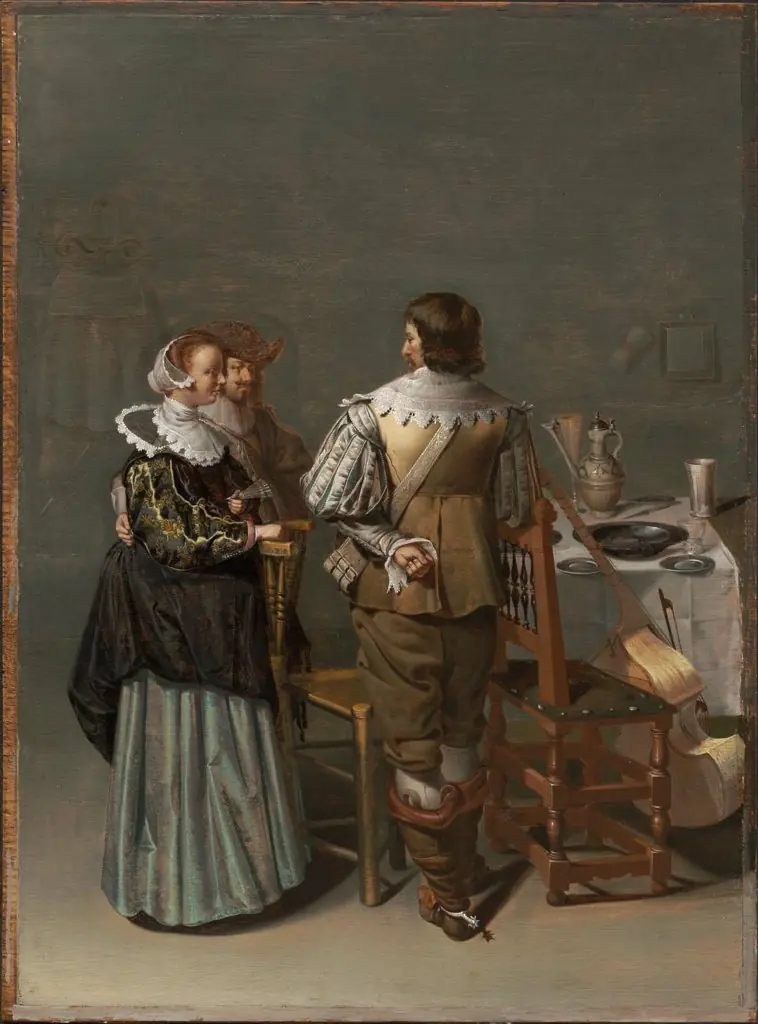 A Merry Company
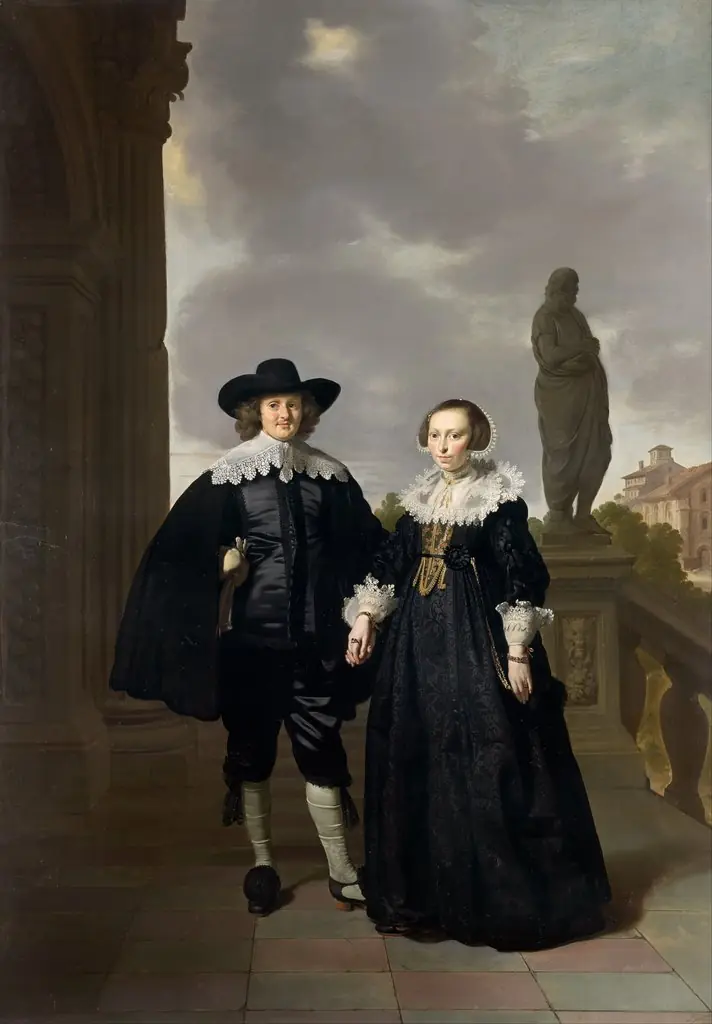 Frederick van Velthuysen and his wife, Josina
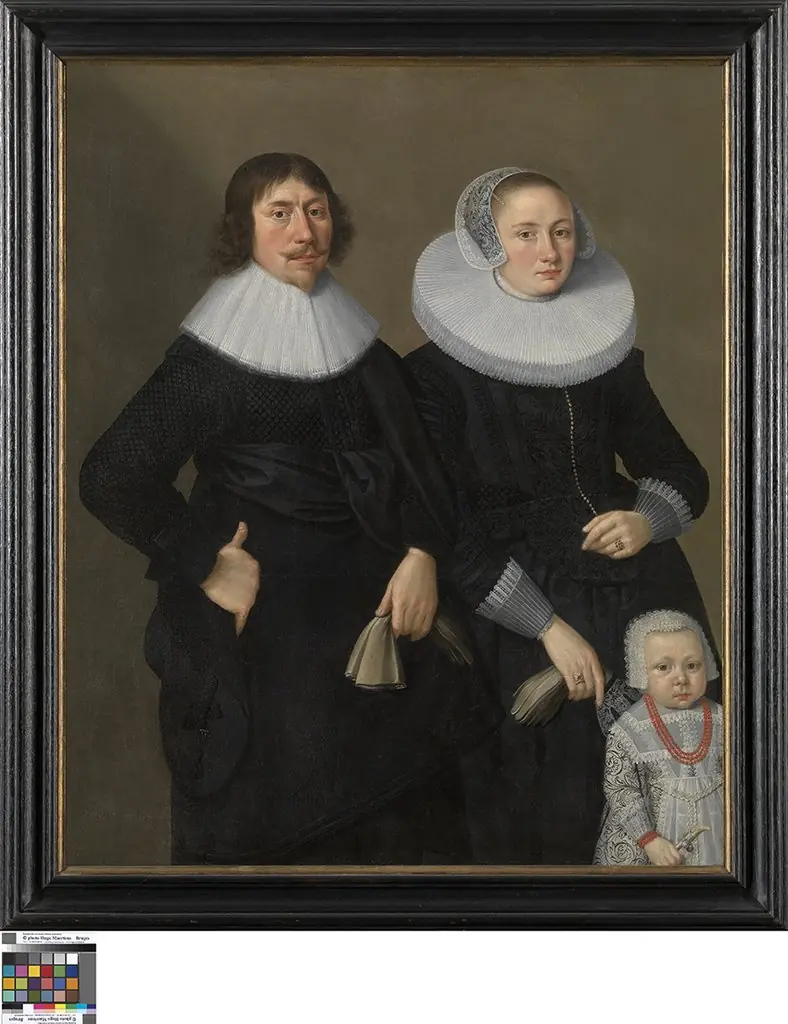 family portrait
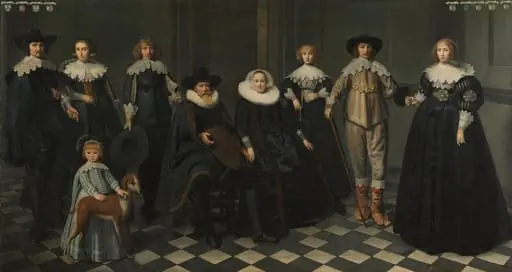 Portrait of the Family of Dirck Jacobsz Bas (1569-1637), Burgomaster of Amsterdam, and Margriet Snoeck (1588-1645)
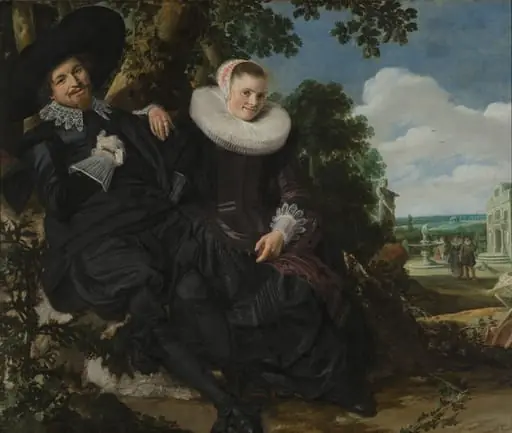 Portrait of a Couple, Probably Isaac Abrahamsz Massa and Beatrix van der Laen
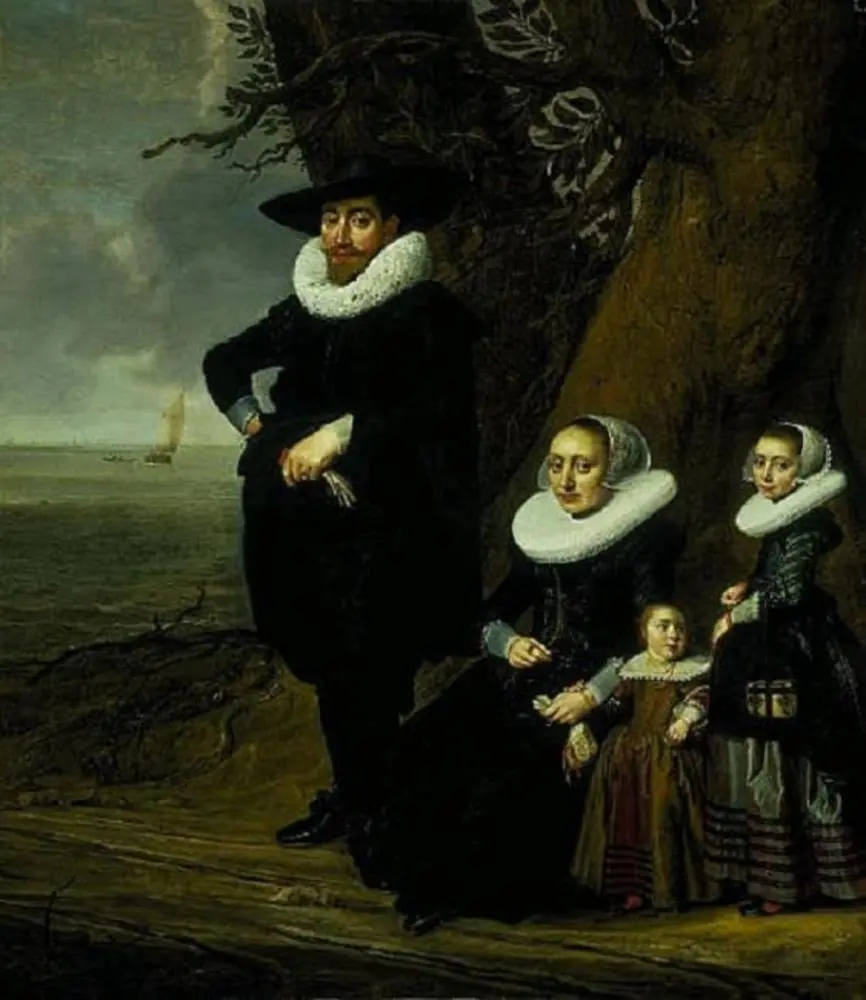 A Dutch Family Group (Portrait of a Man, Woman and Two Girls)