Artwork
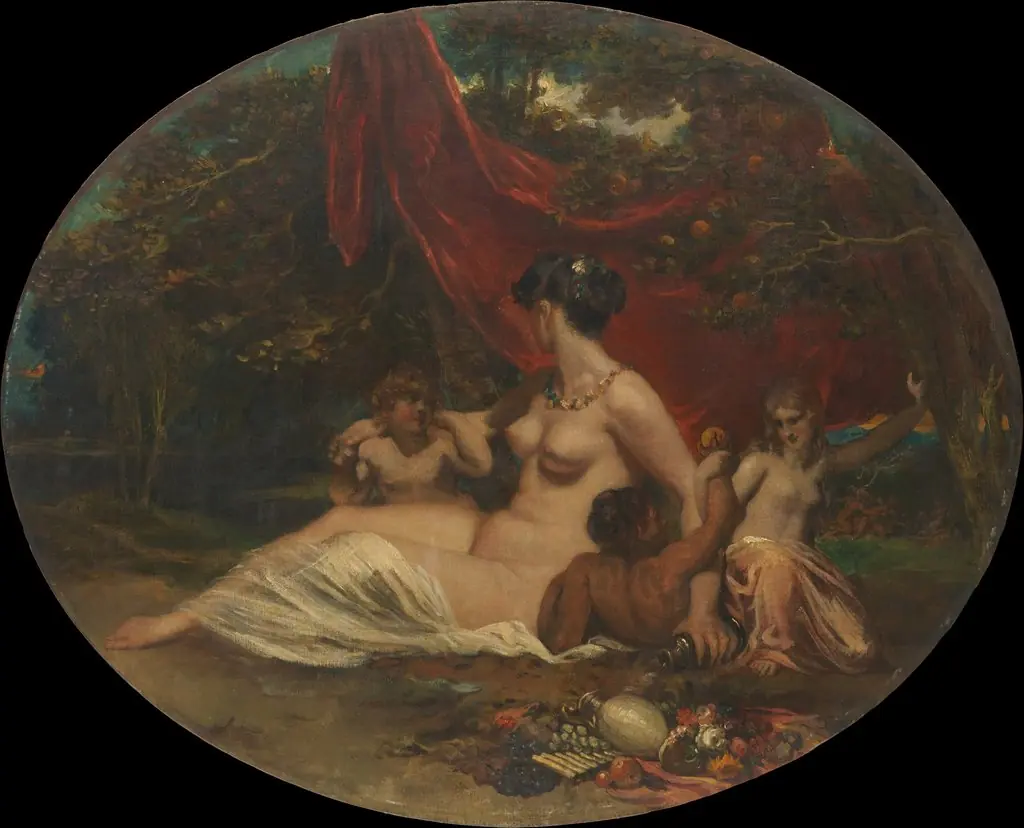
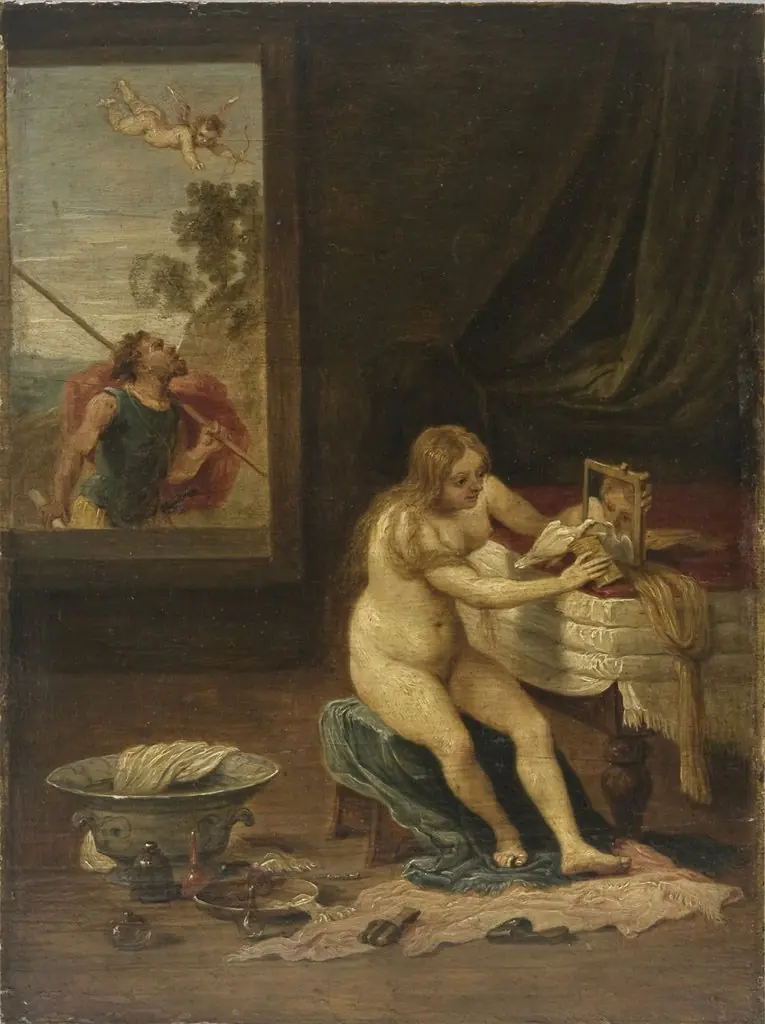
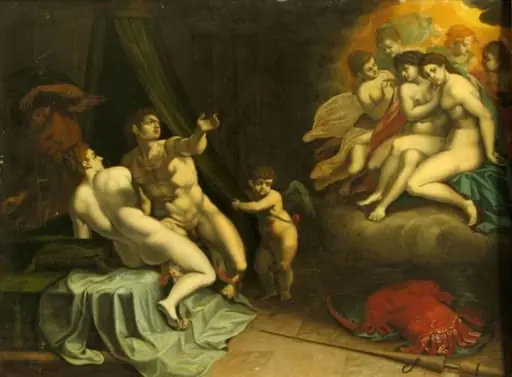
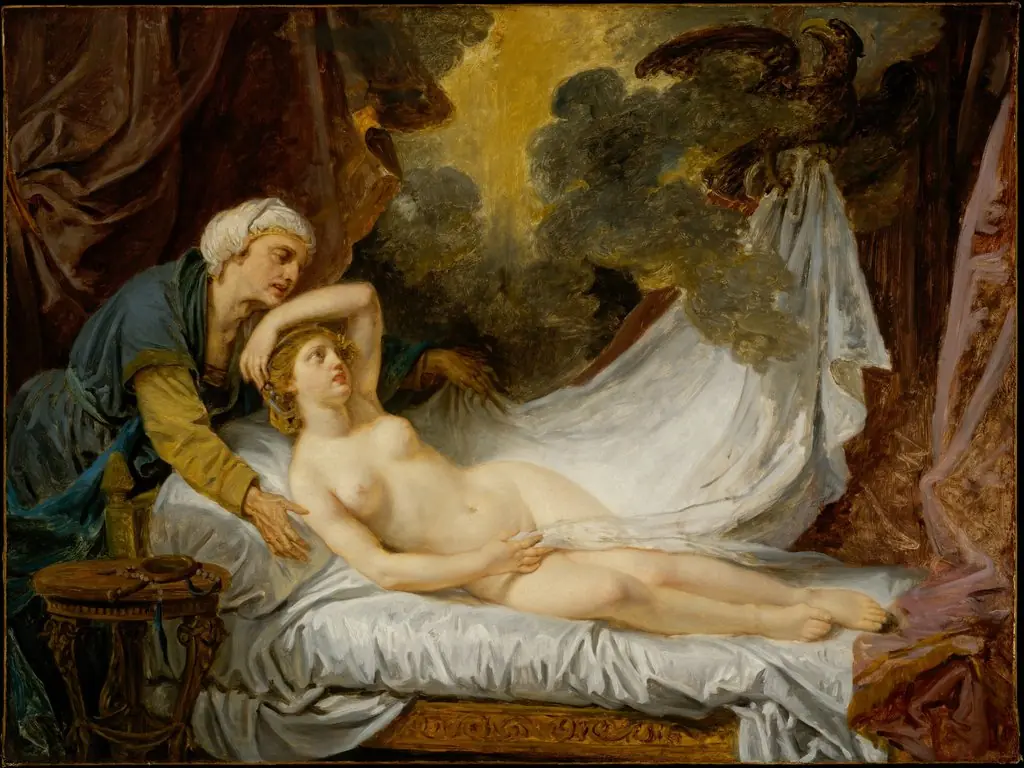
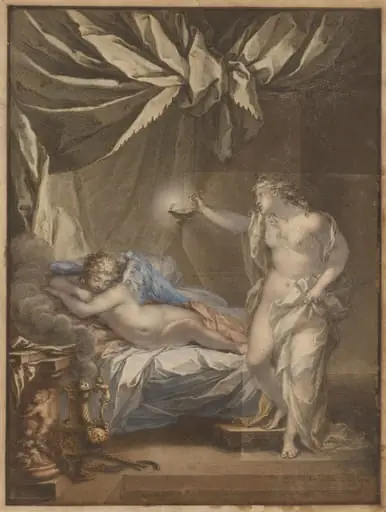
Venus, Cupid and Psyche
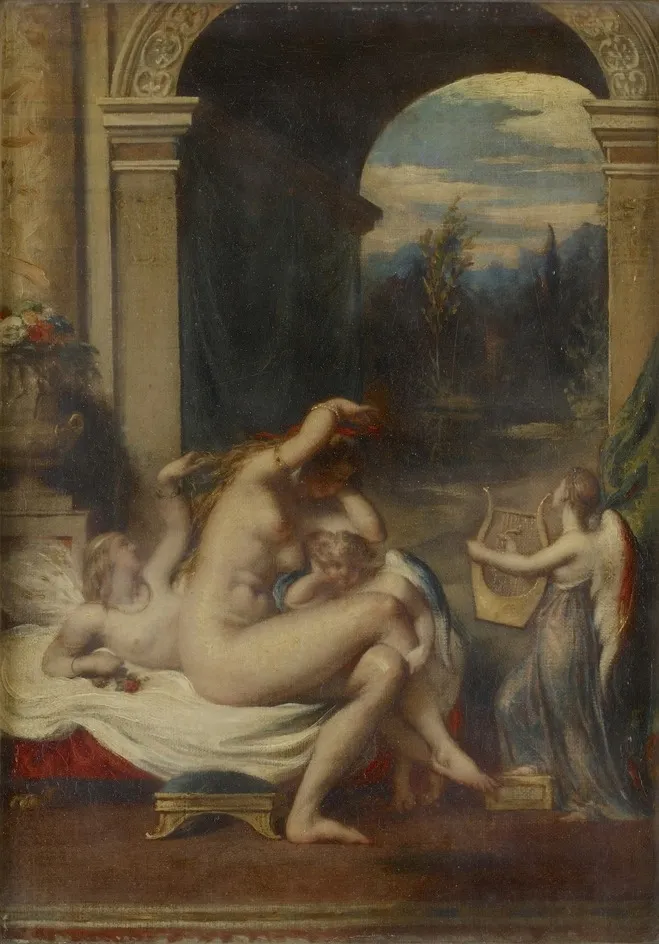
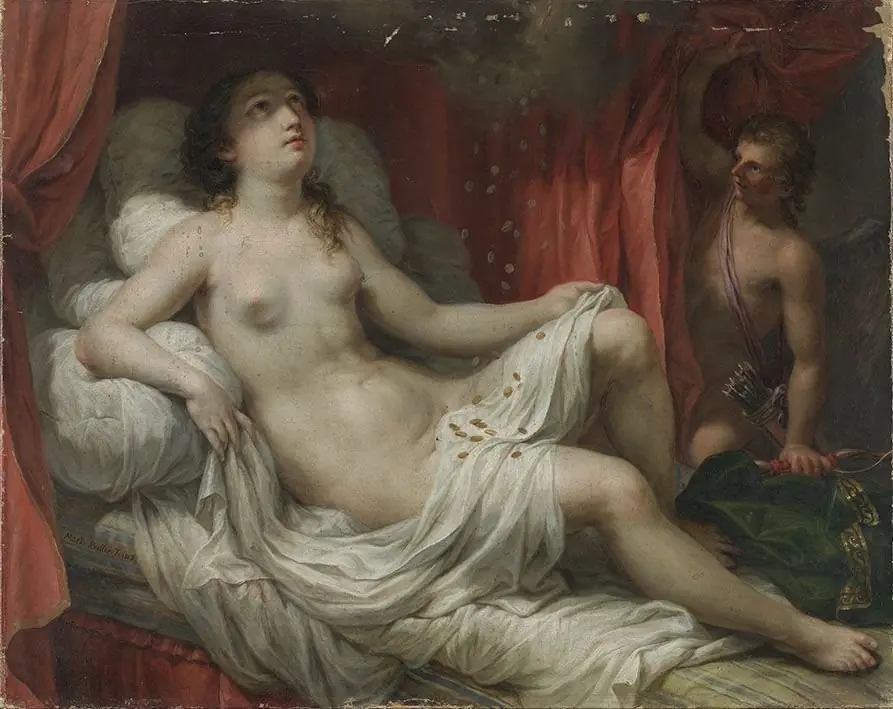
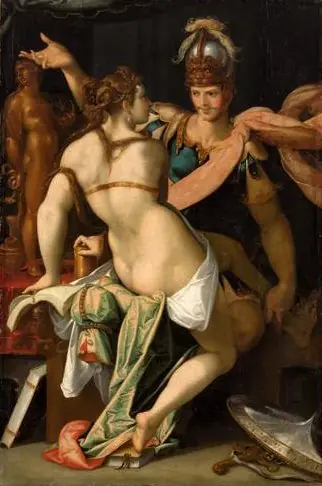
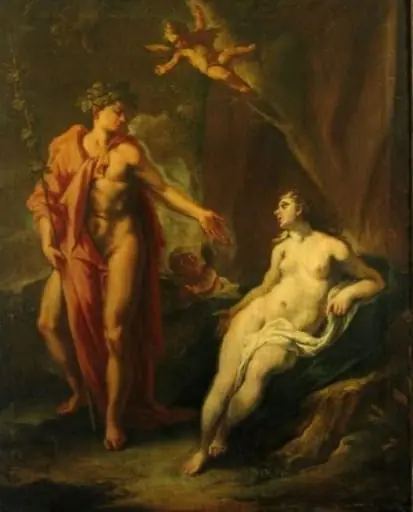
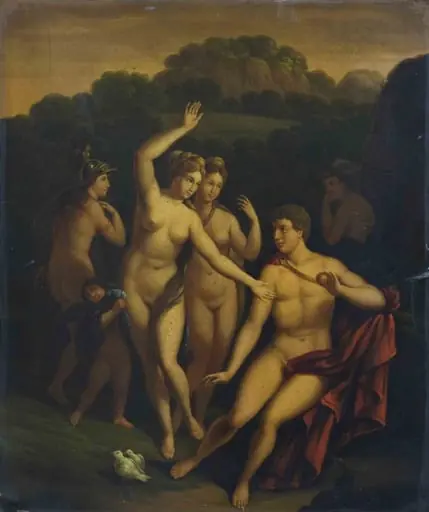
Venus, Cupid and Psyche is an oil painting by the British Romanticist artist William Etty. It dates from 1828 and is held in the collection of the Ashmolean Museum.
About this work
Overview
Created circa 1828 by the Yorkshire‑born painter William Etty, this oil on canvas presents a mythological tableau titled *Venus, Cupid and Psyche*. The work is part of the Ashmolean Museum’s collection and exemplifies the British Romantic interest in classical subjects rendered with a sensuous approach to the human form.
Subject & Meaning
The composition brings together three figures from the ancient love story: a nude Venus reclines on a couch, while clothed attendants—identified as Cupid and Psyche—stand nearby. The juxtaposition of the exposed goddess with her modestly dressed companions underscores themes of desire, innocence, and the interplay between divine beauty and mortal affection.
Technique & Style
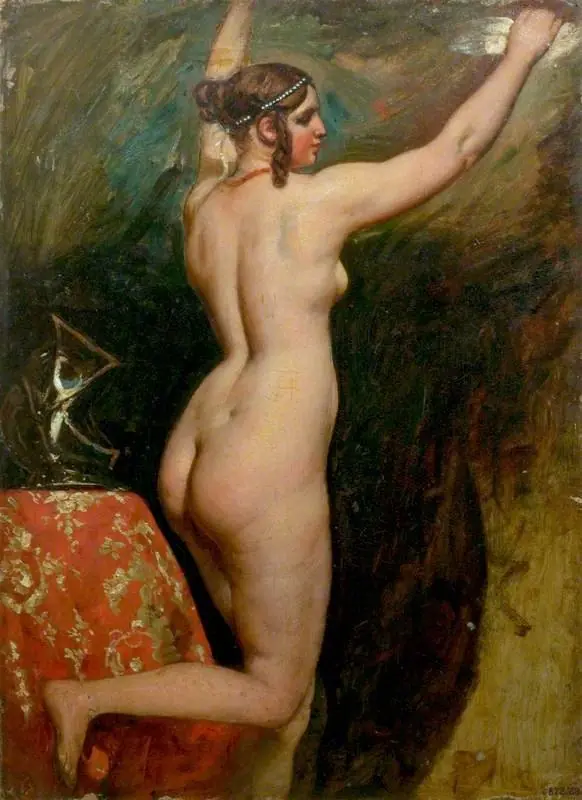
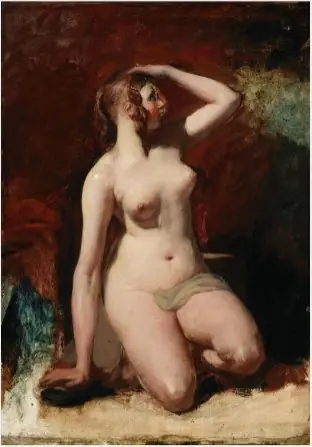
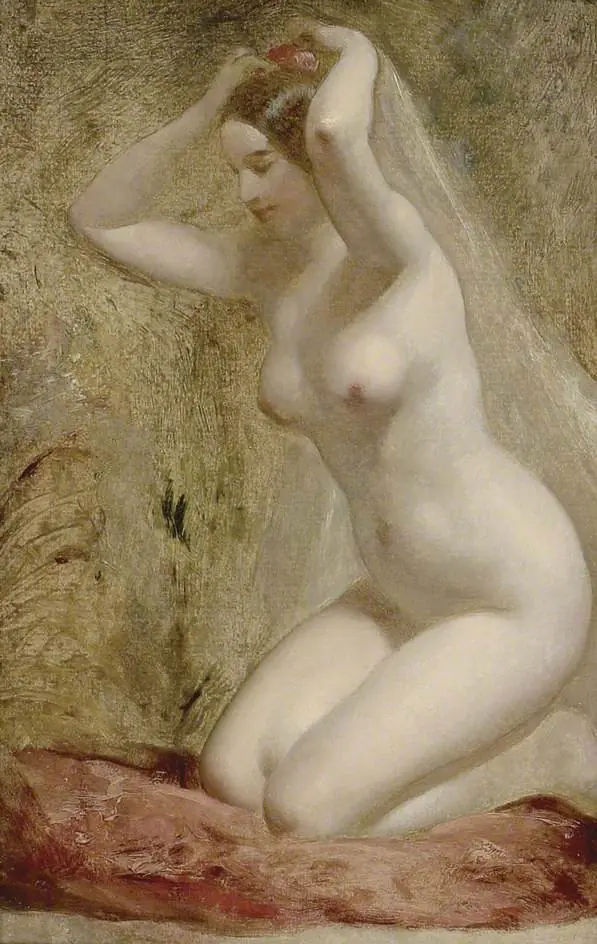
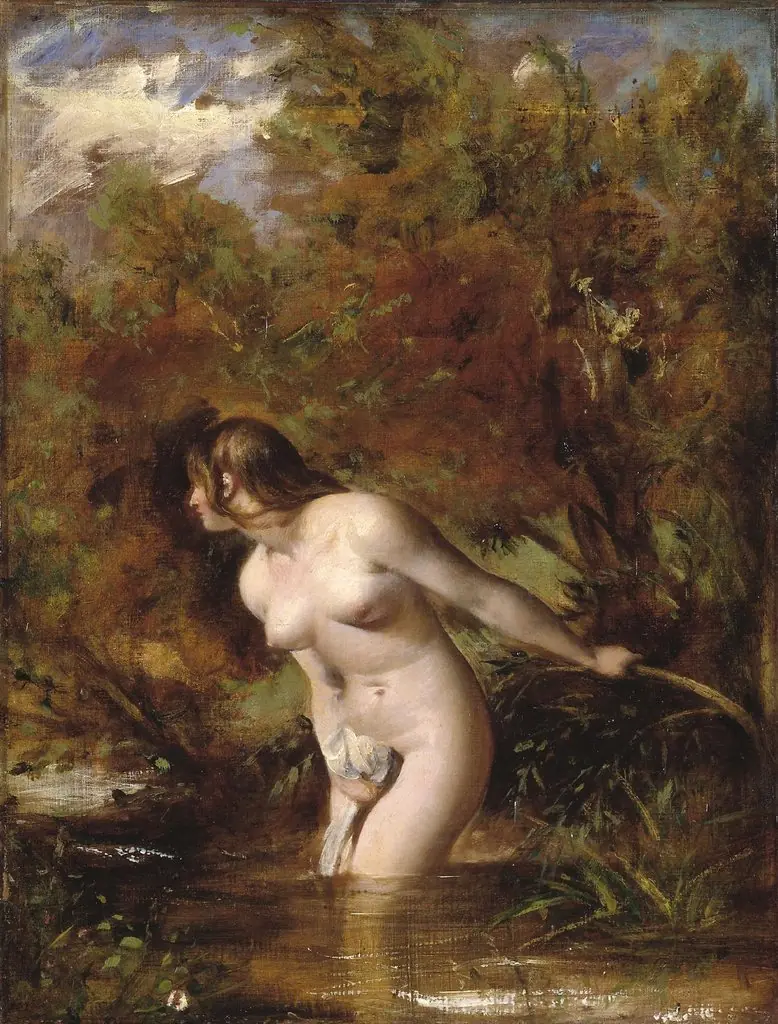
Etty employed the oil medium’s capacity for layered glazing, building translucent tones that model flesh and fabric with subtle depth. His handling reflects the Romantic era’s emphasis on dramatic chiaroscuro and rich coloration, while the precise rendering of anatomy reveals his grounding in academic drawing traditions.
History & Provenance
Born in 1787, Etty earned distinction as one of Britain’s first painters to treat the nude as a serious subject. After its completion, the canvas entered private ownership before being acquired by the Ashmolean Museum, where it remains on display as a representative example of his mythological oeuvre.
Context
During the early nineteenth century, British art increasingly looked to classical antiquity for inspiration, aligning with the broader Romantic movement’s fascination with emotion and the sublime. Etty’s choice of a Venus‑centric narrative reflects contemporary tastes for grand historical and mythological scenes, while his focus on the nude set him apart from many of his peers.
Artist & collection
Artist
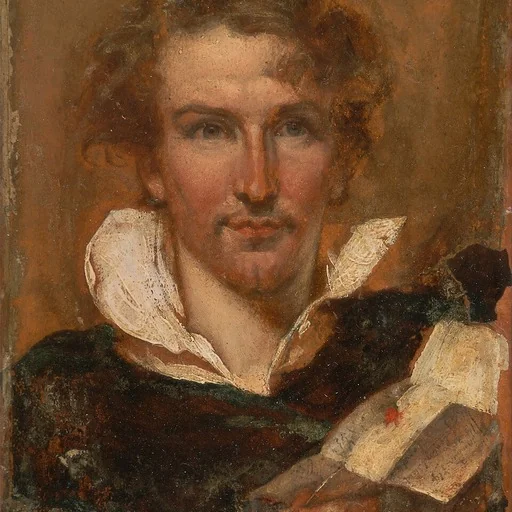
William Etty (10 March 1787 – 13 November 1849) was an English artist best known for his historical paintings containing nude figures.