Artwork
Arteries of Great Britain: The Forth
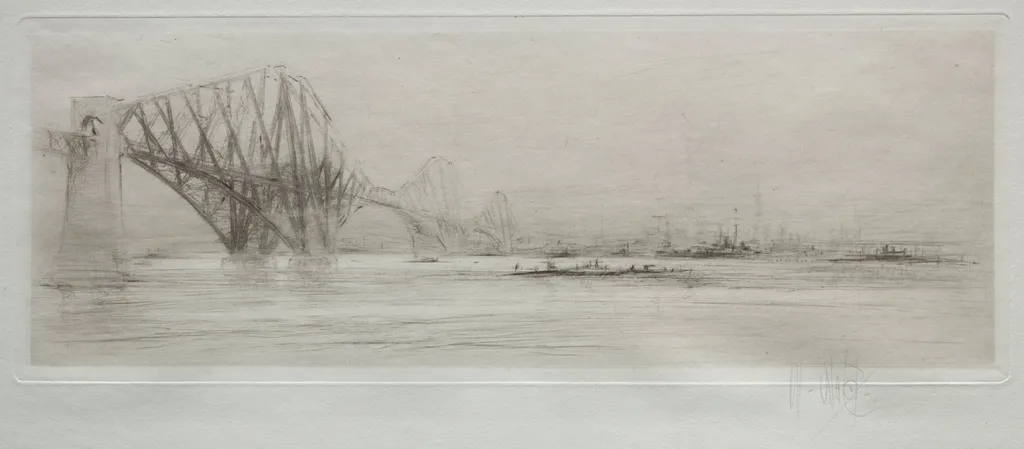
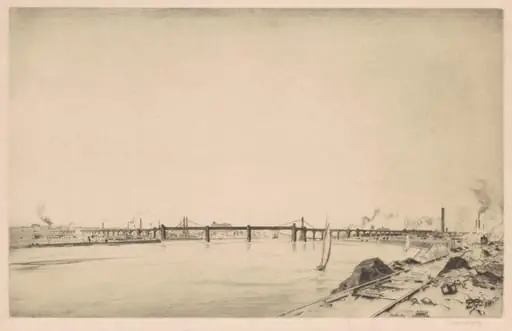
Arteries of Great Britain: The Forth is a print by William Walcot. It dates from 1922 and is held in the collection of the Cleveland Museum of Art.
About this work
This sketch shows a bridge with lots of crisscrossing lines and supports over water.
This sketch shows a bridge with lots of crisscrossing lines and supports over water. The background has faint outlines of hills or buildings, barely visible. The whole thing is drawn in quick, light strokes—almost like a sketchbook doodle.
The artist focused on the bridge’s tangled metal beams, making them the star. The water below looks calm but is drawn with loose, wavy lines.
Want to see more by this artist? Check out William Walcot (British, 1874–1943).
Overview
Created in 1922 by British artist William Walcot, this print depicts the Forth Bridge as a dynamic network of steel trusses. Rendered in delicate, rapid linework, the image captures the structure’s intricate geometry without heavy shading or detail. The composition emphasizes structural complexity over environmental context, reducing surrounding elements to faint, suggestive marks.
Subject & Meaning
The Forth Bridge, a vital railway crossing in Scotland, is presented not as a monument but as an assembly of interwoven metal components. Walcot’s focus on its internal framework suggests an interest in industrial form as a subject in itself—celebrating engineering logic rather than symbolic grandeur. The bridge becomes a visual metaphor for connectivity, both physical and infrastructural.
Technique & Style
Walcot employed light, fluid pen strokes to convey the bridge’s lattice of beams, creating a sense of movement and fragility. The water beneath is rendered with loose, undulating lines, contrasting the rigid geometry above. Background features like hills or distant structures are barely indicated, reinforcing the composition’s focus on the bridge’s structural essence.
History & Provenance
The print is held in the collection of The Cleveland Museum of Art, acquired as part of its broader interest in early 20th-century British graphic art. Walcot, known for architectural illustrations and etchings, produced this work during a period when industrial subjects gained renewed attention among artists exploring modernity through precise, expressive line work.
Context
In the early 1920s, British artists increasingly turned to industrial landscapes as subjects, reflecting societal shifts toward mechanization. Walcot’s approach aligns with contemporaries who favored abstraction and structural clarity over romanticized scenery. The Forth Bridge, completed in 1890, remained a potent symbol of engineering achievement, ripe for reinterpretation in modernist terms.
Legacy
Walcot’s treatment of the Forth Bridge exemplifies a quiet but significant strand of interwar British printmaking that prioritized formal inquiry over narrative. While not widely exhibited today, the work contributes to understanding how artists engaged with industrial infrastructure as aesthetic and conceptual subjects, influencing later generations interested in the poetry of engineering.
Artist & collection

Artist
William Walcot RE was a Russian-Scottish architect, graphic artist and etcher, notable as a architect of refined Art Nouveau in Moscow, Russia.

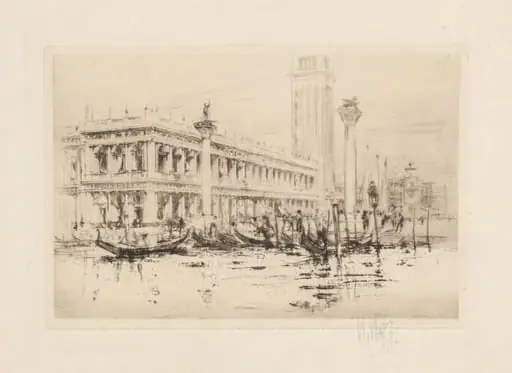 The Venice Set: The Library of St. Mark’s
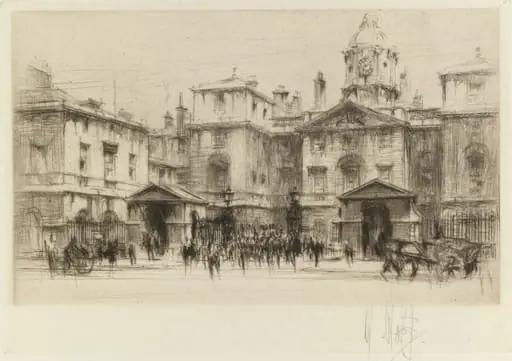 London Set: Horseguards
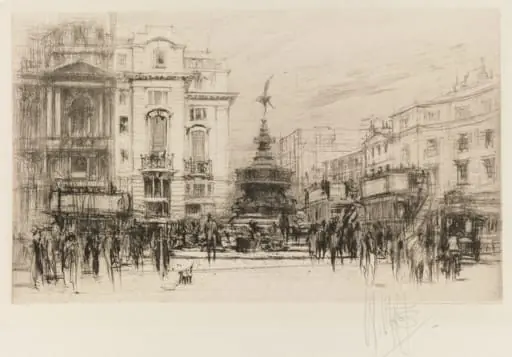 London Set: Piccadilly Circus (with Criterion Theatre)
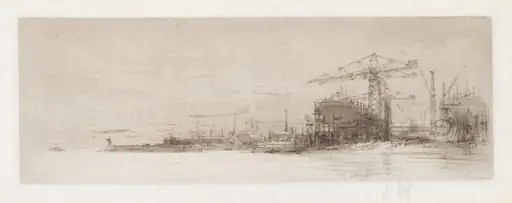 The Clyde from the series The Arteries of Great Britain
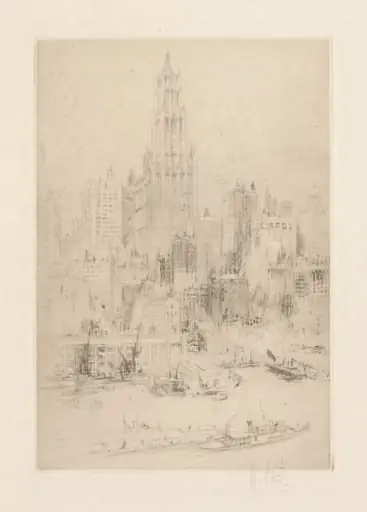 Downtown Manhattan from the East River, with the Woolworth Building
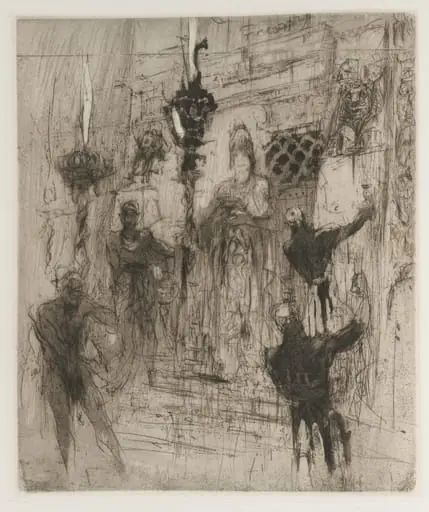 Herodias
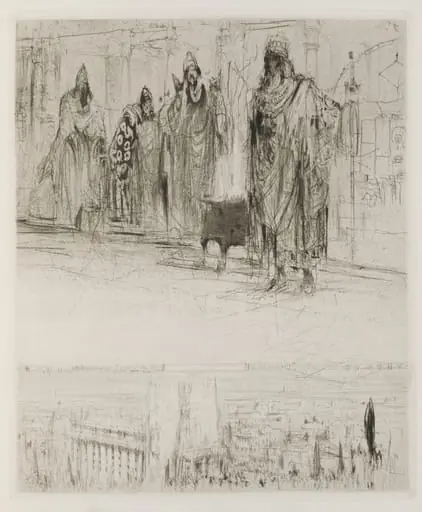 Herodias: Page 13, The tetrarch was awaited by several Galileans, the master of scribes, the chief of the land steward, the manager of the salt mines, and a Jew from Babylon commanding his troops on horse
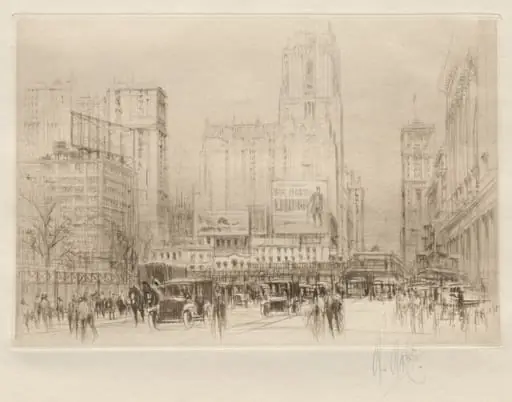 Forty-second Street NY