Artwork
Herodias: Page 13, The tetrarch was awaited by several Galileans, the master of scribes, the chief of the land steward, the manager of the salt mines, and a Jew from Babylon commanding his troops on horse
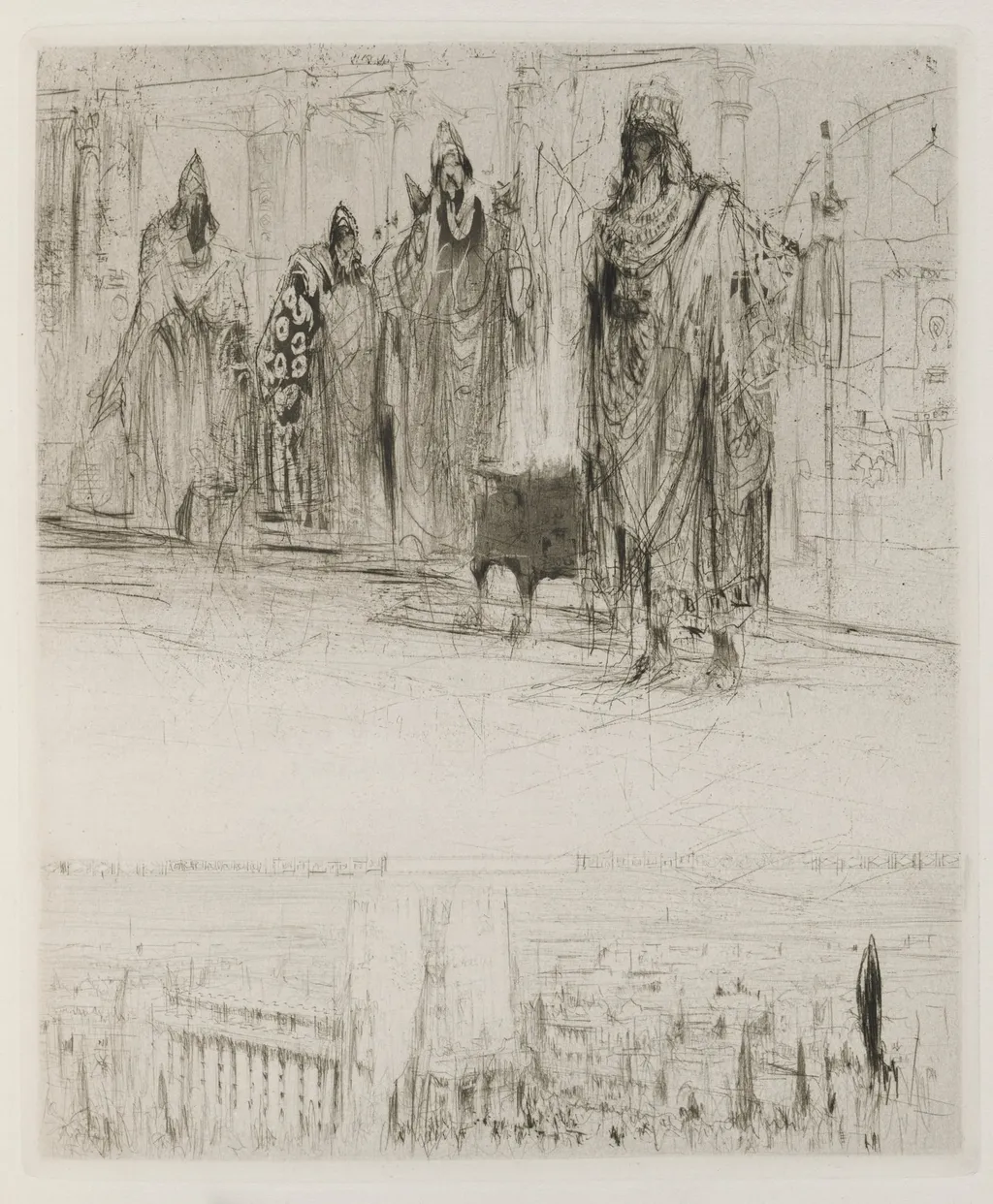
Herodias: Page 13, The tetrarch was awaited by several Galileans, the master of scribes, the chief of the land steward, the manager of the salt mines, and a Jew from Babylon commanding his troops on horse is a print by William Walcot. It dates from 1928 and is held in the collection of the Cleveland Museum of Art.
About this work
Overview
Created in 1928 by William Walcot, this ink drawing is one of many preparatory studies for a larger illustrated project. Executed in a rapid, gestural style, it captures a moment of anticipation among a group of figures. The work is held in the collection of The Cleveland Museum of Art, where it is valued as part of Walcot’s broader exploration of biblical narratives through graphic means.
Subject & Meaning
The scene depicts five robed individuals awaiting the arrival of a tetrarch, likely Herod Antipas, as referenced in the title.
The scene depicts five robed individuals awaiting the arrival of a tetrarch, likely Herod Antipas, as referenced in the title. The figures represent regional authorities—a scribe, land steward, salt mine manager, and a Babylonian military commander—each symbolizing the administrative and cultural layers of Galilee under Roman rule. Their clustered posture suggests formal readiness, conveying the weight of political expectation.
Technique & Style
Walcot employed loose ink lines and minimal shading to suggest form rather than define it. Faces are intentionally indistinct, emphasizing collective presence over individual identity. The horse or mount is rendered as a dark, ambiguous shape, while the background consists of dense, chaotic strokes that evoke atmosphere rather than landscape. The sketch’s unfinished quality reflects its function as a working study.
History & Provenance
This drawing originated as part of Walcot’s illustrated edition of biblical texts, commissioned in the late 1920s. It entered The Cleveland Museum of Art’s collection through documented acquisition, likely as part of a larger group of studies. Its preservation reflects institutional interest in early 20th-century illustrative practices tied to religious literature.
Context
Walcot’s work emerged during a period when artists revisited biblical themes through modern graphic styles, blending historical subject matter with expressive draftsmanship. His illustrations responded to renewed public interest in illustrated scripture, yet avoided overt sentimentality. This sketch aligns with contemporaneous efforts to convey narrative through suggestion rather than detail.
Legacy
Though not widely exhibited, Walcot’s preparatory drawings remain important for understanding the evolution of illustrated biblical texts in the interwar period. This piece exemplifies his method of distilling complex scenes into essential forms, influencing later illustrators who favored economy of line over ornate finish.
Artist & collection

Artist
William Walcot RE was a Russian-Scottish architect, graphic artist and etcher, notable as a architect of refined Art Nouveau in Moscow, Russia.

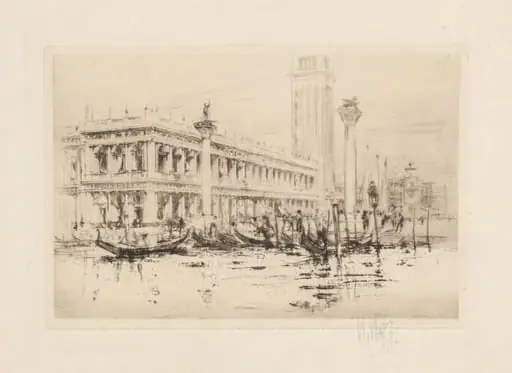 The Venice Set: The Library of St. Mark’s
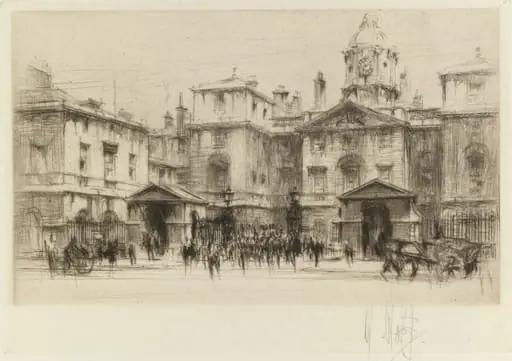 London Set: Horseguards
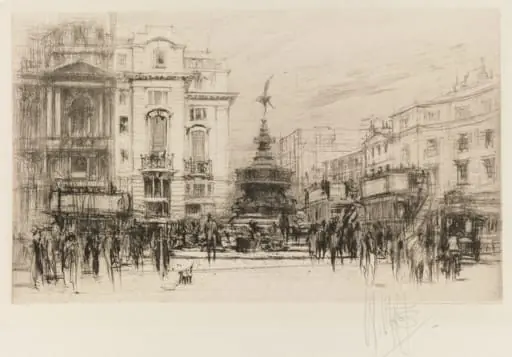 London Set: Piccadilly Circus (with Criterion Theatre)
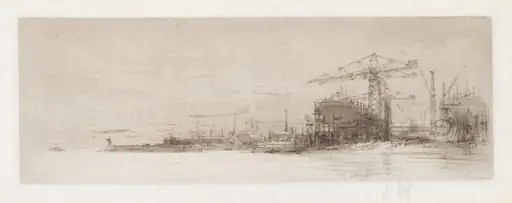 The Clyde from the series The Arteries of Great Britain
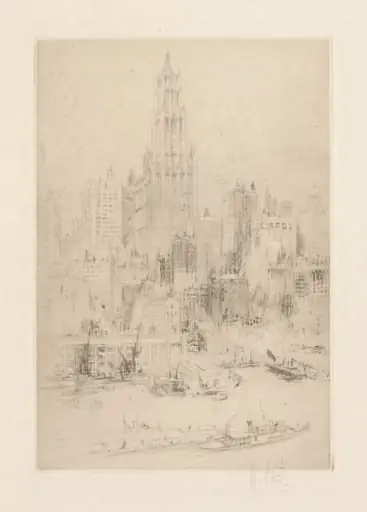 Downtown Manhattan from the East River, with the Woolworth Building
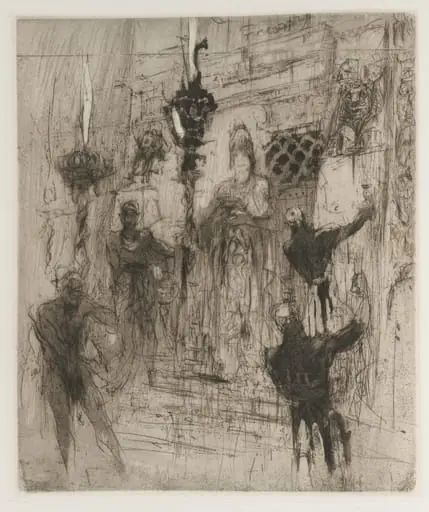 Herodias
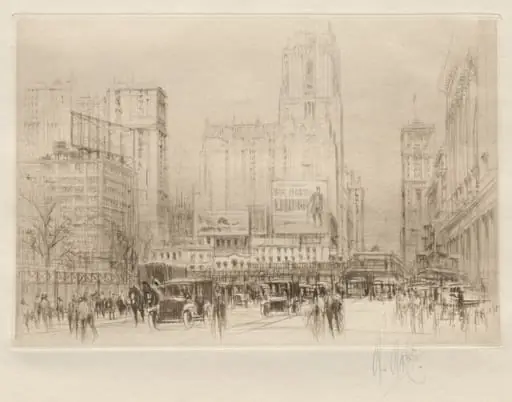 Forty-second Street NY
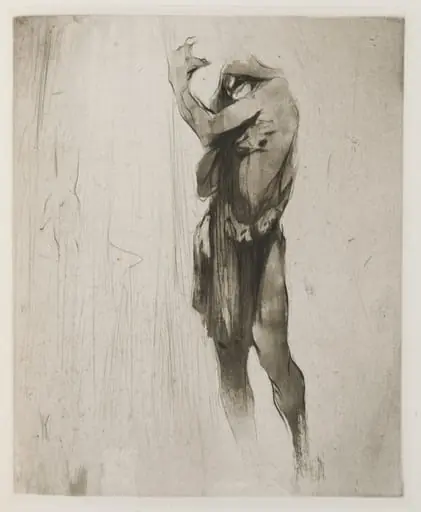 Herodias: Page 27, The voice rose: Woe to thee, Pharisees and Sadducees, race of vipers, bursting with pride!
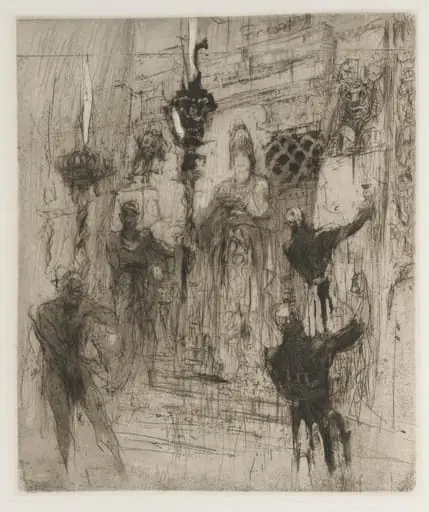 Herodias: Frontispiece, Herodias appeared, coiffed in an Assyrian mitre to which a chin strap was attached to the front
 Procession Leaving a Church (La sortie de la procession)
 Saint-Etienne des Tonneliers a Rouen
 The Way up to the Acropolis
 In Stirling Castle or A Scottish Palace (Un Palais Ecossais)
 Herodias: Page 19, The ramparts were thronged with people when Vitellius entered the castle gates
 A Prince
 Interior of a Church
 Essay on Stone with Brush and Scraper: Chase on the Winding Staircase
 Untitled
 A Backstreet in London