Artwork
Nativity and Passion of Christ
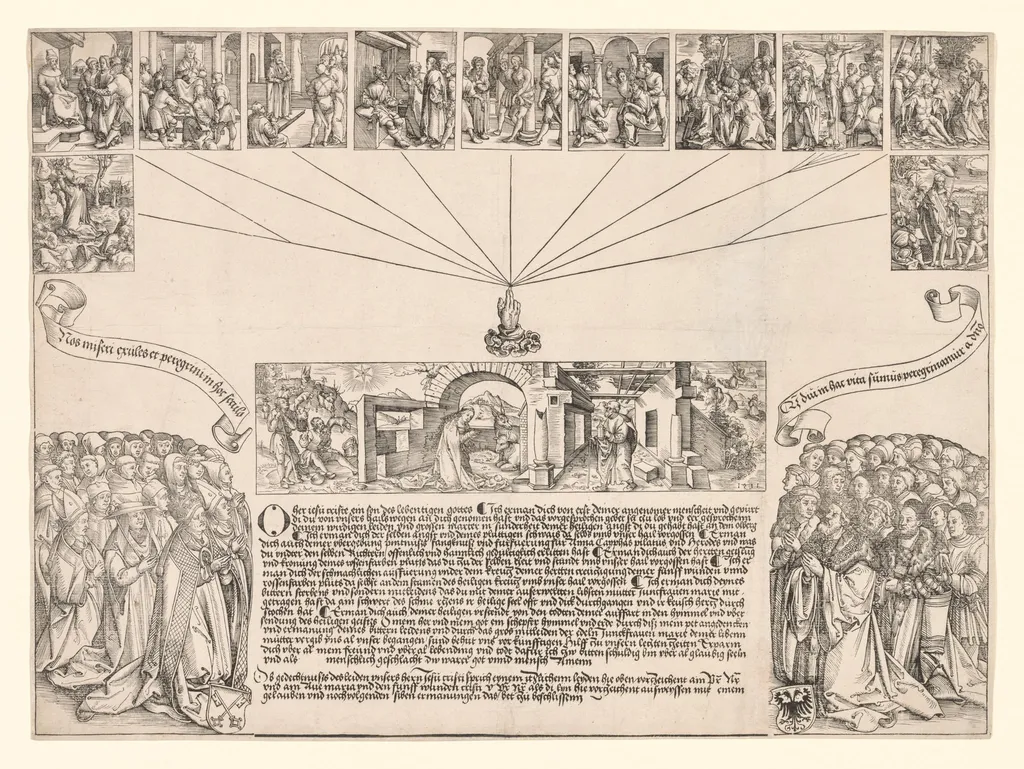
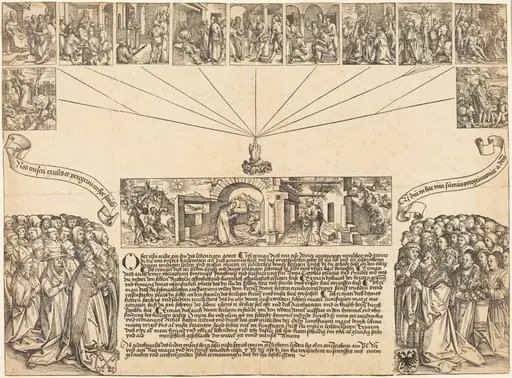
Nativity and Passion of Christ is a print by the Renaissance artist Wolf Traut. It dates from 1511 and is held in the collection of the Cleveland Museum of Art. This German broadsheet combines printed images with accompanying text to narrate key episodes from the life of Christ.
About this work
Overview
Central to the composition is a depiction of the Nativity, featuring the shepherds’ adoration, while surrounding panels illustrate scenes from the Passion.
This German broadsheet combines printed images with accompanying text to narrate key episodes from the life of Christ. Central to the composition is a depiction of the Nativity, featuring the shepherds’ adoration, while surrounding panels illustrate scenes from the Passion. The layout was intended to guide a semi‑literate audience through a devotional prayer that recounts both Christ’s birth and his salvific suffering.
Subject & Meaning
The central panel presents the birth of Jesus, emphasizing the humble worship of shepherds, a motif that underscores the theological theme of divine humility. Above this, a hand gesture points to sequential Passion scenes, linking the Incarnation with redemption. Flanking the central image, groups of ecclesiastics and secular authorities—identified by a papal figure on the left and the Holy Roman Emperor on the right—symbolize the united Christian estate in the narrative of salvation.
Technique & Style
Printed as a broadsheet, the work employs woodcut or engraving techniques typical of early modern German popular prints. The images are rendered in stark black‑and‑white contrast, allowing clear visual communication without reliance on extensive text. The composition balances narrative clarity with decorative elements, using simple line work and shading to delineate figures and emphasize focal points such as the shepherds and the pointing hand.
History & Provenance
Broadsheets of this type circulated widely in the 16th and 17th centuries, serving both devotional and informational purposes in a society where literacy rates were modest. The inclusion of both papal and imperial symbols suggests a production context linked to the Holy Roman Empire, likely intended for distribution among clergy and lay audiences across German‑speaking regions.
Context
The print reflects the broader European tradition of visual catechism, where images supplemented limited textual explanations to convey religious doctrine. By pairing the Nativity with the Passion, the broadsheet reinforces the theological continuum from Christ’s incarnation to his crucifixion, a common didactic strategy in post‑Reformation devotional material.
Artist & collection

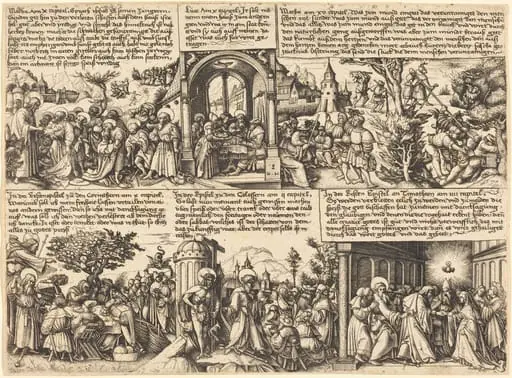 Jesus Christ Giving the Mission to the Apostles and Other New Testament Scenes
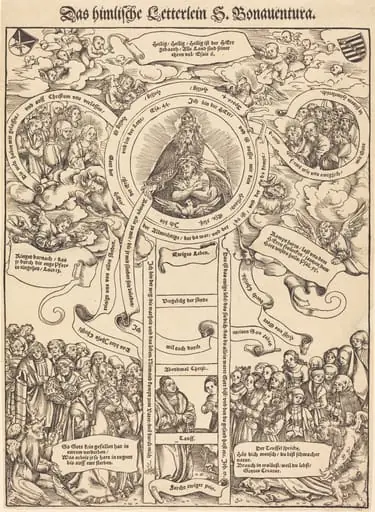 The Celestial Ladder of Saint Bonaventura
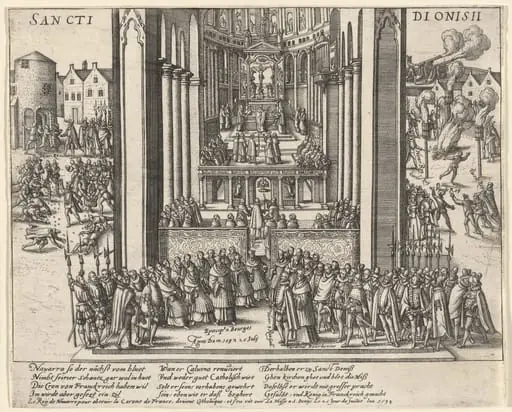 Composite Image Depicting Actions of Henri IV, King of France, upon His Abjuration of the Protestant Faith
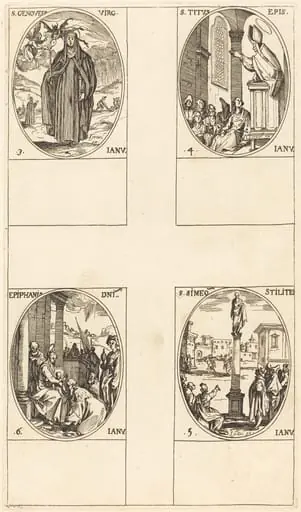 St. Genevieve; St. Titus; St. Simeon Stylites; Epiphany
![A Dialogue on Human Favor (recto) [fol. 15 verso / 16 recto], by French early 16th Century](https://artifactworldgallery.com/img/french-early-16th-century--a-dialogue-on-human-favor-recto-fol-15-verso-16-recto--a4f1453e0385d8d6-w320.webp) A Dialogue on Human Favor (recto) [fol. 15 verso / 16 recto]
A Dialogue on Human Favor (recto) [fol. 15 verso / 16 recto]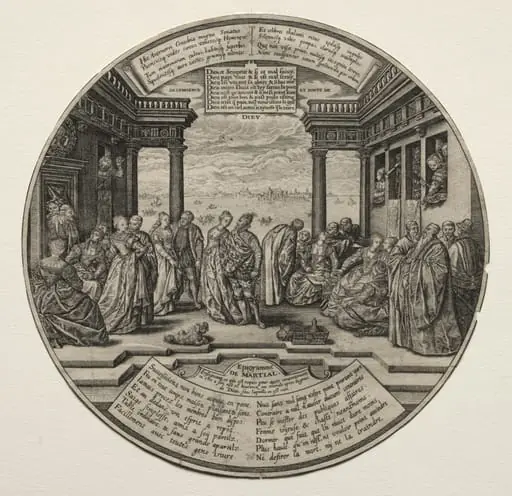 The Venetian Ball
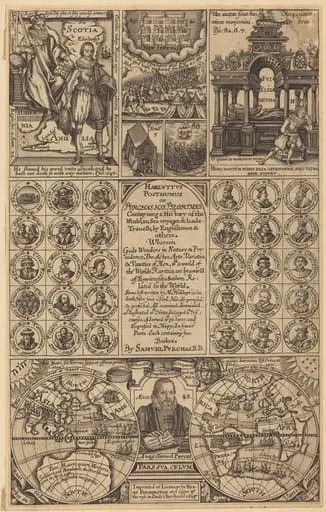 Frontispiece
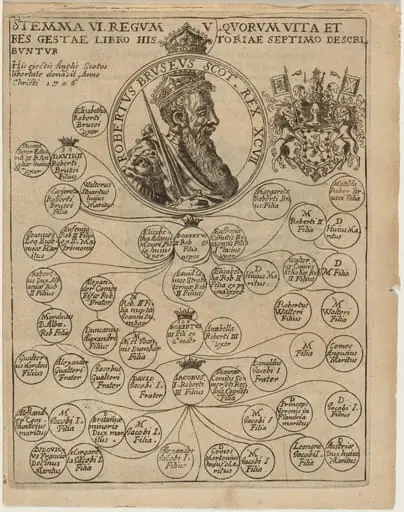 Robert de Bruce VIII, King of Scotland
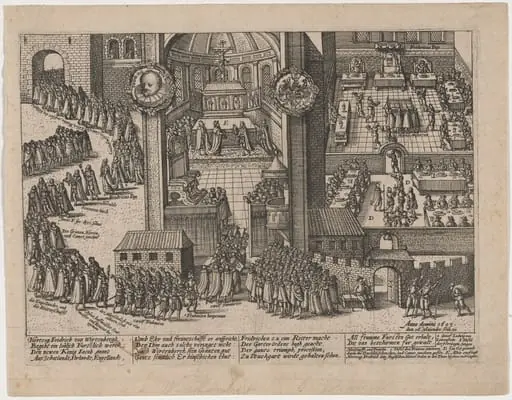 Frederick VI, Duke of Wurtenberg
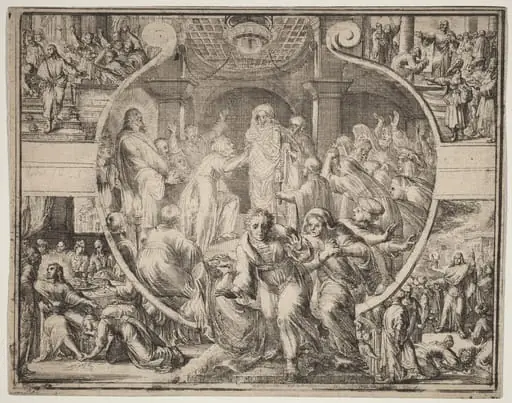 Raising of Lazarus with Scenes from the Life of Christ
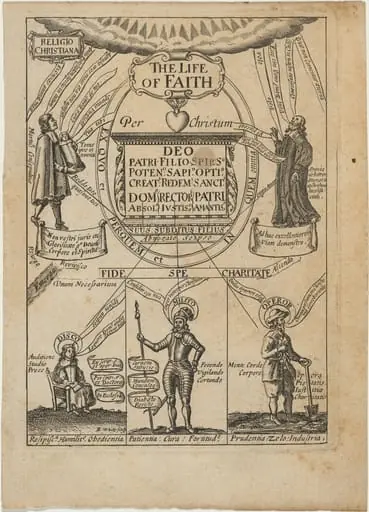 Title Page to The Life of Faith by Richard Baxter