Artwork
Marchand de Legumes à Alger
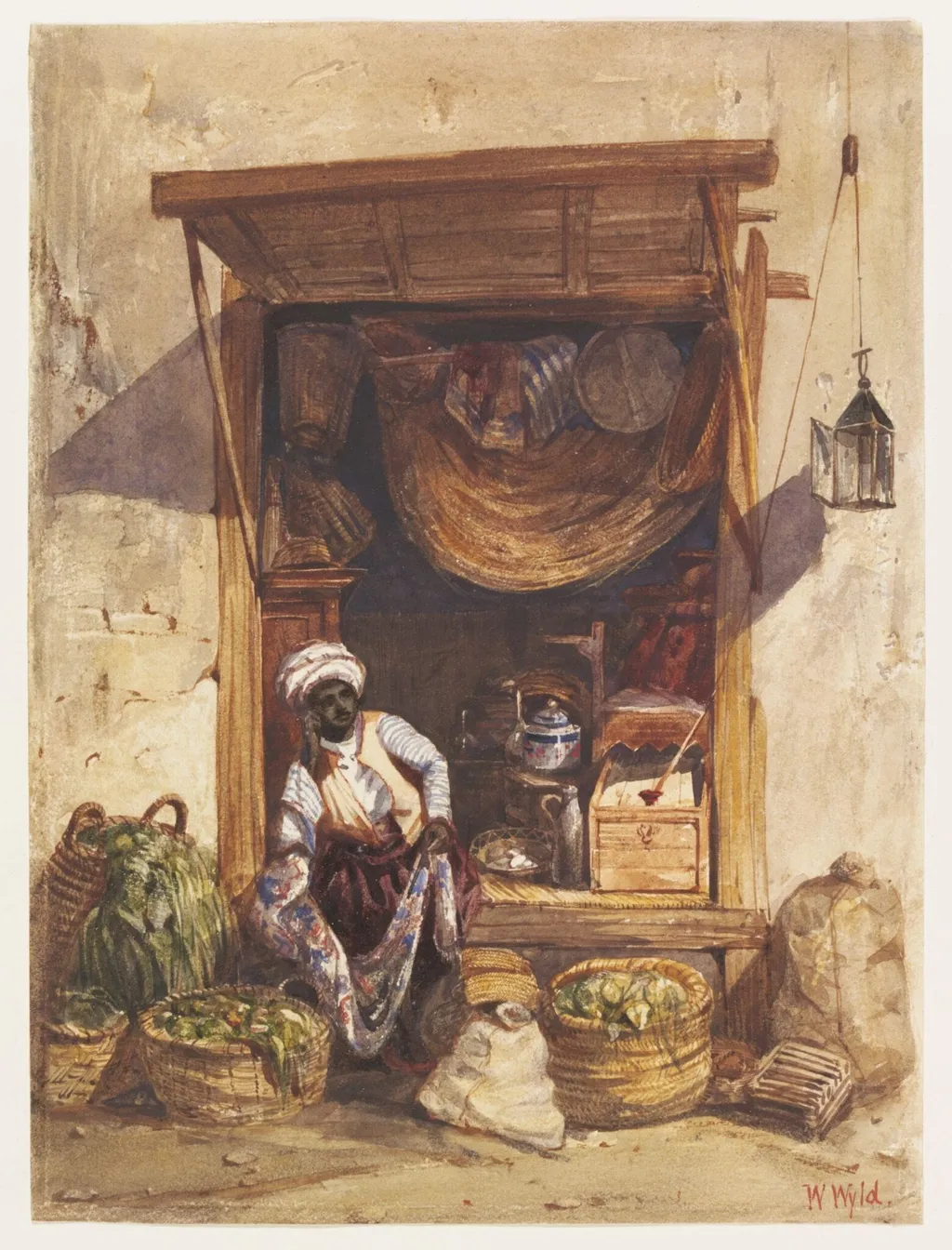
Marchand de Legumes à Alger is a watercolor work on paper by the Orientalist artist William RI Wyld. It dates from 1833 and is held in the collection of the Victoria and Albert Museum. Created in 1833, this watercolour depicts a bustling market stall in Algiers.
About this work
William Wyld, an Anglo-French artist, painted it during a trip to Algeria.
This watercolor shows a lively Algerian market scene from 1833. William Wyld, an Anglo-French artist, painted it during a trip to Algeria. The work captures the colors and textures of goods in a suq.
The seated shopkeeper sits surrounded by his wares. It’s one of several market scenes Wyld made that year. Like his teacher Louis Francia, Wyld learned watercolor in France.
Look next at the museum where it’s held: the Victoria and Albert Museum.
Overview
Created in 1833, this watercolour depicts a bustling market stall in Algiers. An Anglo‑French painter rendered the scene during a short visit to North Africa, focusing on the vivid hues and varied textures of the merchandise displayed. The composition centers on a seated vendor surrounded by his goods, offering a snapshot of everyday commercial life in the city.
Subject & Meaning
The work portrays a typical suq environment, emphasizing the interaction between merchant and clientele. By highlighting the array of locally produced objects, the artist conveys the richness of Algerian trade and the sensory experience of the market, inviting viewers to consider the cultural exchange inherent in such public spaces.
Technique & Style
Executed in transparent watercolour, the piece demonstrates the artist’s command of layered washes to achieve depth and luminosity. The handling of colour contrasts and fine detailing of textures reflects training received from French watercolourist Louis Francia, aligning the work with the Anglo‑French tradition of delicate yet expressive rendering.
History & Provenance
The watercolour formed part of a series of Algerian scenes that the painter produced after his 1833 journey. It was later reproduced as a lithograph titled "Marchand de la Rue de Chartres" in the 1835 publication Voyage pittoresque dans la Régence d'Alger, a collaborative effort with lithographer Émile Lessore. The original now resides in the Victoria and Albert Museum.
Context
During the early 1830s, European artists were increasingly drawn to North Africa, inspired by Orientalist themes. The painter’s encounter with contemporaries such as Horace Vernet, a noted Orientalist, influenced his choice of subject matter and contributed to the broader fascination with Algerian locales among French and British audiences.
Artist & collection
Artist
William Wyld brought 19th-century watercolours to life with scenes from Europe and North Africa.

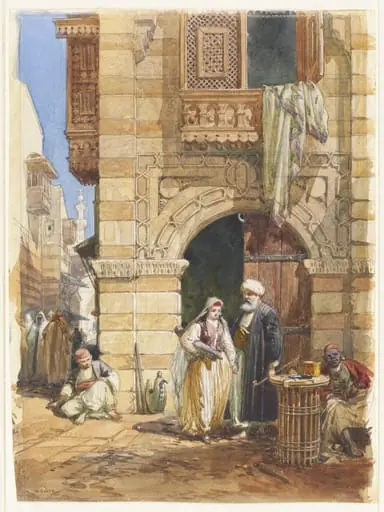 Street Scene in Cairo
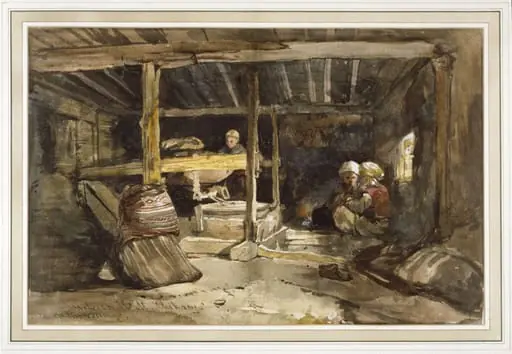 A Turkish Mill, Chikoey, or River Village
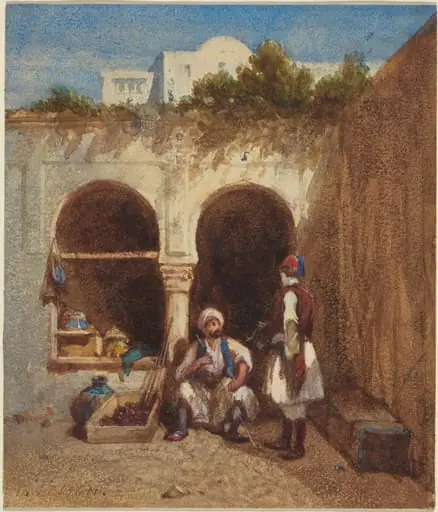 Arab Market
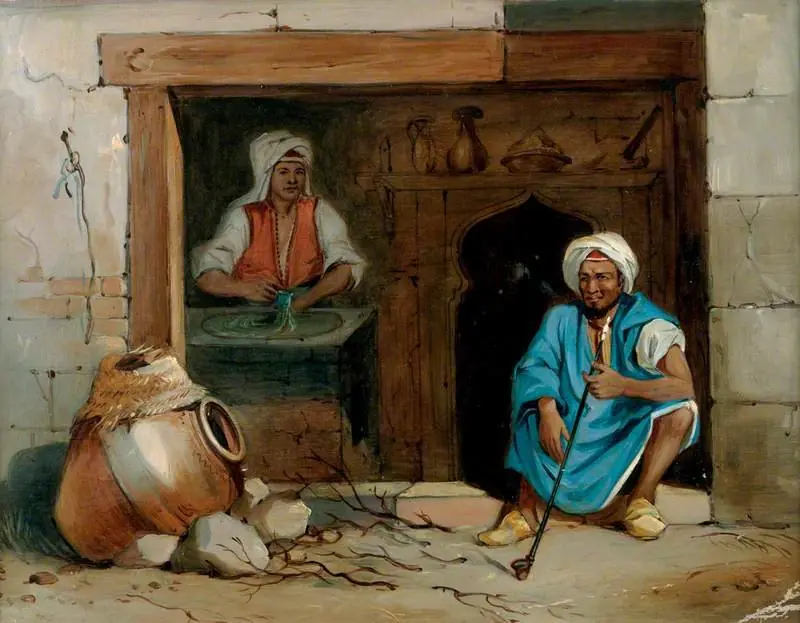 An Egyptian Baker and His Assistant at the Door of a Cake-Shop
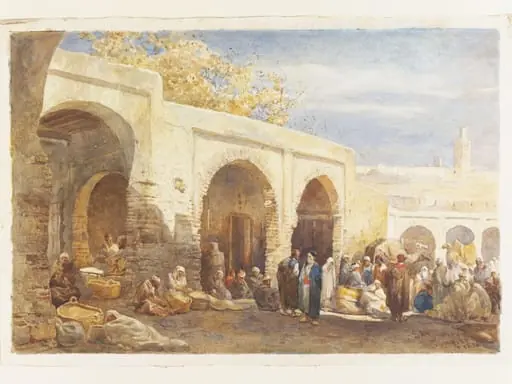 The Corn Market, Tangier
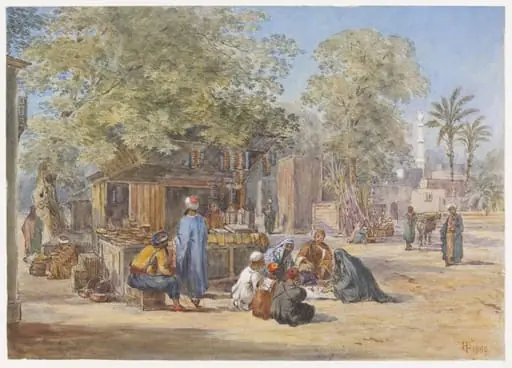 Egyptian Village Scene
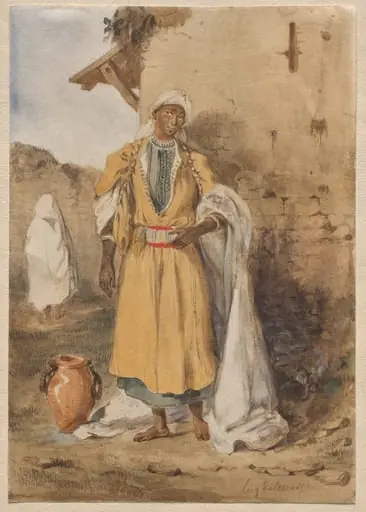 A Young Black Woman Fetching Water
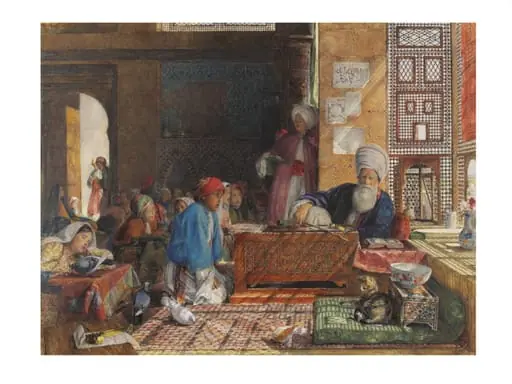 Interior of a school, Cairo
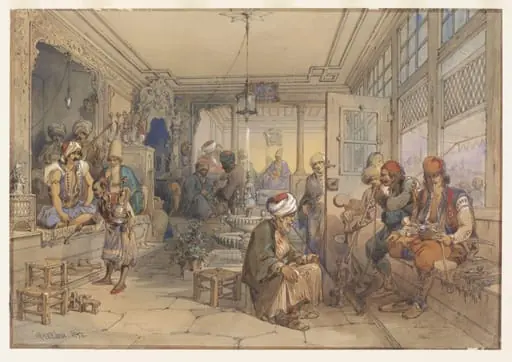 A Turkish Coffee-House, Constantinople
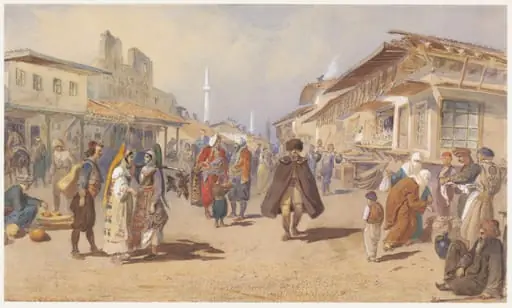 Vue de Belgrad la ruine du Prince Eugene
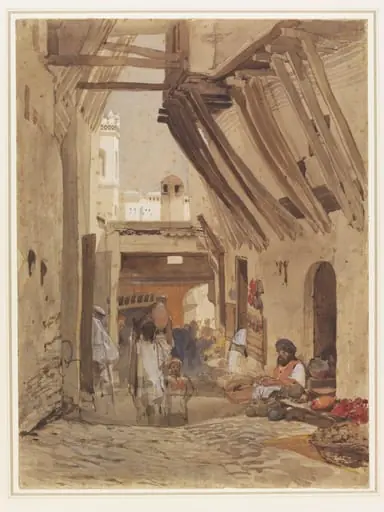 Street Scene