Artwork
チャリネ大曲馬御遊覧ノ図|Illustration of the Imperial Excursion to see the Charini's Circus (Charine daikyokuba goyūran no zu)
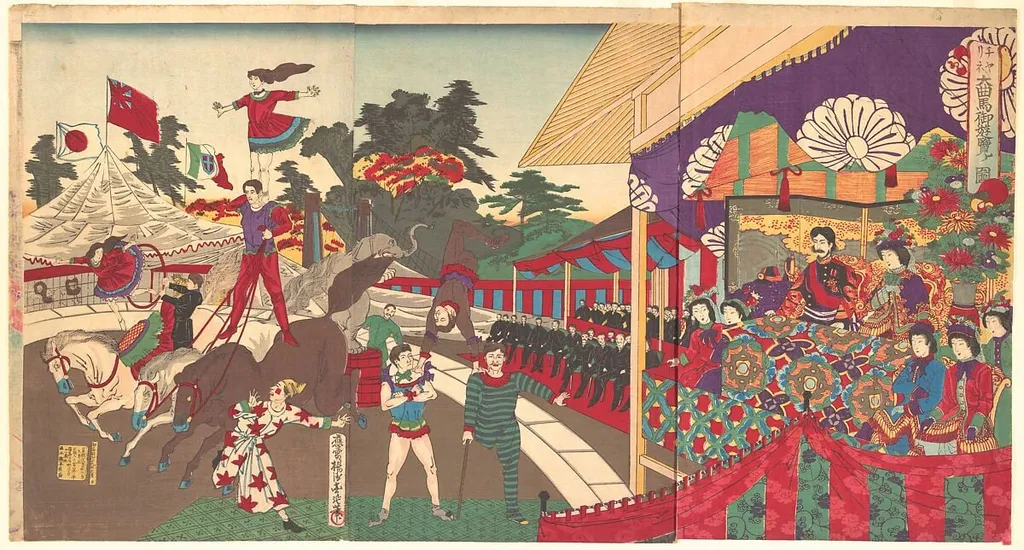
チャリネ大曲馬御遊覧ノ図|Illustration of the Imperial Excursion to see the Charini's Circus (Charine daikyokuba goyūran no zu) is an ink print by the Impressionist artist Yōshū (Hashimoto) Chikanobu. It dates from 1886 and is held in the collection of the Metropolitan Museum of Art.
About this work
Overview
Created in 1886 by the prolific ukiyo‑e artist Yōshū Chikanobu, this woodblock print depicts a lively imperial outing to view a circus performance. Executed with ink and color on paper, the composition captures a bustling scene of riders, an elephant, and acrobats observed by a gathered crowd. The work is part of the Metropolitan Museum of Art’s collection of Meiji‑era prints.
Subject & Meaning
A rider on horseback rides beside an elephant, while a tightrope walker balances overhead, suggesting a blend of martial display and popular entertainment.
The image portrays an organized spectacle in which members of the court and public attend a circus‑like exhibition. A rider on horseback rides beside an elephant, while a tightrope walker balances overhead, suggesting a blend of martial display and popular entertainment. The presence of performers in vivid costumes and a raised viewing platform indicates the event’s ceremonial importance and its role as a public celebration of modernity.
Technique & Style
Chikanobu employs the traditional woodblock method, carving separate blocks for line work and each hue. Bold, flowing outlines define the figures, while flat, saturated colors—greens, reds, purples—create a dynamic contrast against the paper’s surface. The composition uses diagonal movement and layered planes to convey motion, a hallmark of late‑period ukiyo‑e that emphasizes narrative vigor over realistic detail.
History & Provenance
The print was produced during the Meiji period, a time when Japan was rapidly adopting Western influences while preserving native artistic practices. It entered the Metropolitan Museum of Art’s collection through a 20th‑century acquisition of Japanese prints, reflecting the museum’s effort to represent the breadth of Meiji visual culture.
Context
Imperial excursions to public spectacles were promoted by the Meiji government to demonstrate progress and unify the nation. This print documents such an event, illustrating how traditional performance arts were incorporated into state‑sponsored celebrations, thereby reinforcing the emperor’s presence in everyday life while showcasing Japan’s evolving modern identity.
Artist & collection


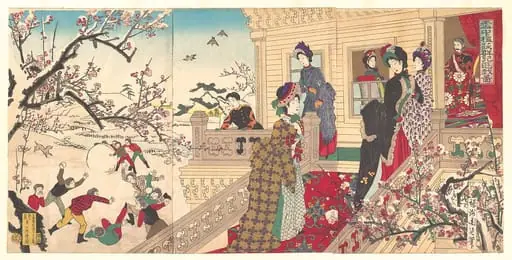 『雪中梅荘群児遊戯 図』|Children Playing in the Snow under Plum Trees in Bloom (Secchū baisō gunji yūgi zu)
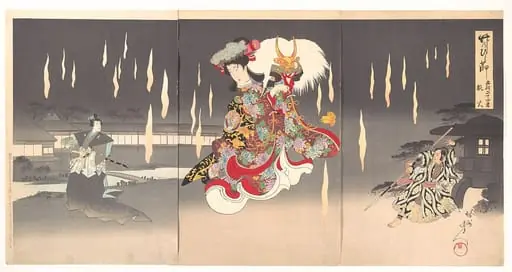 Untitled
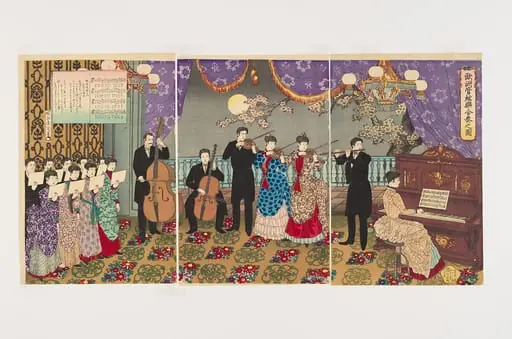 『欧州管絃楽合奏之図』|Concert of European Music (Ōshū kangengaku gassō no zu)
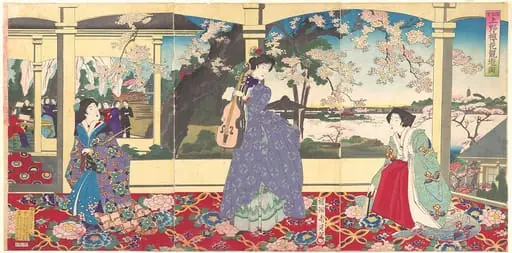 『踏舞会 上野桜花観 遊ノ図』|A Dance Party: Enjoying Cherry Blossom Viewing at Ueno (Tōbukai Ueno ōka yūran no zu)
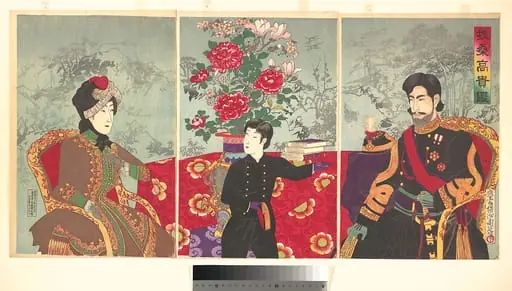 『扶桑高貴鑑』|A Mirror of Japan’s Nobility: The Emperor Meiji, His Wife, and Prince Haru (Fūsō kōki kagami)
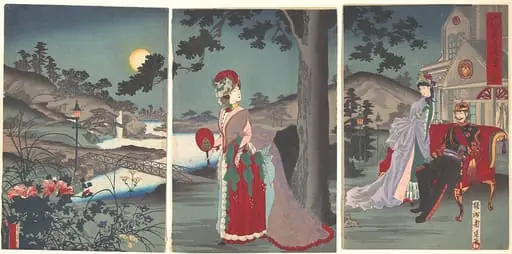 『高貴納涼ノ図』|Nobility in the Evening Cool (Koki nōryō no zu)
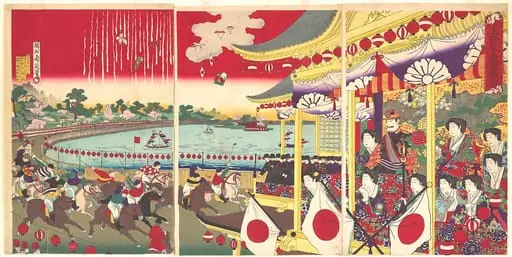 『上野不忍競馬図』|View of the Horse Track at Shinobazu in Ueno Park (Ueno shinobazu keiba zu)
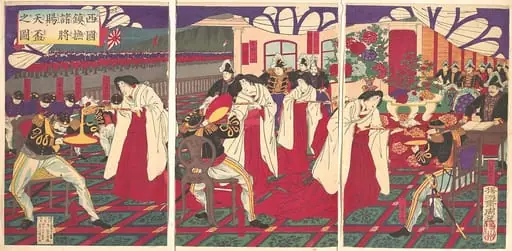 西国鎮静撫諸将天杯賜之図|Illustration of the Commanders who Pacified Western Japan, Receiving the Emperor's Gift Cups (Saigoku chinbu shoshō tenpai o tamau no zu)
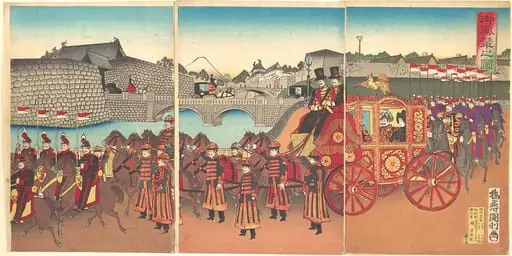 御鳳輦之図|Illustration of the Imperial Carriage (Gohōren no zu)
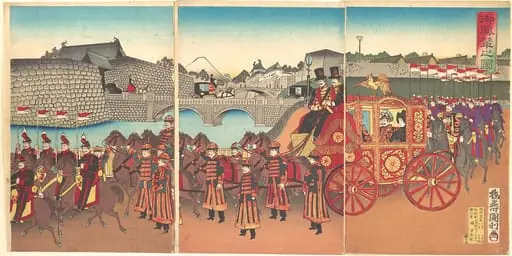 Go Horen no zu|View of the Imperial Carriage
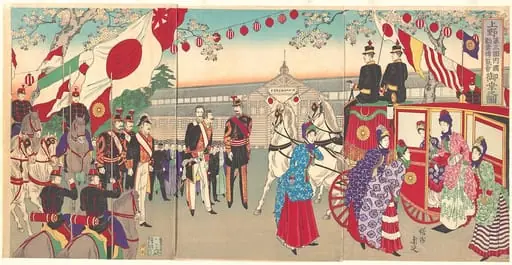 『上野第三回内国勧業 博覧会御幸之図』|Visit of the Empress to the Third National Industrial Promotional Exhibition at Ueno Park (Ueno dai sankai naikoku kangyō hakuran kai gyokō no zu)
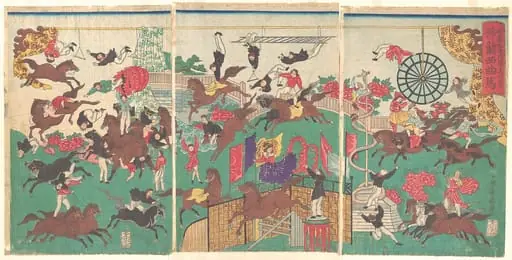 浅草観音境内ニ於イテ興行仕候 佛蘭西曲馬|French Equestrian Circus on the grounds of Asakusa Kannon temple (Asakusa kannon keidai ni oite kōgyō tsukawashi sōrō-Furansu kyokuba)
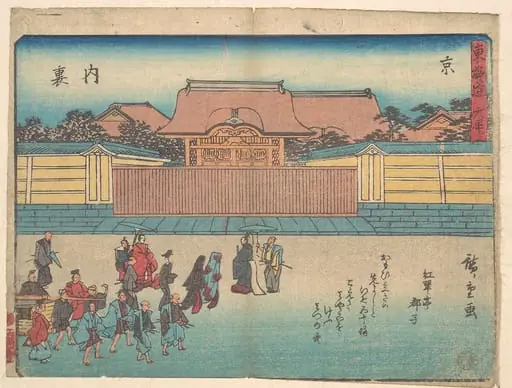 東海道五十三 京 内裏|Kyoto: Dairi
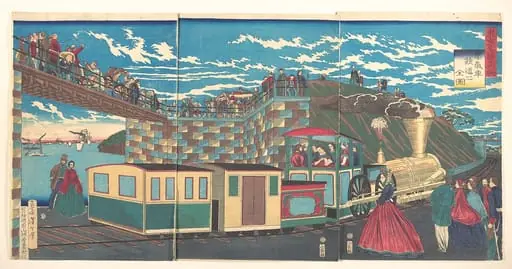 東京名勝高輪 蒸気車鉄道之全図|Illustration of Steam Locomotive Tracks at Takanawa, from the series Famous Places in Tokyo (Tōkyō meishō Takanawa-jōki kikansha no zen zu)