Artwork
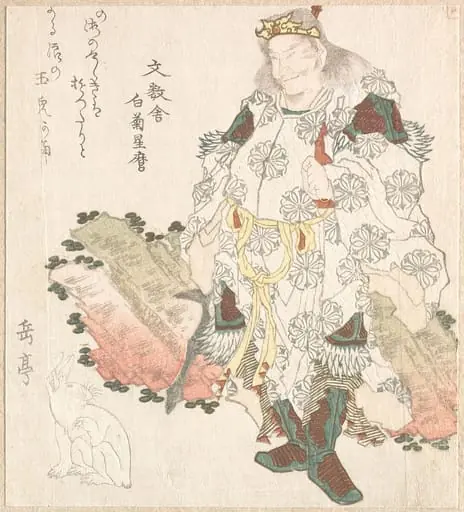
「一陽連文房四友 墨 玄宗皇帝」『春雨集』 摺物帖 |Emperor Xuanzong (Japanese: Gensō) and Daoist Magician Lo Gongyuan Arising from an Inkstone; “Ink” (Sumi), from Four Friends of the Writing Table for the Ichiyō Poetry Circle (Ichiyō-ren Bunbō shiyū)From the Spring Rain Collection (Harusame shū), vol. 1
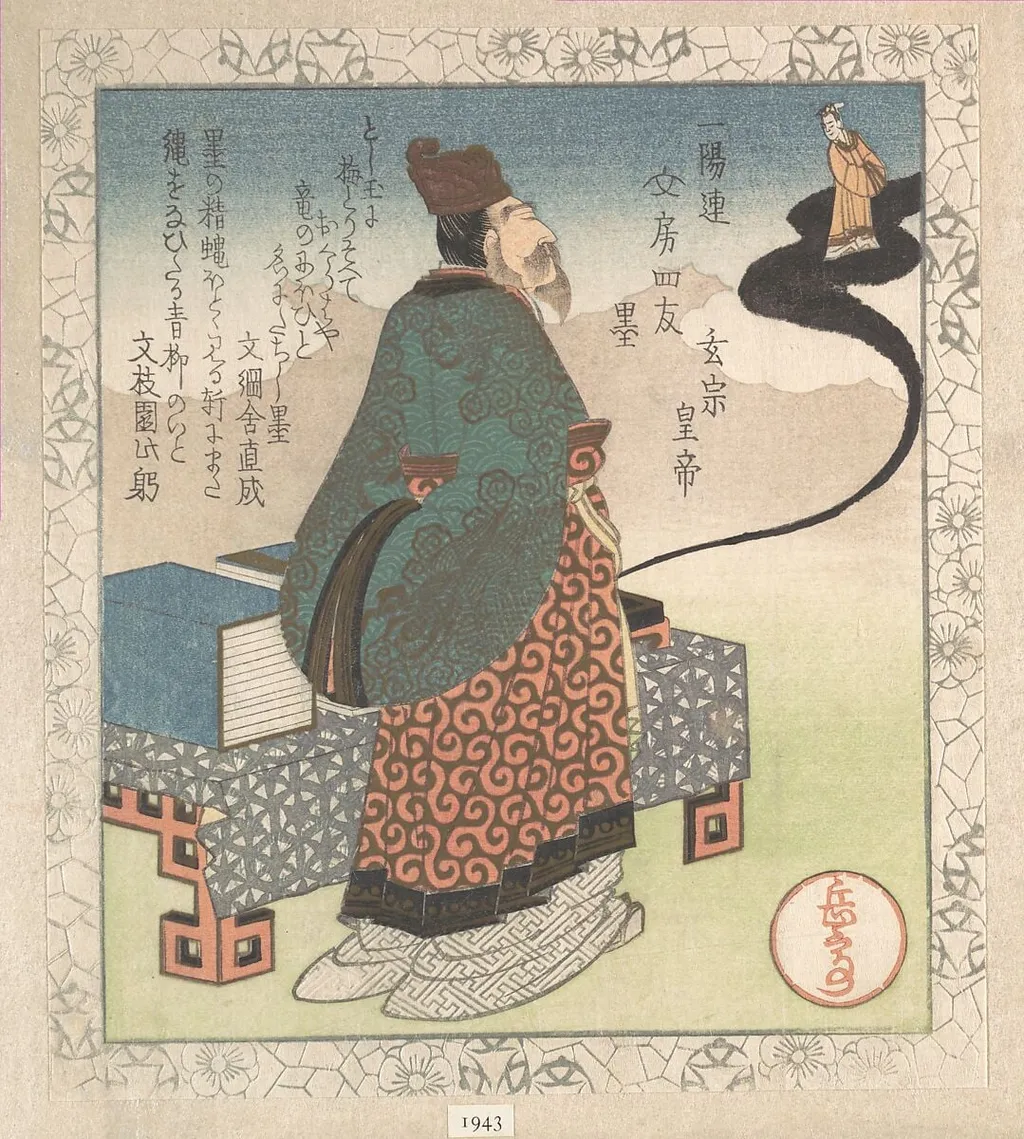
「一陽連文房四友 墨 玄宗皇帝」『春雨集』 摺物帖 |Emperor Xuanzong (Japanese: Gensō) and Daoist Magician Lo Gongyuan Arising from an Inkstone; “Ink” (Sumi), from Four Friends of the Writing Table for the Ichiyō Poetry Circle (Ichiyō-ren Bunbō shiyū)From the Spring Rain Collection (Harusame shū), vol. 1 is an ink print by the Romanticist artist Yashima Gakutei. It dates from 1827 and is held in the collection of the Metropolitan Museum of Art.
About this work
Overview
Created circa 1827 by the Japanese artist and poet Yashima Gakutei, this surimono woodblock print belongs to the Spring Rain Collection (Harusame shū). Executed in ink and color on paper, it illustrates a scene drawn from the traditional motif of the Four Friends of the Writing Table, linking literary practice with visual art.
Subject & Meaning
The composition features an imperial figure, identified as Emperor Xuanzong, seated on a low stool and holding a scroll, accompanied by the Daoist magician Lo Gongyuan who appears to rise ethereally from an inkstone. The pairing evokes the harmonious relationship between the written word and the tools of calligraphy, a theme celebrated by the poetry circle that commissioned the work.
Technique & Style
Gakutei employed the surimono technique, a specialized form of woodblock printing reserved for private, often poetic, commissions. The print combines delicate ink lines with subtle color washes, rendering the robes’ swirling red‑green patterns and the ghostly figure with a refined, almost lyrical quality characteristic of early‑19th‑century Edo‑period prints.
History & Provenance
The work was produced under the patronage of the Ichiyō poetry circle, which gathered around the Four Friends of the Writing Table theme. It formed part of the first volume of the Spring Rain Collection, a series of prints that circulated among members of the circle and later entered museum collections as examples of collaborative literary‑artistic practice.
Context
During the Edo period, surimono prints served as a vehicle for poets and artists to exchange ideas, often incorporating kyōka verses. Gakutei, a disciple of Totoya Hokkei and Hokusai, integrated his poetic sensibility with visual design, reflecting the broader cultural emphasis on the interplay of ink, brush, and poetry.
Artist & collection
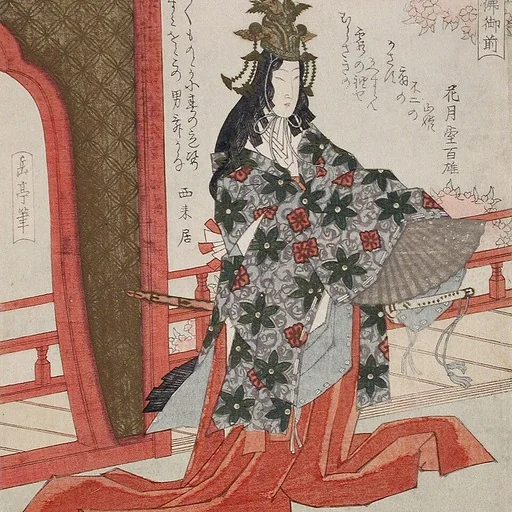
Artist
Yashima Gakutei (Japanese: 八島岳亭; c. 1786 – 1868) was a Japanese artist and poet who was a pupil of both Totoya Hokkei and Hokusai. Gakutei is best known for his kyōka poetry and surimono works.

 Untitled
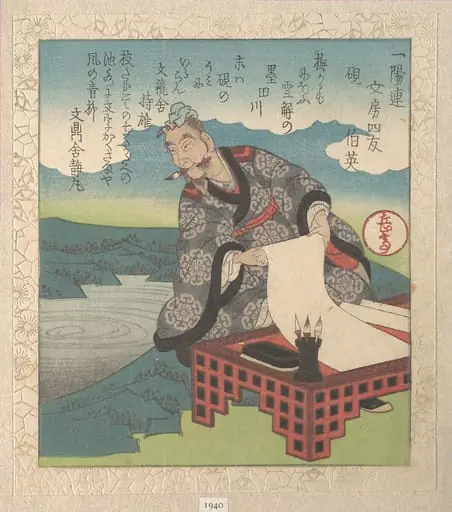 「一陽連文房四友 硯 伯英」『春雨集』 摺物帖|The Chinese Calligrapher Boying (Japanese: Hakuei; also known as the “Sage of Cursive Script”); “Inkstone” (Suzuri), from Four Friends of the Writing Table for the Ichiyō Poetry Circle (Ichiyō-ren Bunbō shiyū) From the Spring Rain Collection (Harusame shū), vol. 1
 Untitled
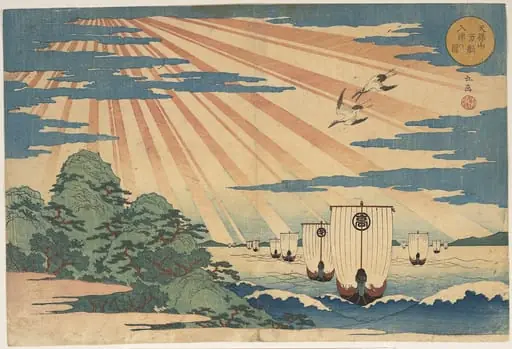
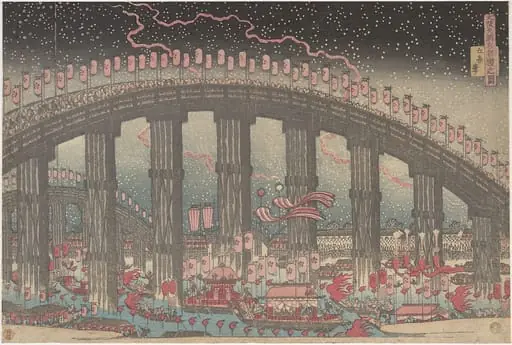 Osaka Tenmangu sairei no zu|The Tenmangu Festival at Osaka
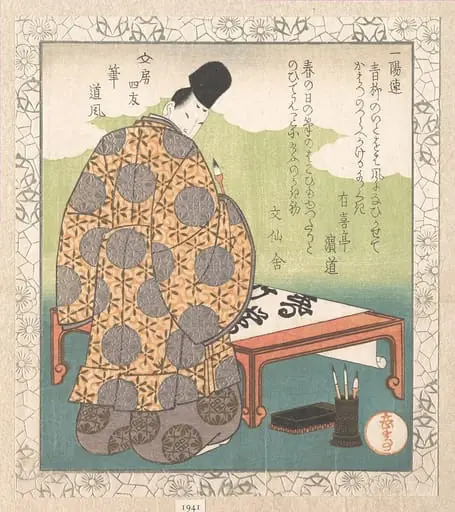 「一陽連文房四友 筆 道風」『春雨集』 摺物帖|The Heian Court Calligrapher Ono no Tōfū (894–966); “Calligraphy Brush” (Fude), from Four Friends of the Writing Table for the Ichiyō Poetry Circle (Ichiyō-ren Bunbō shiyū)From the Spring Rain Collection (Harusame shū), vol. 1
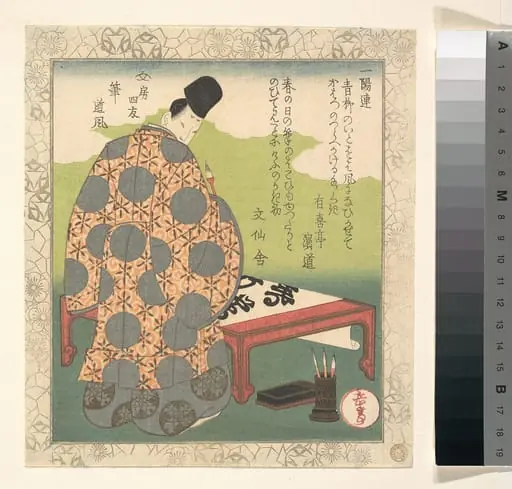 Untitled
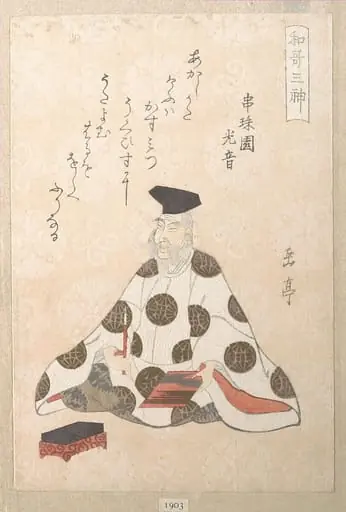 『和歌三神』 柿本人麻呂|Kakinomoto no Hitomaro (ca. 662–710), One of the Three Gods of PoetryFrom the Spring Rain Collection (Harusame shū), vol. 1
 Untitled