Artwork
鮭頭|Head of a Salmon
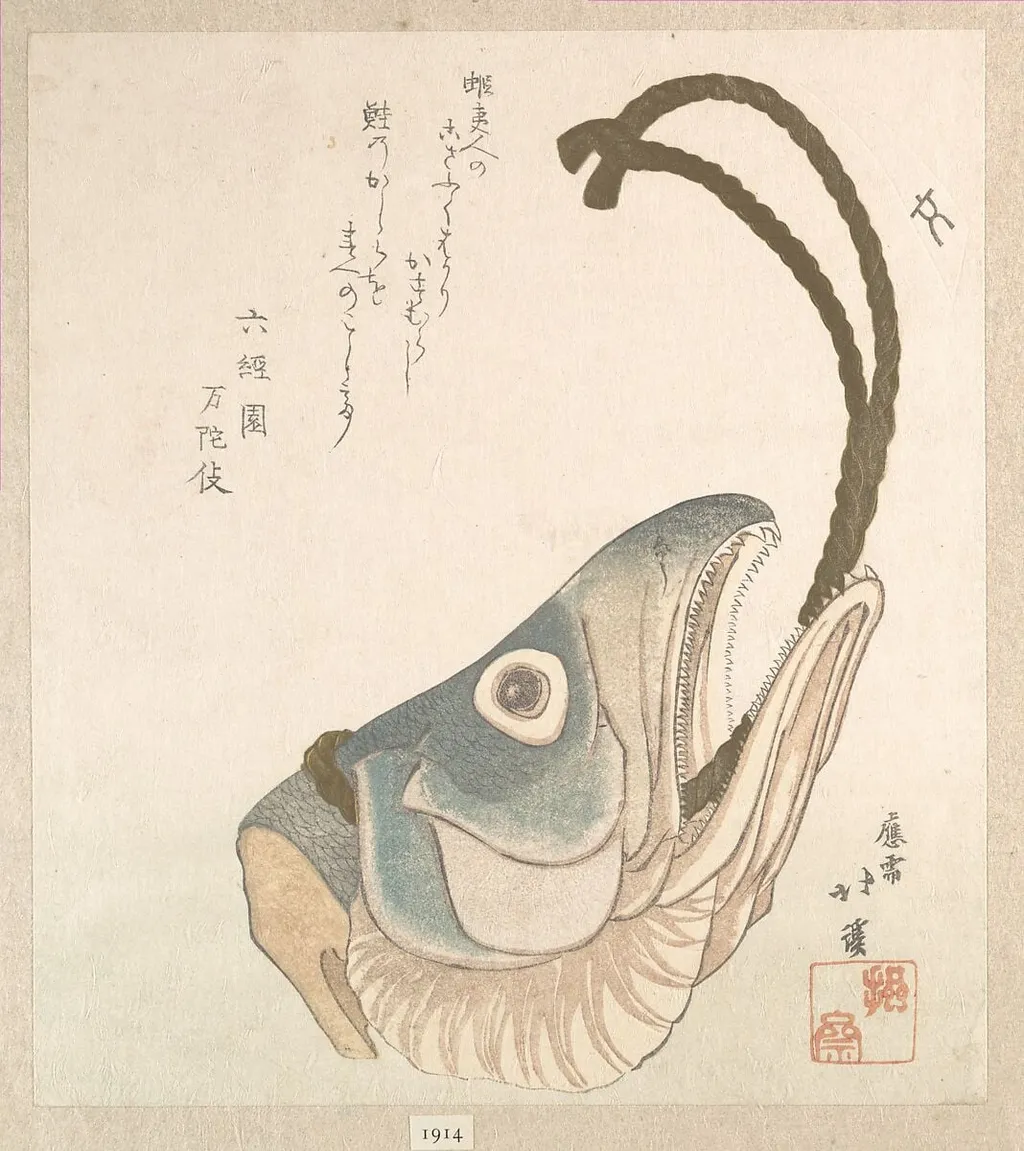
鮭頭|Head of a Salmon is an ink print by the Romanticist artist Totoya Hokkei. It dates from 1820 and is held in the collection of the Metropolitan Museum of Art.
About this work
Overview
Executed in ink and subtle color on paper, it belongs to the surimono genre—privately commissioned prints often produced for literary or seasonal occasions.
Created around 1820 by Totoya Hokkei, this woodblock print depicts the head of a salmon in side profile. Executed in ink and subtle color on paper, it belongs to the surimono genre—privately commissioned prints often produced for literary or seasonal occasions. The work is part of The Metropolitan Museum of Art’s collection, representing a quiet, intimate approach to natural subjects within early 19th-century Japanese printmaking.
Subject & Meaning
The print focuses on the severed head of a salmon, rendered with clinical precision. Open jaws reveal sharp teeth, emphasizing the fish’s predatory nature. Rather than celebrating the catch as a trophy, the image invites contemplation of biological form and the life cycle of aquatic species. Its stillness and lack of context suggest a meditative observation, aligning with Japanese aesthetic traditions that find significance in transient, unadorned natural elements.
Technique & Style
Hokkei employed fine-line carving and delicate hand-coloring to render the salmon’s scales with meticulous detail. Muted grays, browns, and soft washes create a restrained tonal range, avoiding theatrical contrast. The texture of skin and gills is suggested through subtle gradations rather than bold outlines, reflecting a preference for understated realism. The composition’s simplicity and centered focus are characteristic of surimono, which prioritized craftsmanship over mass appeal.
History & Provenance
Produced circa 1820, this print was likely commissioned by a poetry circle or private patron, as was typical for surimono. These prints were often distributed as New Year’s greetings or literary souvenirs, blending visual art with poetic sentiment. The work entered The Metropolitan Museum of Art’s collection through documented acquisitions in the 20th century, preserving its origin within Japan’s Edo-period private print culture.
Context
During the Edo period, surimono emerged as a refined alternative to commercial ukiyo-e, favored by educated elites. While popular prints depicted actors or courtesans, surimono often explored nature, seasonal themes, or literary allusions. Hokkei’s salmon head reflects this trend—elevating an everyday subject through technical precision and restrained beauty, resonating with contemporary tastes for wabi-sabi and naturalism.
Legacy
Though not widely known outside specialist circles, Hokkei’s salmon head exemplifies the quiet sophistication of Edo-period surimono. Its influence lies in its demonstration of how printmaking could serve contemplative, non-narrative ends. The work continues to be studied for its technical restraint and its role in expanding the thematic boundaries of Japanese woodblock art beyond conventional subjects.
Artist & collection
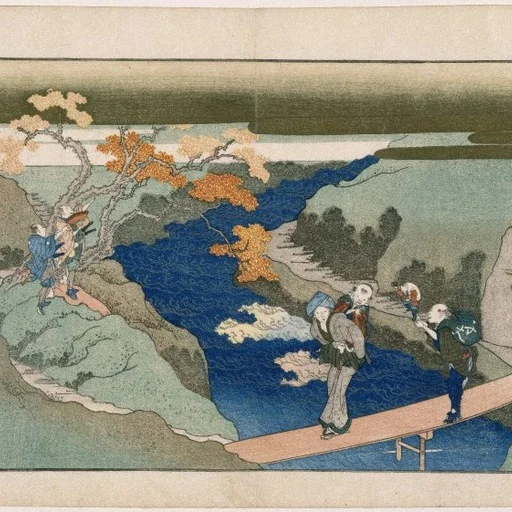

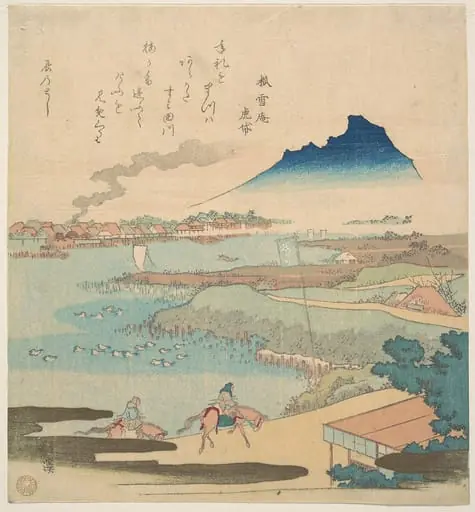 Sumidagawa|Sumida River
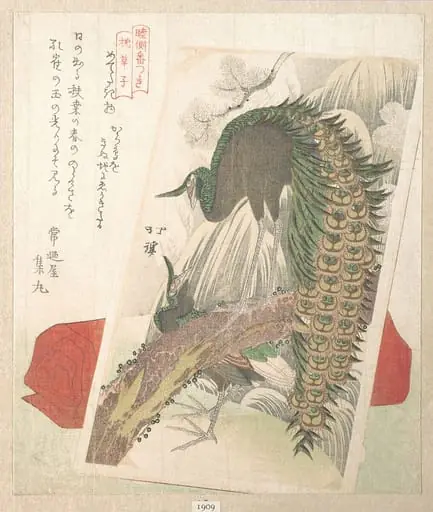 松・滝に孔雀図と緋毛氈|Painting of Peacocks, Pines, a Waterfall, and a Roll of Red Fabric
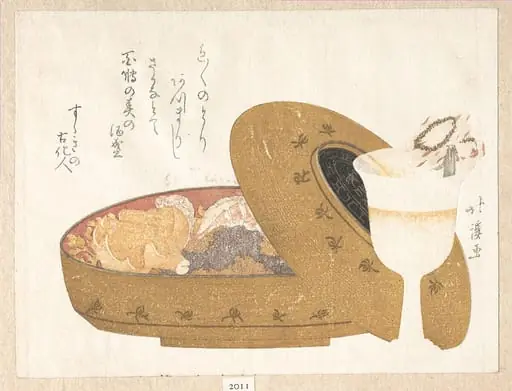 Untitled
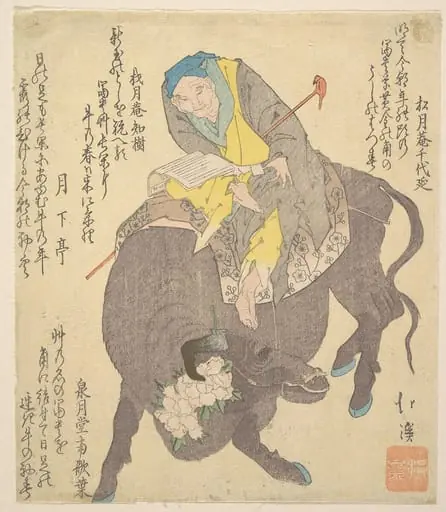 Untitled
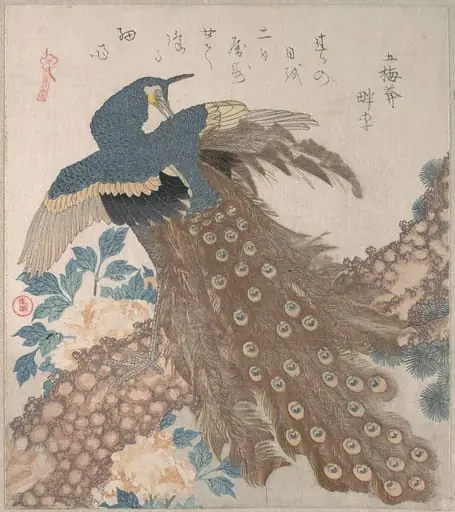 「三ひらの内」松・牡丹に孔雀|Peacock on Pine Tree and Peonies, from the series Three Sheets (Mihira no uchi)
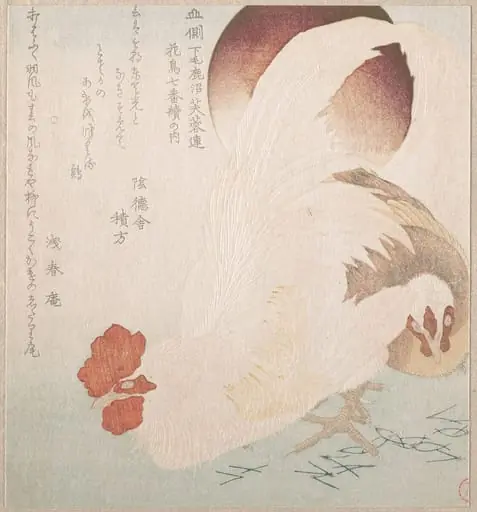 Untitled
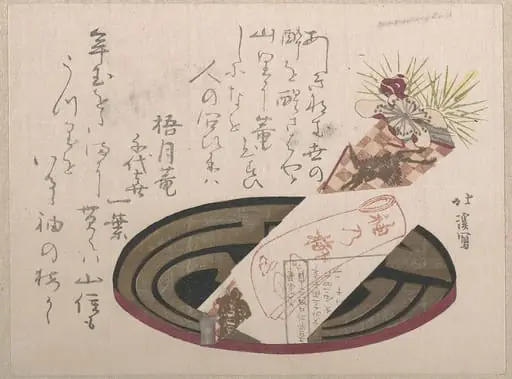 Untitled
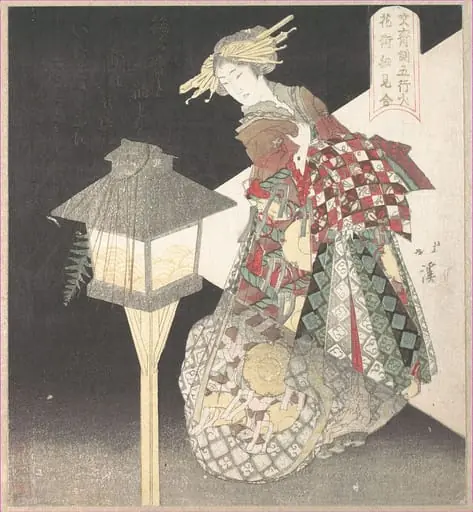 「文齊側五行火 花街細見合」|Courtesan by a Lantern, “Fire,” from the series Five Elements for the Bunsai Poetry Group, a Guide to the Yoshiwara Pleasure Quarters
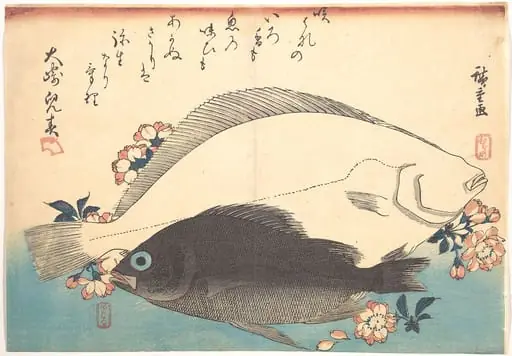 魚づくし ひらめ めばるに桜|Hirame and Mebaru Fish with Cherry Blossoms, from the series Uozukushi (Every Variety of Fish)
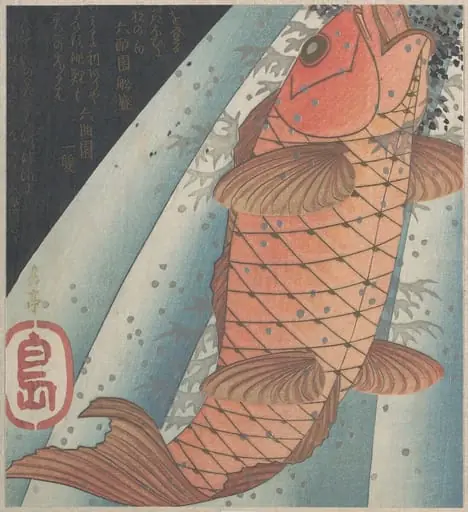 鯉の滝登り|Red Carp Ascending a Waterfall
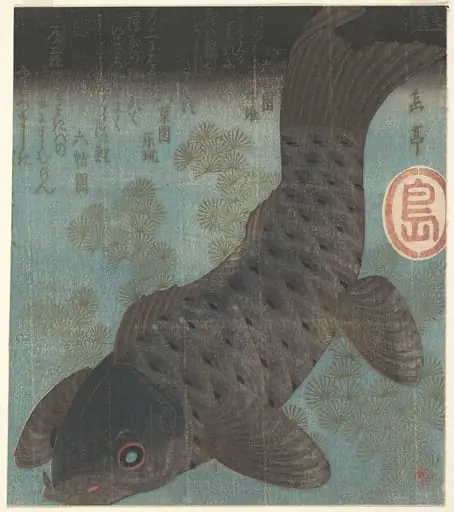 Untitled
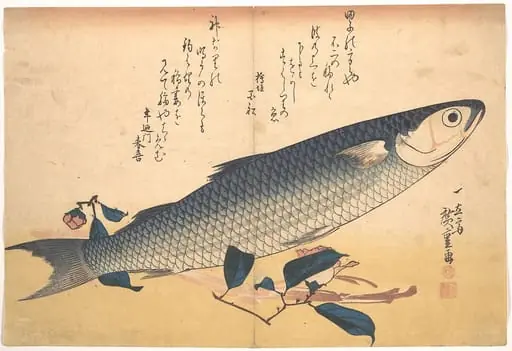 魚づくし ぼらにうど|Bora Fish with Camellia, from the series Uozukushi (Every Variety of Fish)
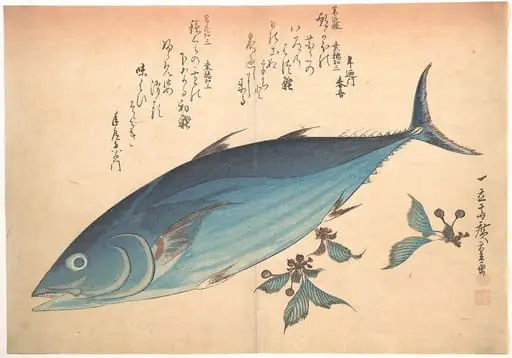 魚づくし 鰹に桜|Katsuo Fish with Cherry Buds, from the series Uozukushi (Every Variety of Fish)
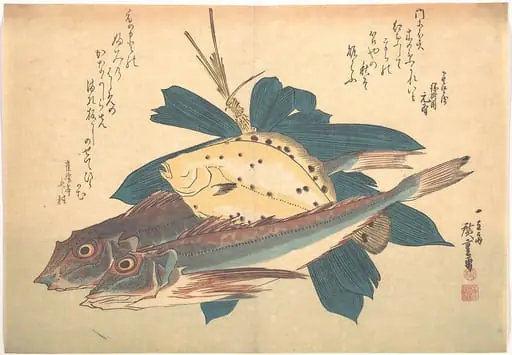 魚づくし かれい かながしらに笹|Kanagashira and Karei Fish, from the series Uozukushi (Every Variety of Fish)
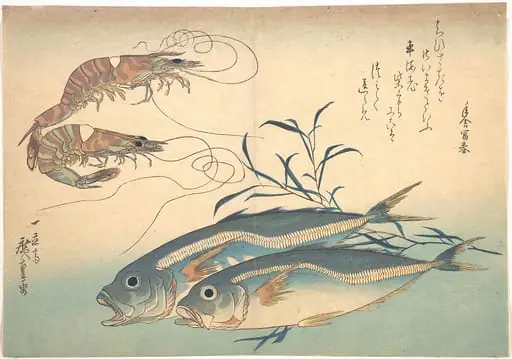 魚づくし 車海老 鯵にたで|Aji Fish and Kuruma-ebi, from the series Uozukushi (Every Variety of Fish)
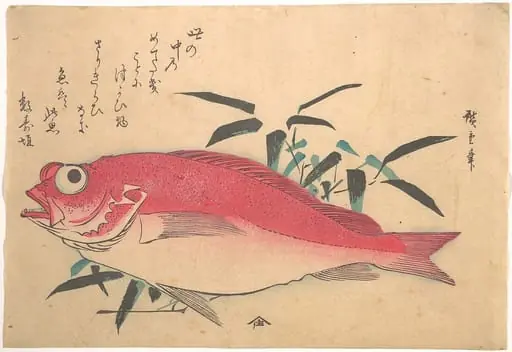 魚づくし|Medetai Fush and Sasaki Bamboo, from the series Uozukushi (Every Variety of Fish)
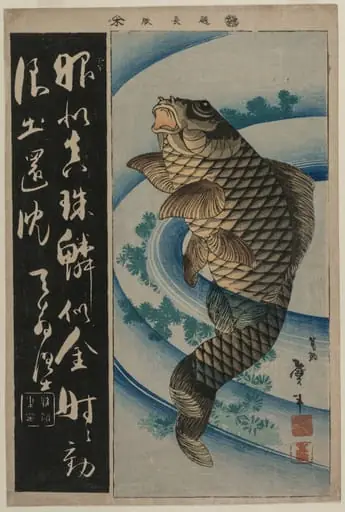 Carp and Waterweeds
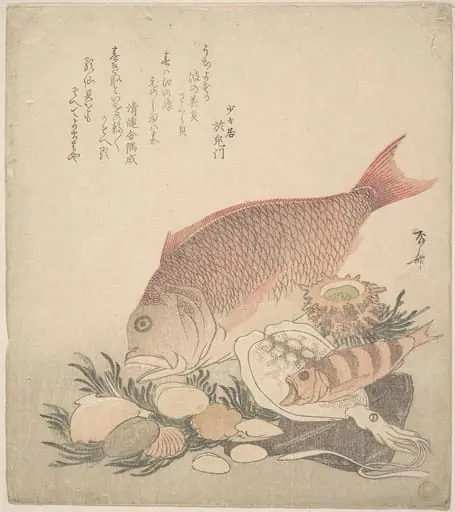 Untitled
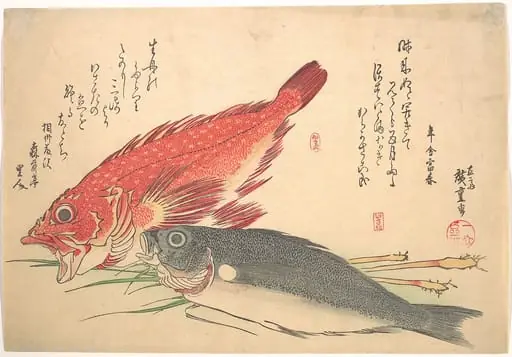 魚づくし かさご いさきに生姜|Isaki and Kasago Fish, from the series Uozukushi (Every Variety of Fish)
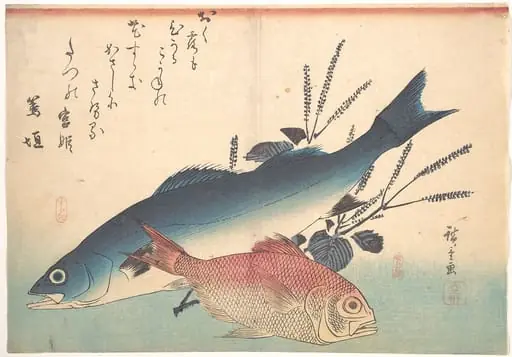 魚づくし いなだ ふぐに梅|Suzuki and Kinmedai Fish from the series Uozukushi (Every Variety of Fish)