Artwork
Untitled
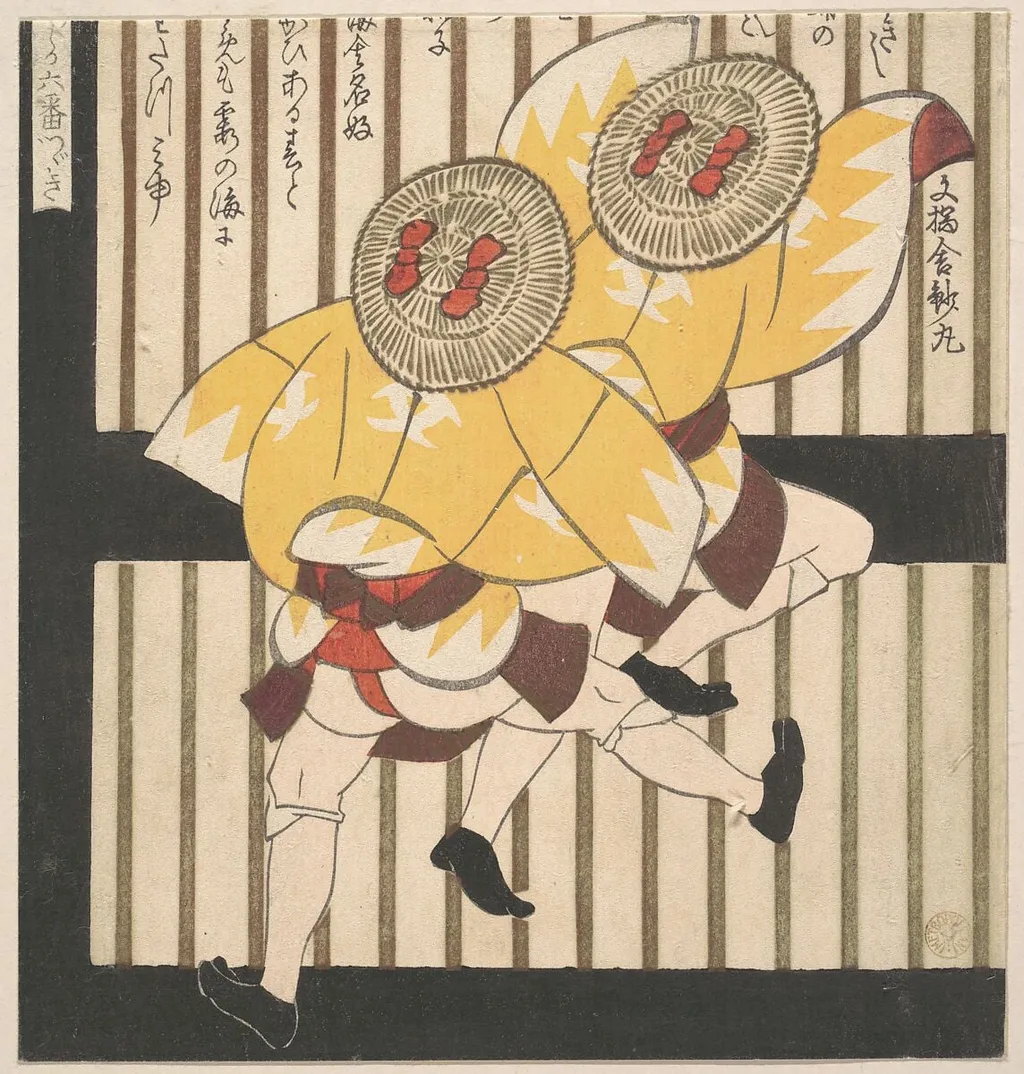
Untitled is an ink print by the Romanticist artist Yashima Gakutei. It dates from 1840 and is held in the collection of the Metropolitan Museum of Art.
About this work
Overview
Executed in ink and color on paper, it belongs to a specialized genre of privately commissioned prints, often produced for literary or seasonal occasions.
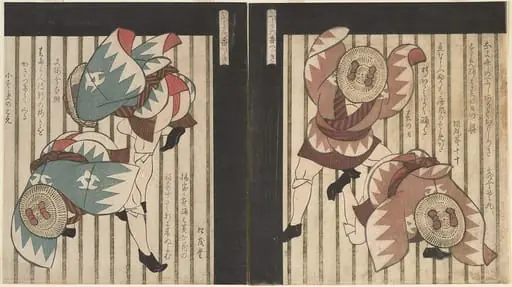
This woodblock print, dated 1840, is a surimono created by Yashima Gakutei, an artist and poet of the late Edo period. Executed in ink and color on paper, it belongs to a specialized genre of privately commissioned prints, often produced for literary or seasonal occasions. The work is part of The Metropolitan Museum of Art’s collection, reflecting its significance within the tradition of Japanese printmaking.
Subject & Meaning
The print depicts two figures in a vigorous, interwoven posture, suggesting physical exertion or ritual movement. Their traditional garments—one in yellow, the other in white—hint at contrasting roles or identities, possibly drawn from theatrical or ceremonial contexts. The absence of facial features directs focus to gesture and form, evoking tension and fluid motion rather than individual narrative.
Technique & Style
Gakutei employed precise woodblock carving and layered pigments to achieve bold, flat areas of color against a striped background of brown and beige. The dynamic composition, with overlapping limbs and diagonal lines, conveys motion without naturalistic detail. This stylized approach, typical of surimono, emphasizes elegance and rhythmic energy over realism.
History & Provenance
Created during Gakutei’s mature period, the print reflects his training under Totoya Hokkei and Katsushika Hokusai, both influential in Edo print culture. Surimono were often produced in small editions for elite patrons, blending poetry, design, and craftsmanship. This piece entered The Metropolitan Museum of Art’s collection as part of its broader acquisition of Japanese prints in the early 20th century.
Context
Surimono emerged in the late 18th century as luxury prints, frequently commissioned by poetry circles to celebrate seasonal events or literary achievements. Gakutei, known for his kyōka verse, often merged poetic themes with visual art. This print aligns with a tradition where visual rhythm mirrored the cadence of verse, appealing to cultured audiences familiar with both aesthetics.
Legacy
Gakutei’s work exemplifies the refinement of surimono as a distinct print form, bridging poetry and visual art. Though less widely known than Hokusai or Hiroshige, his contributions helped sustain the genre’s artistic integrity into the 19th century. This print remains a testament to the quiet sophistication of Edo-period private print culture.
Artist & collection
Artist
Yashima Gakutei (Japanese: 八島岳亭; c. 1786 – 1868) was a Japanese artist and poet who was a pupil of both Totoya Hokkei and Hokusai. Gakutei is best known for his kyōka poetry and surimono works.

 Untitled
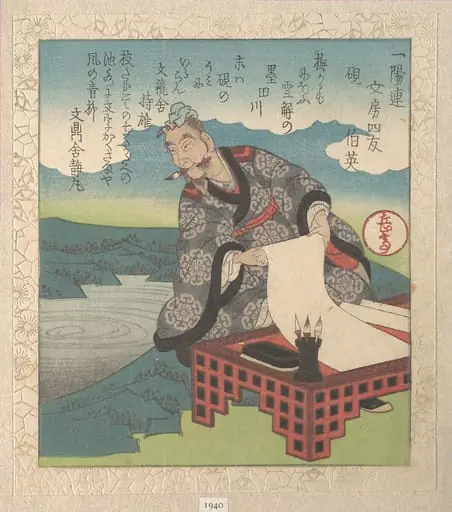 「一陽連文房四友 硯 伯英」『春雨集』 摺物帖|The Chinese Calligrapher Boying (Japanese: Hakuei; also known as the “Sage of Cursive Script”); “Inkstone” (Suzuri), from Four Friends of the Writing Table for the Ichiyō Poetry Circle (Ichiyō-ren Bunbō shiyū) From the Spring Rain Collection (Harusame shū), vol. 1
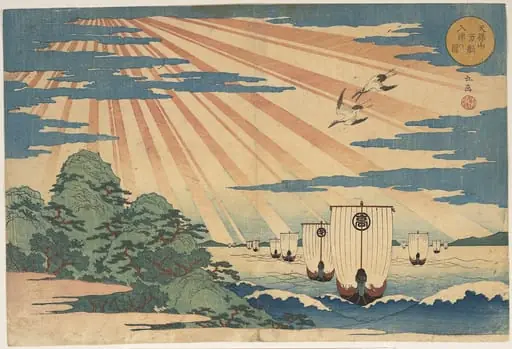 Untitled
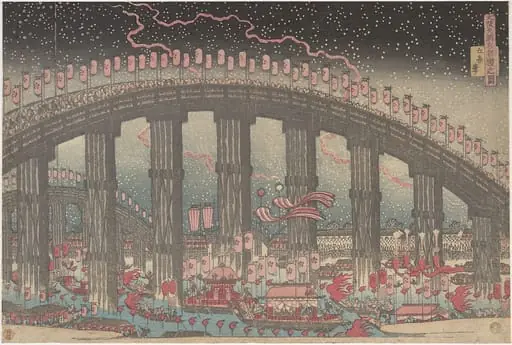 Osaka Tenmangu sairei no zu|The Tenmangu Festival at Osaka
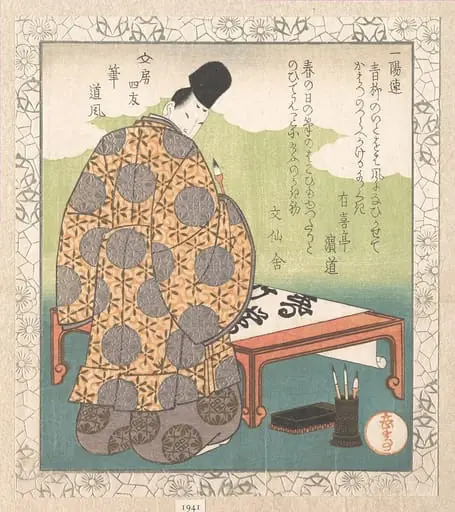 「一陽連文房四友 筆 道風」『春雨集』 摺物帖|The Heian Court Calligrapher Ono no Tōfū (894–966); “Calligraphy Brush” (Fude), from Four Friends of the Writing Table for the Ichiyō Poetry Circle (Ichiyō-ren Bunbō shiyū)From the Spring Rain Collection (Harusame shū), vol. 1
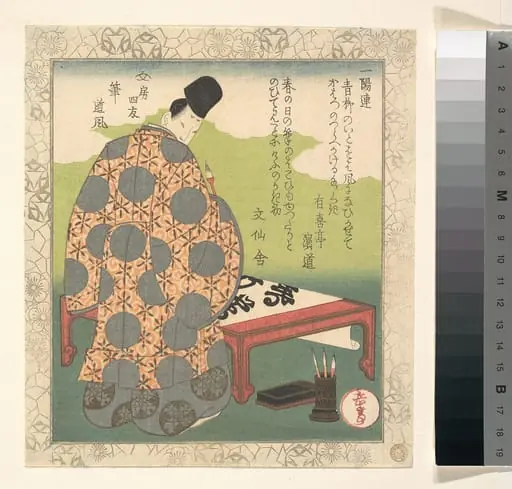 Untitled
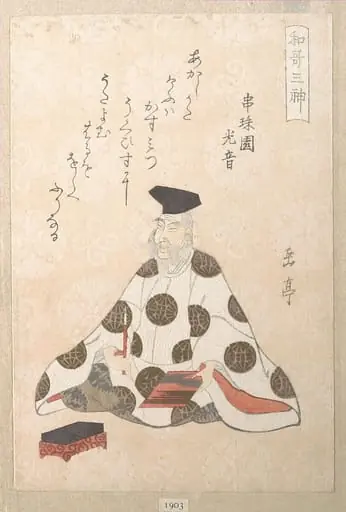 『和歌三神』 柿本人麻呂|Kakinomoto no Hitomaro (ca. 662–710), One of the Three Gods of PoetryFrom the Spring Rain Collection (Harusame shū), vol. 1
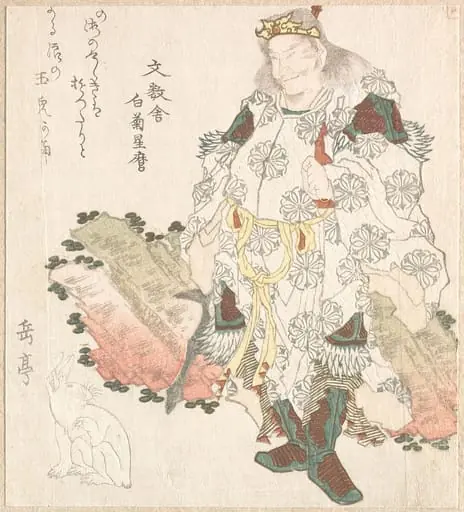 Untitled
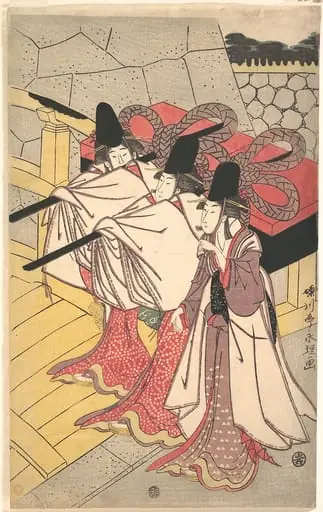 Untitled
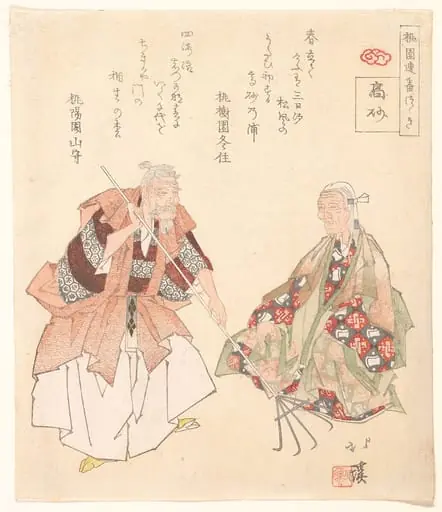 Untitled
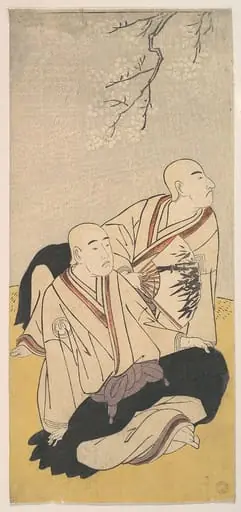 Untitled
 Untitled
 Untitled
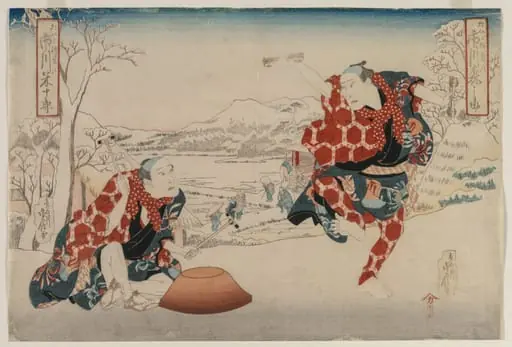 Ichikawa Norinosuke and Ichikawa Yonejuro as Morihachi and Yonehachi, Two Comedians
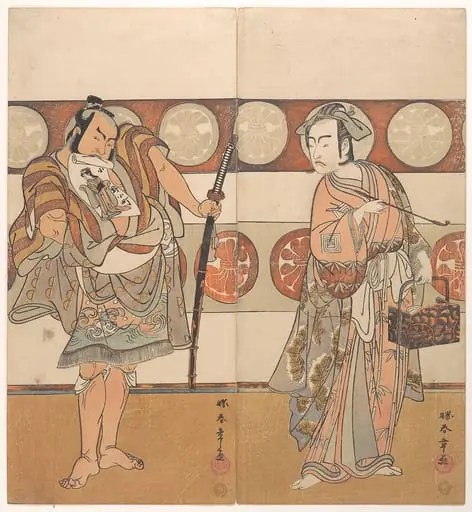 Untitled
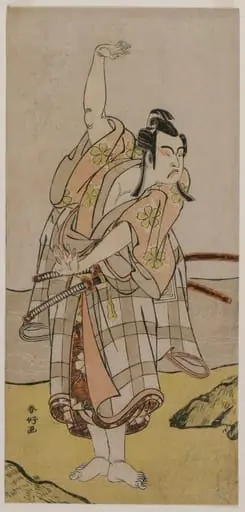 Actor Ichikawa Yaozō II as Sakuramaru
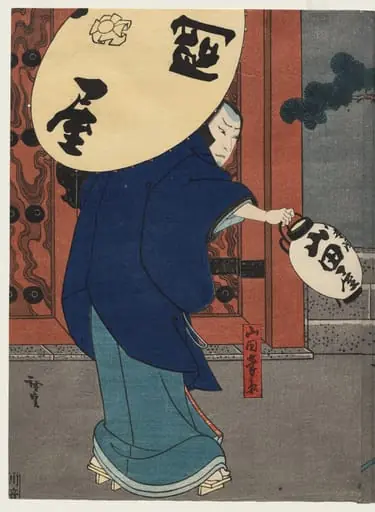 Nakamura Utaemon IV as Karaki Masaemon (From the series A Tale of Valor at Iga Pass)
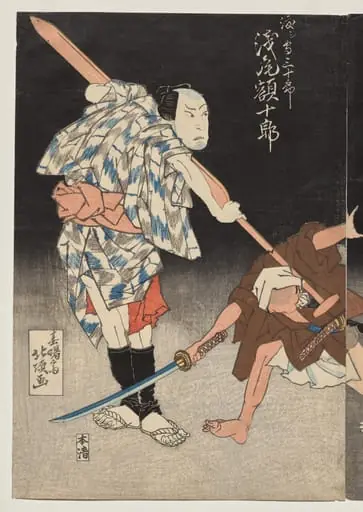 Asao Gakujurō as the Ferryman Sanjūrō from the Kabuki Play "Eight Views of the Kizu River by Boating Song"
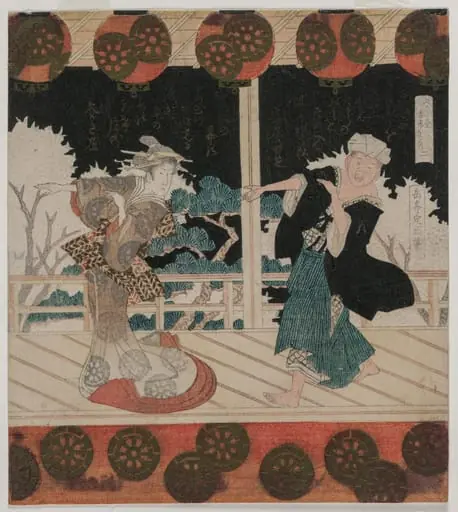 Furuichi Dance at the Hisagataya
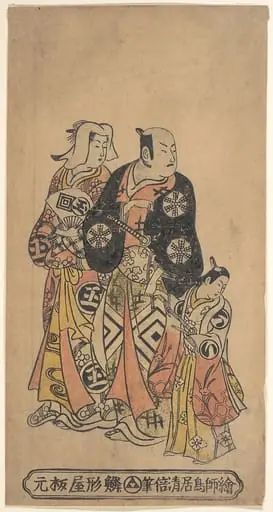 Untitled