Artwork
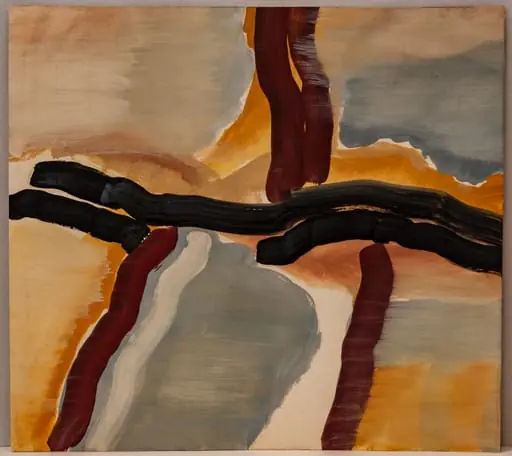
Erupție 2
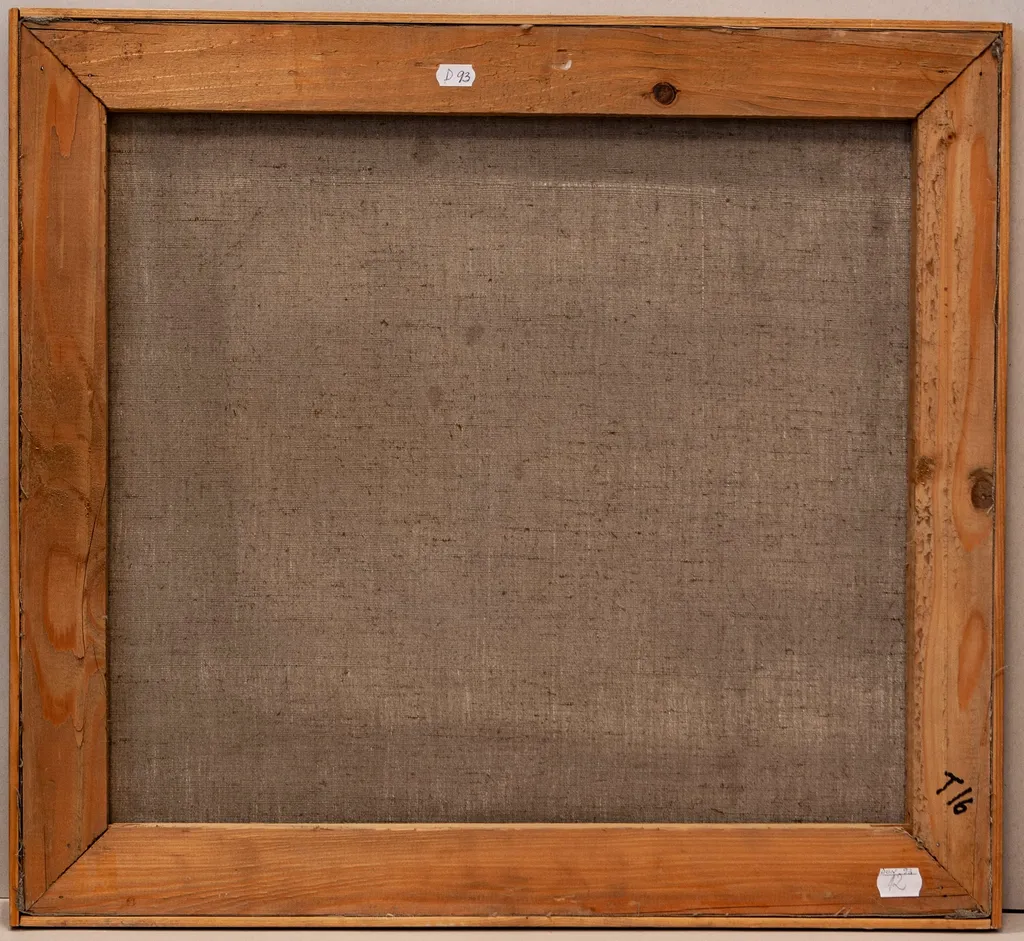
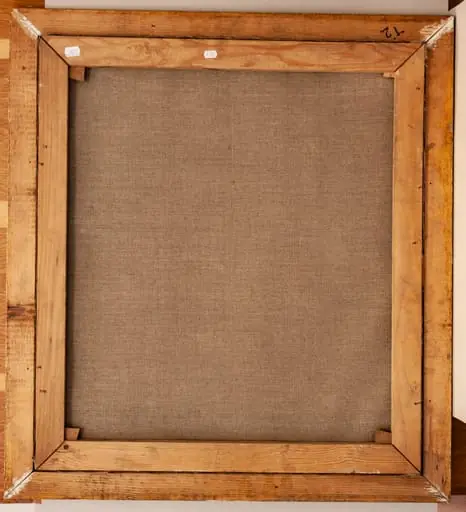
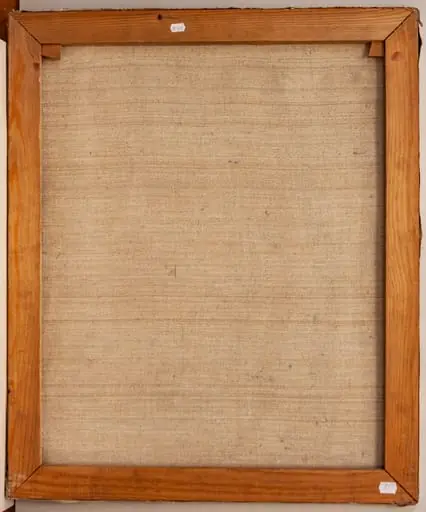
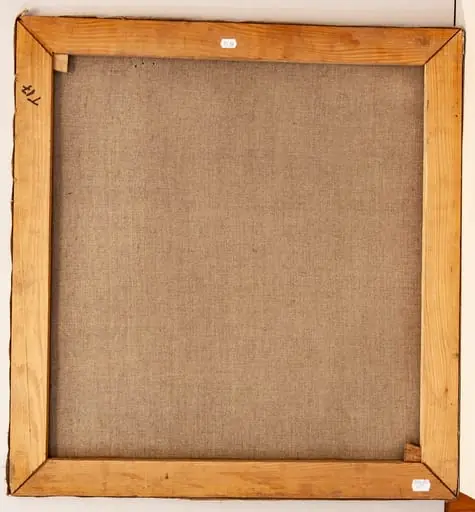
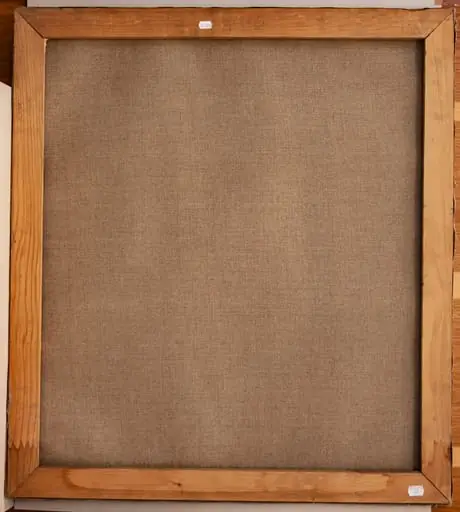
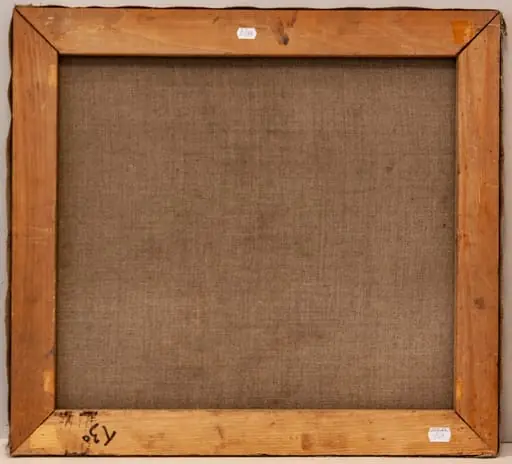
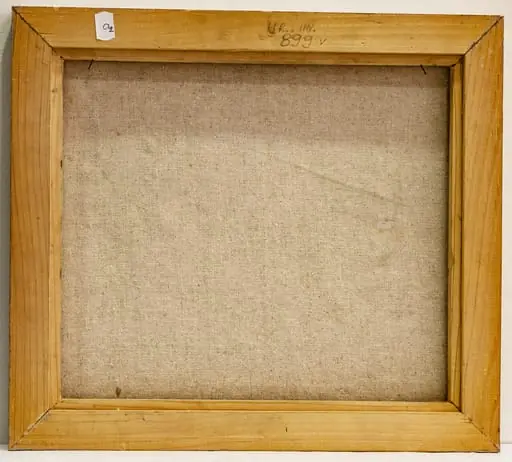
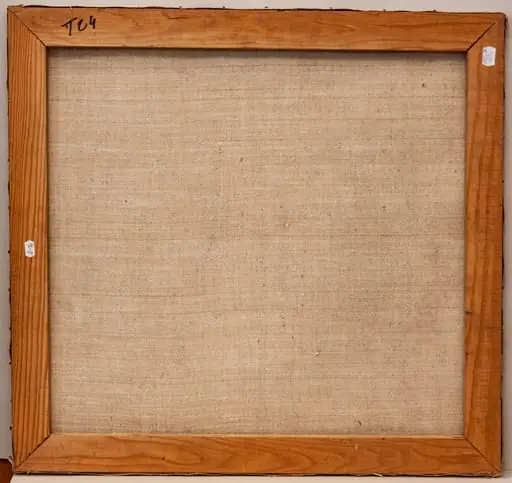
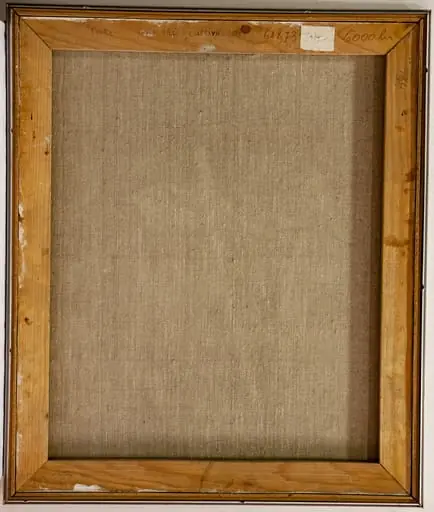
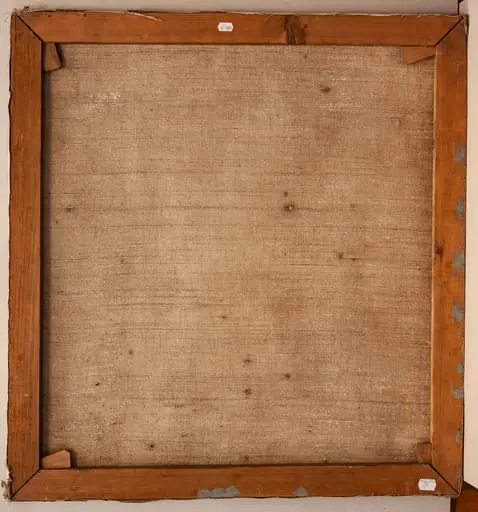
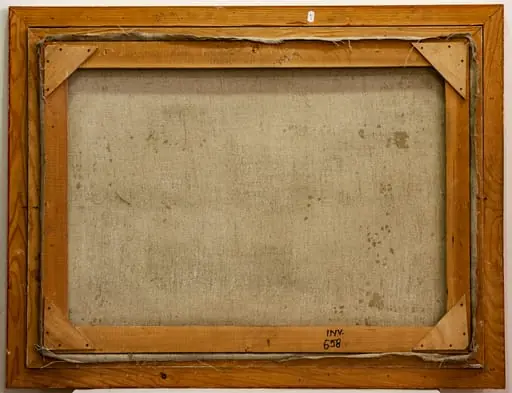
Erupție 2 is a print by Zamfir Napoleon. It is held in the collection of the Gavrila Simion Eco-Museum Research Institute Tulcea. The object is the reverse side of a framed artwork, displaying a plain wooden frame with a light tone and minimal detailing.
About this work
Overview
The construction is utilitarian, lacking ornamental features, suggesting standard museum or storage practices rather than decorative intent.
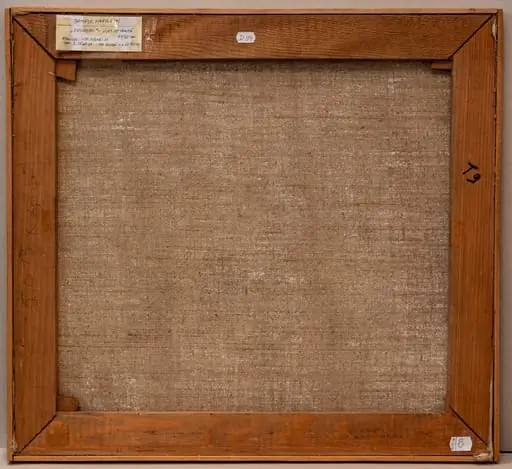
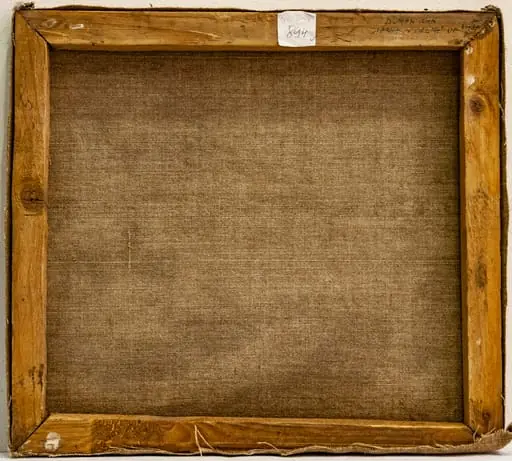
The object is the reverse side of a framed artwork, displaying a plain wooden frame with a light tone and minimal detailing. A beige woven fabric serves as the backing, secured to the frame’s rear. Two handwritten labels are present: "116" in the lower right and "D 93" on the upper edge, likely inventory or catalog identifiers. The construction is utilitarian, lacking ornamental features, suggesting standard museum or storage practices rather than decorative intent.
Subject & Meaning
No visual content of the artwork itself is visible. The reverse side provides no direct indication of the image’s subject, theme, or artistic intent. The labels may correspond to institutional records, but without access to accompanying documentation, the content and meaning of the front-facing work remain unknown.
Technique & Style
The frame’s construction implies standard framing techniques of the mid-20th century, with simple joinery and unadorned wood. The fabric backing is typical of conservation methods used to protect the artwork from dust and environmental fluctuations. No evidence of custom craftsmanship or stylistic embellishment is present, pointing to a functional rather than artistic approach to presentation.
History & Provenance
The handwritten numbers on the frame suggest institutional handling—possibly a museum, gallery, or private collection cataloging system. "D 93" may denote a department or donor code, while "116" could be an accession or storage number. The absence of stamps, seals, or detailed markings limits further provenance tracking without external records.
Context
This frame and backing reflect common practices in art storage and display during the latter half of the 20th century, prioritizing preservation and organization over aesthetic enhancement. Similar frames appear in institutional archives where artworks are managed systematically, often before public exhibition or during relocation between storage facilities.
Legacy
As a fragment of the artwork’s lifecycle, this reverse side contributes to understanding how the piece was handled, stored, and tracked over time. Though devoid of artistic content, it preserves traces of institutional care, offering a quiet record of the object’s journey through collections, beyond the visible surface of the work itself.
Artist & collection
Artist
Museum
Gavrila Simion Eco-Museum Research Institute Tulcea
Continue through works from the same source collection.