Artwork
Massacre of the Innocents [recto]
![Massacre of the Innocents [recto], by Zanguidi, called Bertoia, Jacopo, ink, 1559](https://artifactworldgallery.com/img/zanguidi-called-bertoia-jacopo--massacre-of-the-innocents-recto--10e234e0c20f0571-w1024.webp)
Massacre of the Innocents [recto] is an ink drawing by the Renaissance artist Zanguidi, called Bertoia, Jacopo. It dates from 1559 and is held in the collection of the National Gallery of Art.
About this work
Overview
The work titled *Massacre of the Innocents* (recto) is a drawing executed in 1559 by the artist known as Zanguidi, also referred to as Bertoia or Jacopo. Rendered with pen and brown ink, the image is enriched by a brown wash applied to a blue‑green paper support, presenting a monochromatic yet nuanced visual record of the biblical episode.
Technique & Style
The drawing employs fine pen lines to delineate figures and narrative action, while a subtle brown wash adds tonal depth and atmospheric shading.
The drawing employs fine pen lines to delineate figures and narrative action, while a subtle brown wash adds tonal depth and atmospheric shading. The choice of blue‑green paper provides a cool undertone that interacts with the warm brown pigments, a compositional strategy characteristic of mid‑sixteenth‑century Italian draftsmanship, where emphasis on line and chiaroscuro co‑exists with a restrained palette.
History & Provenance
Created in 1559, the piece originates from the late Renaissance period in Italy. Though specific ownership records are limited, the drawing bears the signatures of the artist’s multiple appellations—Zanguidi, Bertoia, and Jacopo—indicating its attribution was documented contemporaneously or shortly thereafter, a practice common among workshop artists of the time.
Context
The subject, the biblical Massacre of the Innocents, was a frequent motif in Renaissance art, allowing artists to explore dramatic human emotion and complex composition. In the mid‑sixteenth century, such themes resonated with contemporary concerns about authority, suffering, and moral instruction, reflecting the broader cultural and theological currents that shaped artistic production during this era.
Artist & collection


![Mars and Diana [recto], by Zanguidi, called Bertoia, Jacopo](https://artifactworldgallery.com/img/zanguidi-called-bertoia-jacopo--mars-and-diana-recto--a528dea7036b44d0-w320.webp)
![Kneeling Woman [verso], by Zanguidi, called Bertoia, Jacopo](https://artifactworldgallery.com/img/zanguidi-called-bertoia-jacopo--kneeling-woman-verso--fb904e93478d9417-w320.webp)
 Murder of the Innocents
 The Generosity of Empress Pulcheria
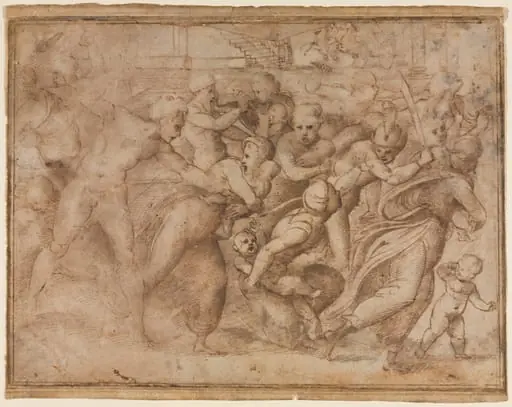 Copy of Raphael's Massacre of the Innocents
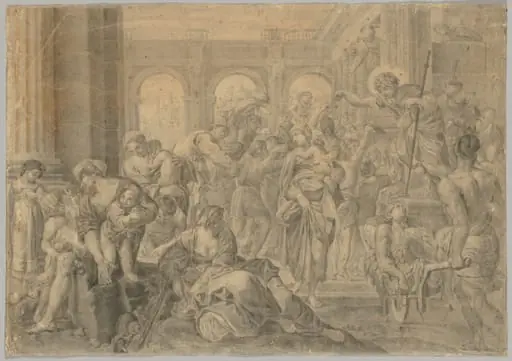 Copy of Annibale Carracci's St. Roch Giving Alms
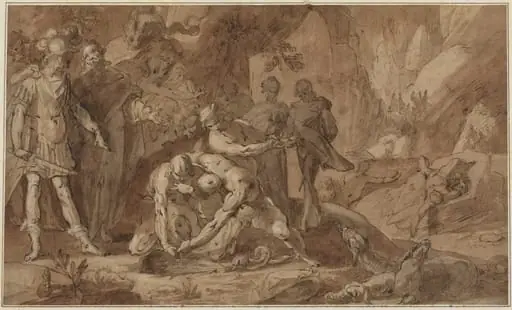 Odysseus and Teiresias
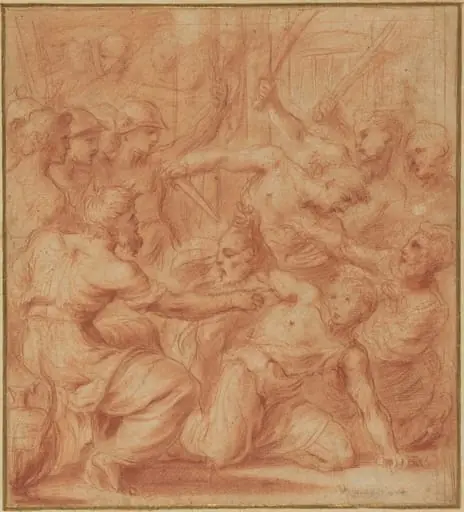 David Offering the Head of Goliath to King Saul
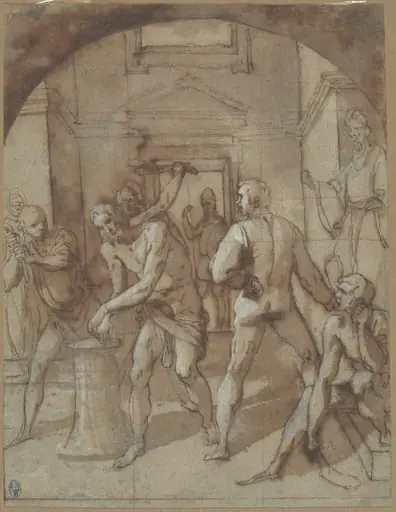 The Flagellation
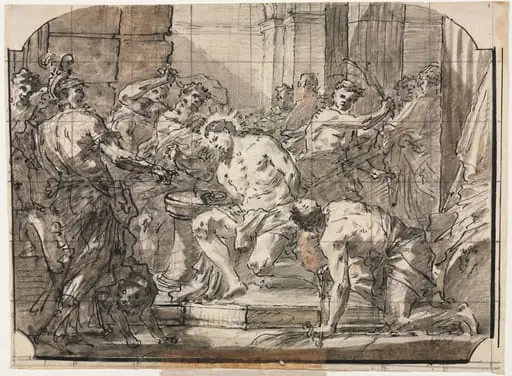 Flagellation of Christ
![The March of Silenus [recto], by Jean Antoine Watteau](https://artifactworldgallery.com/img/jean-antoine-watteau--the-march-of-silenus-recto--41356d5e8937ed4e-w320.webp) The March of Silenus [recto]
The March of Silenus [recto]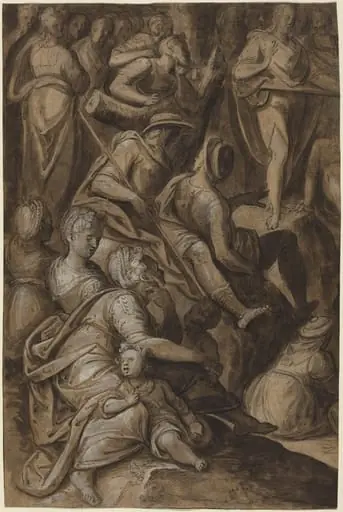 Saint John Preaching